Mining Gnosis Through the Tao Te Ching
from Gnostic Reformation, Clear and Simple Hosted by Cyd Ropp
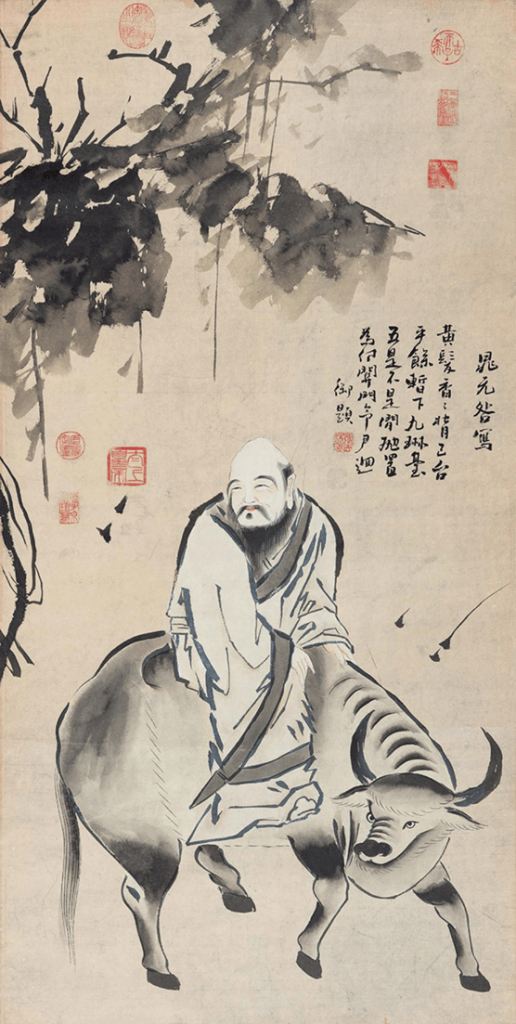
Welcome back to Gnostic Insights and to the Gnostic Reformation on Substack. You know, I often tell you that I’ve been a Christian since I was about five years old, and I’ve been a follower of Jesus in particular, sometimes going to church, most often not going to church. But I’ve always loved Jesus, and I’ve had many dreams and visions of being with Jesus, and this has shaped my current Gnosticism and the reason why I favor the Tripartite Tractate as the book out of the Nag Hammadi codices that I gravitate to, because it’s definitely Christian. The myth is different than our typical Christian myth. However, the characters are the same, if they do take on slightly different roles. For example, Christianity conflates the Son, Jesus, and the Christ as one character. But in Gnostic Christianity, the Son is the first emanation of the Father, and this is simply to indicate—this has nothing to do with gender—this simply indicates that the Father is so illimitable and immense and unfathomable, yet the Father wanted to be known, wanted to have companionship, let’s say, and so the Father emanated His “only begotten Son,” as we say in Christianity. That wasn’t Jesus or Christ, that was the Son. And the Son is like the bucket dipped into the sea of the great consciousness of the Father. The Son is a particular entity with a particular countenance or face, and the Son contains all of the attributes of the originating consciousness, the Source. The Son is more relatable, because like the Son, we too are monads, which means we are a particular entity. We have a particular point of view, and our point of view here on earth is our physical point of view, what I’m looking at versus what you’re looking at, but it’s also the point of view of our meme bundle, of our ideology, of the way we think. It’s our point of view. Each one of us is unique. Obviously, we’re each unique. Our physical bodies are similar but different. We were born in similar but different manners. We live similar but different lives. We eat similar food, but it’s always different. Everything about each one of us is unique, and in a spiritual way, we think that our uniqueness contributes to the totality of the Fullness, to the totality of the experience of what it means to be alive here on this planet Earth. That’s why each person needs to grow into who they are meant to be. We have our temporal worldly parents, mom and dad, the ones who birthed us and gave us our genetic inheritance, but we also have our aeonic parents. There are Aeons in the Fullness of God, ethereal beings, a multitude, an infinite number of Aeons, and they get together in various combinations, different Aeons with their different positions, places, points of view, duties. It’s their address, but they are otherwise all identical because they all are emanations of the Son. They are all variables within the Son. So we have these aeonic parents. They get together and procreate us. We are the descendants of the Aeons of the Father. We descend into this material space. We are descendants from our aeonic parents as well as our physical human parents. So in the same manner as we inherit our genetics from our parents, what we’re going to look like, how our bodies go together—that all comes through our human parental lineage—but through our aeonic lineage, we inherit who we are meant to be. That is the perfection of our Self, our particular combination, and we’re each different, we’re each unique aspects of the Aeons of God. So if someone is a great mathematician, or a beautiful singer, or a wonderful mother, or housekeeper, or a person with any sort of talent whatsoever—and we all have our unique talents—those are the things we inherit from our aeonic parents, from the archetypes—from the archetypal singer, the archetypal mother, the archetypal Aeon, with its unique combination of talents. At least this is my interpretation. This is Cyd’s interpretation of how these things go together. So we all inherit the Fullness of God, the one true Self that is the reflection of the Aeons. Just as the Aeons are all the variables of the Son, we are their fractal fruit. So we carry the Fullness of God within each part of our living bodies. And then we have our aeonic personalities on top of that, which is the particular Aeons which figure most prominently in our aeonic inheritance, the archetypes that we inherit. By the way, this is where C.G. Jung gained his notion of archetypes. If you’ve ever taken the Myers-Briggs personality survey—introvert or extrovert, sensory or intuitive, thought-driven or feeling-driven, step-by-step planner or a big-picture gestalt type—these are the variables of the Myers-Briggs, and those are all variables that reflect Jung’s categories of archetypes. And when you put all those together, there are many, many combinations of possible personality types. Maybe you’re familiar with that system. Well, that’s based upon this Gnostic philosophy, because Jung purchased one of the Gnostic gospels from the Nag Hammadi codices, and it was translated first into German, and then he took his transpersonal theory of psychology out of what he learned from the gnosis of the Tripartite Tractate, which is the same book that we study here at Gnostic Insights and the Gnostic Reformation. But that’s not what I’m actually here to talk about today. What I really wanted to share with you was the Tao Te Ching. Tao is spelled T-A-O, but pronounced Dow. Te is T-E, and Ching. So the Tao is the way, the eternal, ethereal way. The Te is its expression here on Earth, or in the cosmos, and Ching means book. So the Tao Te Ching is the book of the way and its expressions, and is said to have been composed by a sage named Lao Tzu ages ago, around 500 BC, during the time of Confucius. However, probably it’s also an amalgam of many ancient wisdom texts and insights from many Chinese sages put together by Lao Tzu. Now the legend of Lao Tzu is that he was an old man. He had served the emperor. He was the keeper of the royal archives in the state of Chu. He was tired. He wanted to go away and die. And so he was driving his ox out of the city and away from humanity so he could be by himself and pass away. But the gatekeeper of the city saw that the sage was about to leave the world, and he said, Master, you’re about to renounce this world. Please compose a book for me. And it is said that Lao Tzu came down from his ox, sat down, and for several hours wrote a book in one sitting. And then he handed it back to the gatekeeper, got back on his ox, and traveled to the West. Now this is a symbolic telling because, first off, he needed to pass through the gatekeeper to leave the city. And it was the gatekeeper who implored him for wisdom before he would leave and never share his wisdom anymore. Lao Tzu wrote the book in one sitting, and this particular episode of history is captured in many, many ancient Chinese paintings. So if you ever see the old man on the ox or the old man sitting and writing, that’s Lao Tzu composing the Tao Te Ching. And leaving through the gate that goes to the West implies that this teaching was for all peoples. You may wonder why I am talking about the Tao Te Ching here in this Gnostic venue. The answer is that the Tao Te Ching helped me mine my own gnosis years prior to discovering the books of the Nag Hammadi, proving that we can all mine gnosis without having access to so-called Gnostic texts. As we seek out the Truth in religions and sacred writings, it is our own gnosis that draws the understanding out of these sources. Steeping oneself in religion without using discernment to mine the gnosis therein does us no good. Merely being “religious” does nothing to advance your wisdom or understanding of the world and God if you do not mine the gnosis to be found there. But if we read with a gnostic heart and mind, then the gnosis is there to be found. When you find a verse or precept that clicks with you—that is your gnosis being mined. And, why do we call it… This is a public episode. If you'd like to discuss this with other subscribers or get access to bonus episodes, visit cydropp.substack.com/subscribe
Embed this episode
No transcript yet.