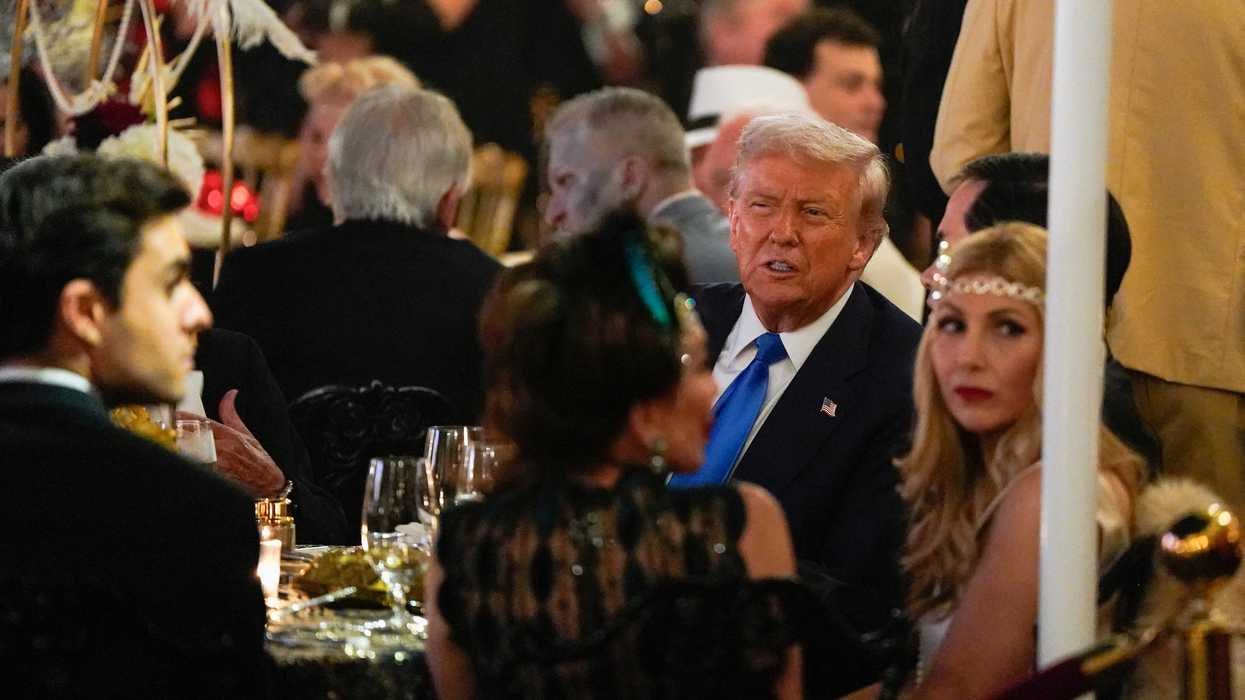
Missing $50 million tracks straight to Mar-a-Lago
from Systemic Error Podcast Hosted by Paulo Santos
What happened AlterNet does not establish that $50 million went to Mar-a-Lago. It reports that federal events connected to the United States’ 250th anniversary cost $128 million, with at least $114 million supplied by taxpayers, while The Wall Street Journal reported that corporate donors contributed at least another $50 million. The article does not provide records showing where those private contributions went. According to AlterNet, Congress had funded an anniversary celebration a decade earlier, but Donald Trump created a separate, privately organized “Freedom 250” effort. The outlet says contracts were awarded without competitive bidding and that the administration has not disclosed a full donor list, contribution amounts, or the ultimate disposition of the donated money. The Mar-a-Lago connection in the headline is therefore insinuation, not a documented financial trail. AlterNet says Democrats suspect the money may have become a fund benefiting Trump or his family, but it presents neither proof of that allegation nor evidence that the money reached his Florida property. The power sits with the administration The decisive actors are not the corporations writing checks or the public left guessing about the accounting. Institutional power belongs to the administration officials controlling the celebration, the contracts, and the records. That control creates the central political problem: the same operation soliciting private money for a public commemoration also determines which contractors receive taxpayer funds and what information the public may see. When officials refuse to disclose donors and expenditures, opacity is not some atmospheric failure of government. It is a choice made by people with custody of the records. Congress also holds power. It appropriated money and possesses oversight authority. If lawmakers do not compel an accounting, they enable secrecy by declining to use the tools attached to their offices. The unanswered arithmetic The reported figures demand an audit, not a punchline. If the events cost $128 million and taxpayers supplied at least $114 million, the publicly identified gap between those figures is $14 million. Separately, corporate donors reportedly supplied at least $50 million. Those numbers raise obvious questions about whether donor funds paid expenses outside the stated event total, remained unspent, or were routed elsewhere. AlterNet does not answer them. More importantly, it does not substantiate the headline’s claim that the money “tracks straight” to Trump’s club. A missing accounting is evidence of failed transparency; it is not, by itself, proof of theft, self-dealing, or a particular destination. That distinction matters precisely because the underlying conduct warrants scrutiny. Inflating an unsupported conclusion gives officials an easy escape: attack the exaggeration and avoid producing the ledger. Corporate money buys obscurity Chevron, United Airlines, and defense contractor RTX are identified as major donors. The article does not establish what any company expected or received in return, so a bribery claim would outrun the evidence. But secret or incomplete donor accounting around a presidentially controlled national celebration creates an influence channel the public cannot evaluate. The corruption risk lies in the structure: corporations with substantial interests before the federal government can finance an operation associated with the president while the administration withholds the details. Disclosure is what allows citizens to distinguish civic sponsorship from access-seeking. Without it, officials are effectively asking the public to trust the beneficiaries of secrecy. Secrecy is the systemic failure The larger pattern is the privatization of public authority without public accountability. A national anniversary becomes a presidential brand vehicle; taxpayer funding and corporate sponsorship become difficult to separate; contracts move without competition; and oversight arrives only after watchdogs uncover fragments of the record. AlterNet weakens its own case by converting that documented opacity into an unproven Mar-a-Lago trail. The stronger indictment is already available: officials controlling public money and presidential access have reportedly refused to provide a transparent account, while Congress retains the power to force one. A functioning system would not require speculation about bathroom cash. It would require contracts, donor records, invoices, recipients, balances, and enforceable consequences for withholding them. When those records remain hidden, the scandal is not that outsiders cannot guess where the money went. It is that the people empowered to know have arranged matters so the public does not. Thanks to Alter Net Source: Missing $50 million tracks straight to Mar-a-Lago This is a public episode. If you would like to discuss this with other subscribers or get access to bonus episodes, visit paulstsmith.substack.com
Embed this episode
No transcript yet.