
Welcome to the Tweed Trends podcast. Hey, Evette, what's trending today? Hey, I'm Evette, hey girl. And you are tuned in to Tweed Trends.
It's the quickest way to find out what's trending today. Let's talk about missing children's day. Let's get started. Hey there, welcome back to Tweed Trends.
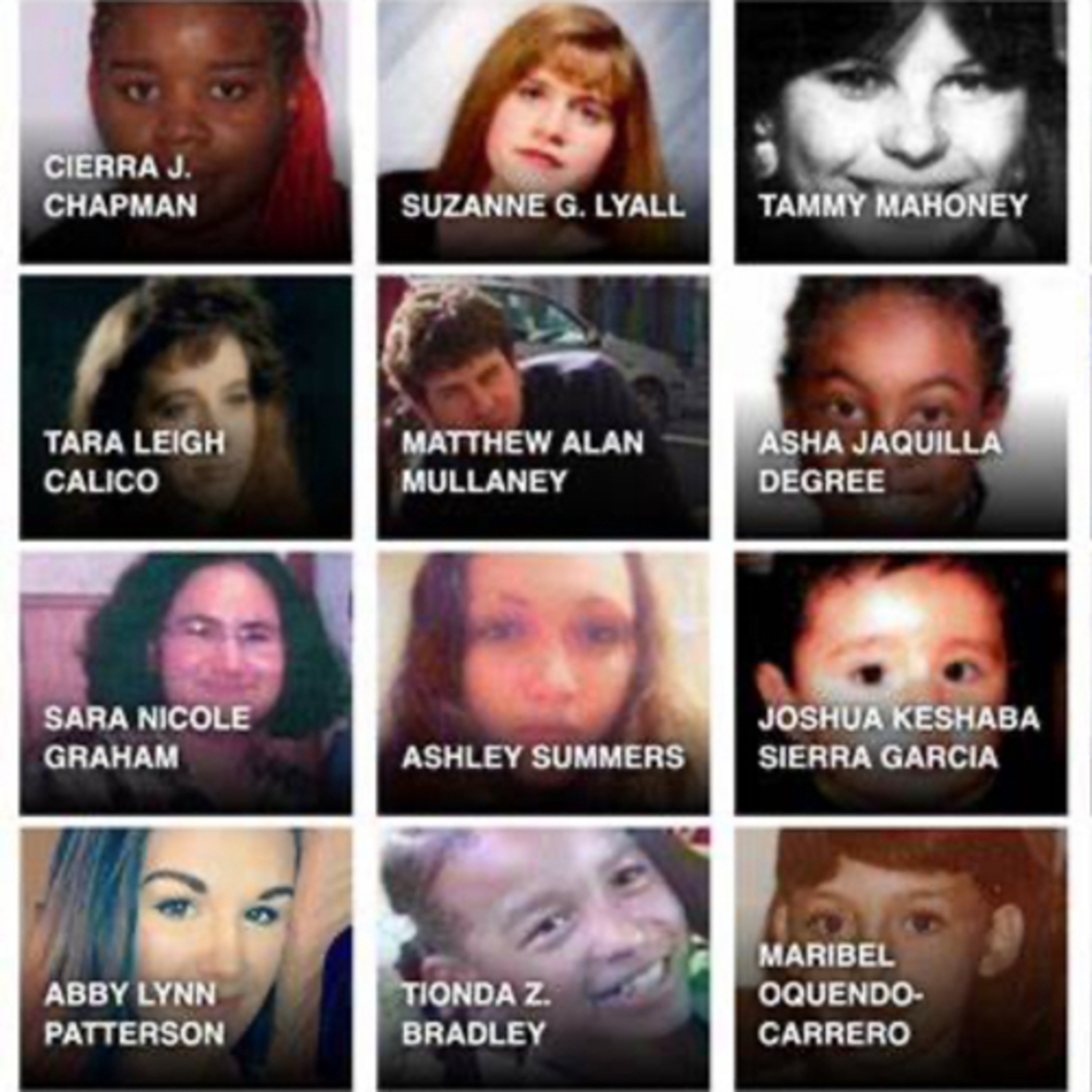
Today's episode, I want to focus on Missing Children's Day. This is a day every year, May 25th, where we shine a light on not just children who are missing, but the families of the children who are missing, as well as ways that we can try to prevent other children, the children that we know and love from being victims, and then possibly exploited, or what have you, you never know. So very interesting story, just recently, like really in the past couple of weeks, my daughter and I, we went to Walmart. And on the way walking out, I pointed out to her the pictures of the children on the wall.
And I was like, have you ever noticed this up here? And she was like, no, never noticed it. And so we had a little discussion about it. And I was pointing out to her, the fact that these children had gone missing.
And you could see the dates on when they went missing, when they were last seen, who they were last seen, with that sort of thing. And it was interesting because she pointed out, she was like, well, mom, wow, that's crazy. But did you notice up there, it says that these children have been found? And I'm like, wow.
So maybe I haven't paid that much attention to the wall, because I always thought for sure that this wall was a list of children who are currently missing, and not ones that have been recently found. So in my mind then, it was like, so then now, where do they put the pictures of the children who are missing? Because as we come and go, and we look at the pictures, maybe as we go about our daily, whatever, we might see one of these kids and go, oh, wait, you look familiar. I saw their face on the wall in Walmart, because they're missing.
Let's see if we can't help get them found again. And so it was funny, because she didn't, she was very, I don't know the word, she was very respectful and pointing that out to me. Although she did not take it for granted, the fact that these kids had actually been missing at some point in time. And so then we had the whole discussion.
And then I explained a little bit more about the fact that when we come into these stores, and you wanna kind of just go running off and go down another aisle without me or whatever, we can take our time and walk through this store together. You don't have to run off and go do things. Although I do remember when I was a child, it wasn't anything for my mom to leave me on the books aisle, or in the toy section, and go and do her shopping and then come back and get me. It wasn't anything for her to do that.
Or even to send me on another aisle to go get something in the grocery store or whatever. And nowadays that's just not a thing, at least not in my book, it's not an option. Because I think that the predators know, hey, the toy section would be where you would look at the little kids, or just kind of wandering around the store looking for you. And so we often go through these little questions here and there.
If we're in the car, I might ask her a question. And when she was younger, it was interesting because I would ask the question like, hey, I got a question for you. Let's say you were playing in the cul-de-sac one day and somebody came through and they lost their dog. What would you do?
And it was like, oh my gosh, I would help them find it. Okay, so that's not the right answer. I would rather you not, you know, than we had the whole conversation about why you don't do that. And you know, or there's a car, someone's in it, they're kind of leaning out the window, or maybe it's a person in the passenger seat and driver seat or whatever, and they're trying to get you to come closer to the car because they want to ask you a question.
They want directions, they want something from you. And it's like, so what do you do? And it's like, well, it depends. If I know where they're talking about, okay, so no, that's not the right answer.
But when you have a child that's considered and caring like that, these are the types of questions that you have to have, you know, that you have to pose for them to them so that they know the right and wrong answers. So that hopefully they'll pick the right thing to do, that they will not worry about being rude to an adult and instead worry about what's right and what's wrong. If you're an adult, you don't need to be asking my child to help you find your lost dog, or you don't need to be offering them candy or popsicles to come with you to do something, or to come look in this house with you, or no, no, no, we don't need to do any of those things. But so going back to the idea of missing children's day, I kind of fell down a little bit of a rabbit hole because then, you know, we know about Amber Alerts, and I saw a new one out there that California has, it's called an Ebony Alert, and seems to be lots of controversy about that, although there's differences there.
So I kind of want to touch on that, and then, but before I get to that, I want to talk about the categories of what it means to be a missing child, because I did not realize it was so complicated, but it actually is. Let's talk about some definitions and categories. Now, starting with the definitions, I had no idea that defining child and missing was such a complicated issue, but that seems to be one of the big barriers and trying to figure out who was considered a missing child. So the child thing, in some instances, is 18 years of age and younger, but not everywhere.
So it depends on where you live in our country, and then throughout the whole world, there are different definitions for who qualifies as being a child. And then missing as well has a number of categories, because there's different versions of missing, and you kind of have to identify that, and then being able to identify the person as missing, and then on top of that, to try to then figure out where they have gone to and can we get them back home. So some of the missing categories, there are endangered runaways, family abductions, non-family abductions, lost, injured, or otherwise missing, abandoned, or unaccompanied minor, and there are others, but these are just like the top ones, if you will. Now, as I was thinking about the categories, I was like, you know, does it really matter?
But I guess in a sense it does, if you think that it's a family abduction, then you may have more leads on where the child may have gone, versus a non-family abduction, versus a runaway, like maybe you have some tips or clues, like maybe it's a boyfriend that you were like, nope, I'm not like in this guy, and it's like, but I love him, so then she runs off to be with him, and doesn't leave a note or anything, or doesn't say to you, I'm leaving. So there are those things, but then I started to think about other type of situations, like autism, and wandering. I've heard of a few in the area, as a matter of fact, where the children had autism, they were on the spectrum, and they were able to get out of the house without anyone noticing them. And as a matter of fact, there's a neighborhood near ours that a lot of times we cut through that one to get to the main road, and there was a young girl sitting outside, like at the edge of the street and her pajamas, and my husband was on his way to work, and he saw the young girl, and he was concerned because she had on just a lightweight pajamas, and it was winter time, it was cold outside.
So he kind of stopped his car and was like, you know, tried to kind of check to see if she's okay, like, hey, are you all right? And she got up and went around into a sliding glass door. And so because my husband then was concerned, like, okay, so she didn't say anything in response, she did get up and kind of go back in the house, but he wanted then to check and make sure that there was an adult there. So he went to the door, rang in, a gentleman came to the door, and my husband told him who he was, he was on his way going to work, and that there was a little girl sitting at the edge of the driveway in her pajamas, and when he stopped and spoke, she did go in the house, but he wanted to make the adult aware that the child had left the house, like, maybe you weren't aware, and the father was not aware, and he got really emotional right there, and he told my husband that she's autistic, not in verbal, and, you know, he thought he knew where she was, and, you know, thank you for letting me know, because that means I need to keep my head on the swivel, I need to be a little bit more attentive to where she is and knowing exactly where she is and what she's doing, because there was nothing to say that she had to sit at the end of that driveway, she sort of wandered off somewhere and no one would have known it, because she's non-verbal, you can call for her, but she's not gonna answer.
So that just got me in my head and in my heart, even more thinking about, oh man, you know, there was that time when, and how awful would that have been if she didn't stop at the end of the driveway, if she did wander off into the neighborhood somewhere, or out of the neighborhood for that, you know? So this is a really big thing, and it hurts to know that there's so much controversy about the different classifications to then make it difficult for people to identify a child as being missing, and then in turn receiving help to try to bring them home. Another thing I want to point out before I go on is the Amber Alerts that we have. People are like, oh, when you hear that Amber Alert, you know, you just get uptight because it's like, oh, somebody's child is missing, but then I had to look that up too.
So what is the age for an Amber Alert? And the age for an Amber Alert is 17. In California, they have a new thing as of January of this year, 2024, where they have implemented an Ebony Alert, and it seems like people are up in arms about it because it's like, why is it that you need to put a color to it because, you know, doesn't that Amber Alert do what's necessary? So I had to do a little deep dive on that too, and there's a difference between an Amber Alert and an Ebony Alert.
The Ebony Alert goes up to age 25, and the reason for that is, is because there is a disproportionate number of African-American females in children that go missing, and because they are above the age of 17, and we know that from the history, the reports, the data out there, quite often, especially African-American females, we are over-sexualized in the eyes of others, and therefore, if you're 18 years old or older and you cannot be found, many people will then say, it's because you don't want to be found, so leave them be. And that's not the case in all situations. So this Ebony Alert has had to be something new that's implemented because there are vulnerable women and children in the African-American community above the age of an Amber Alert. They're over the age of 17, and they need assistance as well.
So just kind of wanted to throw that out there as well. But I want to wrap this up with the education part. What do we do to keep our children and young people safe? Now, as I mentioned, I would have these conversations with my daughter at a very young age because I wanted her to know, because when you live in certain communities, there are certain things that you just don't think about.
And I didn't want to be that parent to overlook the idea or to be so comfortable as to think that it couldn't happen to my child. So I'd rather her know, I'd rather her be aware and knowledgeable and to share that knowledge with her friends than to be an ostrich and stick my head in the sand and pretend like I don't know what's going on out here in these streets. So the different situations, if you haven't run them by your children or cousins, nieces, nephews, grandchildren, what have you, start the conversations early. When they are able to talk and understand and have conversations, start those conversations with them.
Ask them what would you do if and give them a scenario about a person on the playground offering them candy or someone asking for help to find a dog or a cat or something along those lines. There are so many different possible situations, a person driving up in a car and they're trying to get you to come closer to get in and whatnot. And the idea of stranger danger, at one point that seemed to be the solution for everyone. My kid knows stranger danger.
But the problem is that the majority of children that go missing in the United States, they go missing under the category of family abduction. The people that take these children are people that these kids know. So you can't protect them from a family member off of stranger danger. So then it becomes the conversation of, OK, if you're with me, then you make sure that the person knows that you're checking with me first.
Don't be afraid to be rude to somebody and not go with them. Don't be afraid to kick and scream. Don't be afraid to do that because I'd rather it be an embarrassing situation than a heartbreaking one. So there are some things where people say, you know, come up with a code word for your kids.
And that way, if somebody says, hey, your mom sent me to come get you and to take you with them to some other location. What's the code word? Code word? Oh, your mom didn't give me a code word.
She was in a hurry. OK, well, I'm sorry. I can't go with you. And you take off, you run.
You go find whoever the person is in charge of wherever you are, if it's at school and it's a teacher. If you're in a store now, that's a completely different situation because that would probably be a situation of a non-family abduction where you're in a store and you're lost. And somebody's like, hey, look, come with me. Let me help you find who you're looking for.
There are nice people out there and they may reach out, but that could be a dangerous situation. So make sure they know to look for a police officer or to look for somebody who works in the store. So that means you have to have conversations with them to make sure that they know what a person in the store looks like. Do they have their little smock on?
You know, what does the smock look like? Do they have a name tag? All of those things. Look for the person who works there.
Now there's another one that I'd heard recently that I wasn't aware of. But I was like, OK, that might work too. It was look for an adult that has children with them. And I'm like, OK, OK.
Now granted, that would be the last resort. If you can't find a policeman or somebody that works in the store, then yeah, possibly an adult that has children with them, pushing a little one in a stroller, got some other ones, maybe in the, maybe not pushing in a stroller, like a shopping cart and other ones. They might be inside the actual cart or walking around it or something. That might be a safe person to ask for assistance.
And it may just be assistance in finding somebody who works in the store. But you know that you don't leave out of that store with that person. You do not go in any unauthorized area with anyone. But those are the types of things that you'd want to make sure to have these conversations so that hopefully, prayerfully, you don't end up having to then have an umbrella or an Ebony Alert go out for your child.
Thank you so much for joining me for today's episode. I hope that talking about Missing Children's Day and kind of shining a light on the issues and in determining what is a missing child and ways that you can then try to protect your children and those that you love. Hopefully, this episode kind of opened your eyes to some of that stuff. And if you're interested in getting some more information, then I would recommend checking out the National Center for Missing and Exploded Children's website.
You can actually find them also on the place that used to be Twitter that now it's just an X. You can find them there at NC, MEC. That's at NC, Amazon, Mary, EC. And on their site, they've got a curriculum for up to maybe grade five that you can use in the schools or just at home.
But don't sit and think that once they get in the sixth grade that they're free and clear, because if anything, it gets more complicated at that point, because the older they get, the more they think they know about everything, and the more vulnerable, in my mind, they become two strangers and family members who have ill intent. So make sure you have those conversations. You want to make sure that they can recognize and verbalize possible threats around them. Make sure they do the whole buddy system.
All of that stuff. Don't feel like, oh, they're smart. They know what to do. No, have the conversations with them so that they can process it in their minds.
And you can talk to them about their ideas on what they think they would do or should do in those situations. And then that way, should they ever end up in that situation? They've already been there. They've already had that discussion with you.
And the answer, the correct answer, will come to mind faster and they'll be able to act on their feet and possibly avoid being in a really bad situation. So again, thank you for joining me. Spread the word about missing children's day. Check out NC me see do all the things.
And you can always check me out as well on Instagram and X at hay. That's at he. That's at he. Y.
E. D. T. E.
Or just look for the hashtag tweet trends.