
EPISODE · Apr 15, 2026 · 21 MIN
Mission Critical: Why Energy Management is the New Frontier of Risk
from The Health Risk Intelligence Briefing
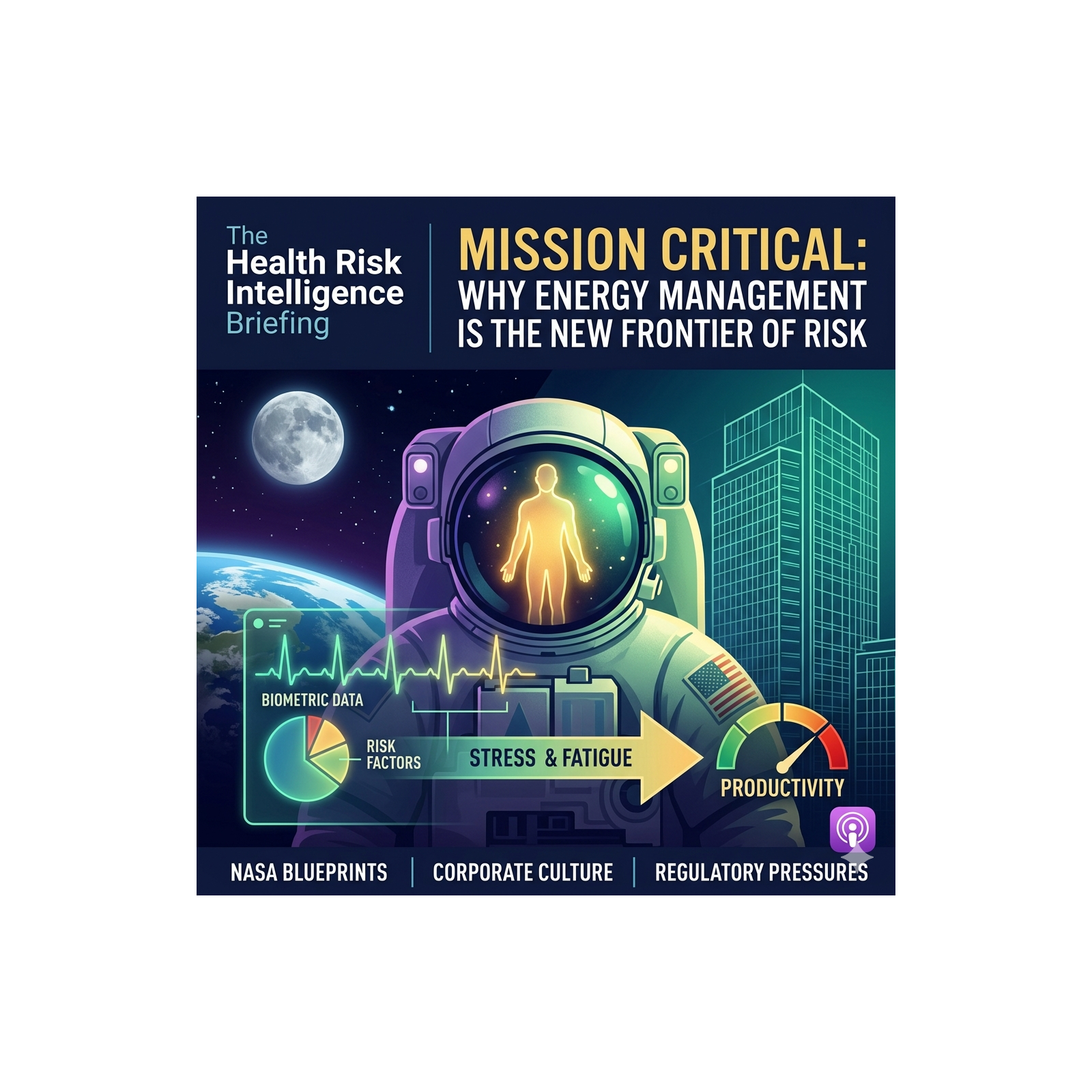
In this episode of The Health Risk Intelligence Briefing, we explore a startling shift in the modern workplace: UK employees have reached a 15-year high in sickness absence, with mental ill health and stress driving the majority of long-term leaves. While many organizations view "energy" as a soft wellbeing topic, we look to the extreme environments of NASA’s Artemis II mission to prove it is actually a mission-critical risk management function.We dive into the data-driven world of astronaut performance—where biology, circadian rhythms, and cognitive fatigue are measured in real-time to prevent catastrophic failure. By contrasting NASA’s proactive interventions with the "structural fault lines" of corporate culture, we identify why the UK is losing £150 billion annually to long-term health conditions and presenteeism.Key takeaways from this briefing include:The NASA Blueprint: How structured, non-pharmacological interventions like controlled lighting and workload design can reduce stress-related absence by up to 30%.The Financial Blind Spot: Why a £4.70 return on every £1 invested in wellbeing is being ignored by 43% of organizations lacking a standalone strategy.Operationalizing Energy: Practical steps for the C-Suite to move from reactive HR fixes to predictive energy risk audits and cross-functional accountability.Regulatory Pressures: Understanding the impact of the HSE’s 2025 focus on workplace mental health and the rising cost of permanent disability claims.Join us as we bridge the gap between deep-space survival and boardroom strategy, challenging leadership teams to stop treating human energy as an infinite resource and start treating it as a measurable risk.
Embed this episode
NOW PLAYING
Mission Critical: Why Energy Management is the New Frontier of Risk
No transcript for this episode yet
Similar Episodes
No similar episodes found.
Similar Podcasts
No similar podcasts found.