
EPISODE · Jan 23, 2026 · 23 MIN
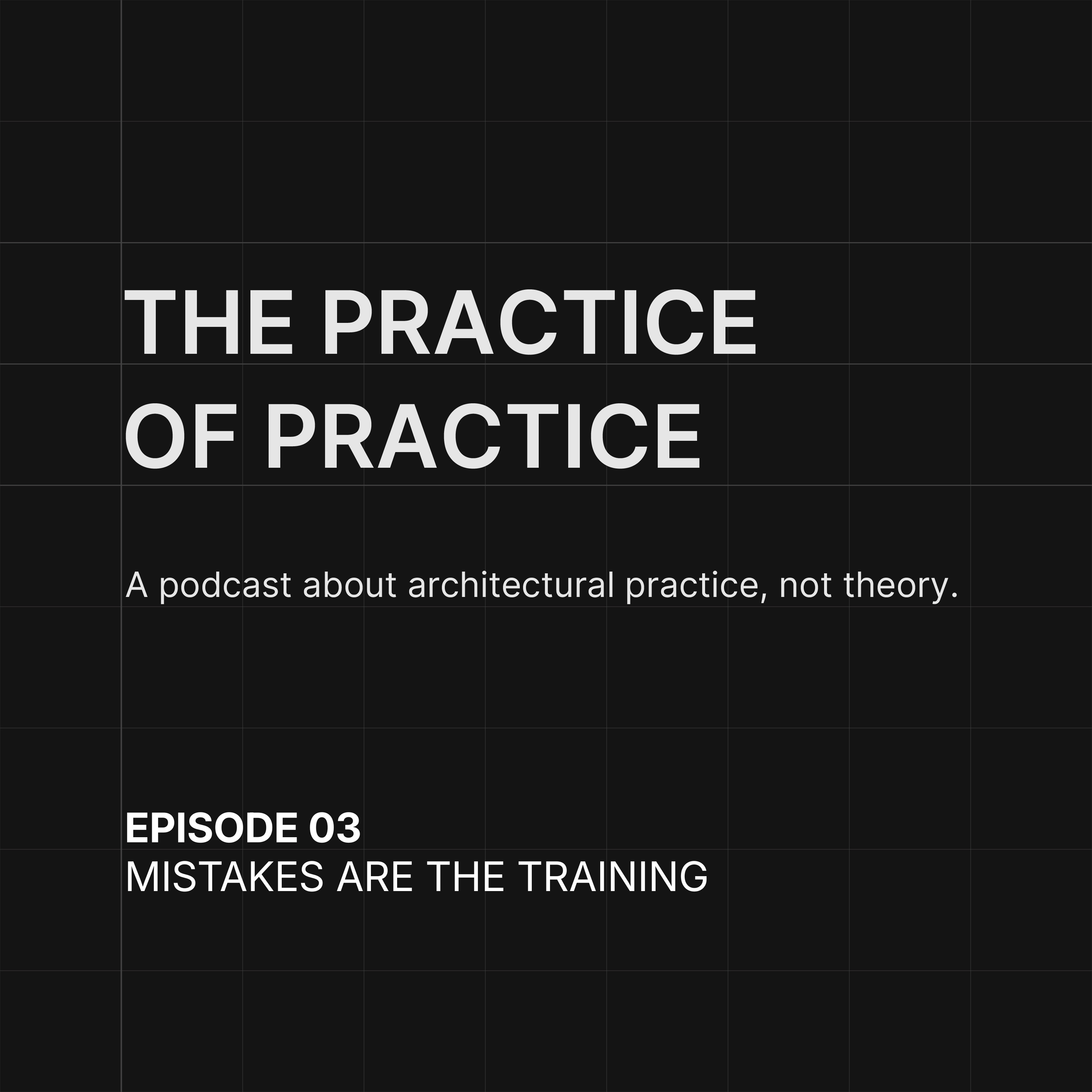
Mistakes Are the Training
from The Practice of Practice · host Taylor Woolf, AIA NCARB
Mistakes are normal in practice. Not dramatic mistakes. Not career-ending mistakes. The everyday ones that happen when work is moving fast and a lot of people are touching the same project.The hard part is that not all mistakes land the same way. Some get corrected with a calm email and a markup. Others change how people trust you, sometimes faster than you expect. The difference is rarely intelligence. It’s how early you surface it, how clearly you explain impact, and whether you close the loop without making it everyone else’s problem.In this episode, we reframe mistakes away from school-brain. Practice is not a test. It’s a risk system. Nobody needs you to be flawless. They need you to be correctable. That means catching issues early, naming assumptions, communicating changes that affect others, and adjusting your habits so the same miss does not repeat.We also talk about the mistake nobody plans for: fear. The fear of being wrong creates hesitation, silence, and delay. Those are the moves that quietly stall careers, not the occasional wrong tag. Finally, we introduce a simple tool to accelerate judgment: keep a running log of what you learn, good and bad, so you can borrow your own experience later instead of relearning it under pressure.In the next episode: we talk about judgment, what it actually is in practice, how it gets built quietly, and why it’s the real difference between being helpful and being trusted.Key TakeawaysNot all mistakes are equal.A typo is friction. A coordination miss creates ripples. A hidden issue becomes a trust event. Learn the category before you react.Practice is not grading you. It’s tracking risk.People are asking if your work is safe to build on: clear, coordinated, timely, and honest about what is assumed versus known.Correctable beats flawless.Flawless is slow and imaginary. Correctable is a professional skill: surface fast, clarify impact, fix cleanly, and prevent the repeat.Most coordination mistakes are really handoff mistakes.If your change affects someone else’s scope, flag it early. Staying quiet “to avoid bothering people” usually creates a bigger bother later.Judgment mistakes often start as unspoken assumptions.Naming the assumption early protects the project and protects trust. Unverified certainty is what gets people nervous.Trust is damaged more by surprises than errors.People can tolerate mistakes. They do not tolerate being surprised late because someone hid a risk or went quiet.Fear of being wrong creates the slow mistake.Hesitation and silence create delay and ambiguity. That risk often costs more than being wrong quickly and fixing it.Keep a running Lesson Log.Capture what happened, what you missed, the fix, and what you will do next time. If you write it down, you can borrow your own experience later.
What this episode covers
Mistakes are normal in practice. Not dramatic mistakes. Not career-ending mistakes. The everyday ones that happen when work is moving fast and a lot of people are touching the same project.The hard part is that not all mistakes land the same way. Some get corrected with a calm email and a markup. Others change how people trust you, sometimes faster than you expect. The difference is rarely intelligence. It’s how early you surface it, how clearly you explain impact, and whether you close the loop without making it everyone else’s problem.In this episode, we reframe mistakes away from school-brain. Practice is not a test. It’s a risk system. Nobody needs you to be flawless. They need you to be correctable. That means catching issues early, naming assumptions, communicating changes that affect others, and adjusting your habits so the same miss does not repeat.We also talk about the mistake nobody plans for: fear. The fear of being wrong creates hesitation, silence, and delay. Those are the moves that quietly stall careers, not the occasional wrong tag. Finally, we introduce a simple tool to accelerate judgment: keep a running log of what you learn, good and bad, so you can borrow your own experience later instead of relearning it under pressure.In the next episode: we talk about judgment, what it actually is in practice, how it gets built quietly, and why it’s the real difference between being helpful and being trusted.Key TakeawaysNot all mistakes are equal.A typo is friction. A coordination miss creates ripples. A hidden issue becomes a trust event. Learn the category before you react.Practice is not grading you. It’s tracking risk.People are asking if your work is safe to build on: clear, coordinated, timely, and honest about what is assumed versus known.Correctable beats flawless.Flawless is slow and imaginary. Correctable is a professional skill: surface fast, clarify impact, fix cleanly, and prevent the repeat.Most coordination mistakes are really handoff mistakes.If your change affects someone else’s scope, flag it early. Staying quiet “to avoid bothering people” usually creates a bigger bother later.Judgment mistakes often start as unspoken assumptions.Naming the assumption early protects the project and protects trust. Unverified certainty is what gets people nervous.Trust is damaged more by surprises than errors.People can tolerate mistakes. They do not tolerate being surprised late because someone hid a risk or went quiet.Fear of being wrong creates the slow mistake.Hesitation and silence create delay and ambiguity. That risk often costs more than being wrong quickly and fixing it.Keep a running Lesson Log.Capture what happened, what you missed, the fix, and what you will do next time. If you write it down, you can borrow your own experience later.
NOW PLAYING
Mistakes Are the Training
No transcript for this episode yet
Similar Episodes
Mar 26, 2026 ·1m
Mar 19, 2026 ·34m
Feb 18, 2026 ·11m
Feb 11, 2026 ·45m