Modern Art and Architecture in Morocco in the Aftershock of the 1960 Agadir Earthquake episode artwork

EPISODE · Apr 21, 2022 · 30 MIN

Modern Art and Architecture in Morocco in the Aftershock of the 1960 Agadir Earthquake

from Maghrib in Past & Present | Podcasts · host themaghribpodcast.com

Episode 140: Modern Art and Architecture in Morocco in the Aftershock of the 1960 Agadir Earthquake On February 29, 1960, an earthquake leveled much of the southern Moroccan coastal city of Agadir. Over the next decade, a new Agadir would be built in an avant-garde brutalist architectural style, representing a concrete example of Morocco’s newly independent future. And yet, this future is haunted by the trauma and violence of the past, by way of both the earthquake as well as colonialism. The literal and figurative aftershocks of the earthquake would go on to impact, in ways that are often obscured, various facets of life all around Morocco and beyond, especially with regards to visual and material culture. This raises the questions about the entanglements of human actors with non-human forces when it comes to histories of modernism, decolonization, and nation-building.   Riad Kherdeen studies global modern art and architecture, with a focus on the region of West Asia/Middle East and North Africa (MENA). He is working on a doctoral dissertation project on modernist art and architecture in Morocco related to the Agadir earthquake of 1960 titled “Spectral Modernisms: Decolonial Aesthetics and Haunting in the Aftershock of Morocco’s Agadir Earthquake (1960)." His interests fall within three main clusters of study: the first is in comparative and planetary modernisms via postcolonial studies and critical theory; the second is in the study of perception, including aesthetics, phenomenology, psychoanalytic theory, cognitive psychology, and neuroscience; and the third is in materialisms, ranging from the micro scale with technical studies of visual and material cultural production, including techniques, processes, technologies, and materials/conservation science, to the macro scale including Marxist/historical materialism, new materialism, ecocriticism, and systems theory. Riad holds a B.A. in Art History and a minor in Chemistry from New York University (2013) and an M.A. in the History of Art and Archaeology from the Institute of Fine Arts (2016). His M.A. thesis “Masdar City: Oriental City of the Twenty-First Century,” advised by Jean-Louis Cohen, looks at the urban design and architecture of Masdar City in the United Arab Emirates as a new iteration of the “Orientalized” city within a genealogy of recent urbanism in the Arab world, one that still succumbs to the imagined representations of the region created by European imperialism yet embraces those stereotypes to construct new narratives about its people and its nascent nation. Previously, Riad has held positions at the Museum of Modern Art, the Metropolitan Museum of Art, the Whitney Museum of American Art, and the Art Genome Project at Artsy.   This episode was recorded on November 19th, 2021 at the Tangier American Legation Institute for Moroccan Studies (TALIM).    Posted by Hayet Lansari, Librarian, Outreach Coordinator, Content Curator (CEMA).

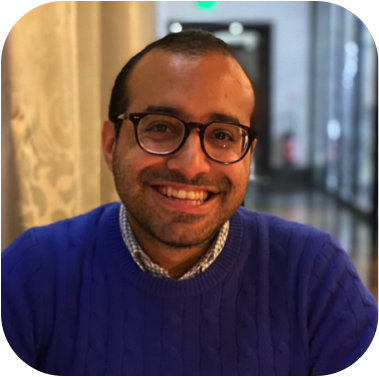
On February 29, 1960, an earthquake leveled much of the southern Moroccan coastal city of Agadir. Over the next decade, a new Agadir would be built in an avant-garde brutalist architectural style, representing a concrete example of Morocco’s newly independent future. And yet, this future is haunted by the trauma and violence of the past, by way of both the earthquake as well as colonialism. The literal and figurative aftershocks of the earthquake would go on to impact, in ways that are often obscured, various facets of life all around Morocco and beyond, especially with regards to visual and material culture. This raises the questions about the entanglements of human actors with non-human forces when it comes to histories of modernism, decolonization, and nation-building. Riad Kherdeen studies global modern art and architecture, with a focus on the region of West Asia/Middle East and North Africa (MENA). He is working on a doctoral dissertation project on modernist art and architecture in Morocco related to the Agadir earthquake of 1960 titled “Spectral Modernisms: Decolonial Aesthetics and Haunting in the Aftershock of Morocco’s Agadir Earthquake (1960).” His interests fall within three main clusters of study: the first is in comparative and planetary modernisms via postcolonial studies and critical theory; the second is in the study of perception, including aesthetics, phenomenology, psychoanalytic theory, cognitive psychology, and neuroscience; and the third is in materialisms, ranging from the micro scale with technical studies of visual and material cultural production, including techniques, processes, technologies, and materials/conservation science, to the macro scale including Marxist/historical materialism, new materialism, ecocriticism, and systems theory. Riad holds a B.A. in Art History and a minor in Chemistry from New York University (2013) and an M.A. in the History of Art and Archaeology from the Institute of Fine Arts (2016). His M.A. thesis “Masdar City: Oriental City of the Twenty-First Century,” advised by Jean-Louis Cohen, looks at the urban design and architecture of Masdar City in the United Arab Emirates as a new iteration of the “Orientalized” city within a genealogy of recent urbanism in the Arab world, one that still succumbs to the imagined representations of the region created by European imperialism yet embraces those stereotypes to construct new narratives about its people and its nascent nation. Previously, Riad has held positions at the Museum of Modern Art, the Metropolitan Museum of Art, the Whitney Museum of American Art, and the Art Genome Project at Artsy. This episode was recorded on November 19th, 2021 at the Tangier American Legation Institute for Moroccan Studies (TALIM).  Posted by Hayet Lansari, Librarian, Outreach Coordinator, Content Curator (CEMA).

NOW PLAYING

Modern Art and Architecture in Morocco in the Aftershock of the 1960 Agadir Earthquake

0:00 30:49

No transcript for this episode yet

We transcribe on demand. Request one and we'll notify you when it's ready — usually under 10 minutes.

MG Show MG Show The MG Show, hosted by Jeffrey Pedersen and Shannon Townsend, is a leading alternative media platform dedicated to uncovering the truth behind today’s most pressing political issues. Launched in 2019, the show has grown exponentially, offering unfiltered insights, comprehensive research, and real-time analysis. With a commitment to independent journalism and factual integrity, the MG Show empowers its audience with knowledge and encourages active participation in the political discourse. Eat to Live Jenna Fuhrman, Dr. Fuhrman Our health is our most precious gift and smart nutrition can change your life. Each month, join Dr. Fuhrman and his daughter, Jenna Fuhrman as they discuss important topics in the world of nutrition. Eat to Live will change the way you eat and think about food. French Your Way Jessica: Native French teacher founder of French Your Way Boost your French listening skills and test your comprehension with this one of a kind series of podcasts. Get the chance to listen to a real conversation between native speakers talking at normal speed AND customise your learning experience through carefully designed sets of questions (2 levels of difficulty) available for download at www.frenchvoicespodcast.com. All interviews also come with the transcript. French teacher Jessica interviews native speakers of French from around the world who share a bit of their life and passion. Where else would you meet in one same place a French yoga teacher based in Melbourne, a soap manufacturer from Provence, or a couple cycling around the world? XXX Tech by SOVRYN Dr. Brian Sovryn The crossroads between technology, sensuality, and metaphysics - and the longest running anarchist podcast in the world! Brought to you by Dr. Brian Sovryn.

Frequently Asked Questions

How long is this episode of Maghrib in Past & Present | Podcasts?

This episode is 30 minutes long.

When was this Maghrib in Past & Present | Podcasts episode published?

This episode was published on April 21, 2022.

What is this episode about?

Episode 140: Modern Art and Architecture in Morocco in the Aftershock of the 1960 Agadir Earthquake On February 29, 1960, an earthquake leveled much of the southern Moroccan coastal city of Agadir. Over the next decade, a new Agadir would...

Can I download this Maghrib in Past & Present | Podcasts episode?

Yes, you can download this episode by clicking the download button on the episode player, or subscribe to the podcast in your preferred podcast app for automatic downloads.
URL copied to clipboard!