
EPISODE · Sep 9, 2026 · 9 MIN
Monday Mourning
from Talking With Friends, Sharing the Load Podcast · host Joanna Piros
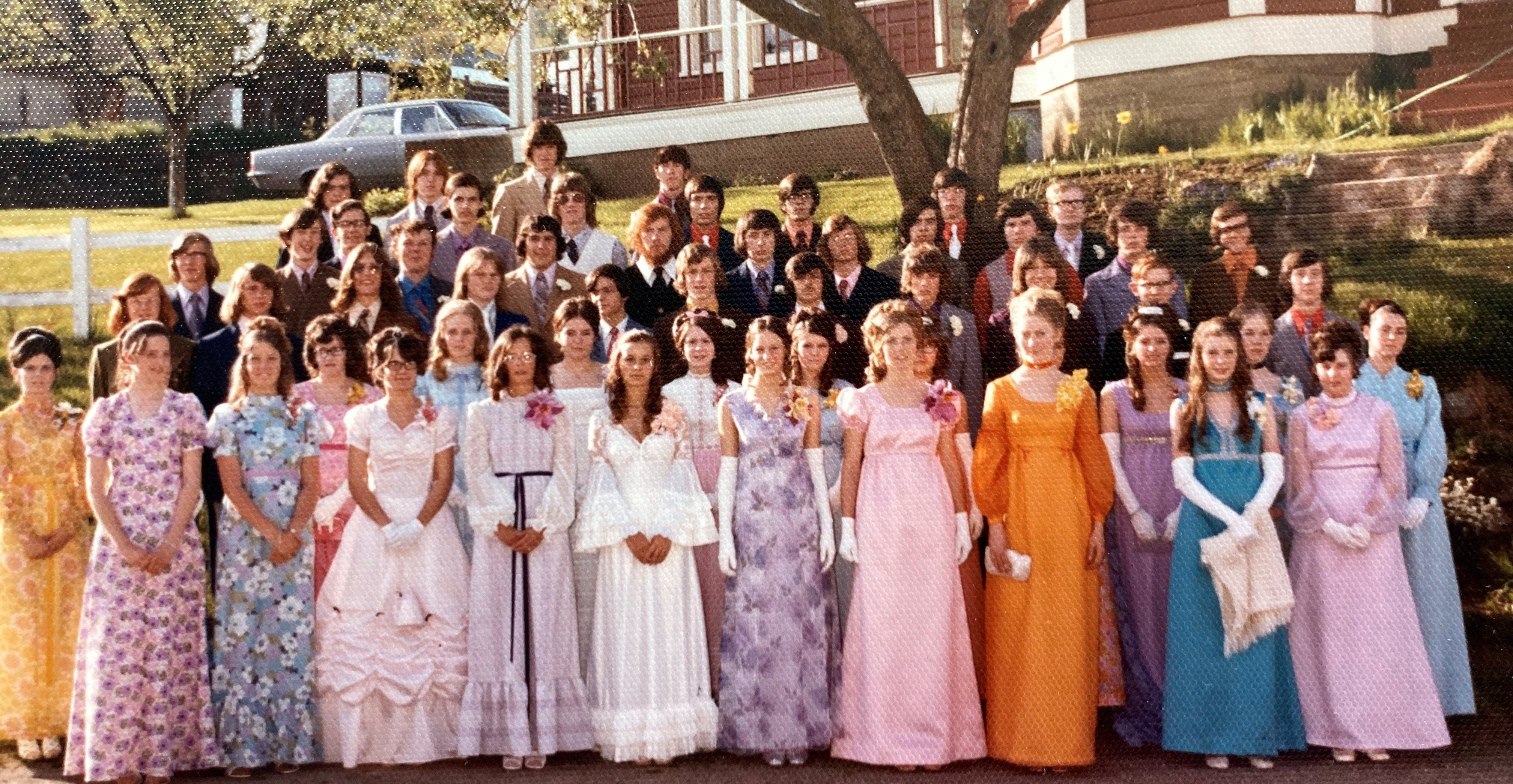
When someone you went to high school with dies, it doesn’t matter how close friends you were, or weren’t, or if you’ve kept in any kind of touch since then. When you hear of the death, years later, something in your present and future changes, because your past just did.Today I received a note telling me someone I had been in high school with, back in the 70s, had died during heart surgery and my first thought was, how does a teenager die in heart surgery? Crazy, yes, but because he was part of my teen years, and not my adult life, he’s never aged, changed, moved on. He was still 17 so far as I knew because I hadn’t seen anything to the contrary. Now I have, so now I can’t ignore the fact that he’s not 17 because he’s died, not in the 70s, but in his.High school deaths always conjure up premature, tragic and senseless loss. Freak accidents, motor vehicle carnage, suicide. There’s a cognitive disconnect between that concept, and the concept of age-related illness.People you knew in high school didn’t have to be close friends to be part of the landscape of those tectonic times. But that landscape shifts every time someone from those days is erased. So long as they were out there, their story was still unfinished — and so was mine. And if their future still holds possibility, so does mine, and yours.Although I ignorantly believed this was something only I had conjured up, plenty of others have trod these lino hallways in the name of science. In 1932, the psychologist Frederic Bartlett asked people to think about an old folk tale or story, and retell it many times over days and then weeks. What he found was a memory drift. With each retelling the stories began to conform to something the teller found made sense. This was the first scholarly look at how memory isn’t fixed, like a recording. He titled his experiments, War of the Ghosts which seems eerily apropos.Then, in 2000, Karim Nader and his team showed that when we try to remember something, that act makes the original memory unstable before it rewrites and reshelves it, and that is a bio-chemical process. It’s a little like pulling an old, much-loved book off the shelf, flipping through the pages and recognizing a few passages before putting it back. So, my remembering the schoolmates who have died, picturing them in the classrooms, hallways and on the playing fields of school, changes memories a little bit each time I “think back”.When a man who died at 71 is still 17 in my mind, it’s not a failure to update, it’s what my memory is designed to do: hold the last version I filed away, labelled “true”, until something forces a rewrite I didn’t choose.The more the past is whittled away, conforming to a more accurate present, the more conscious I am of how little time really is left. When you’re young, time is a linear construct, one year follows another but as you get older there are years, and then there are good years, and it’s the good, healthy, active years that are slipping away faster.Every death is a reminder of that infernal hourglass and its implacable contents and every death makes us sit up straighter and vow to make the most of the time we’ve been given but very quicky we forget those brave promises and allow quotidian reality to steer our days until they too become years and imperfect memories.Going way back with Joni Mitchell.Until next time, cherish your memories and book your flights. This is a public episode. If you'd like to discuss this with other subscribers or get access to bonus episodes, visit joannapiros.substack.com/subscribe
Embed this episode
Ready to play
Monday Mourning
No transcript for this episode yet
Similar Episodes
No similar episodes found.
Similar Podcasts
No similar podcasts found.