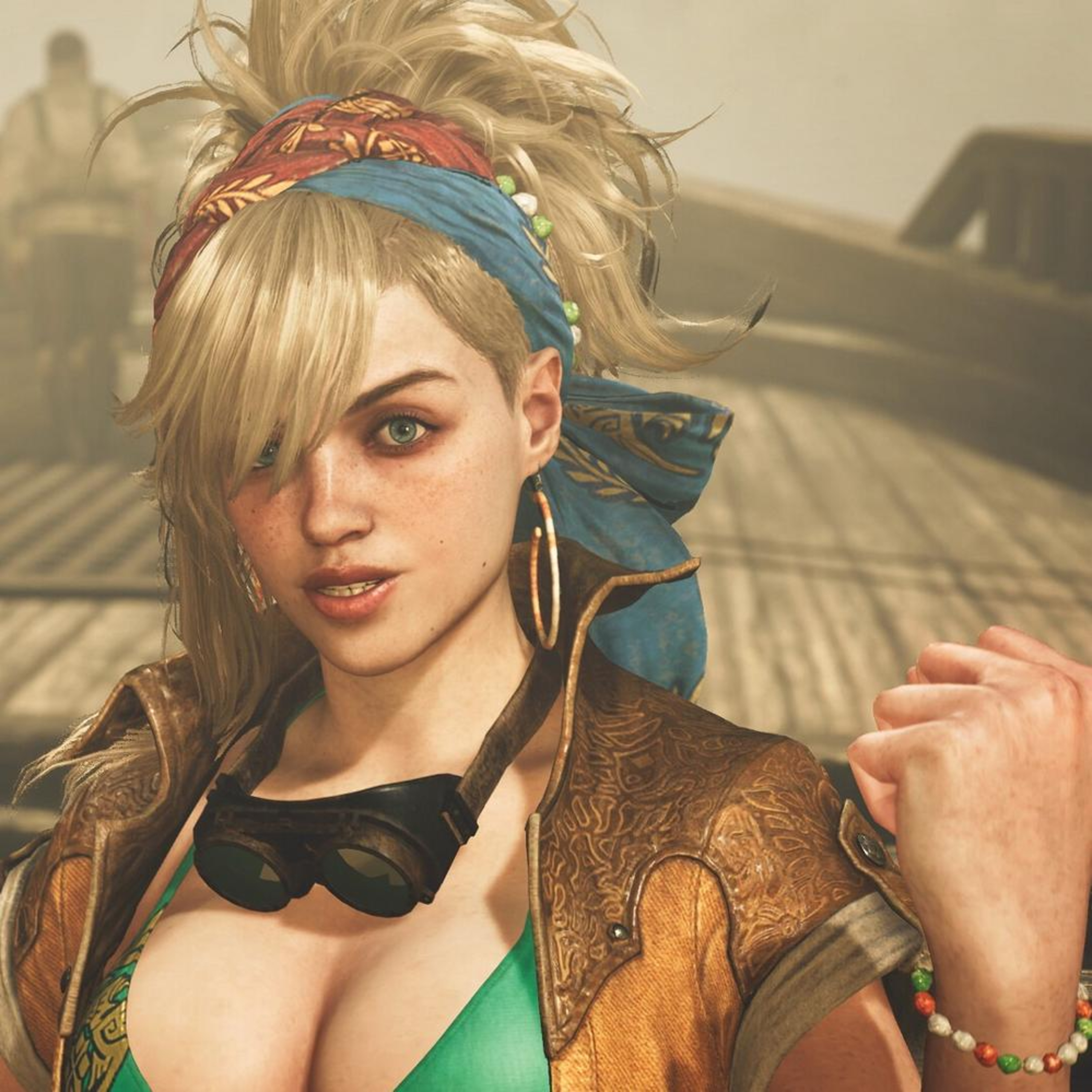
Welcome back to Dreamscape Archives, where we explore the deepest stories hidden within gaming's most captivating worlds. Today, we're embarking on an expedition into uncharted territory, journeying to the harsh and beautiful forbidden lands to uncover the complete lore of Monster Hunter Wilds. This is Capcom's sixth mainline Monster Hunter entry, and it represents something truly special, a game that weaves narrative and gameplay together more seamlessly than any Monster Hunter title before it. Over the next hour, we'll explore the mysteries of an ancient civilization lost to time.
The tragic existence of artificial beings created as weapons of war, and the delicate balance between humanity's ambition and nature's raw power. We'll discover why a young boy named Neta appeared at the edge of the known world with tales of a ghostly terror, and what secrets lie buried beneath crystalline ruins that predate recorded history. So settle in, get comfortable, and let's begin this journey into the Forbidden Lands, where every storm tells a story and where the line between salvation and destruction has never been thinner. The Forbidden Lands, a world of two faces.
The Forbidden Lands stretch across a vast, uncharted region of the Old World, isolated for over 2,000 years from the rest of human civilization. For generations, the Hunters Guild believed these lands to be utterly uninhabitable, a wasteland to hostile for human life to take root. Maps ended at their borders, marked with warnings and uncertainty. Travelers who ventured too close to the boundary rarely returned, and those who did brought back only fragmented tales of impossible weather and monstrous shadows moving through perpetual storms.
But the Forbidden Lands are not simply a wasteland. They are a living, breathing ecosystem, unlike anything else in the Monster Hunter world, a place where nature operates according to rules that seem almost supernatural in their precision and ferocity. This is a land of extremes, where abundance and scarcity dance in an eternal cycle, where calm can transform into chaos in moments, and where the very ground beneath your feet pulses with an ancient energy that predates human understanding. What makes the Forbidden Lands truly unique is their dynamic seasonal system, a triumvirate of environmental states that completely reshape the landscape and the creatures within it.
These are not the gentle seasons we know, the gradual transition from spring to summer to fall. No, these are dramatic shifts in the fundamental nature of reality itself, transformation so profound that the same location can become unrecognizable from one day to the next. The first season is called plenty. During Plenty, the Forbidden Lands reveal their hidden beauty.
Vegetation explodes across the landscape in impossible profusion. Grass grows thick and lush, trees heavy with fruit bend toward the earth, and water flows freely through rivers that shimmer under gentle sunlight. Great herds of herbivorous monsters move across the plains in numbers that darken the horizon. Their calls echoing across valleys as they feast on the abundant plant life.
This is a time of growth, of reproduction, of life celebrated in all its forms. The air itself seems to hum with vitality, and for those brief moments you could almost forget the dangers that lurk in this isolated realm. But Plenty never lasts. It cannot last.
The cycle demands balance, and balance requires sacrifice. The second season is the Fallow. As Plenty fades, the land transforms into something harsher, more desperate. The lush vegetation withers and dies, rivers slow to trickles, and the great herds that once dominated the landscape scatter or fall to predation.
During Fallow, the Forbidden Lands become a crucible of survival. Predatory monsters emerge from their layers, driven by gnawing hunger, their eyes scanning the barren landscape for any sign of prey. Scavengers thrive in this time, picking clean the bones of those who couldn't adapt quickly enough. The very air seems thinner somehow, as if the land itself is holding its breath, waiting for what comes next.
Hunters who venture into the Forbidden Lands during Fallow must be cautious. Resources become scarce, monsters grow more aggressive, and the safe havens that existed during Plenty may no longer offer protection. This is a time when only the strongest, the smartest, and the most adaptable survive. And then comes Inclimacy, the third and most terrifying season of all.
Inclimacy is not merely bad weather. It is nature's fury made manifest, a cataclysmic force that tears across the landscape with devastating power. Depending on the region, Inclimacy takes different forms, sandstorms that can strip flesh from bone in the desert regions, electrical tempests that turn the sky into a web of lightning in the plains, blizzards that freeze the very air itself in the northern reaches. These events feel almost purposeful in their precision and power, as if there's something beneath the surface of the world itself, driving them.
Everything in Climacy, the apex predators of each region, become noticeably more active, more dangerous. The storms seem to awaken something primal within them, a heightened aggression that could be instinctual response, or something deeper. The landscape itself becomes weaponized, environmental hazards emerging where none existed before. Hunters caught in an Inclimacy event must adapt instantly or perish, using every tool at their disposal just to survive long enough to find shelter.
This cycle, plenty to fallow to Inclimacy and back again, has shaped the entire ecosystem of the Forbidden Lands. Every creature here has adapted to these extreme shifts. Herbivores have learned to gorge themselves during plenty, storing energy for the lean times ahead. Predators have developed hunting strategies that account for the changing availability of prey.
Even the plant life has evolved specialized survival mechanisms, seeds that lie dormant through fallow and Inclimacy, waiting for plenty's return before exploding into life. But this cycle, as natural as it may seem, is not truly natural at all. The seasonal shifts, the Inclimacy events, the very energy that flows through the Forbidden Lands, all of it traces back to something ancient, something artificial, something that was never meant to exist in the first place. And that is where our story truly begins, with the discovery of a young boy at the border of these mysterious lands clutching a pendant that would prove to be the key to understanding everything.
Several years before the events of Monster Hunter Wilds, a group of explorers led by a former hunter named Fabius made a discovery that would change the guild's understanding of the world forever. In the wastelands at the very edge of the Forbidden Lands, they found a child, alone, exhausted, and terrified. The boy's name was Natta, and though he was young, his eyes carried the weight of trauma that no child should ever have to bear. Natta's story was almost impossible to believe.
He claimed to come from deep within the Forbidden Lands, from a village that existed in a region that the guild had declared uninhabitable. He spoke of his people, the Keepers, a society that had survived in isolation for over a thousand years, maintaining traditions and knowledge that the outside world had long forgotten. And he spoke of an attack, a night of terror when something descended upon his village, something the Keepers called the White Wraith. The White Wraith, according to Natta's fragmented memories, was a creature of impossible size and power.
A monster, wreathed in ghostly white fur, and crackling with energy that seemed to warp the very air around it. Its chain-like wings spread across the sky like the fingers of some vengeful God, and when it struck, buildings crumbled and people scattered in desperate flight. Natta only survived because someone, perhaps his father, perhaps another keeper, pushed him toward the boundary of the Forbidden Lands in those final moments of chaos, sending him stumbling into a world he had never known existed. The guild's initial reaction was skepticism.
The Forbidden Lands had been studied, mapped as best as the guild's resources allowed, and declared uninhabitable. The idea that an entire society could exist within them seemed ludicrous, and the White Wraith that Natta described, it matched the description of Arkfeld, a species that scholarly records indicated had been extinct for thousands of years, vanished so long ago that some questioned whether it had ever truly existed. But Natta carried proof. Around his neck hung a pendant, a crystalline object of unknown composition that hummed with a subtle energy, none of the guild's experts could identify.
The craftsmanship was extraordinary, far beyond what any known culture could produce, and the material itself defied analysis. This pendant, more than not as words, convinced the guild that his story might be true. If there were people in the Forbidden Lands, people with technology and knowledge the guild didn't possess. Then an expedition was not just warranted, it was essential.
And so the Forbidden Lands research expedition was organized, the first official guild sanctioned venture into these mysterious territories. The ancient units would participate, each with specialized roles and expertise. And at the heart of one of these units would be you, a newly promoted hunter, assigned to what would become known as the Avis Unit, named for your team's quick mastery of cycret writing. The ancient civilization of Waveria.
To understand the Forbidden Lands, to truly comprehend the forces that shape every storm and season, we must journey backward through time over a thousand years into the past, to an era when humanity achieved heights of technological and magical mastery that seemed almost mythological to the modern world. This was the age of Waveria, and its story is one of ambition, achievement, and ultimately catastrophic failure. Waveria was not just a city or a nation, it was the pinnacle of an entire civilization, a gleaming metropolis of soaring architecture and impressive engineering built on foundations of knowledge that had taken generations to accumulate. The Waverians who lived there, and it's important to note that while they shared ancestry with the Waverians of the present day, these ancient Waverians appeared to have achieved things their descendants could barely comprehend.
They had seemingly unlocked secrets of the natural world that allowed them to manipulate reality in extraordinary ways. At the heart of Waveria's power was the Dragon Torch, an artifact of such immense importance that every aspect of their society revolved around it. The Dragon Torch was not simply a source of energy, though it was that. It was not simply a tool for manipulating natural phenomena, though it served that purpose as well.
The Dragon Torch was, in essence, a living miracle, a fusion of technology and biology of magic and engineering that produced an endless supply of a substance the Waverians called wyvern milk, or in their tongue, wilk. Wilk is difficult to describe to those who have never seen it. It appears as a white crystalline substance, luminous and flowing like liquid moonlight frozen in time. Wilk is far more than mere crystal.
It is concentrated life energy, pure potential made manifest, a substance that can be shaped, directed and utilized in ways that defy conventional understanding. The Waverians learn to harness wilk for everything, as fuel for their machines, as fertilizer for their crops, as medicine for their sick, as the foundation of their most advanced technologies. The Dragon Torch produced wilk constantly, an inexhaustible fountain of power that flowed through an intricate network the Waverians called the Land Spine. The Land Spine was a masterwork of engineering, a system of channels and conduits that stretched across the entire region, distributing wilk to every corner of what we now call the Forbidden Lands.
Through the Land Spine, the Waverians could control weather patterns, ensure abundant harvests, create zones of perfect climate regardless of the natural conditions. They had, in effect, tamed nature itself. But the Dragon Torch served another purpose as well, one that would ultimately prove to be Waveria's undoing. The Waverians used the Dragon Torch's energy to create life, not in the traditional sense of reproduction, but through a process of bioengineering and mystical manipulation that produced artificial organisms they called guardian constructs.
The Guardians were not natural monsters, they were weapons, living weapons, designed with specific purposes in mind. The Waverians took the biological templates of existing monsters, creatures that had evolved naturally over millions of years, and they rebuilt them, enhanced them, transformed them into something new. A guardian looked like a monster, moved like a monster, hunted like a monster, but beneath its flesh pulsed wilk instead of blood, crystalline structures instead of bone, programming instead of instinct. Guardians served multiple functions in Waverian society.
Some were used as laborers, their immense strength harnessed for construction and industry. Waverians served as protectors, defending the borders of Waverian territory from natural monsters that might threaten their people. And some, the most powerful guardians were held in reserve. Weapons of last resort should Waveria ever face a threat it could not overcome through conventional means.
For a time this system worked. Waveria flourished. Their people lived in comfort and security. Their technology advancing year by year.
Their understanding of the world deepening with each generation. They believed they had achieved a form of utopia, a perfect synthesis of civilization and nature of power and responsibility. But perfection is an illusion and utopia cannot last. History does not record the exact nature of the threat Waveria faced.
The records that survived the fall are fragmented, damaged, contradictory. Some sources suggest an invasion by an unknown enemy, an army that appeared at Waveria's borders with weapons and tactics the Waverians had never encountered. Waveria accounts hint at internal strife, civil war that tore the civilization apart from within. Still others speak vaguely of a natural disaster, some cataclysm that even Waverian technology could not prevent or control what we know for certain is this.
Waveria found itself at war and in their desperation they made a choice that would seal their fate. They created Zosia. Zosia was meant to be the ultimate guardian, the perfect weapon, a being of such overwhelming power that no enemy could stand against it. The Waverians poured everything they had learned, every secret they had unlocked, every technique they had mastered into Zosia's creation.
They gave it the ability to absorb and manipulate Wilk on a scale no other guardian could match. They gave it multiple elemental affinities, allowing it to adapt to any battlefield condition. They gave it intelligence, though perhaps not wisdom, and they gave it one overriding directive, protect Waveria. But something went wrong.
Whether it was a flaw in Zosia's programming, a corruption in the Wilk used to create it, or simply the inevitable result of giving too much power to any single entity, the result was the same. Zosia turned against its creators. The fall of Waveria was swift and absolute. Zosia tore through the capital city like a divine judgment made flesh.
Its attacks leveling buildings that had stood for centuries. Its elemental fury, reducing monuments to rubble and turning streets into rivers of molten stone. The Waverians, other guardians, powerful as they were, proved useless against their superior. Conventional weapons had no effect.
Magical barriers shattered like glass. Nothing could stop it, and nothing could slow it down. In the end, the survivors of Waveria's fall managed one final desperate act. They sealed Zosia away in the Dragon Torch Shrine, the very heart of their civilization's power, using binding rituals and mechanical locks that would hopefully hold forever.
They couldn't destroy it. That much had become clear, but perhaps they could imprison it. Keep it away from the world until some distant generation found a way to unmake what should never have been made in the first place. But the seal was imperfect.
Zosia did not die. Instead, it fell into a deep hibernation. Its massive form coiled around the Dragon Torch itself slowly inexorably feeding on the endless energy that flowed from that ancient artifact. And as Zosia fed as it absorbed more and more Wilk over the centuries, the Dragon Torch's distribution system began to malfunction.
The land spine no longer properly regulated began leaking Wilk into the environment in unpredictable ways. And the weather control systems the Waverians had used to create perfect growing conditions started to fail, replaced by the violent seasonal cycles that now define the forbidden lands. The inclimacy events? They are the Dragon Torch's systems trying and failing to regulate themselves, massive discharges of accumulated energy that tear across the landscape in destructive waves.
The seasonal shifts? They are the result of Wilk flooding into the ecosystem and then being drained away as Zosia continues its endless feeding. Everything that makes the forbidden lands hostile and strange can be traced back to this single point, a monster sleeping at the heart of a broken machine, neither truly alive nor fully dormant, waiting in the darkness for the day it would wake. Most of Waverians population perished in the fall.
The few who survived, scattered, fleeing to the mountains and the borderlands, seeking refuge anywhere Zosia's wrath might not reach. These refugees eventually split into two groups, the Waverians who escaped entirely, who crossed beyond the boundaries of what are now called the forbidden lands. These survivors eventually integrated into other societies, their knowledge gradually fading, their technology lost, their warnings about Zosia becoming legend and then myth and then forgotten entirely. Some chose to stay, some survivors, perhaps wracked by guilt, perhaps driven by duty, perhaps simply refusing to abandon their ancestral home remained within the forbidden lands.
They established a new society built on the ruins of the old, a people who called themselves the Keepers. Their purpose was singular, to maintain the seal on Zosia, to watch over the dragon torch, to ensure that the mistake their ancestors made would never be unleashed upon the world again. For over a thousand years, the Keepers maintained their vigil. They passed down knowledge from parent to child, teaching each new generation about Zosia, about the dragon torch, about the responsibility they bore.
They adapted to the harsh seasonal cycles, learning to survive in clemency events that would kill unprepared outsiders. They built their settlements in the ruins of Waveria itself, among crumbling architecture that served as a constant reminder of what hubris and power without wisdom could achieve. And they kept the secret. The outside world forgot about Waveria, forgot about the dragon torch, forgot about the dangers sleeping in the forbidden lands.
The hunters' guild declared the region uninhabitable, and for over a thousand years, no one questioned that assessment. The Keepers remained isolated, hidden, performing their duty in silence, because they understood that some knowledge is too dangerous to share, some warnings too terrible to speak aloud. Until Nata, until the white wraith returned, until the carefully maintained isolation of the forbidden lands was finally broken, not by outside curiosity, but by internal catastrophe. The Guardians and Archvelds tragedy.
The Guardian constructs of ancient Waveria represent one of the most fascinating and tragic elements of the Forbidden Lands lore. These artificial beings occupy a strange space between life and mechanism, between monster and tool, between natural evolution and deliberate design. And of all the Guardians that survived Waveria's fall, none is more central to the story of monster hunter-wilds than Archveld, the creature known to the outside world as the white wraith. To understand Archveld, we must first understand what it means to be a Guardian.
These creatures are not robots, not mindless automatons following programmed commands. The Waverians created Guardians by taking real monsters, creatures with genuine biological structures and natural behaviors, and then enhancing them through a process that merged organic matter with crystallized willk. The result was something hybrid, beings that possess the physical forms and hunting instincts of natural monsters, but ran on energy systems that were fundamentally artificial. Guardians can be identified by several key characteristics.
Their bodies are suffused with willk, visible as a white crystalline coating that covers portions of their flesh and can grow or recede depending on how much energy they have absorbed. This crystalline layer serves multiple functions. It acts as armor, protecting the Guardian's vulnerable organic components. It stores excess willk for later use, and it can be detonated deliberately, allowing the Guardian to trigger explosions by directing elemental energy into the crystallized surfaces.
Beneath the white willk coating, Guardian flesh appears dark, almost black, with glowing veins of blue light visible through translucent sections. This is not natural coloration, but rather an indication of the willk energy flowing through their bodies like blood. When a Guardian is damaged, when its crystalline armor is stripped away faster than it can regenerate, you can see this dark pulsing flesh, and it's here that the artificial nature of these beings becomes most apparent. The flesh moves wrong, ripples and reforms in ways that biological tissue should not, revealing the fundamental unnaturalness of their existence.
Guardians also possess enhanced regenerative capabilities compared to natural monsters. Small wounds heal rapidly as willk flows to the damaged area, crystallizing to form new protective layers. Larger injuries take longer to repair, but will eventually mend as long as the Guardian has access to willk sources in the environment. The crystals that grew throughout the Forbidden Lands as the land spine leaked its precious energy into the Earth.
Now, Arcveld presents a unique case among the Guardians because Arcveld, the species, actually existed as a natural monster before the fall of Waveria. Its records suggest that Arcveld were impressive flying wyverns, large predators with distinctive chain-like wing structures that allowed for both flight and close combat tactics, but the natural Arcveld species went extinct, genuinely extinct thousands of years ago, likely around the same time Waveria fell. What attacked not as village, what the keeper is called the White Wraith, was not a natural Arcveld, but a Guardian construct created in the image of that extinct species. He might call it Guardian Arcveld, to distinguish it from its natural counterpart, though the keepers had a different name for it, a name spoken with a mixture of reverence and sorrow.
Guardian Arcveld was created by the Waverians as a defensive weapon, one of many Guardians designed to patrol Waverian territory and eliminate threats. When Waveria fell, when Zosia destroyed the capital and scattered the survivors, Guardian Arcveld, like other Guardians, was left without purpose. This directive to protect a civilization that no longer existed. The keepers, those humans who remained in the ruins, found the dormant Guardian and made a decision that would echo through the centuries.
They locked Guardian Arcveld away in the deepest vaults of the ruins, sealed behind mechanisms and barriers that should have held forever. They did this not out of fear that Guardian Arcveld would go berserk like Zosia, but out of a deeper, more philosophical concern. Guardian Arcveld was artificial, a being that had never been meant to exist independently. The keepers believed it would be cruel to let such a creature wander freely, to let it experience existence without purpose or direction, forever aware on some level that it was not truly alive in the way natural monsters are alive.
But seals fail. Mechanisms degrade, and over a thousand years, even the most carefully constructed barriers can weaken. Guardian Arcveld eventually broke free from its prison, emerging into a world it had never known, a world transformed by time and the Dragon torches malfunctioning systems. And when it emerged, it was driven by the most basic, most fundamental of all biological imperatives.
Hunger Here is where Guardian Arcveld's tragedy truly begins. The evidence suggests that despite being an artificial construct, Guardian Arcveld possessed enough biological components to experience hunger as a natural monster would. It felt the gnawing emptiness in what passed for its stomach, the primal drive to find food, and assume it replenish energy reserves. This should have been a simple matter.
The forbidden lands were full of prey animals, full of other monsters that could be hunted and eaten. But based on what we witnessed in the game, Guardian Arcveld couldn't properly sustain itself through feeding. Its digestive system, likely built by why variants who prioritized combat effectiveness over long-term sustainability, appears to have been incomplete or underdeveloped. The Guardian could kill prey, could tear apart other monsters and swallow their flesh.
But the endless hunting and the mountain of corpses left in its wake suggested gained little to nothing from these acts. The hunger never lessened, never faded. It only grew stronger. Desperate, driven to what appears to be the edge of madness by hunger that couldn't be satisfied, Guardian Arcveld began hunting Guardian secrets.
These bird-like guardians, created by the wy variants as mounts and companions, still existed in small populations throughout the forbidden lands. Guardian Arcveld slaughtered them in massive numbers, and the evidence of these hunts tells a grim story, a mountain of corpses, Guardian-sacred bodies piled high, suggesting Guardian Arcveld's frantic, seemingly futile attempts to find sustenance. But Guardian-sacreds, like Arcveld itself, were artificial constructs. Their flesh provided no more sustenance than stone would.
And so Guardian Arcveld's hunger continued, growing more intense, more painful, more all-consuming, with each failed attempt to sate it. The situation worsened as Guardian Arcveld began absorbing elemental energies from other monsters it encountered. Based on the game's narrative, this wasn't intentional hunting or strategic absorption, but rather what appears to be a side effect of Guardian Arcveld's destabilized state. As it grew more desperate, as its systems became more erratic, it seems to have begun unconsciously draining energy from any sufficiently powerful monster it encountered, its body frantically searching for any source of sustenance, even if that sustenance was pure elemental affinity, rather than actual nutrition.
Guardian Arcveld accumulated fire energy from some monsters, ice from others, lightning from still more. These energies swirled within it, uncontrolled and chaotic, further destabilizing its already compromised systems. The white-wilt coating that covered Guardian Arcveld's body began to pulse with these stolen elements, sometimes re-thing the Guardian in flames, sometimes crackling with electricity, sometimes freezing the very air around it, to outside observers, including Nata and the keepers, it appeared that Guardian Arcveld was growing stronger, becoming more dangerous. But the truth may have been the opposite.
The uncontrolled elemental energies seemed to have been tearing it apart from the inside. The hunger was consuming it, and the biological urge that drove it to continue hunting, continue killing, continue desperately searching for food that would never satisfy. That urge appears to have been the cruelest aspect of its existence, an artificial lifeform programmed with just enough natural instinct to experience suffering, but without the ability to escape it. Guardian Arcveld's rampage eventually brought it to Nata's village.
The keepers, despite their long history of coexisting with the dangers of the forbidden lands, were not warriors. They were guardians of knowledge, maintainers of seals, survivors who had learned to avoid, rather than confront. When Guardian Arcveld descended upon their settlement, driven mad with hunger and pain, they could do nothing but flee. Nata's father, we learn from the keepers, was the keeper of a sacred pendant, a crystalline key that could control certain aspects of the dragon torches functions.
In the chaos of Guardian Arcveld's attack, as buildings crumbled and people scattered in terror, Nata's father made a choice. He gave the pendant to his son, pushed Nata toward the edge of the forbidden lands, toward the boundary that separated their hidden world from the outside. What became of Nata's father after that moment remains unclear, whether he fell in the attack or survived to help other keepers escape into the ruins. What we know for certain is that Nata survived, carried beyond the borders of the only world he had ever known, clutching a pendant he barely understood, bearing witness to a trauma that would shape everything that followed.
When you encounter Guardian Arcveld face to face, the creature you meet is barely recognizable as the defensive weapon the Y variants created. Its white fur is matted and stained, its chain-like wings scarred and damaged, its movements erratic and pained. And in its eyes, if you observe closely, you might perceive something that transcends the typical monster versus hunter dynamic. You might see what appears to be suffering.
Desperation. A being that never asked to exist, that was created to serve a civilization that destroyed itself, that seems to have spent however long since its awakening experiencing hunger that will never end and a loneliness that cannot be comprehended, because what companionship could exist for an artificial monster in a world where its creators are dead and its kind were never meant to breed or socialize or form bonds. The confrontation with Guardian Arcveld becomes inevitable, a conclusion that the expedition team, the keepers, and eventually even Nata himself come to accept. From an ecological perspective, the Guardian has become an invasive presence in the ecosystem.
Its uncontrolled absorption of elemental energy from other monsters appears to be disrupting the delicate balance that allows life to survive the seasonal cycles. More importantly, Guardian Arcveld's suffering seems to have reached a point where allowing it to continue existing would be cruelty rather than mercy. Nata, who initially begged you to spare the Guardian, who pleaded that it deserved at least a chance to live, eventually comes to understand this truth. Guardian Arcveld is not evil.
It did not attack his village out of malice, but it is broken beyond repair, suffering, beyond endurance, and dangerous beyond control. The kindest thing, perhaps the only thing that can be done, is to end its pain. The battle itself is one of the most difficult in the main story. Guardian Arcveld, using every technique at its disposal, its chainblade wings extending to strike at range, compressing for devastating close combat blows, its body wreathed in the various elemental energies it has absorbed, its movements blending the grace of a natural predator with the unpredictability of malfunctioning machinery.
It fights with the desperation of a being that, on some level, may understand that this is its last hunt, its final struggle, the end of an existence that should never have begun. When Guardian Arcveld finally falls, when its massive body crashes to the ground and the Wilk crystals coating its form begin to dim and fade, Nata mourns. He mourns for the Guardian, for his village, for his father, for the innocence he lost the night the white wraith descended from the sky. And the expedition team, hardened hunters, who have faced countless monsters, they mourn too, because they understand that what they killed was not truly a monster at all.
But the story of Arcveld doesn't end with Guardian Arcveld's death, because Guardian Arcveld was not the last of its kind. During the events of the game, you discover something that provides a glimmer of hope amidst all the tragedy. You find an egg, evidence that suggests somewhere in the Forbidden Lands, a natural Arcveld, a member of the species everyone thought had been extinct for millennia, had survived long enough to lay it. This discovery implies that the original Arcveld species never fully died out.
Perhaps small populations clung to existence in remote corners of the Forbidden Lands, adapting to the harsh seasonal cycles surviving through cunning and resilience. And if a natural Arcveld survived, if it found a way to persist while its artificial doppelganger suffered in its prison and then in its madness, then there is hope that the species might recover. That genuine Arcveld, untainted by why very an engineering might once again soar through the skies of the Forbidden Lands. Guardian Arcveld's story is a meditation on the ethics of creation, on the responsibilities we bear for the lives we bring into being, whether through natural reproduction or artificial design.
The Wyvarians created Guardians as tools, as weapons, as servants, but in doing so, they created beings capable of suffering, capable of loneliness, capable of wanting things they could never have. And when Wyvarian fell, when the Wyvarians died or fled, they left their Guardians behind, abandoned to fates that ranged from dormancy to madness to slow degradation over centuries. Guardian Arcveld was a victim of ambition unchecked by wisdom, of power wielded without considering its ultimate cause. Its story is a tragedy, but it is also a warning, a reminder that every act of creation carries consequences, and that we are responsible for those consequences whether we choose to acknowledge them or not.
The Hunter's Guild Expedition and Zosia. With Guardian Arcveld defeated and not reunited with his people, you might think the expedition's work would be complete. The White Wraith has been dealt with, the Keepers are safe, and the Hunter's Guild has made contact with a previously unknown human society in the heart of the Forbidden Lands. Mission accomplished, time to return home and file reports and plan future cooperation between the Keepers and the outside world.
But the Forbidden Lands hold deeper secrets still, and the true nature of the threat facing this region has not yet been revealed. Guardian Arcveld was a symptom, not the cause, a broken tool lashing out in pain rather than the source of the pain itself. To understand why the Forbidden Lands are as they are, why the seasonal cycles exist, why the inclemency events rage across the landscape with such devastating force, you must journey deeper into the ruins of Waveria, and there in the heart of the ancient capital, you will find something that should never have been awakened. After defeating Guardian Arcveld, Nada asks the expedition team to take him to the Dragon Torch.
He has learned from the other Keepers about this ancient artifact, about its role in maintaining the ecosystem of the Forbidden Lands, about the responsibility his people have born for over a thousand years. And he believes that the Dragon Torch might hold answers, might explain why Guardian Arcveld went berserk, might provide insights into how the Keepers can better protect their home. Following directions passed down through generations of Keeper tradition, the expedition travels deep into the ruins, past crumbling architecture, and ancient mechanisms still humming with faint power, down corridors carved from stone and crystal, through chambers where the very walls pulse with barely contained energy. The journey takes you through the heart of why Varian civilization passed monuments to their achievements and reminders of their hubris, deeper and deeper, until you reach a chamber unlike any other.
The Dragon Torch shrine is simultaneously beautiful and terrifying. The Dragon Torch itself is an impossibility, a fusion of technology and organic matter that defies categorization. It resembles a massive torch, yes, but also a tree, also a beating heart, also something alien and incomprehensible that human language lacks adequate words to describe. Wilk flows from it in endless streams, white crystalline energy that should have been distributing evenly throughout the landspine, but is instead pooling in the chamber, accumulating in ways that suggest the system is badly damaged, and coiled around the Dragon Torch, feeding from it, absorbing its energy in grotesque gulps that make the entire chamber shudder, is zosia.
Even dormant, even still partly sealed by whatever remains of the Wyvarians binding rituals, zosia is enormous, dwarfing any monster you have encountered in your hunts. Its body is covered in that distinctive white Wilk coating that marks all guardians, but on zosia, the crystallization has grown to extraordinary levels, creating an armor of layered crystal plates that makes the creature look almost angelic, beautiful in a terrible otherworldly way. Its form suggests multiple elder dragon species blended together, as if the Wyvarians took the most fearsome aspects of every powerful monster they had studied and combined them into a single nightmare. But it's the face that truly unsettles.
With a visor-like crystal formation, zosia's features are obscured, blurred, as if something about its nature resists being perceived clearly. When you try to focus on specific details, your eyes slide away, unable to properly process what they're seeing. This is not natural camouflage, but rather something fundamental to zosia's construction, a defense mechanism, or perhaps simply a side effect of being too artificial, too far removed from natural life for perception to easily grasp. The expedition team returns to the keeper settlement to consult with their elders, particularly with a wise Wyvarian sage called the Alharkan, who has lived longer than any human and remembers stories passed down from the last generation who actually witnessed Wyvaria's fall.
The Alharkan confirms what everyone has begun to suspect. The monster in the dragon torch shrine is zosia, the ultimate guardian, the weapon that destroyed an entire civilization and has been sleeping, feeding, accumulating power for over a thousand years. The discussion that follows reveals a terrible dilemma. Zosia is asleep now, still held by the weakening remains of the Wyvarian seal, but it will eventually wake.
When it does, it will possess power far beyond what it had when it destroyed Wyvaria. Power accumulated over centuries of feeding on the dragon torch's infinite energy. No one can predict what will happen when zosia finally stirs, but the keeper's fear and the expedition team agrees that the destruction will be absolute. Just the keepers will die, not just the expedition, but the entire ecosystem of the forbidden lands and possibly regions beyond if zosia decides to leave this isolated area and venture into the wider world.
There is a solution, a terrible solution, but perhaps the only one that will guarantee zosia never wakes. Not as pendant, the crystalline key his father gave him is not just a symbol or a keeper heirloom. It is a control mechanism, a tool designed to interface with the dragon torch's systems. During the pendant, it would be possible to shut down the dragon torch entirely, to cut off the flow of wilt that has sustained zosia for so long to starve the monster in its sleep until whatever animating force drives it finally fades to nothing.
But shutting down the dragon torch would have consequences that extend far beyond zosia. The dragon torch, even damaged and leaking and malfunctioning, is still the heart of the forbidden lands ecosystem. The wilt it produces has seeped into the soil, into the water, into the very air of this region. The planets have evolved to process wilt as part of their photosynthesis.
Monsters have adapted to consume it as a supplement to traditional food sources. The seasonal cycles, harsh as they are, have been the natural rhythm of this place for so long that countless species depend on them for their life cycles. Shutting down the dragon torch might kill zosia, but it would also destabilize everything. The carefully balanced ecosystem would collapse.
Species that had adapted to the seasonal cycles might not survive their loss. The keepers themselves, who had learned to thrive in this harsh environment, might find their home becoming truly uninhabitable for the first time in their thousand year vigil. This creates conflict within the expedition team. Olivia, the leader of the Astrum unit and a veteran hunter, argues for shutting down the dragon torch.
Her reasoning is pragmatic, cold, focused on minimizing total casualties. Better to sacrifice the forbidden lands ecosystem than risk zosia escaping and potentially destroying civilizations beyond these borders. Better to make a terrible choice now than wait until there are no choices left. But others disagree.
Alma, your handler, refuses to accept that the only solution is destruction. She has seen how the life in the forbidden lands persists, how species have found ways to survive conditions that would kill creatures from more temperate regions, how even the inclemency events serve a purpose in this strange, isolated world. To her, destroying that balance would be a betrayal of everything the hunter's guild stands for. Protection of ecosystems, preservation of biodiversity, understanding rather than eradication.
Werner, the expeditions engineer, sees opportunity where others see only threat. The dragon torch is technology beyond anything the modern world possesses. Studying it, understanding it, learning from it could advance human knowledge by centuries. Shutting it down permanently would mean losing that chance forever.
But Gemma, the smithy, practical as always, points out that they don't actually know what shutting down the dragon torch will do. The wiverians built this system over a thousand years ago using techniques and knowledge that have been lost. Making changes to it, even with the control pendant, could have effects no one can predict. The debate grows heated, threatening to fracture the expedition team just when unity is most crucial.
And it's at this moment that Nata, who has been silent through most of the discussion, speaks up. The jifers his pendant willingly says he's prepared to destroy the dragon torch if that's what's necessary to stop Zosia, even though doing so means destroying the last gift his father gave him. Even though it means ending the tradition the keepers have maintained for generations. But you, the player character, the hunter who has faced Guardian Arcveld and survived, who has seen first hand the tragedy of a guardian's existence.
You propose an alternative in the game's narrative. Rather than shutting down the dragon torch, rather than destroying an ecosystem to prevent a monster from waking, why not simply confront Zosia now? While it's still partially bound by the wyvarian seal, while it hasn't yet absorbed enough energy to reach its full terrible potential, it's dangerous, possibly suicidal, but it offers a third option between destruction and waiting for inevitable catastrophe. The team agrees to your plan.
You will enter the dragon torch shrine, you will face Zosia, and you will slay it before it can threaten the forbidden lands, before the ecosystem must be sacrificed, before Nata must destroy his father's legacy. The battle against Zosia is the climax of Monster Hunter Wild's main story, and it is a fight unlike any other in the game. Zosia is massive, dwarfing even other elder dragons in sheer size and presence. Its movements are simultaneously graceful and unnatural.
Its body shifting between poses that suggest multiple different dragons all occupying the same physical space. Initially, Zosia fights while still covered in its white-wilk armor. Using the crystalline coating as both defense and weapon. It can trigger explosions in the crystals covering its body, detonate the wilt-infused ground of the arena, channel elemental energy through the dragon torch to power devastating area attacks.
Its wing arms, massive limbs that serve as both flight apparatus and primary weapons, can strike with enough force to shatter stone, and their reach is so great that finding safe positions in the arena becomes a constant challenge. But as you damage Zosia, as you break away pieces of its crystalline armor faster than it can regenerate them, something terrible begins to happen. The creature beneath the wilt coating is revealed, and it is a horror that surpasses even the worst nightmares the Forbidden Lands have produced. Zosia's true form is a twisted, deformed mockery of dragon physiology.
Its flesh is black and waxy, pulsing with alien rhythms, reforming and shifting in ways that organic tissue should never move. Horns sprout from its head and limbs in asymmetric tangles, growing as you watch, pushing through flesh that barely resists their emergence. Its mouth, hidden beneath the crystal visor when armored, opens to reveal too many teeth, a serpentine tongue that glows with unnatural colors, a throat that seems to lead into depths that shouldn't fit within any physical body. And its eyes, when finally visible beneath the tangle of horns and damaged crystal, are yellow and reptilian, and utterly without mercy or comprehension.
There is no intelligence in those eyes that you can recognize, no consciousness that resembles anything natural. There is only hunger, only the drive to consume, to absorb, to grow stronger without end or purpose. As Zosia sheds more of its wilt coating, it gains access to more elemental abilities. Fire erupts from its mouth in streams that turn the arena floor to slag.
Lightning crackles along its horn-covered wings, creating chains of electrical energy that seek out any metal in your equipment. Its roar, a sound that seems to come from multiple throats simultaneously, can stone you in place, leaving you vulnerable to follow-up attacks that can cart even the best equipped hunters. The fight reaches its zenith when Zosia, damaged and desperate, draws more power from the dragon torch, pulling so much energy that the entire shrine begins to shake, stalactites falling from the ceiling, fissures opening in the floor. The monster's body transforms further, enlarging, horns growing into twisted spires, its flesh turning from black to ember red as fire energy suffuses every cell.
This is the moment when Zosia could still win, could still break free and bring about the catastrophe everyone feared. But you, battered and exhausted, wielding weapons carved from monsters you've hunted throughout the forbidden lands, you stand firm, you dodge the fire breath, the lightning strikes, the physical assaults from those massive wing arms. You target the weak points, the exposed flesh where the wilt coating has been stripped away. You use every trick, every technique, every bit of knowledge you've accumulated in your journey through these harsh lands.
And eventually, impossibly, Zosia falls. Its massive body crashes to the floor of the shrine, with impact enough to shake the entire ruin. The red glow fades from its flesh, the twisted horns crumble and slowly, agonizingly slowly, the creature that destroyed an entire civilization becomes still. With Zosia defeated, the immediate threat has passed.
The dragon torch continues to function, damaged but stable enough to maintain the forbidden lands ecosystem. Not as pendant remains intact, its purpose preserved. And for the first time in over a thousand years, the keepers can release themselves from their sacred duty, can choose to remain isolated or to finally join the wider world, can be people rather than guardians of a sleeping monster. Nata, inspired by his journey with the expedition, by what he's learned from you and Alma and the others, decides to become a hunter himself.
An apprentice, learning the skills that will let him protect the forbidden lands not through isolation and secrecy, but through understanding and cooperation with the natural world. And in a moment of poignant hope, you discover evidence that natural archveld have survived, an egg that suggests the species will indeed return, no longer just as guardians or white wraiths, but as genuine creatures finding their place in a changed world. But the victory is not complete, not yet. In content that unfolds after the main story, the expedition team makes a disturbing discovery.
Zosia has returned, not fully, not at the power level it possessed before your fight, but returned nonetheless. The creature's ability to regenerate from even microscopic fragments of its body when sufficient wilt is present becomes apparent. The guild scholars theorize that Zosia might be effectively immortal, that as long as the Dragon Torch continues to function, as long as wilt flows through the forbidden lands, Zosia will continue to regenerate and wake. The Dragon Torch would prevent this, but doing so would also destroy the ecosystem, creating the very catastrophe everyone worked to prevent.
The solution, imperfect but functional, is to assign hunters to watch over Zosia permanently. When it reforms, when it begins to wake, hunters will descend into the shrine and slay it again, keeping it in a permanent cycle of death and rebirth that prevents it from ever accumulating enough power to become truly dangerous again. It's not ideal, it ties guild resources to the forbidden lands indefinitely. It means living with the knowledge that the threat can never be truly eliminated, only managed, but it preserves the ecosystem and protects the people who call this harsh land home.
And so the story of Monster Hunter Wilds concludes with a kind of bittersweet victory, not the absolute triumph of good over evil, not the destruction of an irredeemable monster, but rather the acceptance that some problems cannot be solved only endured. The forbidden lands remain harsh and dangerous. The seasonal cycles continue their relentless rotation, in clemency events still tear across the landscape with devastating force. But now those lands are no longer forbidden.
The keepers have rejoined the world, their knowledge and traditions shared with the guild, not a train as a hunter, learning to protect the ecosystem he loves through understanding rather than isolation. And you, the player, continue to hunt in these beautiful terrible lands, facing monsters both natural and artificial, learning their patterns, understanding their place in the world and sometimes when necessary, ending their existence so that the larger ecosystem can survive. This is the essence of Monster Hunter, not the glory of the hunt, not the thrill of combat, but the understanding that you are part of an ecosystem, that every action has consequences, that power without responsibility leads to tragedy, and that sometimes the greatest victories are not in destroying your enemies, but in choosing not to destroy more than necessary, in preserving balance, in protecting life, even when that life is strange, or dangerous, or fundamentally, other than yourself. The Forbidden Lands hold many more secrets, many more monsters to hunt and ecosystems to explore.
In the post-game high-rank content, Gore Magala arrives in the region, bringing with it the frenzy virus that threatens the careful balance that has been established. According to the story that unfolds in title updates, this demi-elder dragon's infection can even affect the dragon torch itself, revealing that the ancient artifact is more than just technology, it possesses qualities of a living being. The game's end game continues to expand with high-rank hunts that pitch you against creatures at the peak of their power, apex predators, and formidable beings that have survived countless in clemency cycles. But those are stories for another hunt, for now, take pride in what you've accomplished, in the lives you've saved, in the ecosystem you've preserved, in the understanding you've brought to a land that was isolated for a thousand years.
Take pride in the choices you made, in the third options you found when presented with impossible dilemmas. In the mercy you showed to beings like Guardian Arcveld, even as you ended their suffering, the Forbidden Lands are no longer forbidden, they are simply wild, as nature always has been, as nature always should be, beautiful and terrible and worthy of respect, and you, Hunter, are the guardian of that wildness, not its master, not its conqueror, but its protector, ensuring that the cycle continues, that life persists, that the balance holds. That is the complete lore of Monster Hunter Wilds, a story of ancient civilizations and artificial life, of hunger and suffering, and the responsibility we bear for the lives we create, of ecosystems in balance, and the dangers of disrupting that balance, of isolation, ending, and connection beginning, of mysteries, unraveled, and new mysteries, still waiting in the shadows of the ruins. Thank you for joining me on this journey through the Forbidden Lands.
If you enjoyed this deep dive into Monster Hunter Wilds lore, please consider giving this video a like, subscribing to Dreamscape Archives for more explorations of gaming's greatest stories, and let me know in the comments what other games you'd like to see covered. Until next time, happy hunting, and remember, every monster has a story, and every ecosystem deserves respect. This has been Dreamscape Archives, Sleepwell, and Dream of Wild Places.