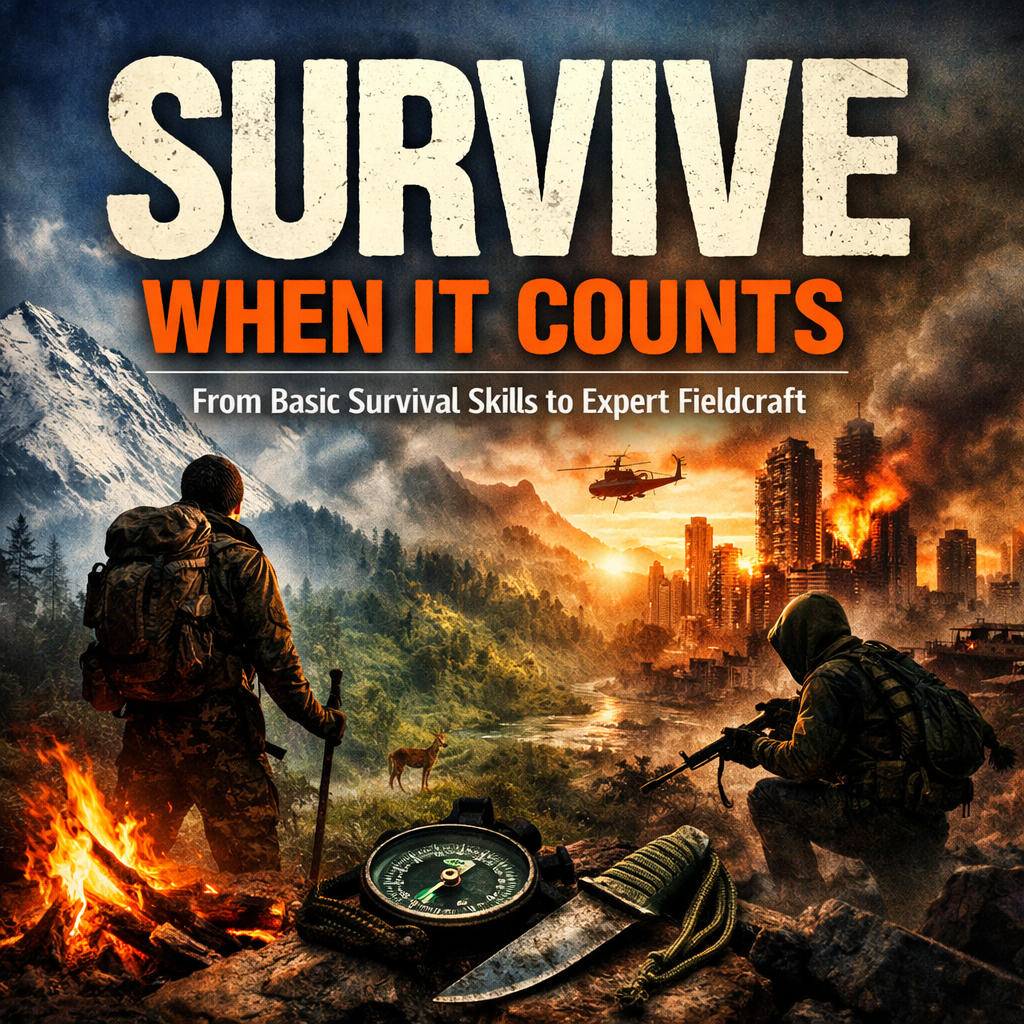
Mountain Survival episode artwork

EPISODE · Apr 15, 2026 · 3 MIN

Mountain Survival

from Survive When It Counts

Mountain survival demands more than fitness or confidence. At higher elevations, the environment can change fast, the weather can turn violent, and small mistakes become serious problems very quickly. In this episode, we’re breaking down the core skills that matter most when you’re exposed to steep terrain, thin air, cold winds, and limited options. Whether you’re hiking for the day or facing an unexpected night out in the hills, the goal is the same: stay calm, conserve energy, and make smart decisions. The first priority in mountain survival is understanding the terrain before it starts making decisions for you. Mountains are unforgiving because they combine multiple hazards at once: fatigue, altitude, unstable footing, limited visibility, and rapid weather shifts. Before moving, take a moment to assess where you are, where you’re going, and what’s below or above you. Avoid unnecessary climbs, exposed ridgelines, and dangerous slopes if safer ground is available. In mountain country, the shortest route is not always the best route. A slower, safer path often saves energy and reduces the chance of injury. Next comes the importance of shelter and protection from the elements. In the mountains, temperature can drop suddenly, even in seasons that feel mild at lower elevations. Wind is often the real enemy because it strips away heat fast and makes rest difficult. If you need to stop, look for natural shelter behind rock formations, in depressions out of the wind, or among dense but safe tree cover. Your clothing becomes a survival system here, so use layers wisely. Keep dry if you can, cover your head and hands, and get out of wet clothing before your body starts losing heat. If you’re forced to spend the night, insulation from the ground matters just as much as overhead protection. Water management is another critical piece of mountain survival. High terrain may look clean and pure, but that doesn’t mean water is safe to drink without treatment. Streams, snowmelt, and alpine runoff can all carry contamination. If you find water, treat it whenever possible by filtering, boiling, or using purification methods you trust. At the same time, remember that dehydration still happens in cold environments because people often don’t feel thirsty. Drink regularly, especially if you’re climbing, sweating, or breathing hard at altitude. A calm, steady pace helps you conserve both water and energy. Finally, navigation and decision-making can determine whether a mountain emergency stays manageable or becomes dangerous. Poor visibility, dead batteries, and confusing terrain can make it easy to lose your bearings. Use multiple navigation methods if you have them: map, compass, landmarks, and a clear understanding of your route. If you’re unsure, stop early rather than pushing deeper into bad terrain. In mountain survival, panic wastes energy, and extra movement can create more risk than benefit. The smartest move is often to pause, reassess, and choose the simplest safe option. Signal for help if needed, stay visible, and make yourself easier to find. Mountain survival is about staying deliberate under pressure. Respect the environment, protect your body, manage your resources, and make each move with purpose. In the mountains, good judgment is just as important as gear. If you can think clearly, stay warm and dry, and navigate with care, you dramatically improve your odds of getting through the situation safely. Sponsor: Find the book on Amazon and Books Central Website

Mountain survival demands more than fitness or confidence. At higher elevations, the environment can change fast, the weather can turn violent, and small mistakes become serious problems very quickly. In this episode, we’re breaking down the core skills that matter most when you’re exposed to steep terrain, thin air, cold winds, and limited options. Whether you’re hiking for the day or facing an unexpected night out in the hills, the goal is the same: stay calm, conserve energy, and make smart decisions. The first priority in mountain survival is understanding the terrain before it starts making decisions for you. Mountains are unforgiving because they combine multiple hazards at once: fatigue, altitude, unstable footing, limited visibility, and rapid weather shifts. Before moving, take a moment to assess where you are, where you’re going, and what’s below or above you. Avoid unnecessary climbs, exposed ridgelines, and dangerous slopes if safer ground is available. In mountain country, the shortest route is not always the best route. A slower, safer path often saves energy and reduces the chance of injury. Next comes the importance of shelter and protection from the elements. In the mountains, temperature can drop suddenly, even in seasons that feel mild at lower elevations. Wind is often the real enemy because it strips away heat fast and makes rest difficult. If you need to stop, look for natural shelter behind rock formations, in depressions out of the wind, or among dense but safe tree cover. Your clothing becomes a survival system here, so use layers wisely. Keep dry if you can, cover your head and hands, and get out of wet clothing before your body starts losing heat. If you’re forced to spend the night, insulation from the ground matters just as much as overhead protection. Water management is another critical piece of mountain survival. High terrain may look clean and pure, but that doesn’t mean water is safe to drink without treatment. Streams, snowmelt, and alpine runoff can all carry contamination. If you find water, treat it whenever possible by filtering, boiling, or using purification methods you trust. At the same time, remember that dehydration still happens in cold environments because people often don’t feel thirsty. Drink regularly, especially if you’re climbing, sweating, or breathing hard at altitude. A calm, steady pace helps you conserve both water and energy. Finally, navigation and decision-making can determine whether a mountain emergency stays manageable or becomes dangerous. Poor visibility, dead batteries, and confusing terrain can make it easy to lose your bearings. Use multiple navigation methods if you have them: map, compass, landmarks, and a clear understanding of your route. If you’re unsure, stop early rather than pushing deeper into bad terrain. In mountain survival, panic wastes energy, and extra movement can create more risk than benefit. The smartest move is often to pause, reassess, and choose the simplest safe option. Signal for help if needed, stay visible, and make yourself easier to find. Mountain survival is about staying deliberate under pressure. Respect the environment, protect your body, manage your resources, and make each move with purpose. In the mountains, good judgment is just as important as gear. If you can think clearly, stay warm and dry, and navigate with care, you dramatically improve your odds of getting through the situation safely. Sponsor: Find the book on Amazon and Books Central Website

NOW PLAYING

Mountain Survival

0:00 3:41

No transcript for this episode yet

We transcribe on demand. Request one and we'll notify you when it's ready — usually under 10 minutes.

Breaking News Show | eTurboNews Juergen Thomas Steinmetz News is relevant to the global travel and tourism industry, human rights and global issues.Breaking news when it happens and only from the source. LIGHTS, CAMERA, SMILE! Creatives Club Media Lights, Camera, Smile, is a podcast for anyone with a dream to share something with the world, out of the overflow of themselves - be it their mind, their heart, their personalities, and much more. Each of us are alive in this moment in time, with an innate ability to have ideas and create various things to benefit both ourselves and the people around us for a reason, and here, you will find the encouragement, the inspiration, and the motivation to do just that. Hosted by Cicily, founder of Creatives Club, she dives into various topics surrounding creativity and business. Exploring entrepreneurship for creatives in a corporate reality, sharing tips and tricks in a media centered company, answering questions regarding what a creative actually is are just a few of the things discussed on this podcast. Be encouraged to create for yourself as Cicily gets vulnerable by pivoting the camera to herself for the first time.To submit questions for Cicily to answer, or have her address certain t Solving for Change MOBIA Technology Innovations Solving for Change welcomes business and technology leaders to share stories of bold business transformation within complex organizations. In an era when technology and markets are changing around businesses, the key to staying competitive is to evolve in response to those changes.  MOBIA’s Mike Reeves and Marc LeBlanc investigate business transformation, deconstructing the challenges, ambitions, and market disruptions that drive companies to embark on transformation journeys, and exploring their unique approaches to achieving meaningful outcomes.  What sparks leaders to pursue business transformation? How do they overcome the challenges along the way? What are the keys to creating enduring change?  Through in-depth conversations with business and technology leaders, Mike and Marc answer these questions and explore how businesses evolve by pulling four key transformation levers: people, process, technology, and culture. Invictus by Greyana, A Tomione Podfic M+G Readings Sporadic uploads thanks to gallstones.Voldemort intended the object to be used by his most loyal follower in the event that his horcruxes were destroyed, but it ended up in Hermione’s possession instead.It sent her back to a time when he was much less the monster that she’d always known him to be. Nothing could have prepared her for the intelligence and charm of Tom Riddle.He isn’t who she thought he was.Hermione discovers that it’s a dark descent into the madness of the man she should hate, but can’t… a descent she will never emerge fr

Frequently Asked Questions

How long is this episode of Survive When It Counts?

This episode is 3 minutes long.

When was this Survive When It Counts episode published?

This episode was published on April 15, 2026.

What is this episode about?

Mountain survival demands more than fitness or confidence. At higher elevations, the environment can change fast, the weather can turn violent, and small mistakes become serious problems very quickly. In this episode, we’re breaking down the core...

Can I download this Survive When It Counts episode?

Yes, you can download this episode by clicking the download button on the episode player, or subscribe to the podcast in your preferred podcast app for automatic downloads.
URL copied to clipboard!