
EPISODE · Oct 7, 2021 · 59 MIN
movement & memory: reflections on labor and the genealogy of resistance w/ Saladin Muhammad Pt. I
from Africa World Now Project · host AfricaWorldNow Project
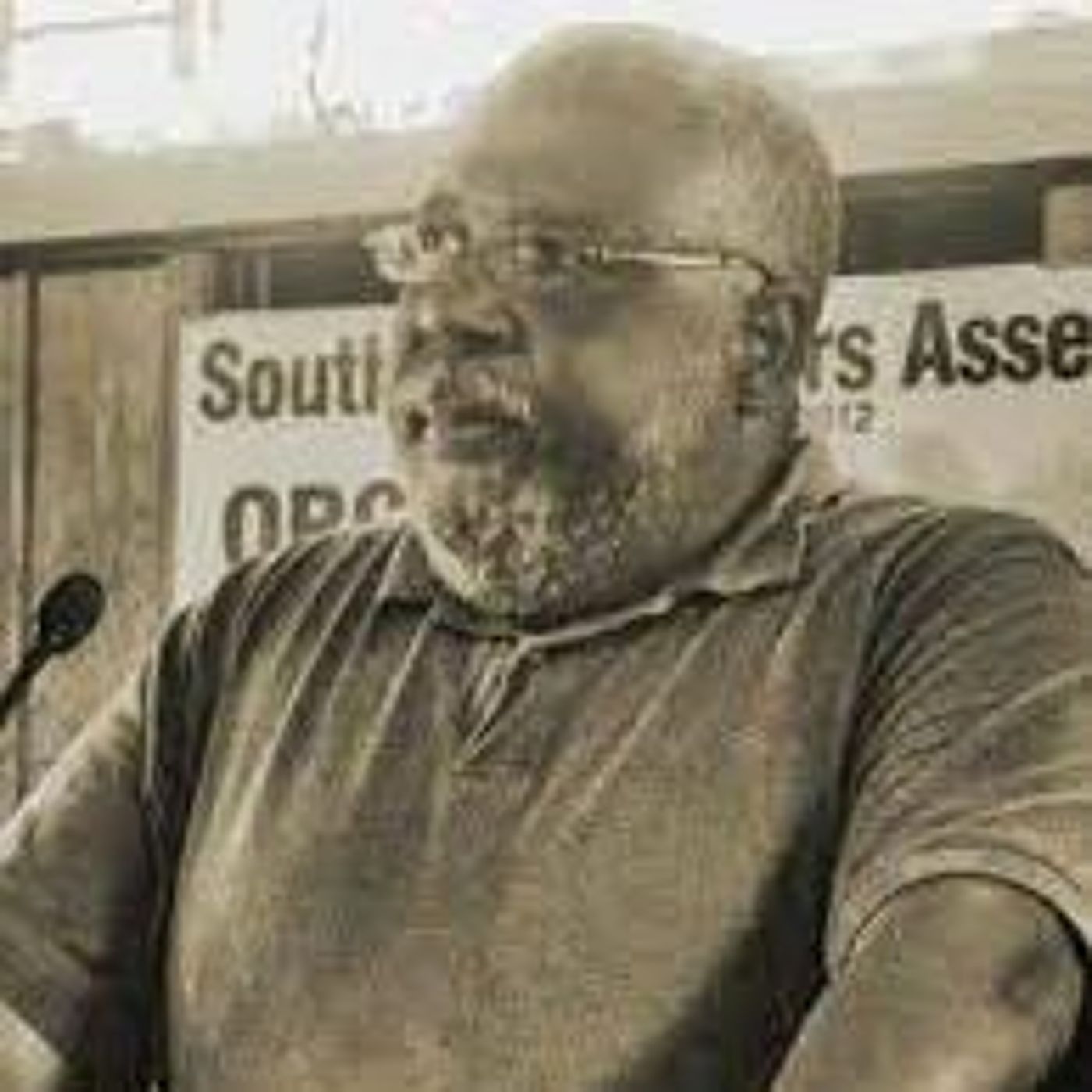
Abdul Alkalimat writes on a multimedia project that explores the work of Saladin Muhamad that “our movements for social transformation have often fallen victim to the tendency to oversimplify the struggle. Moreover, there is far too little self-criticism to learn from our “right” and “left” errors. This is particularly dangerous as we are at the beginning of a new generational awakening. We need to think about the past few decades of struggle by listening to those who have marched on and maintained a revolutionary perspective.” Labor, whether force or extracted through coercion has been a consistent cause of struggle for African/a peoples, globally. James Boggs, in a speech given at a Political Science Seminar in Atlanta University on February 17, 1974, argued that “we must be ready to recognize that as reality changes, our ideas have to change so that we can project new, more advanced aspirations worth striving for. This is the only way to avoid becoming prisoners of ideas which were once progressive but have become reactionary, i.e., have been turned into their opposite. The only struggles worth pursuing are those which advance the whole society and enable all human beings to evolve to a new and higher stage of their human potential”. Expanding this assertion, Boggs goes on to suggest that “knowledge must move from perception to conception; in other words, knowledge and struggle begin by perceiving your own reality. But it must have the aim of developing beyond what you yourself or your own group can perceive, to wider conceptions that are based upon the experiences of the whole history of Mankind. The only way that anyone can take this big step of moving beyond perception to conception is by recognizing and struggling against your own internal contradictions and weaknesses. Of these weaknesses, the most fundamental and most difficult to overcome, as a result of the specific history of United States society [and I will add the evolution of the global racial capitalist system], is the tendency not to think at all but simply to react in terms of individual or ethnic self-interest” [Boggs, 1974]. Reflecting more on the praxis of Saladin Muhammad, Abdul Alkalimat asserts that “there are many theoretical and practical issues involved in the experiences covered by the life of Saladin Muhammad and his experiences in struggle. Saladin is a proletarian cadre of the revolutionary movement. He served as chairperson of the Black Workers for Justice for over 20 years. While being retired from full time union organizing, he remains active on many battle fronts including the Southern Workers Assembly.” This is Part I of our recent conversation with Baba Saladin Muhammad. Saladin Muhammad is an organizer, theoretician, writer. He published a number of articles that explore issues ranging from exposing the structural and systemic racism in labor to ways to understand the interdependence of human rights and Black internationalism. Saladin Muhammad is the co-founder and national chair of Black Workers for Justice and until his retirement, he was an international representative for the United Electrical Workers [UEW]. His praxis has been forged in Black freedom work for than three decades. Our show was produced today in solidarity with the native/indigenous, African, and Afro-descended communities at Standing Rock; Venezuela; Cooperation Jackson in Jackson, Mississippi; Brazil; the Avalon Village in Detroit; Colombia; Kenya; Palestine; South Africa; Ghana; and Ayiti; and other places who are fighting for the protection of our land for the benefit of all people. Listen intently. Think deeply. Act accordingly. Black Liberation and Social Revolution: The Life and Legacy of Saladin Muhammad http://theblm.net/saladin/
Embed this episode
NOW PLAYING
movement & memory: reflections on labor and the genealogy of resistance w/ Saladin Muhammad Pt. I
No transcript for this episode yet
Similar Episodes
No similar episodes found.
Similar Podcasts
No similar podcasts found.