
EPISODE · Mar 23, 2026 · 46 MIN
Mozaic and the Future of Mass-Capacity Storage – with Stephanie Hernandez
from The Data Movement · host Seagate
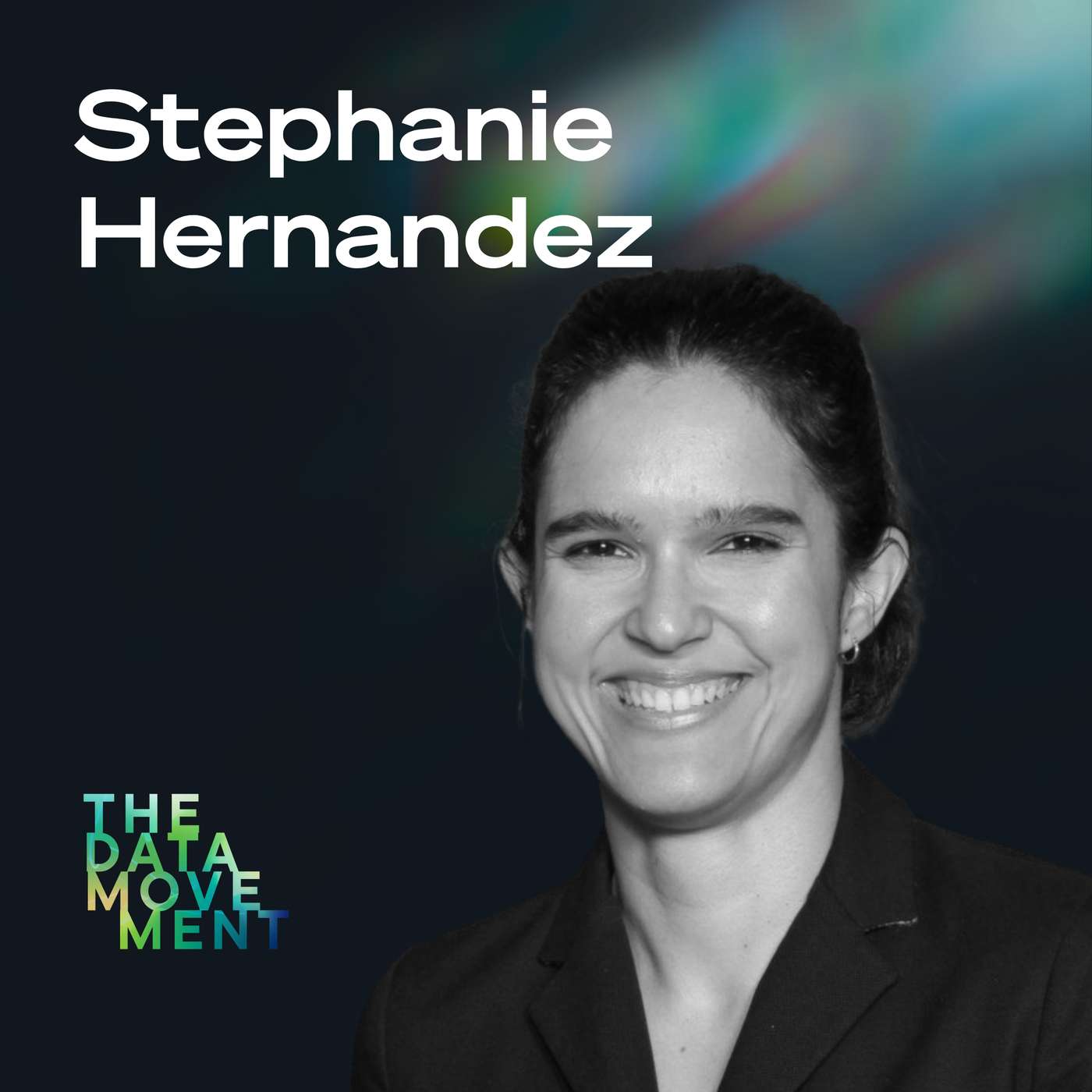
In this episode of The Data Movement, host Paul Langston sits down with Stephanie Hernandez, Senior Engineering Director at Seagate, to explore Mozaic—Seagate’s breakthrough HAMR (Heat-Assisted Magnetic Recording) technology platform—and how it’s redefining what’s possible in mass-capacity data storage. Stephanie shares her 15-year journey from magnetic recording researcher to leading future HAMR innovations, explaining how atomic-scale engineering, lasers, and advanced materials like iron platinum are enabling 30TB, 40TB, and soon 100TB-class drives—all within the same familiar 3.5-inch form factor. From overcoming the superparamagnetic limit to scaling production to millions of drives for hyperscale data centers, this conversation reveals the extraordinary science, precision, and vision powering the infrastructure behind the world’s exploding data demand. Time Stamps 00:00:00 – The Power of Data and Introducing Mosaic00:01:00 – Stephanie’s 15-Year Journey at Seagate00:03:30 – The Rise of HAMR and Industry Skepticism00:08:30 – Understanding the Superparamagnetic Limit00:10:50 – Grain Size, Signal-to-Noise, and Scaling Challenges00:12:30 – The Core Innovations Behind HAMR00:16:00 – Atomic-Scale Precision and Laser-Assisted Recording00:23:30 – From Research Concept to Mass Production00:26:30 – Why Capacity Growth Matters to the World00:27:50 – Hyperscalers, Form Factor, and Fleet Economics00:31:00 – Driving Aerial Density Toward 10TB per Disc00:33:30 – Multisensor and Advanced Recording Technologies00:40:00 – Beyond HAMR: Future Media and Architectures 00:43:00 – The Hidden Innovation Inside the Hard Drive About Stephanie Hernandez Dr. Stephanie Hernandez is Senior Engineering Director at Seagate Technology, where she leads advanced research and development for next-generation data storage technologies, including Heat-Assisted Magnetic Recording (HAMR) and other cutting-edge media and memory systems. She earned her Ph.D. in Electrical Engineering from the University of Minnesota in 2010, with graduate research focused on modeling magnetic recording media and spin-torque structures. After joining Seagate, she worked as a read transducer designer before moving into research roles in HAMR and advanced storage systems. Today, Stephanie’s work drives innovation in high-capacity hard drive technologies that power data centers and the global datasphere. About Seagate: Seagate is a leader in mass-capacity data storage. We’ve delivered more than four-and-a-half billion terabytes of capacity over the past four decades. We make storage that scales, bringing trust and integrity to innovations that depend on data. In an era of unprecedented creation, Seagate stores infinite potential. Unlock the full value of your data today. Learn more at seagate.com Links Learn more about this episode Connect with Stephanie on Linkedin Connect with Paul on Linkedin Learn more about Moziac technology Follow Seagate Facebook: facebook.com/seagate Instagram: instagram.com/seagate/ Linkedin: linkedin.com/company/seagate-technology/ X: x.com/Seagate YouTube: youtube.com/user/SeagateTechnology – Discover The Data Movement at seagate.com/stories/podcast
Embed this episode
Ready to play
Mozaic and the Future of Mass-Capacity Storage – with Stephanie Hernandez
No transcript for this episode yet
Similar Episodes
No similar episodes found.
Similar Podcasts
No similar podcasts found.