
EPISODE · Jun 8, 2021 · 20 MIN
MSU Music Therapist Spreads Music’s Healing Power to Patients Throughout Michigan
from MSU Today with Russ White · host Russ White
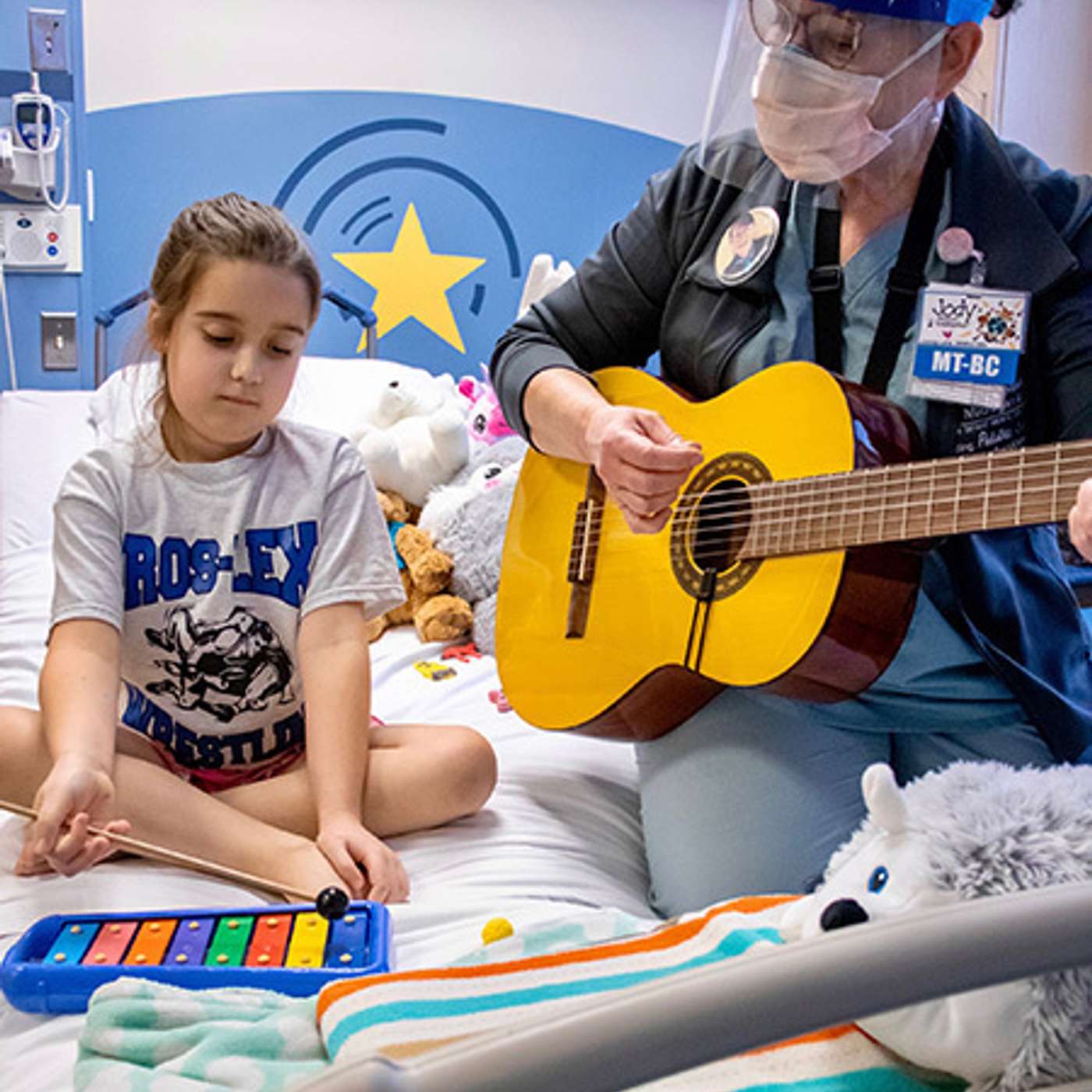
Jody Conradi Stark, Ph.D, is a board-certified music therapist with over 35 years of experience. Her work and research have contributed to that growing body and has impacted numerous populations including psychiatric, cognitively impaired, autism spectrum disorder, veterans, medical, and hospice. Jody is the site director of music therapy clinical services at the Michigan State University Community Music School, Detroit (CMSD), where she partners with the Children's Hospital of Michigan to provide music therapy through a grant funded by the Children's Foundation. Jody is also the president and founder of Creative Arts Therapies Inc., a company that provides contractual music, dance movement and art therapy services to agencies and individuals throughout Southeastern Michigan.“The American Music Therapy Association defines music therapy as the clinical and evidence-based use of music interventions to accomplish individualized goals within a therapeutic relationship by a credentialed professional who has completed an approved music therapy program,” says Stark. “That's kind of long and wordy, but basically it's using music in a structured manner to improve the lives of all different types of clients and individuals.”What is it about the power of music that's so therapeutic in so many ways to so many people?“When words fail, music speaks. That's one of my favorite quotes, I believe by Hans Christian Andersen. There is something about music. It's happening in the here and now. It's nonverbal, and it's connecting us. I like to emphasize that therapeutic relationship. We connect with individuals, and we provide those transformative experiences through music. Music moves us. It engages us physically, emotionally, spiritually, and cognitively.”How has music therapy evolved?“One area that it's evolved in is the medical arena. We've got quite a body of literature and evidence that proves the effectiveness of music and music therapy. That has been an area that has opened up to music therapist as we've seen how effective it can be with patients, regardless of what we're addressing. We could be addressing pain control, working with children during procedures to help them to be calm, and to just simply normalize the environment in the hospital that can be quite scary.”Stark says she’s fortunate to have been working at CMSD since it first opened in 2009.“What excites me about working at the Community Music School, Detroit is that we're really taking the outreach mission of MSU to individuals in Detroit and to people who may not be able to access music otherwise. "Our largest current grant is from the Children's Foundation, and it funds services at the Children's Hospital of Michigan. We are onsite at Children's Hospital. What’s most important is our work at the bedside working with children individually.”Stark talks about how she plans and implements a music therapy session.“It's all tailored to the individual; no two sessions are alike. If I'm walking into a room and I am seeing a child for the first time, I know what they're in the hospital for. Situations can range from infants in the neonatal intensive care unit to older teenagers and even young adults who started their treatment at Children's and are maybe returning for chemotherapy or rehab. We understand what they are there for. If it's for rehabilitation or if they've maybe been in a car accident or had a traumatic brain injury, we would be on the rehab unit working perhaps to help a patient learn how to walk or learn to speak again.“If we're working with children on the burn unit who might be having burn dressing changes, it's more of an immediate intervention where we're trying to help distract them from the pain of those procedures. We're there to normalize the environment for the family and for the patient. It really is family-centered care and sometimes the family needs support certainly as much as the patients in terms of what they're facing with their child being hospitalized. So if I'm walking into the room and I have a sense of what I will be facing, I first and foremost want to introduce music therapy services and introduce myself. I want to give them a sense that I'm not there to do a procedure.“I'm there to provide something that maybe is more normal in their environment or in their lives, whether they play an instrument or whether they just enjoy music and love listening to it. Most adolescents and children do. Things we can do in music therapy include playing instruments, singing songs, composing music or songs about their frustration that they're in the hospital or what they miss about not being home. It can be listening to music. We can focus on relaxation, breathing techniques, and learning to cope with pain. It really runs the gamut of a number of different types of interventions.”Stark says her work is rewarding.“I am so passionate about my work. I love my work. I love that I've been able to work in a number of different settings and with a variety of populations and individuals.Sometimes our impact is immediate. If a child is at the hospital and in pain or crying and needs to have assistance with falling asleep or relaxation, we can help with that. It surprises me how quickly they can fall asleep and be able to have some relief from pain and have a chance to relax.”What do you suggest for someone who thinks they have a loved one or a friend or a family member who could benefit from music therapy? “Going back to that quote where words fail, music speaks, patients can benefit from an experience that is transformative, goal directed, and a stress reducer. Perhaps their loved one is elderly and is experiencing dementia. Often music elicits long-term memories. I've had elderly clients who could no longer speak. They lost that ability because of dementia, but they are able to sing every word to a song from their youth. We've had loved ones come to music therapy groups so they could see their loved one come back alive through music and dance and interact with them and see the joy that music brings when it elicits those long-term memories. Music impacts us physically, emotionally, and cognitively. So with the variety of goals that we focus on through music, I think certainly they should consider music therapy as an alternative.”MSU Today airs Sunday mornings at 9:00 on 105.1 FM and AM 870 and streams at WKAR.org. Find “MSU Today with Russ White” on Spotify, Apple Podcasts, and wherever you get your shows.
Embed this episode
What this episode covers
With the power to soothe and excite, it should come as no surprise that music also has the power to heal. Touted since the days of Aristotle in ancient Greece, an ever-growing body of research continues to back music's healing power.
Ready to play
MSU Music Therapist Spreads Music’s Healing Power to Patients Throughout Michigan
No transcript for this episode yet
Similar Episodes
No similar episodes found.
Similar Podcasts
No similar podcasts found.