
EPISODE · Oct 30, 2020 · 26 MIN
MSU’s FRIB on the cutting edge of science and developing the next generation of researchers
from MSU Today with Russ White · host Russ White
Thomas is a university distinguished professor, and in 2008, he led the team that prepared the winning FRIB proposal, bringing FRIB to Michigan State University. Since then, he's led a team of 850 employees to run the FRIB laboratory within Michigan State University. “FRIB is the world's most powerful heavy ion accelerator,” Glasmacher tells Spartans athletic director Bill Beekman. “We can accelerate any element from hydrogen to uranium to half the speed of light at quite a high intensity. By doing that, we can make rare isotopes that once existed on earth that have long since decayed and continue being made in the universe and in stars. We can make those isotopes available to scientists from all over the country so they can study their properties and see how they can be applied to better everybody's life.”Glasmacher explains how FRIB works and how the facility is a Department of Energy Office of Science user facility and what that means.“Part of being a user facility is that scientists have to write proposals to use the facility. They have to promise to publish the results. These proposals get reviewed by a panel of other scientists. And if they're ranked high enough, they get allocated beam time. Scientists come from all over the country and the world.“The average experiment has teams of 30 to 50 people. These instruments are too hard to run just with one scientist. You have to convince the panel that you have a group of people who can pull it off and get the data analyzed. The typical experiment is about a week-long and involves those 30 to 50 collaborators. Some of those collaborations are also from different countries. They come here a couple of weeks before, set up their instruments, get everything going, then run it for a week or two. We have about 1,500 scientists in our user group, and they come from probably about 100 countries in the world.“FRIB will be the most powerful facility in the world. Our accelerator is the most modern and powerful; scientists go where the best opportunities are.”Glasmacher describes FRIB’s impact on Michigan’s economy and developing the next generation of scientists. And he touts the significance of FRIB being located on the campus of a research university.“The great thing about the Michigan-based construction and the Midwest focused machine shops and fabricators is that we found we have about 1,000 suppliers. We found 1,000 partners who were willing to put up with us and help us with this. We have found suppliers who build things similar to the ones we want who can extend within their comfort zone to the product we need. “And our scientists make discoveries along the way. To me, that is one of the key features of FRIB. It's a world-class machine facility on the campus of a research intensive university. And we have the opportunity to expose students who come to study at MSU to FRIB. We give them tours. Some of them have jobs here, and some of them do undergraduate research here. And by engaging in nuclear science and accelerator physics, they see what's possible. Then they start to imagine a career in that field, and then they take a career in that field.”Glasmacher appreciates the bipartisan support FRIB has received from the beginning.“We have an incredible team and I think we're just really humbled as a team and as a university to be afforded the opportunity to build this national facility for the country and for the scientists of the world.“In the beginning, we just wrote the proposal and then we won the job, and then we got started. And it's only in the last year or two that we can see the light at the end of the tunnel. And that's a really good feeling because the important part is the accelerator is working. We commissioned the accelerator already. This last year will be spent hooking it up to the existing facility. And there were many moments where we weren't quite sure what the next right step is, but in the end it all worked out with the help and advice of many, many people. And we really appreciate the public's trust placed in us to make this one of a kind thing work.”MSU Today airs every Sunday morning at 9:00 on 105.1 FM, AM 870, and however you stream at home. Follow and subscribe at Spotify, Apple Podcasts, and wherever you get your podcasts.
Embed this episode
What this episode covers
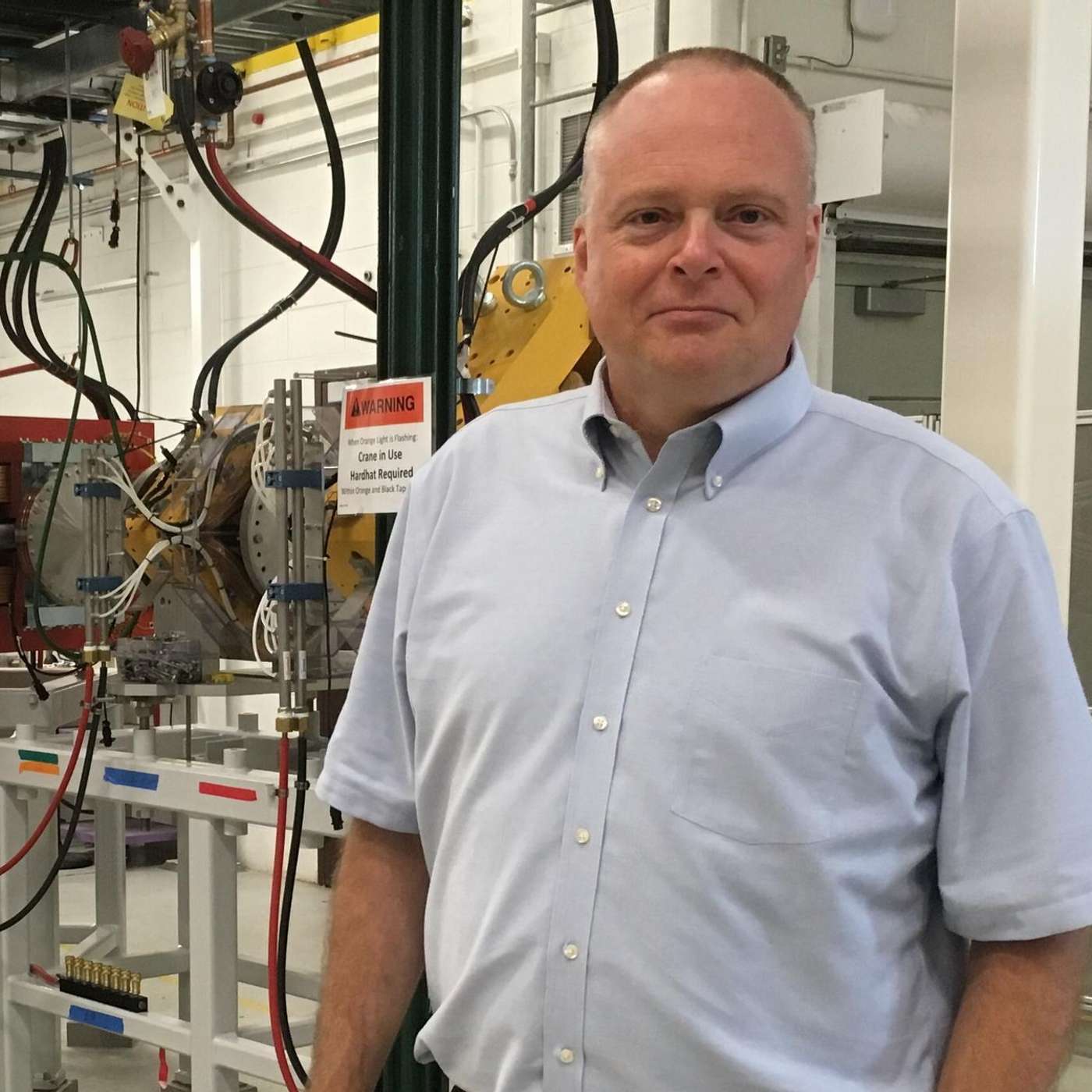
Thomas Glasmacher is laboratory director of MSU’s FRIB, the Facility for Rare Isotope Beams. Thomas came to Michigan State in 1992 working with the National Superconducting Cyclotron Laboratory and joined the Department of Physics and Astronomy as a faculty member in 1995.
Ready to play
MSU’s FRIB on the cutting edge of science and developing the next generation of researchers
No transcript for this episode yet
Similar Episodes
No similar episodes found.
Similar Podcasts
No similar podcasts found.