
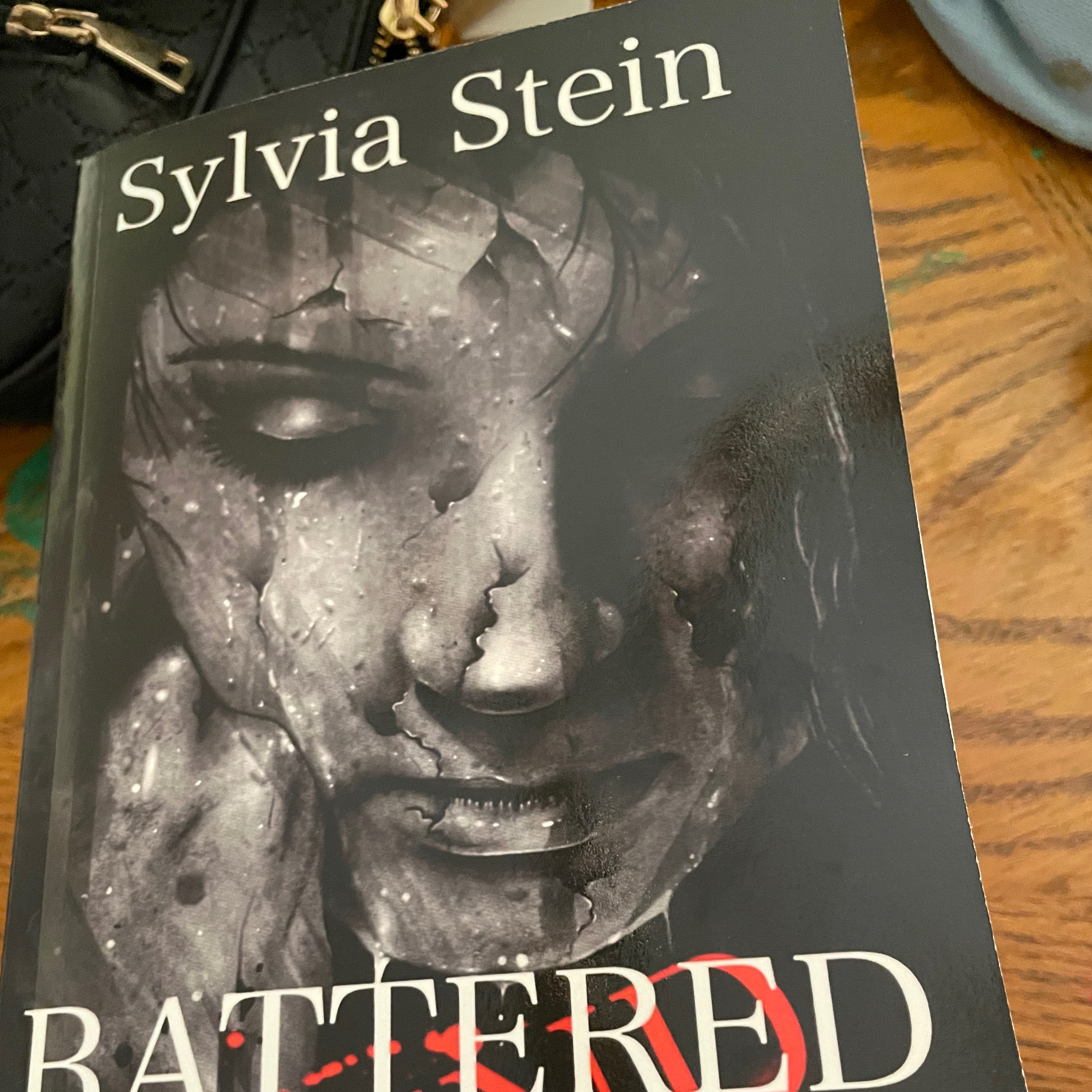
Good afternoon and happy, happy Thursday. I hope everyone is having an amazing and fantastic day. This is Sil Stein from The Daily with Sil Stein on Anchor. Today I'm going to be talking about my book, Battered Mind, which hopefully will be out at the end of this year, but for sure by next year, February of 2020.
I've been working really hard on it, but one of the most difficult things to do is because I have more than one point of view in the book, I want to make sure that it is what everyone wants to read and it doesn't complicate things. So this book I've been working on for a long time and I want to discuss that with you guys today. So I hope everyone's having a fantastic, fantastic day and welcome again. Sorry for not being on.
I've been having a lot to do with family and I've been trying to do Instagram. I do a lot of coffee chronicles. That's something that I will be discussing on The Daily with Sil Stein at the end of this segment. Before the show is over, I'll make a few announcements on that, but I wanted to take the time to discuss what I've been working on lately and I hope that you'll be able to interject and add your own points of view.
Of course, I'll still continue with the writing tips, which we'll do, but today because I'm discussing about my book and I wanted to kind of enter, also put in there about the multiple points of view and I wanted to share a few tips about that. So let's get started and we'll be right back. And I'm going to share an article by the New York Book Editors dot com that discusses how to write a novel with multiple points of view. And we'll be right back.
And welcome back to The Daily with Sil Stein on Anchor. As I said before, Battered Mind is my new thriller. The book, I started working on it and it's a different take from the book that I normally write. I've written two novellas, Closure, The Diary of the Broken Father, and then a YA entitled Chasing Clarity.
But with Battered Mind, I wanted to do a different type of book and it's been more than a few years. And when I first started, I already knew the idea of what I wanted. But then I had more characters in order to make justice for the story. And then I had to figure out courtroom, different things of what the character is going through and how to bring all that alive for the characters, because the characters was what drove my story in this book.
So I thought about doing multiple points of view, which is hard to navigate. But if you do it right, hopefully the reader will be more and more than enthralled and really want to be a part of it and want to enjoy reading it. So because I'm doing that with my new book, I wanted to bring into the New York Book Editors dot com article that talks about how to write a novel with multiple points of view. Now, the article starts, which it says one of the hardest, excuse me, one of the hardest feats to pull off in literature, it says it's writing from multiple points of view.
You've got to juggle different personalities and motivations and somehow use them all to tell a coherent, cohesive and compelling story. And then they say, I won't lie to you. Some readers hate it, some writers hate it. But if you want to explore a story from multiple points of view and believe that your reader will also benefit from this literary device, go for it.
Besides, you'll be in good company, such as if you've ever read Jody Pico's books, My Sister's Keeper, Margaret Atwood's The Year of the Flood, William Faulkner's As I Lay Dying, Barbara Kingsolver's The Poison Wood Bible, Amy Tan's The Joy Luck Club, and Catherine Stockett's The Help. And then there's also J.R.R. Martin, A Song of Ice and Fire in that series, which turned into what we now know as Game of Thrones. And that's just to name a few.
So if you're ready for the challenge, here's how to write your novel from multiple points of view. So here they go into like a guide of what they mean. But before they want to give you the different points of view. So I'm going to go ahead and review that.
Give me one moment. Open that. All about point of view. Which one should you use?
So it's a question. It says every author must answer before. Yes, I can hear. Sorry about that.
Putting pen to paper. What point of view is right for this story? The answer isn't always easy to figure out, but that's why we're here. In this post, we're going to help you figure out the advantages and disadvantages to each point of view.
So let's get started. Started. Sorry. And then we go is a point of view.
First of all, is a perspective an author uses to give a glimpse into the world he's created. So us as authors or as a writer, author, you want to show, you know, what kind of world you created to your readers. So it's a point of view as a perspective an author uses to give a glimpse into the world he's created. The reader may experience this world directly through the inner thoughts of a character or distantly from the perspective of an objective observer.
Point of view is an important literary device for exploring a story. The point of view an author chooses can determine how the reader understands and participates in the story. Point of view can be used to express the feelings, thoughts, motivations, and experiences of one or many. It is the angle that the story is viewed through.
For example, if you wanted to rewrite the story of Rapunzel, you could choose several angles. You could write it from Rapunzel's perspective, either in her voice or limited to what she knows. What is she thinking, feeling, longing for, and experiencing? Or write it from the perspective of the evil witch Dom Gothel or Dane Gothel?
Was she evil? Was she really just misunderstood? Write it from the perspective of the prince who falls in love with Rapunzel. What does he see, believe, and struggle with?
Write it from the perspective of an impartial observer. What is the moral of the story? Does the observer know about everyone's emotions and motivations, motivations, or just Rapunzel's? Those are just four options.
There are many more ways the story of Rapunzel could be told. The point of view that you use to tell a story can influence how a reader feels about the different characters or the lessons to learn within the story. So let's dissect the different points of view. So here we go.
The different points of view. First person. When the narrator uses the pronouns I, me, myself, or mine to relate a story you are dealing with. The first person point of view.
In this point of view, the readers experience the world vicariously through the narrator. The advantage of first person is you can immediately connect with the reader. The disadvantage is that the author is limited to writing from one perspective. There are several types of first person narrators.
Narrators. Goodness. Narrators. The protagonist.
This is the main character. He or she is who the entire story is about. The reader is either inside of the protagonist's head and privy to his thoughts where the protagonist relates the stories in letters, journal entries, or through conversational devices. Like, for example, The Catcher in the Rye by J.D.
Salinger. Says another major or minor character. Then there's also the example of The Hound of Baskervilles. And then, of course, uh, the, uh, Escobie Fitzgerald, The Great Gatsby.
American Psycho by Brett Easton Ellis. There are so many. This is the first person narrative. And then, of course, there's the third person where the narrator uses the pronouns he, she, they, or it.
Unlike in first and second points of view, in third person, the narrator is not a character within the story. Third person point of view is perhaps the most commonly used perspective. It can give the author more flexibility than the other two perspectives, especially with third person multiple or omniscient. The advantage of a third person is that the author can write from a broader perspective.
The disadvantage is that it can be difficult to establish connection with the reader. Third person limited. This point of view is limited to one character. The narrator only experiences what this one character experiences.
This character is generally the protagonist of the story. Third person limited is similar to first person because the story is confined to the knowledge, perspective, and experiences of only one character. Take, uh, the example here is George Orwell, 1984. This point of view allows the narrator to follow multiple characters within the story.
The narrator can switch between characters and relate. So this is the third person multiple, sorry. Uh, it's, um, it says, and the example on the other one, sorry, the third person limited was George Orwell, 1984, excuse me. Then third person multiple.
This point of view allows the narrator to follow multiple characters within the story. The narrator can switch between characters and relate the story from their perspective. It is limited because the narrator does not know about everything, only the characters he follows. Example, A Song of Fire and Ice by J.
R. R. Martin. And then, of course, we have the third person omniscient.
This point of view is global. The narrator knows everything about everyone in the story. He knows the motivations, childhood, inner thoughts, and emotions of every character. The narrator becomes godlike.
The narrator, this narrator can provide accurate and insightful commentary because he knows how everything is connected. Example, 100 Years of Solitude by Gabriel, by Gabriel Garcia Marquez. Which point of view should I use? If you're stuck, here's an exercise to determine which point of view to use in your novel.
And it gives several examples, and we'll be right back with those. And welcome back to The Daily with Still Sign on Anchor. And now we're back and discussing the different points of view. And we're going to discuss the exercises from the article by the nybookeditors.com.
Which point of view should I choose? Now, because I'm working on that same thing with my latest book, my thriller, Battered Mind, which will be out at the end of this year, early next year, but for sure by February of next year. So let's cross our fingers, right? So it says, if you're stuck, here's an exercise to determine which point of view to use in your novel.
Write the first page of your novel from all three points of view, then answer these questions and pay attention to subtle hints. Which one feels most natural to the story? Which one gives you the greatest amount of creative power? Which one tells the story the best?
Which point of view was quickest to write from? I mean, which point of view was quickest to write from? You may even surprise yourself when you find that second person feels like the best choice. It happens.
Now, the final thoughts. There's pluses and minuses to every point of view. Truth be told, you could probably tell your story in different perspectives and still end up with a well-done novel. However, some stories are better experienced to a specific point of view.
Your challenge is to use this information to figure it out, and good luck. So basically, there's no right or wrong. It's just it's telling you of the different perspectives to write from. Now, for example, here, let's see, and it does offer a download.
If you go to nybookeditors.com, it does offer a guide on the different points of view. If you're interested, be sure to go into nybookeditors.com and make sure to look through each of the points of view. But you can also go through the books that I mentioned to show you the different perspectives, like Jody Peoples, My Sister's Keeper, Margaret Atwood's The Year of the Flood, William Faulkner, As I Lay Dying, to name a few. And of course, George R.
R. Martin's A Song of Ice and Fire series, and Catherine Stockett's The Help, which also became a movie. George R. R.
Martin's book also became a series, Game of Thrones. That's where it spurred from. And then, of course, Jody Peoples, My Sister's Keeper. She also had The Pact, I believe, and, you know, those were made into movies.
And of course, the book William Faulkner's As I Lay Dying, you know, I remember reading it several times throughout school. And also recently, when I got my, I also went back when I got my master's in creative writing, English and creative writing at SNHU, I also had to read on one of the classes, As I Lay Dying, and it does show the different perspectives. So be sure to check those out, and we'll be right back. And welcome back to The Daily with Silstein on Anchor.
I had already done this segment, but I had to redo it, so my apologies. I wanted to say that I appreciate you joining me today on this new venture of The Daily with Silstein through Anchor, because I'm trying to add, when I do a segment, try to add an article, not just a book with the writing tips to kind of interject, also with the audiences listening, especially like the writing community, all writers, authors out there. And that way, you know, if you have something to say, you can, you know, bring a question, or you can add it on, or you can call it in, however you feel. Because I did a segment where I asked others to share their advice, and that went really, really well, and I would like to continue with that, and also bring editors on the show to speak more on this topic.
But as far as how to write a novel with multiple points of view, my book, Battered Mind, I've been working on it for quite a while. It's a different type of book, different perspectives because of the characters, and I hope that once you read it, you'll be able to connect, just like the article that I read from nybookeditors.com, you will be able to connect with the multiple points of view, just like the books I named, like Jody Picold, and J.R.R. Martin, and William Faulkner, and the different perspectives of points of view, I hope that you'll be able to connect with my book. Right now my book is inspired by many new authors, or great authors that I started reading.
I think they're new, but some of them are, some of them aren't. I know that there's Rachel Ware in A Dark, Dark Wood, Paula Hawkins, The Girl on the Train, one of my favorites, Leanne Moriarty, and Her Big Little Lies, and Nine Perfect Strangers, her books, and then there's so many out there. Gillian Flynn, still a great one, Gone Girl, Sharp Objects, even made it into a series. There's so many that have inspired me, but there's so many like Jody Picold that I've admired and read, and she's so great at navigating this multiple point of view in her stories.
The same for J.R.R. Martin, and all the ones that I named before, and there were others that were on that list. So be sure to check out the NY Book Editors, nybookeditors.com. Sign up for their newsletter.
They have webinars. They have great articles. Just check them out. I hope you do.
And I'll be right back with the wrap-up and my announcements. We'll be right back. And welcome back to The Daily with Silstein on Anchor. And now it's time for the wrap-up of our show.
It was a little different today, but I wanted to kind of show different sides of what they're doing. the Daily with Silstein will look at now and hopefully stay for a long while. I want to say that for the announcements, of course, I'm working on my book, Battered Mind. Hopefully, it'll be out late December or early February or early next year by February.
So that's the timeline. So I'm really working hard on it to bring it to you. And I really love that I was able to share the multiple points of view and share the article by nybookeditors.com. So I hope you'll check that out.
And I'll still continue on the books by Amy Peters, the writer's devotional and all of that, but I wanted to change it up a bit. And I hope you will contact the show, email silwriters07 at gmail.com. And I am working on a newsletter for the Daily with Silstein on Anchor. And that late August for sure, early September.
So I am working on that. Another thing in the announcements that I wanted to share, which is very important, is also I am doing the Coffee Chronicles. This is something I started out of positivity because I love coffee. And those are my own Chronicles accounts of the morning and the daily routine and stuff like that.
I want to add those, but probably maybe at the end of the week, I'll do a separate show on the Coffee Chronicles where I just kind of share in the morning a short, you know, kind of affirmation of the day and well wishes and kind of talk about the morning routine. And this will be an added bonus for the daily. And hopefully that'll start sometime next week because the Coffee Chronicles is more about, you know, what you do on a daily basis, how your week starts and you're kind of sharing your thoughts with everyone. And I do them on Instagram and I wanted to add it on to the Daily with Silstein on Anchor and a segment of the Coffee Chronicles.
So I hope that's okay with you guys. But other than that, I just want to say thank you for listening to the Daily with Silstein on Anchor. I hope everyone has a happy and most blessed Thursday. And thank you so much for joining me.
I hope you'll support the podcast. Stay tuned for more shows and I hope you enjoyed today's segment. And this is Sylvia Stein from the Daily with Silstein on Anchor saying until we see, until we, uh, until next time, have a great one. This has been the Daily with Silstein on Anchor.
Join us again for another show. Hello everyone and welcome to the Daily with Silstein announcements. I'm so happy to tell you that now on the Daily with Silstein on Anchor, I will be having segments of something I call the Coffee Chronicles that I do on Instagram. You can see all the Coffee Chronicles there, but I'm going to be adding them on to the Daily with Silstein on Anchor.
So I hope that you'll be ready to, you know, check that out. That's going to be like early in the mornings. I'll do a short segment as I do my segment in the mornings on Instagram and then add a few little items or things just to talk to everyone. So I'm really, really excited about that.
I'm also going to be doing several podcasts today, tomorrow, maybe Saturday also on what's coming up for the Daily. Tonight I'm going to do another excerpt of my future book, um, my thriller coming out hopefully by the end of this year or not by February of next year. So I'll have a more tentative date as I go, but I'm really excited to be bringing you more of my writing and of course the Daily, uh, the Coffee Chronicles, which is something new and doing like my affirmation show to give thanks for all the things that I'm really, really grateful for. And I'm going to be adding more, um, authors coming to our, to the Daily with Silstein, um, maybe a Chronicle and, you know, a cup of, uh, you know, the Daily Chronicles presents and then we'll have an author.
We can do it in the morning or if we do it in the evening, you know, kind of have a chat depending on how we can work the schedule, but I'm really, really excited about all that that's coming. And as I said before, I do plan to do editors on editing. A lot of different things are coming up for the Daily book recommendations, book reviews, and a lot more and more fun stuff. So I really hope you tune into the Daily with Silstein on Anchor.
Really excited to bring it to you. Check out the new podcast coming up soon, uh, where I'll be sharing an excerpt and other news. And of course, we'll still continue with the writing tips, which is what it's geared for writing tips and using books on writing. So I hope that you'll keep tuning in to the Daily with Silstein on Anchor.
Thank you so, so much. And I will talk to you all soon. Have a happy, happy Thursday. Have a pleasant one.
This was the Daily with Silstein announcements. Stay tuned for more.