
EPISODE · Aug 10, 2025 · 1H 28M
MuséeCast 025 by Badawan
from MuséeCast · host Le Musée
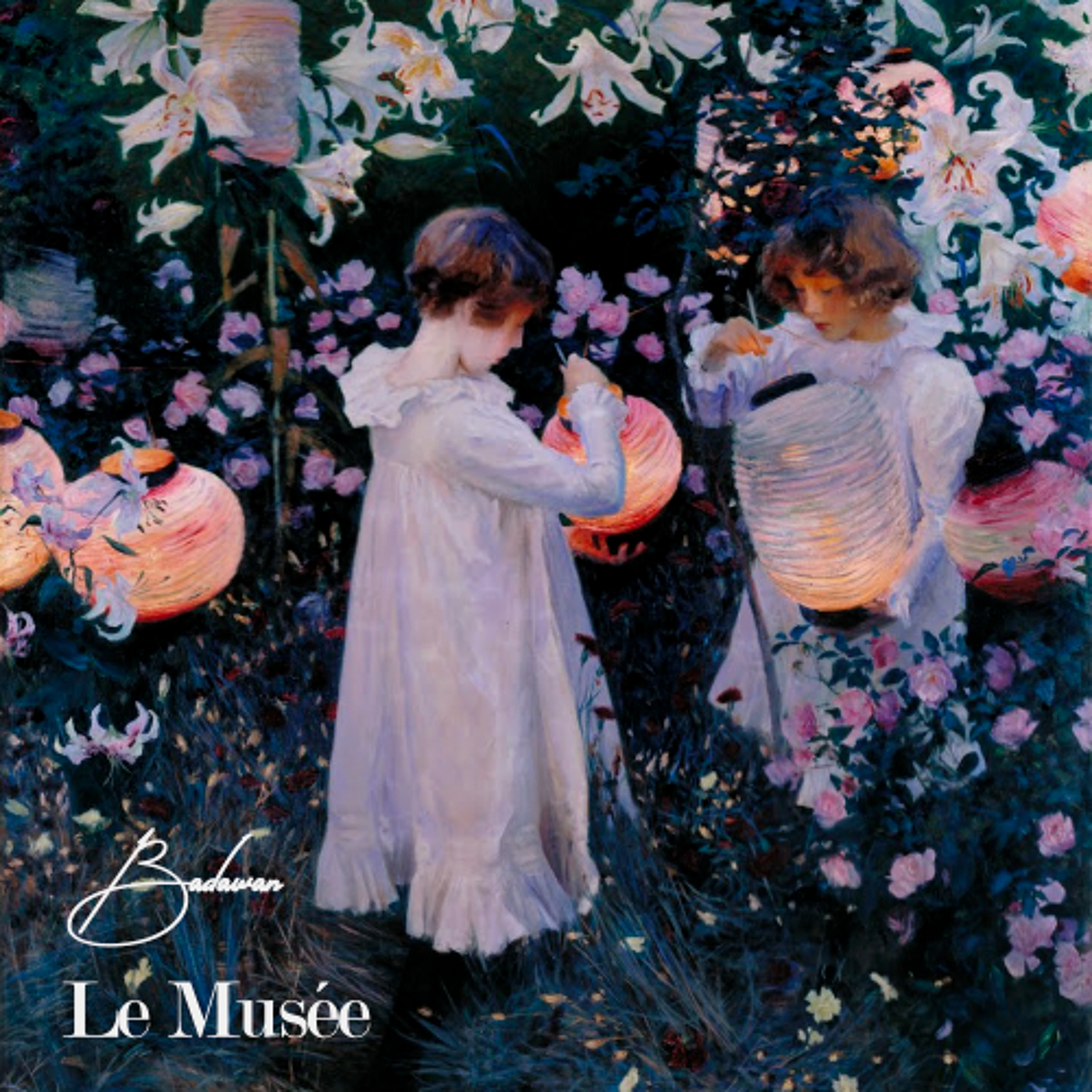
Carnation, Lily, Lily, Rose (1885–1886) by John Singer Sargent is a captivating vision of twilight a poem in paint where innocence, light, and time converge. Set in the garden of Farnham House in Broadway, in England’s Cotswolds, Sargent began the work during the summer of 1885, not long after departing Paris in the wake of the “Madame X” controversy. The idea was sparked during a September boating trip on the Thames at Pangbourne, where he saw Chinese lanterns glowing among trees and lilies at dusk. The painting depicts two young girls Dolly to the left and Polly to the right lighting paper lanterns amid roses, carnations, and tall white lilies in bloom. Originally, Sargent had planned to use the dark-haired daughter of his friend Frederick Barnard as a model, but she was replaced by the Barnard sisters for their fair hair, which better suited the luminous palette. Painted en plein air with impressionistic spontaneity, Sargent worked each evening for just a few precious minutes during the fleeting “blue hour” to capture the delicate balance between lantern glow and fading daylight. As real flowers wilted with the advancing season, he replaced them with artificial ones to preserve the harmony of the composition. The canvas was originally rectangular but later trimmed by about two feet on the left to emphasize the central figures and bring it closer to a square format. When it was unveiled at the Royal Academy’s Summer Exhibition in 1887, it received both criticism for its “Frenchified” style and praise from admirers, including Sir Frederic Leighton, who encouraged its acquisition for the nation. It became the first of Sargent’s works to enter a British public collection, and today it resides in Tate Britain. The scene captures the quiet enchantment of evening the hush of a garden, the gleam of lanterns, the fragrance of blooms distilled into a single suspended breath where the ephemeral beauty of nature and the artistry of light merge into something timeless. -------------------------------------------------------------------------------- In this MuséeCast session, Jonas Studer, performing as Badawan, delivers a set that bends genres and redefines the dancefloor’s edge. Moving between deep, psychedelic textures, hypnotic midtempo grooves, and driving rhythmic progressions, he shapes a sound that feels both raw and deliberate. There’s a storyteller’s pulse to the way he shifts from shadowy, progressive passages into bright, kaleidoscopic moments each change carrying its own sense of momentum. With roots firmly planted in underground culture, his music carries an untamed energy, rich in detail and layered with atmospheric depth. This is Badawan at his most fluid and focused, blending instinct and precision into a performance that stays with you long after the last beat fades. Follow the artist: @yunus-studer https://www.instagram.com/jonas_studer/?hl=de
Embed this episode
Ready to play
MuséeCast 025 by Badawan
No transcript for this episode yet
Similar Episodes
No similar episodes found.
Similar Podcasts
No similar podcasts found.