
EPISODE · Aug 12, 2026 · 20 MIN
My Eating Disorder Recovery Story Continued: Internalized Weight Bias in the Age of Ozempic
from Dr. Marianne-Land: An Eating Disorder Recovery Podcast · host mariannemillerphd
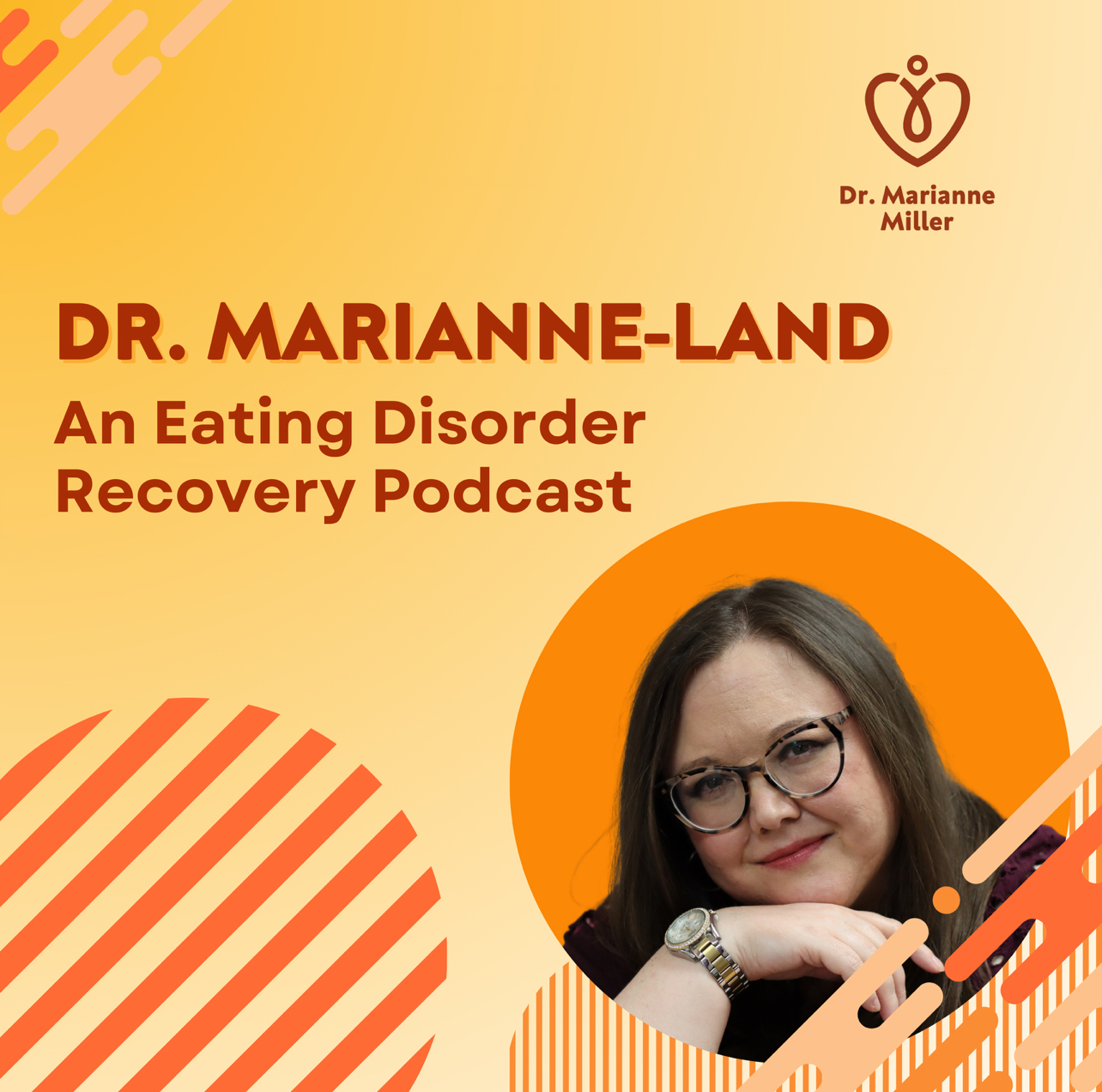
What happens to eating disorder recovery when the culture around you starts celebrating weight loss again? In this deeply personal solo episode, Dr. Marianne continues sharing her eating disorder recovery story and talks about something that has surprised her: the return of body insecurities during the Age of Ozempic. After recovering from a decades-long history of anorexia, binge eating disorder, orthorexia, and bulimia, she rarely spends much time thinking about her body size. But the rise of Ozempic and other GLP-1 medications like Zepbound and Wegovy has changed the cultural conversation around weight, thinness, and fat bodies. During the height of the body diversity movement, living in a larger body felt different. Plus-size clothing became more visible. Larger bodies appeared in advertising. Conversations about weight stigma, fatphobia, body neutrality, and fat liberation entered the mainstream. Now, many of those gains seem to be disappearing as celebrities become smaller, plus-size departments vanish from stores, and thinness once again becomes something we're expected to pursue. When Eating Disorder Recovery Meets the Age of Ozempic Dr. Marianne shares what it's like to encounter old eating disorder and body image thoughts after years of recovery. Sometimes those thoughts arrive unexpectedly: Look at that celebrity. They did it. Why can't I? Having that thought doesn't mean eating disorder recovery has failed. Recovery doesn't necessarily erase decades of conditioning around weight and body size. Instead, it can help us recognize internalized weight bias when it resurfaces and decide whether we want to listen to it. Dr. Marianne also discusses an important distinction: wanting a smaller body isn't necessarily the same thing as wanting relief from anti-fat bias. Sometimes the thought, Life would be easier if I were thinner, reflects a painful reality about how fat people are treated rather than a genuine desire to change one's body. The World Is Getting Smaller for Fat People Anti-fat bias doesn't exist only in our thoughts. It shows up in the physical world. Plus-size clothing departments have disappeared from many stores, forcing people in larger bodies to shop online. Airplane seats continue to create accessibility barriers for larger passengers. Cars, restaurant booths, waiting-room chairs, theaters, and other public spaces frequently fail to accommodate body diversity. The message can become impossible to ignore: if the world won't make more space for you, you're expected to make yourself smaller. Dr. Marianne explores the mental health toll of repeatedly navigating environments that weren't designed for your body. Constantly wondering whether a seat will fit, whether a store carries your size, or whether a healthcare provider will blame your symptoms on weight creates an enormous cognitive and emotional burden. Defending the Right to Be Fat Dr. Marianne shares a recent dream in which she found herself defending her fatness to another person. When she woke up, she realized how closely the dream reflected the experience of living in a larger body today. Fat people often have to defend their right to exist without pursuing intentional weight loss. They may have to advocate for appropriate healthcare, accessible seating, clothing, travel accommodations, and the basic right to occupy space without apology. That emotional labor takes energy. For neurodivergent people, the burden can become even greater. Autistic people and ADHDers may already expend significant energy navigating sensory needs, executive functioning, uncertainty, masking, and environments that weren't designed for neurodivergent nervous systems. When neurodivergence intersects with anti-fat bias and other forms of marginalization, the cumulative mental health toll can become significant. Internalized Weight Bias Doesn't Mean You've Failed at Recovery Eating disorder recovery happens in the real world, not in a protected bubble. You can appreciate your body and still feel hurt by weight stigma. You can reject diet culture and feel grief when plus-size clothing disappears. You can practice fat acceptance and still have moments when you wonder whether life would be easier in a smaller body. Those experiences don't erase recovery. Sometimes what looks like body dissatisfaction is actually grief, anger, exhaustion, or a desire to move through the world without constantly having to advocate for your right to belong. Dr. Marianne shares the question that helps her separate internalized weight bias from her own values: Do I actually want a different body, or do I want a different world? Related Episodes How a Part of Me Wanted to Take a Weight-Loss Drug on Apple & Spotify. My Eating Disorder Recovery Story on Apple & Spotify. Finding Liberation-Focused Eating Disorder Support If the Age of Ozempic has stirred up old body image struggles, eating disorder thoughts, or internalized weight bias, you don't have to navigate those experiences alone. Finding an eating disorder therapist or provider who understands weight stigma can make a profound difference. Liberation-focused, trauma-informed, neurodivergent-affirming eating disorder treatment can create space to examine these experiences without making weight loss the goal. If you'd like to work with Dr. Marianne, she provides eating disorder therapy in California for adolescents and adults navigating anorexia, bulimia, binge eating disorder, ARFID, body image concerns, and neurodivergence. If you live elsewhere, Dr. Marianne also offers consultations and coaching for individuals, families, and professionals. Learn more about working with Dr. Marianne at drmariannemiller.com.
Embed this episode
What this episode covers
Explore eating disorder recovery, internalized weight bias, fatphobia, and body image struggles in the Age of Ozempic and GLP-1s.
NOW PLAYING
My Eating Disorder Recovery Story Continued: Internalized Weight Bias in the Age of Ozempic
No transcript for this episode yet
Similar Episodes
No similar episodes found.
Similar Podcasts
No similar podcasts found.