
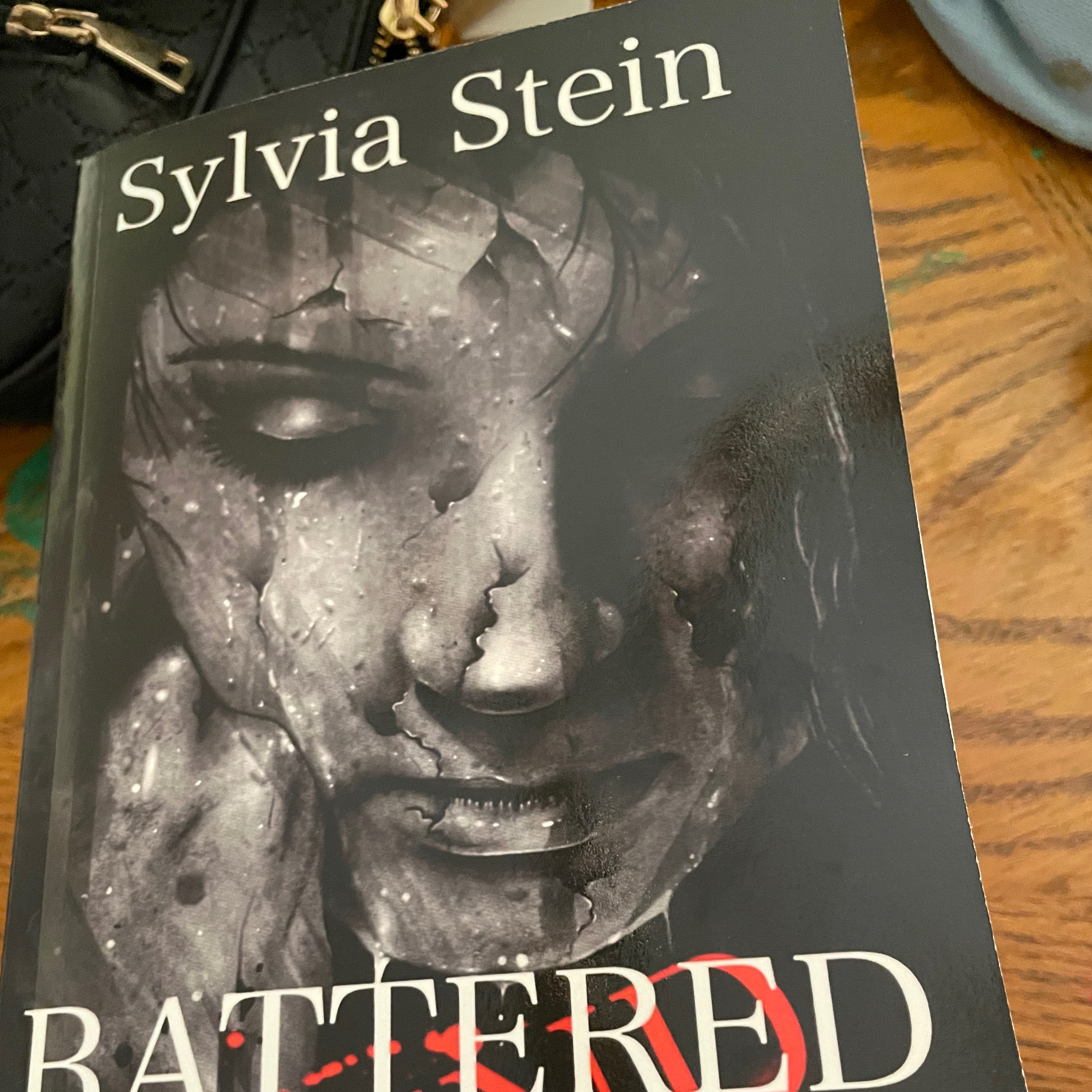
Hello. Hello. Welcome to the Daily with Phil Stein here on anchor. Today I am so pleased to have a wonderful guest.
She is a co-worker and an editor writer from Coffee House Writers, but let me do her introduction here on the Daily with Phil Stein. Happy Thursday everyone. I have a pleasure of having Francine Lee W. She is a content creator and assistant editor for Coffee House Writers.
She's a budding author currently working on her first dystopian novel. She recently graduated with a bachelor's degree in communication with a concentration in professional writing. And Francine has had a love of folks from a very young age. She's also an MCU, Doctor Who, and Ken Bruinfan and a believer in making dreams come true.
So without further ado, here's Francine Lee. Thank you for being here, Francine. Hi. How are you?
Thank you for having me. I am so good. I'm so happy that you're here and I'm glad that the late work and we had no technical difficulties because sometimes that does happen, but yay for technology today. Nice and easy.
Exactly. But thank you so much for coming to the Daily with me, Phil Stein, or Sylvia Stein here on Anchor. You're a wonderful person and I want more people to get to know you. So tell us about you today.
Well, I'm somebody who's taken the hard way through life. Like I've had lots of skills and talent, but I've always been like, oh you can't make money. I've been one of those people that's always been like, you dreams aside to make your money blah blah blah. Yeah.
The universe kept doing stuff to me to be like, hey, you need to realign. And I just I was one of those seven people that wouldn't listen. Yeah. And the beginning of May of 2015, I was riding my bicycle.
I was at the end of an 11 mile ride. I was on my house and I got hit by a car. Oh my gosh. By a lady who said that she didn't hit me.
Her mirror hit my handlebars and I fell off my back. Oh my gosh. You know, that's why I spent a lot of time being angry and very fortunate to have a very supportive husband. He's seen me start a lot of things and end them because I've always gone back to, I really love doing this.
Like I went to school photography. Yeah. I went to Johnson and Wales for baking and pastry arts and I did work in and kitchens and bakeries. Well, it was always you know, I make more money to do this.
I do that. I never followed my dreams. I'm hit by my car. I'm not by my car by this lady's car.
I finally realized, you know what, this is the universe saying, you are taking your life in the wrong direction. And I thought about it long and hard and I went to college for communications with a concentration of professional writing because I knew I wanted to write. Yes. But I didn't have faith that I'd make money.
So I was still thinking like that. And I love college. You know, I know there's a lot of people like it's too expensive. It's not worth it.
You know, you know, stuff that you need to to really succeed. And I totally disagree with that. Having gone to SMHU, there's like a great community. It's just a matter of finding the right college and through that community, I found the coffee house writers.
That's how I found you. Yes. Ruth, who was the one who introduced me to the bookmanship program that I was in. Yes, I remember from one of the meetings we had, right?
Yeah. Yeah. And it was quite, it's been quite a whirlwind. I was actually originally writing a nonfiction book.
Yes. About how to heal relationships with other women, because there's tons of self help out there about, you know, how to heal yourself. Yes. You know, even when we do stuff like that, you know, we still don't know how to move on.
We still have women who are like cutting other women's throats. Well, my God, you know, we're not coming together as a people and seeing, you know, in society right now, it's you versus me, you know, I can't be your friend. I can't get along with you if you aren't 100% in the same beliefs that I am, you know, yes, exactly. You guys, we can start helping each other, lifting each other up, right?
Exactly. Yes. Yes. So, you know, that book was supposed to be about how people come together.
And I believe in me, his name is Chuck Curven Danson from NPR's Hidden Brain Podcast. Oh, I listened to a podcast. You talked about how people achieve more and they have more knowledge and do better things when they work, you know, multi-culturally and together. So that was like, I had all these great ideas, but I just couldn't get professional neurologists, psychologists and sociologists, you know, I'm new to the field.
I don't have anything other than what I have on coffee house writers. So what I found is I'd send out a lot of requests for, you know, interviews and they would respond. Oh, my God. And so that's where I finally was like, you know what?
Universe is telling me this is the wrong book. And I finally learned to listen to the universe. So I guess you could say I'm the woman that's finally listening to the universe. So you're, you know, not to interrupt you, but because of those that are listening, you had, you know, you had, you thought you had one path when you started and now because you, you know, we're all stubborn.
We're always worried about money. Unfortunately, that does happen. We're always concerned. Am I going to have enough money for this?
But the universe kept telling you, no Francine, this is where you need to go. And this is where what path you should follow. And now you're going in a different route as a concerning your book, correct? Yes.
Yes. Wow. And yeah, so that's how I went up on fiction, you know, and it's um, and I love it because I mean, this book is just coming so freely and it's falling out. I mean, they're like, oh my gosh, I can't believe how much you're producing.
And I'm thinking to myself, I can't believe this story just keeps coming. It just, it's just taking you so, so many places. And that's, that's so wonderful to hear. Not about the accident.
That's, that's really unfortunate. And I only laughed with you of how you made it humorous. It's by the effect the person had, had, had hit you with their car and they tried to blame you. But you took it into another perspective.
I'm glad that that turned into a positive, even though anything you were upset about it. I was, I spent like a year and a half being angry and thinking, my life is over. What am I going to do? I can't stand to cook or bake anymore.
And I had too much of a gap in my employment history to go back to office work. Yes. You know, um, and uh, I was pretty angry for about a year and a half. It took me a while to come to terms and start applying for college and then just this whole experience since, uh, what was it, March?
Mm hmm. This is 2018. So March of, uh, was it 20? No, it wasn't 2016.
That's year I moved. We've been March of 2017. Yeah, so it took me a little over a year to complete my degree because I've been to so many different colleges doing different things and never finding my cap. But you finally did.
You finally did. Yeah. And um, if there's one thing that I want people to know from my stories, don't be afraid to change and don't be afraid to embrace what scares the mother duckin' out of you. Yes.
I like how you said that. You know. But, but that's the thing with you. And I have to brag about you here a bit.
One thing that Francine does very well as all of us at Coffee House Writers know, besides being a fantastic writer, if you haven't read her articles on Coffee House Writers from media, and we'll go more into that. You need to know she's such a great communicator. She gave a seminar for us at Coffee House Writers and she is such a gifted speaker. You are.
You truly are. You really, really are. So I had to, I had to stop and say that, but no more interrupts, just go ahead. There are times I don't feel comfortable speaking, but I kind of like how social media removes the audience for me.
So it makes it easier to speak because there are people looking at me giving me, you know, faces, they're probably bored off their board or just, you know, thinking intently about what I'm saying. No, actually, your voice is what I say. Your voice. No, I'm going to stop you right there.
Sorry. I lied about the interrupts. Your voice is so positive that it makes you keep going. You don't bore me at all.
Not one. Oh, thank you. Sorry. It is a gift.
Yeah. So, um, where did you want me to go? Did you want me to start talking about, um, how I've been going with the book and stuff like that? Yes.
Go ahead and talk to all the people listening who may not know about you, like you're, if you want to go into the beginning of how you, you know, you already told us how you got there, but tell us where you're going with everything. Yeah. Yeah. So I basically took the premise of my nonfiction book and I had a story that I started a couple of years ago and I put it away when I started school.
Okay. Um, and it happened because of I, uh, I'm a very kind of empathetic person. I would not call myself an empath. I'm not, um, at that level, but I'm empathetic to the way other people feel.
I get jumped. Yes. I get strong, you know, emotional feelings when I'm around people when I'm experiencing something, things like, I can't watch things like Mr. Bean and, um, that Ben Stiller movie where he meets, uh, meets his fiance's parents, because to me, I don't know those things so humiliating and I just feel horrible.
Okay. I see. Like, you don't like people getting humiliated in a movie or you find those things kind of embarrassing. I do.
I do. And, um, you know, so being one of those people and seeing what was going on in the world that I had moved from Massachusetts, um, 1,100 miles, um, down here to, uh, Savannah, Georgia. Okay. And it was, um, it was a huge learning curve.
Nobody likes to believe that they're racist. They believe, you know, is that a kind heart? I'm non judgmental. I don't care, you know, who you are, what you look like, anything like that, you know, but when you come to Savannah and you experience what it's like for them, you're thinking, Oh my gosh, you know, everybody's defending, you know, the Confederate flag as if it's, um, you know, piece of history.
But when you think about it, um, history displays, you know, relics of the heroes. They don't display relics of the people who lost. And so that is true. I never thought of it like that, but yes, it makes sense.
Savannah is unique in that it's one of the few cities in the country where there are more African Americans, um, than people who, um, who would be considered white. Um, and it has a very, very small Hispanic and Asian community compared to those two. Um, and, um, so I experienced a lot getting to know people talking to us. One thing that I didn't get a lot of doing up north was talking to people.
The only people I got to talk to were like the, the Hispanics in the kitchens. I didn't experience, you know, they experienced, um, some racism and stuff like that. But, uh, at the time that I was working with them before Trump and all that and built the wall and all that other stuff, they weren't as persecuted as they are now. It's, it's nothing worse.
And, you know, um, I'm, I'm in Savannah, Georgia, and I'm seeing that these people are literally living under oppression. They have a bridge named after a racist governor. They have Confederate, uh, statues and all sorts of other stuff out there. And, and I'm thinking, you know, these things, they're right.
They belong in a museum. You don't go to Germany and see statues denazis everywhere. Losers get tucked away. You always put out the windows, but down here, there's no reconstruction and civil war reconstructionists with, uh, you know, streets named after them.
There's no statues of union heroes who, you know, um, helped free the slaves or anything like that. And it's literally, I believe, meant to, to, to, to hold, to continue to hold people in what they want to believe is their place. And there's a bunch of other issues going on, but I don't want to get into a big, you know, political debate, you know, but I saw that. And, and with the news when, you know, Trump became president, where everything grew up, I mean, there were before that we had the flint issue, you know, which shows that there's, you know, all sorts of systemic issues.
There's an education issue, which is another systemic issue in Savannah. Um, you know, and you're seeing all this blow up in these riots and people are finally standing up and then people are standing up against the people who are standing up for, you know, basically to save themselves, deliver better life. And I just started seeing the country divide and still. Yeah, there's too much division.
That's all I'll say about that because there is a lot of divisions. It's not that I don't care because I do, but there's so much division and more has to be done about that. There's too much. And it's like a more of a subject for like, that needs to be resolved.
And there's so much people, you know, especially like you said, you're surrounded by the different people that are getting hurt by it, but there's so much divide everywhere and different races are getting affected. It's just the ongoing thing and it's sad. But you know, but I think you're going with something from that, right? I think I want to interrupt.
Yeah, no, no, I mean, so, you know, this is, this is where the front is where my book came. It was, let's set it in the future. And all I was thinking about was we're going to set it in the future. Um, the world is falling apart because we couldn't come together.
As when president after president, it's gotten worse. You know, TV becomes government TV. Um, there's no privacy. You know, people are breaking off into little militias, gangs, groups, you know, stuff like that.
We're completely a divided nation. And now other nations see America, you know, so we're at a civil war, you know, it becomes a civil war. And then other nations see America, this one's great nation that has potential and power and they're going to attack us. And that actually all happens before the book starts.
Okay. Because what I wanted to concentrate on was what happens when people finally pull together. Okay. And this is where it goes back to, uh, the hidden brain episode about people from multiple cultures coming together.
Now, this episode was a belief in January of this year, but it, it very, if you listen to the episode, it very much reinforced my idea of what I wanted for this book, we were going to come up with a group of people that were Hispanic, gay, Christian, Muslim, you know, just all these people that are fighting and at each other's roots, they're going to come together and they were going to make a difference. Okay. So your whole premise of the book is to show how all of these people come together in spite of their, like what people, you know, will say our differences, but they're really buying a common ground. Could you say that finding a common ground in something, a cause that's greater than them that they believe will make a change in the world, you know, and other people's lives.
So they're sacrificing themselves, you know, in their lives, because you figure, well, I don't want to give up too much, but basically this war has been going on for 18 years. Oh my goodness. Yes. Because we're just that divided and we've had the outside attacks and stuff like that.
And it's great. And this is where I put it aside from it, because I don't know where to go with it. I'm like, this is all to be more, but that's what happened, blah, blah. And then, you know, when I switched from the non-fiction book to this book, this is where I tell every, every reader ever since I started working with this developmental editor and working on my novel, yeah, listen to your editors, let your ego go.
Yes. And listen to your editors, because one of I have editors, she was like, Oh, this is great. This is wonderful. You know, I'm like, oh, where to go?
What am I going to do? And like I said, I switched mentorship instead of having 20 weeks to come up with my prime idea. You know, and I had I had 10 weeks to write my first 20,000 words and my author now. And so I only had 10 weeks to go.
And at that, at about that 10 week point, my developmental editor just drops off. And, but luckily they assigned me another developmental editor. And the first thing he, one of the first things he said to me when he called me to introduce himself is, you know, he introduced himself, said he's, you know, written, you know, he's been a script writer in Hollywood. And he, you know, listed off all his credentials and stuff.
And then he said, I don't give a crap about your ego. My loyalty is to the story. Yeah, I'm going to make you kill darlings. And you might think they're great, but I am not going to coddle your ego.
And I was kind of like, whatever, you know, yeah, but I found it to be very good because, you know, he's come back and he's had such great insight. And I really think that people, it helps to have that outside people. I was just thinking war, I'm going to be balanced. People can be fighting, you know, but you know, war, there's casualties.
And I like that. I like that he was that even though sometimes for others, it may come up as high strung, like you said, but you've got to learn that's where you learn about your ego and letting it go and let the story, you know, carry you for me, it's the opposite. His characters that carry my story. I was going to get into that like, it seems like your story's carrying the whole premise or would you say your characters are writing it from the first person pointed to you.
Okay. So one of the things that my editor has told me is the story has to come from her in her mind. But like, there's a lot, another thing that, you know, another reason why you need to really listen to your editors is I tend to have a bad habit of breaking the fourth wall. And he's like, you need to get back in her head.
Put this in a conversation. So the majority of my story is told through conversations and interactions. Now last week, you had a wonderful podcast that I would suggest to anyone about writing the dialogue and how you don't just write the dialogue because then it sounds unnatural. You've put things in there.
Like, here's the first half of what he said, but here's how she reacted to it. Yes. No. He said blah, blah, blah, blah.
And she did, you know, she took a step back and thought to herself, is this man crazy? And you go back to letting him continue. And she continues to, you know, process her thoughts or shake her head or, you know, she lost my arms. Yes.
Wondering what the hell this guy is talking about, you know, something like that. Yes. So in a way, because I chose first person point of view, I have to stay in the present tense. And I have to literally do it through the character's dialogue.
Yes. You know, so it really depends, like, if I had done it, like an omniscient version where somebody else is telling the story from the outside, it would be different. My story could carry it. Yeah, like, I'm missing that narrator, kind of like, some of these stories, kind of trying to figure out who's, you know, is it under a reliable narrator or who is this talking, you know?
Exactly. And the reason I chose the first person point of view is because this is more. Yes. I have to have a lot of tension in the book.
And you have to have that connection with the reader from the very start. Exactly. So you're not going to know what's going on around her. You're not going to know what other people are doing.
You're only going to know what she knows. So when it happens to her, it happens to you, you know, and she finds out the way you find out. Yes. Because you're not going to see anything external.
Exactly. Exactly. That sounds I'm that's so fascinating to me that about what you're talking about, you know, where your dystopian novel is going. I hope I said that correctly.
Yes. And it sounds just so powerful. And I can't, was there a lot of research involved with this? I imagine there is.
Yes. Well, like I said, I have to do a ton of research on getting back to listening to your developmental editor. I was thinking just war and he said, this is set in 2018. You've got another antagonist.
That's not human. And I was like, what's that? He's like, you realize that in 2018, climate change is going to be a huge issue. Oh, so that's another character, right?
Not just a character. I had to create a whole new world, but it gave such life to my story. It changed it. All of a sudden, I knew what the catalyst was going to be because it wasn't going to be human.
I knew, you know, the catalyst to get her on her, uh, her, uh, her quest, you know, um, you know, and, and I was like, holy crap, you know, I was like, I never even thought about this. Now they're not only fighting people, they're fighting the environment. They have to survive and, and, and a place, you know, and it's amazing. And it took a lot of research to find out, you know, what is our world going to be like?
I went by one main website, but I also looked at other websites to compare it. And then I was like, well, I can tweak it, take a little, you know, you know, fictitious lead in this direction or that, but I can get it to be too far off because you want it to be believable. You don't want to insult your readers. No, you do not.
Exactly. You know, your readers are going to mind if you take a little, you know, creative justice, but they're, they're going to mind if you write something that's completely just insanely not correct. Exactly. Exactly.
So, so what did you, um, because you do both, you're a great writer, you're an editor. Do you find it hard to separate the two when you're working on something like this because you are an editor? Um, I actually haven't because I've relied so much on my developmental editor to help guide me. Okay.
One of the things is I've never written a novel before. Like I said, I went to school for professional writing. You want somebody to write you a blog post to write you an article, um, to write some public relation, whether or anything like that. I, I'm the person to support that.
Yes. Um, you know, and so writing a novel, you know, a lot of people, you know, I hate when people are like, you are a writer because you write. And one of the things that I've learned having gone back to college is you are not a writer because you're right. You need to know what kind of writer you are, how to write for that style, you know, what your audience is and what they expect, because you can't just go off writing whatever you want.
Yeah, like the target, target audience. You're more, you were more of a technical writer. Very technical writer. Yeah.
So writing the novel was new to me, but I had, you know, there's a lot of stuff that because I'm a part of Coffee House writers that they posted. So I started learning from that. I listened to your podcast. I've listened to my development editor.
And like I said, one of the things that I did and that I'm very grateful about is I joined a mentorship program. So I've been guided throughout this process and I've been very lucky to be guided throughout this process because it's almost like getting, you know, in another degree, you know, but this degree isn't writing. And I believe that if you want to be a writer, you have to study writing. Yes.
I mean, I didn't know that there were seven different, you know, stories, you know, kinds of stories, different story arcs, and then you've got character arcs. And then, you know, and all these things have been written. Yes. It's a different thing.
It's like when I went to SNHU for writing, I love writing stories, my own stories, but I actually had to like join a writer's group and join SNHU to become the writer that I wanted to be. Yes. And it's very important that you be humble because I didn't go on Coffee House writers and I can, I can edit an article or a poem and be like, yes, this is perfect. This is beautiful.
I've struggled with, I have one person, her name is Amber, and she writes fiction. And I've struggled anything hard because I didn't exactly understand how things have to go and this and that. But that's the one thing about good about Coffee House writers is you share the information. We have the bi-monthly training meetings.
Yes, and you learn. And then also through this learning through this program, learning through, you know, my developmental editor, I've learned to approach her anything differently. And in a way, it's helped like when I edit somebody's article and once I edit somebody's poem, I think now they're like, hey, you know, you're kind of missing this element. There's like, you need to explain this poem.
Yes. Yeah. You know, because story arcs are as important in an article or a poem as they are in a story. Yes.
Because you're telling somebody something, you could be, you know, writing for popular mechanics about the latest satellite technology. But that's basically a story. This is what I'm going to talk about. Why is it important?
What makes it matter? What are the key points? Why is it important to you? And it's all a story.
Exactly. You've got to know the background is like, when you're writing your story, you have to have that backstory. You can't assume that your audience is going to know everything. Yes.
So you do have to create some type of backstory. Yeah. And the only thing that I enjoy more about the novels than I do about the technical, you know, journalistic writing that I've been doing is that I get to add a bit more detail. But I think I got a little overbored.
Okay. My developmental editor went through like three chapters last night. He's like, you need to cut this. This is too much.
This is too wordy reword this. So it doesn't sound good. Yeah. Well, that's the entity part right now.
You know, so I went from being like, excited. Oh, yep, this is writing. Cut it back down. You know, so you're not just a writer, because you write, you're right, because you write and you study and hone your craft, hone your craft exact.
And this is the reason for the reason why I like to do these podcasts. You learn something new every time from different people, different people that come that have written a novel or starting to write a novel or, you know, you learn something new or you add a book like I like to use the writer's devotional. It helps people hone their craft. It gives you different assignments to work on.
And what you just said, you know, kind of made me kind of, you know, it goes with what I like to do for the podcast. The whole point is to give you more and like a tip or advice to, you know, kind of maybe guide you on your path as a mentorship or something. Yes, yes, exactly. And even if you can't afford college, if it's out of your reach, you know, there's so much information online, find a way to join a mentorship program, but I want YouTube, you know, and I start watching videos that people have posted about, you know, about how to, you know, about how to write, how to, how to start with your character, how to start with a broad stroke.
And that's why I like the coffee house writers, because we have a whole array of people like Tracy Hicks, shout out to her, she's always sharing articles that help writers all the time. And there's always people like Chastity, she's so wonderful at responding and answering questions. Yes, Caitlyn is a huge Caitlyn. Yes, Caitlyn, I had her on the show, Caitlyn Haynes, my boss that I say, because I do team advertising with her, she's ahead there.
And of course, Jessica Knopel and everyone on top of the house is just amazing. Alexandria and all the wonderful three shining hints. And I hope I get her here to come to the show. She only did an advice piece about her draft and writing drafts and all of that.
But Chastity, yes, she's another good one. And a lot of great people, but I sense that you've got to have that mentorship or writers group that you might want to join to help you hone your skills, if you can't afford to attend a college. And if you consider coffee house writers to what I said about, you know, different people, different backgrounds, you know, we're becoming better because we're sharing experiences with people that are outside of our, you know, our, you know, local comfort zone outside of, you know, people who live completely different lives from us. They, you know, we have article writers, we have blog post writers, we have book reviewers, book reviewers, entertainment pieces, political stances, you know, there's a whole array of people that have so much to offer with.
And that's why I suggest that people join a mentorship program, you know, they can be anywhere, you know, they can be cheap, they can be expensive, but find a way to save up the money. I mean, I was lucky this one that I went through. He only works with college students, but I put 150 down for the developmental and they're putting $300 down to the advertisement. And then I have to sell 200 books to cover all the publication and advertising costs, you know, like to run the ads and stuff that I guess is $300 just to make the video and stuff or something like that.
I was told I'd be reimbursed after I sold 200, 200 books or so. So it's a pre-sale, it's a pre-sale publication publisher. It's a pre-sale publisher. So it started to get you to publishing.
And I've learned a lot about how to go about publishing. I was thinking I was going to go to the traditional group because that was the only thing that was considered acceptable. You know, I was still believing, you know, that, you know, people don't, you know, that traditional public publishers don't like the, you know, people who sell published that they think that they're less or writers or whatnot. But then I was walked reading, eavesdropping on, I think it was the writing talk in the Coffee House writers and you and Shacity were going and a few other people were going back and forth.
I think, and it was, you guys are talking about how a lot of publishers now, they want to see your social media, they want to see how successful you're self-publishing is. And now they look to self-published authors to see how, to see what your platform, what you're building, because a lot of times, yes, traditional is easier up and it is a lot harder to get into. Yeah. So, you know, it's, there's a lot more to writing than just writing.
Nowadays, like many other, you know, even just, you know, people say they hate social media about products and blah, blah, blah, blah, but anyways, it's expanded a lot, it's made it better too. It's a two-way sword and you just got to figure out which side you're going to have, right? Yeah. So, now writers, they're also going to have to be second voters.
They're going to have to know how to market their writing. They're going to have to know how to go about looking for a publisher and so on. So, there's more to being a writer than just sitting down and writing a book. You're not a writer if you just sit down and write.
I sit down and for eight hours a day, I write, I research my topic that I'm writing about. I research, you know, trends and fiction writing, trends and social media writing, you know, there's a lot, I think we're doing a disservice to everything that authors do. And I think it's one of the reason why a lot of content writers and, you know, other people who write for companies, for publications and stuff like that. The reasons that we're having issues with getting paid what we're worth, I believe, falls back to people assuming that anybody can write.
And I still hear that from people. Anybody can write. But the thing is, can they write well? Can they write what you need?
Will they're writing a dream, an audience? Yeah. It's just, it's just, everyone has a different, that's like you said, you are correct in what you're saying, but everyone, you know, to turn like devil's advocate here. There is a, you know, a lot of people have a different belief too.
So that that's where, you know, you got to reach a common ground to please because there's a lot of people that do write and there's those that do write and do write well that are great to share their work. So, you know, there is, there is differences, but you've made a good point on that. I do, I do agree with everything you brought today to the, to the show. It's been, like I said, you have a whole new insight for what you're, what you're working on, for what authors should do.
There was a lot of great advice that you've given today from, from your interview, from, from what you're telling us. And I wanted to add, and I didn't want to take away with what you were saying, but I wanted to say like, for those that want to connect with you through social media, or do you have a platform for that, for them? Yes. Um, I have a Facebook page, Francine legal writer.
Okay. And I, I do, I've been neglecting and I do need to get back to it. One place that I am on multiple times a week though, is a legal dot, at legal dot Francine on Instagram. Okay.
Okay. You can do Frankie W1313. That's my personal one, but my, uh, I just started a writing one about two, three weeks ago, and I've been pretty active on it. And that is at legal dot Francine.
At legal dot Francine. Okay. Yes. And, um, and I will get all of your links and put them with the podcast, um, for everyone.
I wanted to say, is there like anything additional that you wanted to add to what you said today? Yeah. Well, you, you, you brought up the writers that are really great writers, but they're great to share their work. And I just want to say the one thing that I've learned is to be vulnerable.
Okay. Um, when you share yourself, I mean, even if it's a fictional character, you have undoubtedly put yourself into a number of characters in your book. If you're writing, um, an article about something that is personal to you, uh, say a feature article or a blog post, don't be afraid to be vulnerable because that's how your audience is going to connect to you. And you will be so surprised at how many people are going to embrace your vulnerability.
Yes. Then, then, then shun it. Um, so don't be afraid to be vulnerable. Your vulnerability is your strength.
Yes. Exactly. And, and, and that's the same way it was for me when I started. I, I was afraid just to start anything, to start this podcast.
But one day I said, you know, I really want to help other authors. I really want to give, say something, you know, teach something, you know, teaching is, educate or whatever it may bring back that person is listening, whether it's one person to fight people or whoever it is striking. You know, don't, don't be afraid to, like I said, be vulnerable. That's a great point.
And like I said, you, you've had a lot of great points today. It was shared a lot of yourself. And, uh, so now you're just don't waiting to publish your novel, correct? Yeah.
Um, it's my first draft is you, I was just told it's June 26th. They gave me three extra days. I'm loving it. Um, and then it will supposedly be published in December.
Yeah. Sales start in July, but anybody's interested. Um, they can contact me and I will create a mailing list to let them know. So contact me either on my Facebook or my Instagram and I will, you know, give me your information and I will let you know when sales start.
Well, that is, that's just so, so awesome. I, uh, I really have been enlightening, uh, I've learned, uh, educated and, uh, it's been such a wonderful interview because it where it started and where it took off and, you know, all the points that you covered. I'm sure everyone is listening to Francine Lee today. I hope that you're able to grasp something for yourself, you know, from where she started to what the universe, you know, it shook her basically and said, Hey, you're going to do this.
Exactly. You know, whether you like it or not, this is what's going to happen. Instead of, you know, direct, some of us do a lot. We, uh, we let one thing bring us down.
She had a setback with that accident, but instead of letting her anger consume her, she decided to do something different and, and found SNHU got her degree, right? And I believe that's what happened. And then look, look where she is now. And she isn't a wonderful speaker.
I personally think you are. And if you don't start a podcast, you should, because you're very good at it. I have stuff to start a podcast. I'm just trying to figure out what my topic is going to be.
I don't think there'll be anything you can't cover. No, I'm going to talking. I just need to get rid of all the arms. No, exactly.
And I still do that when I listen back to my voice. I'm like, I rather listen to the guests. I still need to work on them. Yes.
But you learn every day. And like I said, I hope that you enjoy being on the daily here with Salutely have and I love, I love your podcast. I've been enjoying it. Because like I said, just listening to people who are experiencing it and living through, living through, you know, writing and I'm learning from it.
You will, you know, I don't know who said it, but there was a quote that well, I'm going to paraphrase it because I can't remember exactly. But life, you will always be learning if you stop learning, if you think you've learned everything in your debt. Yes, I've heard of it before. Yes.
Yes. That's a great way of looking at things. I really, I really, I'm really glad you said that. And I guess at Francine, it's been a pleasure.
And I'm absolutely thrilled and excited that I got to be on your podcast. And I really appreciate it. And you're always welcome to come and share whatever you want to bring to the table. I'm pretty sure we're gonna have a lot of downloads from this podcast.
And what I'll do is once I have it ready, I'll send it to Francine and we'll share, share, share. Absolutely. And all the information you need to know about her. And is there anything you want, anything else you wanted to add before we show?
No, I think that is very perfect. We've had a lot of very important points. So let's, let's give people stuff to digest rather than overstimulate. Okay, well, that's a good way to end it.
Exactly. Thank you so, so much Francine. Thank you everyone for tuning in to the day that was so Stein. On anchor, please make sure you download this episode once I have it.
I will, I will finish the recording and then share it. And then you'll, you'll get to share the wonderful Francine Lee. And thank you so, so much for being here today. You're welcome.
I was enough to the pleasure. Thank you. So same here. Everyone have a happy, happy Thursday.
Enjoy your day. And please listen to the podcast. And thank you for joining me here on anchor. As always, have a wonderful and blessed day.
Bye bye. Thank you, Francine. You're welcome. Bye bye.
Bye bye.