
EPISODE · Sep 8, 2025 · 4 MIN
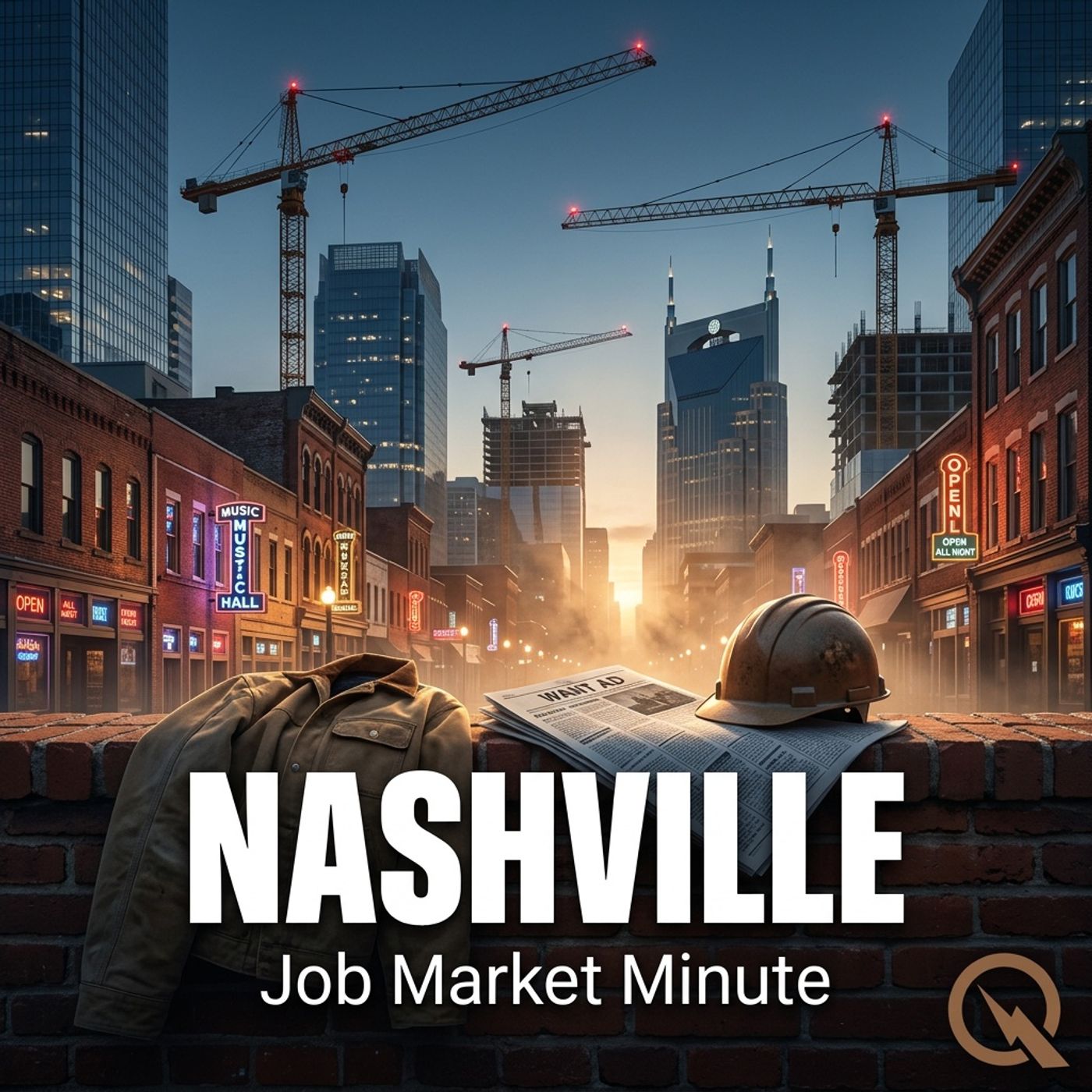
Nashville's Evolving Job Market: Resilience, Diversity, and Adaptation
from Nashville Job Market Minute · host Inception Point AI
Nashville’s job market in September 2025 shows robust activity but faces a period of transition, marked by steady employment, rising labor force participation, and evolving industry strengths. The city’s unemployment rate has recently hovered near the national average, with sources such as WGNS Radio stating that improvement is expected as the fall semester reopens and seasonal hiring ramps up, reflecting the cyclical nature of local job metrics driven by education, hospitality, and logistics. According to ZipRecruiter, major Nashville employers currently include UPS, Kroger, Pinnacle, FedEx, Costco, and Automation Personnel Services, confirming the city’s continued reliance on distribution, retail, and service sectors. Nashville’s employment landscape is diverse, with healthcare, professional services, entertainment, technology, and hospitality acting as cornerstones of the local economy. Data from the Bureau of Labor Statistics and CNBC highlights that healthcare remains one of the fastest growing sectors nationwide, and in Nashville, this trend is underpinned by a cluster of hospital systems and healthcare corporations. Social assistance and individual services also continue to expand amidst a backdrop of declining jobs in federal government and manufacturing, indicating a shift away from more traditional employment sectors. Home closings statistics from Greater Nashville Realtors show 3,056 closings in August 2025—a slight 1% decrease from the previous year, suggesting a stable yet tightening housing market with affordability concerns impacting local worker mobility and cost of living. Market evolution in Nashville, such as the major East Bank riverfront redevelopment, is expected to alter spatial job patterns, attract new businesses, and support growth in real estate, construction, and technology. According to AInvest, Nashville’s vacancy rates and median home prices highlight resilience in the residential market and potential for further economic expansion. Seasonal patterns influence hiring, with logistics, warehouse, and retail seeing predictable peaks during holidays, school terms, and summer tourist influxes. Commuting trends remain influenced by urban development, but as the city grows outwards, more workers travel from the suburbs, increasing reliance on regional transit options and carpool initiatives. Government action in Nashville now centers heavily on infrastructure investment, workforce training programs, and incentives for high-growth companies. These efforts target skill gaps and aim to keep pace with population gains and business relocations, particularly in technology, entertainment, and advanced manufacturing. Recent developments such as the opening of new distribution centers, tech startups, and entertainment venues underscore the city’s evolution toward a hub status in both music and information industries. However, official labor data can lag behind rapid market shifts and privately reported figures, requiring careful This content was created in partnership and with the help of Artificial Intelligence AI.
Embed this episode
NOW PLAYING
Nashville's Evolving Job Market: Resilience, Diversity, and Adaptation
No transcript for this episode yet
Similar Episodes
No similar episodes found.