
Well, good morning and happy, happy birthday! Welcome to The Daily with Sil Stein here on Anchor. I am Sylvia Stein. Good morning, everyone.
I hope you all had a great Halloween. I know we did, and it was amazing. So I hope you all are having a great, great Thursday today. And welcome to The Daily with Sil Stein here on Anchor.
I want to talk about, as we know, National Novel Month, or NaNoWriMo. This is something that has started today and will end at the end of the month. And the goal of National Novel Month is to get yourself to write a novel in 30 days. Basically, it's been going on for a while now.
National Novel Month, as you know, for those that don't, it got started with trying to get writers, authors to begin, you know, working. It's an annual internet-based creative writing project that takes place during the month of November. And all the participants, you attempt to write a 50,000-word manuscript between November 1st and 30th. And they give you sprints and ways to work on it.
But basically, this started back in July of 1999 with 21 participants. And by the 2010 event, over 200,000 people took part and wrote a total of over 2.8 billion words. So this, you know, it started with trying to get people to write, and then it just became a whole phenomenon. So it started, I believe, in the San Francisco Bay Area by a freelance writer by the name of Chris Beatty.
And then it just took off and it took a life of its own. I wanted to just kind of reflect a little bit about National Novel Month. Of course, I'm going to go into my own advice about National Novel Month. And, you know, I just wanted to wish, first of all, everyone that's participating in National Novel Month a very successful, you know, for you to begin and the end and the whole process.
I hope you do well. And for those that are just concentrating on getting the 50,000 words, that's great. Don't think you don't. But there are a few tips I would like for you to follow or at least listen to.
And then, you know, of course, everyone goes through their own advice and their own tips and stuff. And if you have your own tips of what you're doing, please call in and share that with me here on the show because that would be amazing to reflect on and talk about. So we'll be right back with more on National Novel Month here on The Daily with Sil Stein on Anchor. Happy, happy Thursday.
We'll be back. And happy, happy Thursday. Welcome to The Daily with Sil Stein here on Anchor. Now we move on to part two.
Here, normally I would be doing the intro would be the author's corner where we talk about books that we recommend. Of course, that's the first segment. But for today, it's all about National Novel Month. I want to just focus on that today on today's show.
Tomorrow, even though I'll still be talking about National Novel Month, I will go with the regular books I recommend on author's corner and news and then my own author news and then the writing tips. I'll do that in the wrap up for today. It's just about National Novel Month and the wrap up. And if you have if you feel like you want to call in and give your own advice and your own tips for what it's been like or what you did and what you will not do or what are you nervous about, please call in the show or you can also email us at SilWriter07 at gmail.com and I will share those comments with you guys.
But I wanted to share about my own experience in National Novel Month. First and foremost, I did try it in 2012 and I didn't succeed, so I just decided not to do it. I got too overwhelmed with trying to get the 50,000 words and I was going to school at Southern New Hampshire University as an HU. I was working on another novel, which is now Closure.
That was my first novel that I created on when I was on as a short story when I was attending Southern New Hampshire University. Then, of course, I was so overwhelmed. I didn't even continue it, so I gave up. I was too focused on trying to get the 50,000 words.
It wasn't happening and I just gave up. But what I learned was that other people at the time that I was talking to were dealing with the same type of nervousness. And basically what I heard a lot was focus just on what you're writing. Don't focus on how many words.
Try to give yourself a limit, but just work on them without editing. And that's what I did. I didn't worry about editing my novel. I was editing too much on the first one, not focusing and enjoying but just the free writing, which is what I did.
I free wrote and then I came up with a novel called Clarity at the time. And that story took its own shape and it focused on some event happened during the summer of 2012. And I was so shattered by it. It was about a TV show.
I won't go into the details. And then a beloved character had passed and I was so shaken by it. And then I started thinking about what it would be like to lose someone that you care about. And I created what later is now known as Chasing Clarity.
And I created the story of Mia Girard. And it went from there and I started it with Clarity. And I did it, I think, as a third person novel when I did it on NaNo. And before I knew it, I was done with the whole book.
I did it within, before the 30th, I became a National Novel Month winner for 2013. But the thing was, I wasn't focused on the whole process of 50,000 words. I just went with free writing and I really, really loved it. And we'll be right back with more.
And now we're back with part three of The Daily with Sil Stein on Anchor, speaking about National Novel Month. So as I said, where I left off, Chasing Clarity 2013, or Clarity at the time, became my National Novel Month winner. But I was really just enjoying the process of writing the story. It poured out of me and I was able to just write it.
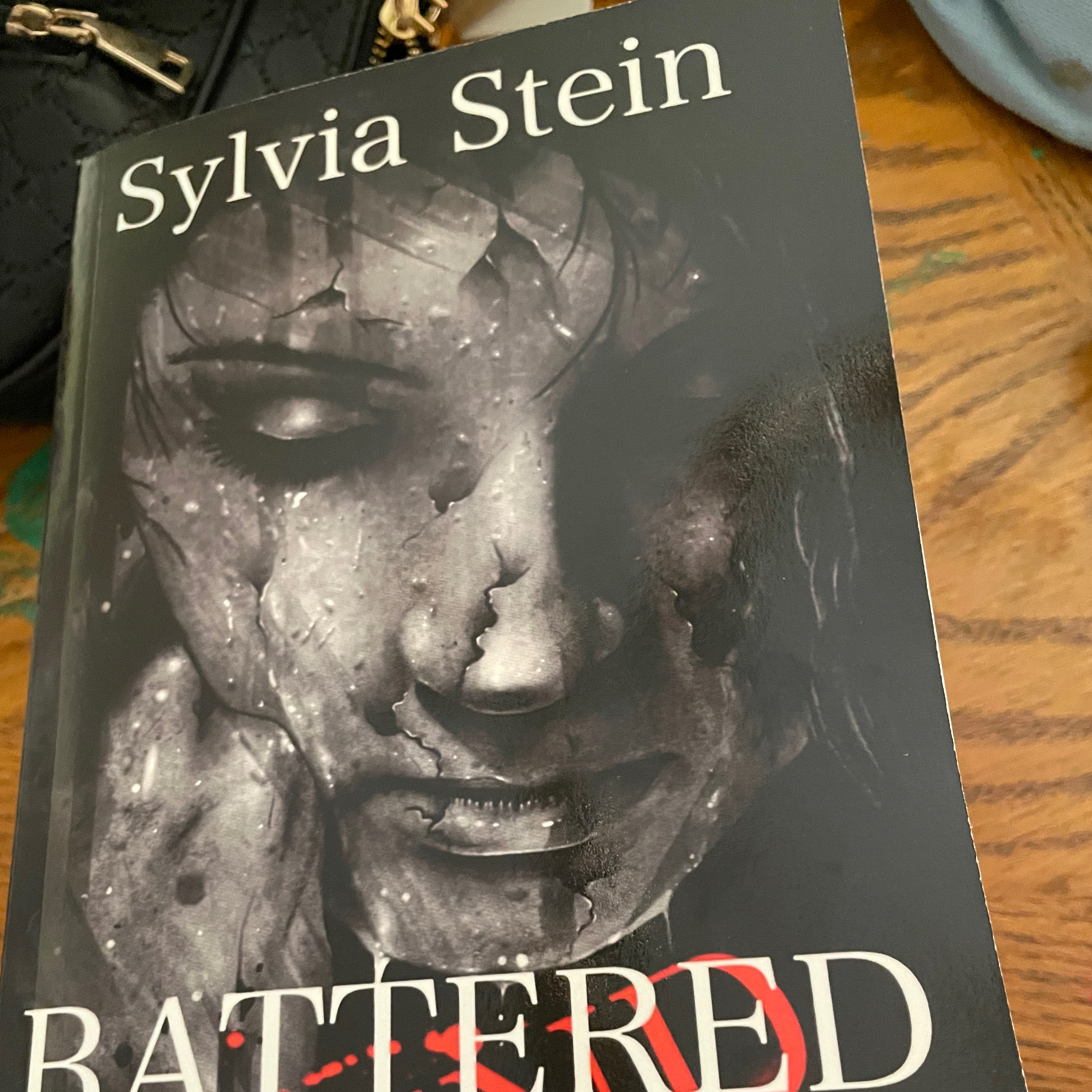
And then I won that 2013. I won National Novel Month that year. And I was really, really excited and happy. And it only motivated me for the following year where I started working on a novel called, which is my thriller coming out next year, Battered Mind.
I created this story. It just came, you know, it was like a little process here and there. I didn't know what I wanted to do and I started creating the Sadie Martin Carlisle story. And also that year, the same thing.
Excuse me, again, I drank a lot of coffee. I always do that. I apologize. And that story, it was something that I just needed to say.
I wrote it, the first draft, and it came out and I didn't worry about editing or anything. And then I also won it that year. But I just focused on the group environment that I had. I had it in 2013.
I had a few writers. 2014, same thing. And I think all of that together helped with my process of what I wanted to do and trying to set up an outline. I also worked on that and that helped.
And then, of course, there were the years that I failed at it. I tried to do another possible sequel to Battered Mind and I didn't get that done. And then, of course, in 2015 and I wasn't really into it because I had too much going on. I was graduating, all this excitement.
And I really didn't focus on a group and I never got to do the ones in July that come out that you do on National Novel Month for July. And then I jumped into trying to do another novel in 2016 and also I got too caught up in trying to do too many things at once and I didn't get that done. So the main thing that you can take out of the National Novel Month, as far as for me, the tips I give is be focused, know what you want to write about and enjoy what you're doing. Enjoy the process.
Don't edit. Do it later and get yourself a group of people that will be there for you to just vent or when you start getting discouraged, but you keep on going. And if you have too much going on, you know, either try to write when you can or set up a schedule. But a lot of times when you're overwhelmed by too many things, you have to really prioritize what you want to do.
And for me as a mom and having kids and having so many things, a job and and of course, you know, too many things like a daytime job and all this stuff with school, you've really got to put all the like prioritize yourself with the things that matter because those are going to be the make or break when it comes to you being able to write your novel and work on it. So we'll be right back. And now we are going to do the wrap up. I know it was a pretty quick show for the daily with Silstein here on Anchor talking about National Novel Month.
But basically, the message is simple. What I was trying to do is just give you my own experience of what I did, of what worked for me, what didn't work for me. But it does help to do sprints, try to set up a schedule where you work on, you know, a certain sprint kind of like either you want to time it or or set yourself in an hour or a couple of hours and see how much you can do that doesn't mean I won't return for it next year or the following year, but I am really, really grateful that I was able to do the podcast today for the Daily with Sols9 to talk about National Novel Writing Month and to offer you my own advice and tips of what I did. And if you would like to call in and weigh in on what I said, or want to give your own advice or your own tips or your own hesitation, please call into the show or email me at [email protected].
And as always, I'm really grateful that you joined us here on the Daily with Sols9 here on Anchor. I hope you'll join me tomorrow for another show, which will be in the regular format that I just began last week. Have a great and happy Thursday. Thank you for listening.
Bye-bye.