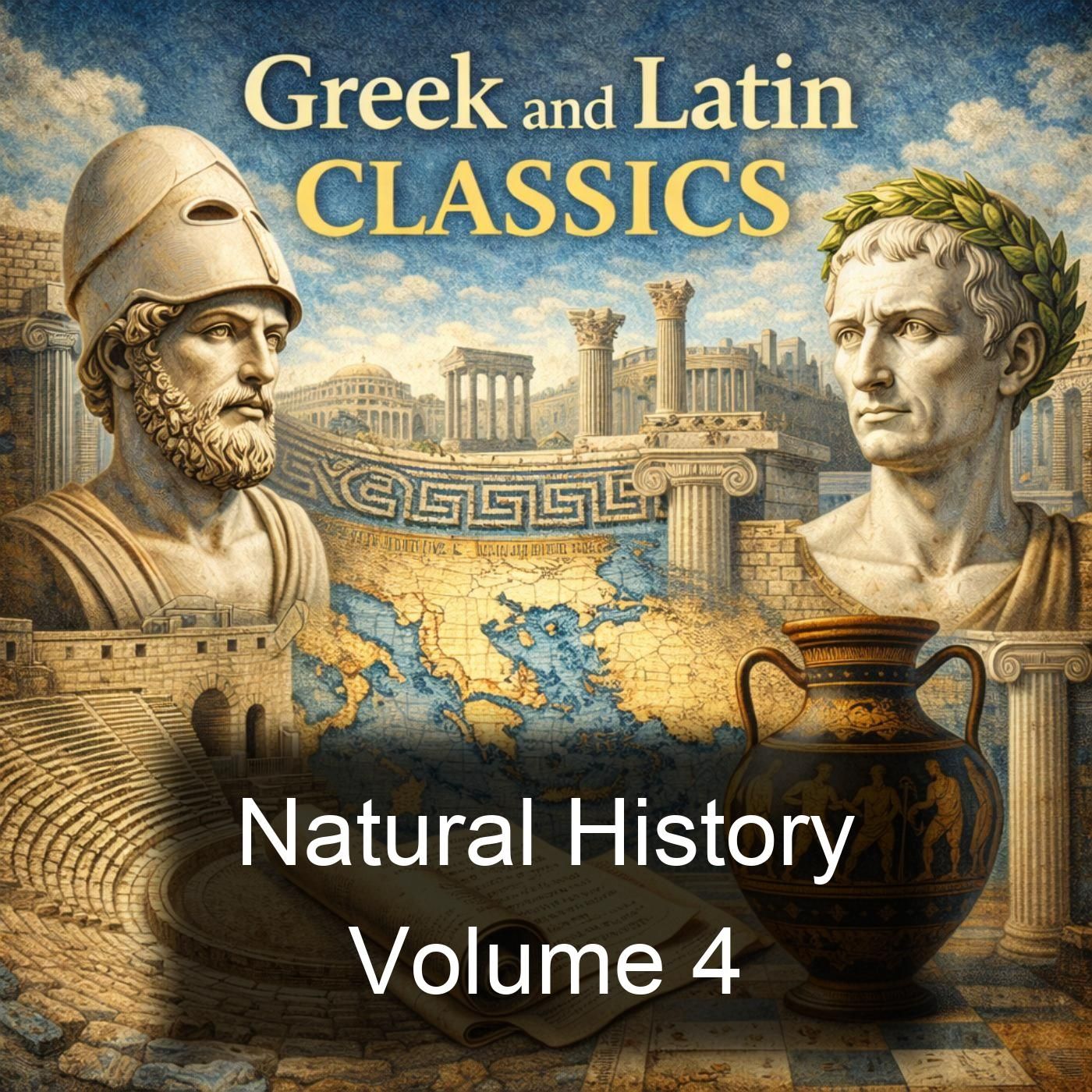
Natural History Volume 4 - Pliny the Elder - Part 1 episode artwork

EPISODE · May 13, 2026 · 9H 26M

Natural History Volume 4 - Pliny the Elder - Part 1

from Natural History Volume 4 · host Pliny the Elder

Naturalis Historia (Latin for "Natural History") is an encyclopedia published circa AD 77-79 by Pliny the Elder. It is one of the largest single works to have survived from the Roman empire to the modern day and purports to cover the entire field of ancient knowledge, based on the best authorities available to Pliny. The work became a model for all later encyclopedias in terms of the breadth of subject matter examined, the need to reference original authors, and a comprehensive index list of the contents. The scheme of his great work is vast and comprehensive, being nothing short of an encyclopedia of learning and of art so far as they are connected with nature or draw their materials from nature. The work divides neatly into the organic world of plants and animals, and the realm of inorganic matter, although there are frequent digressions in each section. He is especially interested in not just describing the occurrence of plants, animals and insects, but also their exploitation (or abuse) by man, especially Romans. The description of metals and minerals is particularly detailed, and valuable for the history of science as being the most extensive compilation still available from the ancient world. (Summary adapted from Wikipedia by Leni)This fourth volume includes books sixteen to twenty, covering the following subjects:Book 16 - The natural history of the forest treesBook 17 - The natural history of the cultivated treesBook 18 - The natural history of grainBook 19 - The nature and cultivation of flax and an account of various garden plantsBook 20 - Remedies derived from the garden plantsVolume 1 of this work can be found hereVolume 2 of this work can be found hereVolume 3 of this work can be found here

Naturalis Historia (Latin for "Natural History") is an encyclopedia published circa AD 77-79 by Pliny the Elder. It is one of the largest single works to have survived from the Roman empire to the modern day and purports to cover the entire field of ancient knowledge, based on the best authorities available to Pliny. The work became a model for all later encyclopedias in terms of the breadth of subject matter examined, the need to reference original authors, and a comprehensive index list of the contents. The scheme of his great work is vast and comprehensive, being nothing short of an encyclopedia of learning and of art so far as they are connected with nature or draw their materials from nature. The work divides neatly into the organic world of plants and animals, and the realm of inorganic matter, although there are frequent digressions in each section. He is especially interested in not just describing the occurrence of plants, animals and insects, but also their exploitation (or abuse) by man, especially Romans. The description of metals and minerals is particularly detailed, and valuable for the history of science as being the most extensive compilation still available from the ancient world. (Summary adapted from Wikipedia by Leni)This fourth volume includes books sixteen to twenty, covering the following subjects:Book 16 - The natural history of the forest treesBook 17 - The natural history of the cultivated treesBook 18 - The natural history of grainBook 19 - The nature and cultivation of flax and an account of various garden plantsBook 20 - Remedies derived from the garden plantsVolume 1 of this work can be found hereVolume 2 of this work can be found hereVolume 3 of this work can be found here

NOW PLAYING

Natural History Volume 4 - Pliny the Elder - Part 1

0:00 9:26:34

No transcript for this episode yet

We transcribe on demand. Request one and we'll notify you when it's ready — usually under 10 minutes.

The 48 Laws of Power by Robert Greene (Full Audiobook) Robert Greene Amoral, cunning, ruthless, and instructive, this multi-million-copy New York Times bestseller is the definitive manual for anyone interested in gaining, observing, or defending against ultimate control – from the author of The Laws of Human Nature.In the book that People magazine proclaimed “beguiling” and “fascinating,” Robert Greene and Joost Elffers have distilled three thousand years of the history of power into 48 essential laws by drawing from the philosophies of Machiavelli, Sun Tzu, and Carl Von Clausewitz and also from the lives of figures ranging from Henry Kissinger to P.T. Barnum.Some laws teach the need for prudence (“Law 1: Never Outshine the Master”), others teach the value of confidence (“Law 28: Enter Action with Boldness”), and many recommend absolute self-preservation (“Law 15: Crush Your Enemy Totally”). Every law, though, has one thing in common: an interest in t 繁盛店にしたいなら私の話を聞きなさい! K-MIX KIKURA 静岡市のチーズケーキ専門店『すずとら』創業者、現在は夫婦で経営する『ITAMAE朝太郎』の女将である小川陽子が、悩める女性店舗経営者に送る応援型ポッドキャストです。美容サロン、飲食店、物販など様々な店舗を起業した経験から、今までの失敗談を含めてあなたの起業・店舗経営に役立つ魔法のエッセンスをズバッとお伝えします。番組へのメッセージやご感想は公式LINEかメルマガへお気軽にご連絡ください。公式LINE:https://kiby8fuo.autosns.app/line公式メルマガ:https://1lejend.com/stepmail/kd.php?no=IRnMelaqEvInstagram:https://www.instagram.com/yokoneko0829YouTube:https://youtube.com/@user-hx4ge5kt2g▼MC:小川陽子㈱ベルエキップ・プラス代表取締役。美容、カフェ業を経て50歳を機に洋菓子店を事業売却。店舗ビジネス20年4事業10店舗実績。売れて信頼されるロングセラービジネス法で女性店舗経営者をサポート。宅建士。 Song Against Songs, The by G. K. Chesterton (1874 - 1936) LibriVox LibriVox volunteers bring you 9 recordings of The Song Against Songs by G. K. Chesterton. This was the Fortnightly Poetry project for October 16, 2011.Chesterton was a large man, standing 6 feet 4 inches (1.93 m) and weighing around 21 stone (130 kg; 290 lb). His girth gave rise to a famous anecdote. During World War I a lady in London asked why he was not 'out at the Front'; he replied, 'If you go round to the side, you will see that I am.' On another occasion he remarked to his friend George Bernard Shaw: "To look at you, anyone would think a famine had struck England". Shaw retorted, "To look at you, anyone would think you have caused it". P. G. Wodehouse once described a very loud crash as "a sound like Chesterton falling onto a sheet of tin."( Summary from Wikipedia ) The Laura Ingraham Show Laura Ingraham The most-watched woman in the history of cable news brings her no-holds-barred political and cultural commentary to podcasting with The Laura Ingraham Show. A bestselling author, breast cancer survivor, and mother of three internationally adopted children, Laura was the most listened-to woman in talk radio before launching her own podcast. A trailblazer across media platforms, she brings a unique perspective to this twice-weekly show, drawing on her experience as a white-collar criminal defense litigator and a Supreme Court law clerk.New episodes drop twice a week—delivering the clarity, courage, and common sense America needs.

Frequently Asked Questions

How long is this episode of Natural History Volume 4?

This episode is 9 hours and 26 minutes long.

When was this Natural History Volume 4 episode published?

This episode was published on May 13, 2026.

What is this episode about?

Naturalis Historia (Latin for "Natural History") is an encyclopedia published circa AD 77-79 by Pliny the Elder. It is one of the largest single works to have survived from the Roman empire to the modern day and purports to cover the entire field of...

Can I download this Natural History Volume 4 episode?

Yes, you can download this episode by clicking the download button on the episode player, or subscribe to the podcast in your preferred podcast app for automatic downloads.
URL copied to clipboard!