Computers are getting smarter, Silicon Valley's getting weirder, and AI is taking over. At least that's what everyone keeps telling us. Welcome to Machine Gods, a new NPR podcast that will be your field guide to the AI-powered future. We're veteran tech journalists with front-row seats to the industry, and twice a week we'll make sure you get smarter about AI, so you know what's real, what's hype, and what might come next. Listen to Machine Gods from NPR on the NPR app, or wherever you get your podcasts.
Support for the show comes from ServiceNow. AI is moving fast across the enterprise, but without visibility, it's just chaos. Different tools, different models, different teams using AI in completely different ways. ServiceNow turns that chaos into control. With the AI control tower, you see all your AI across the business in one place. What it's doing, what it's done, and what it's about to do. So you stay in control. To put AI to work for people, visit servicenow.com.
Support for the show comes from CrowdStrike. It's not a huge stretch to say that AI is the next major computing platform. Every platform shift changes the way we build software, and it changes security too. CrowdStrike is defining cybersecurity in the AI era with AI detection and response, or AIDR, a solution for seeing, monitoring, and securing AI across the enterprise. Learn more about how leading companies are turning to CrowdStrike to secure AI and secure their business at crowdstrike.com slash decoder.
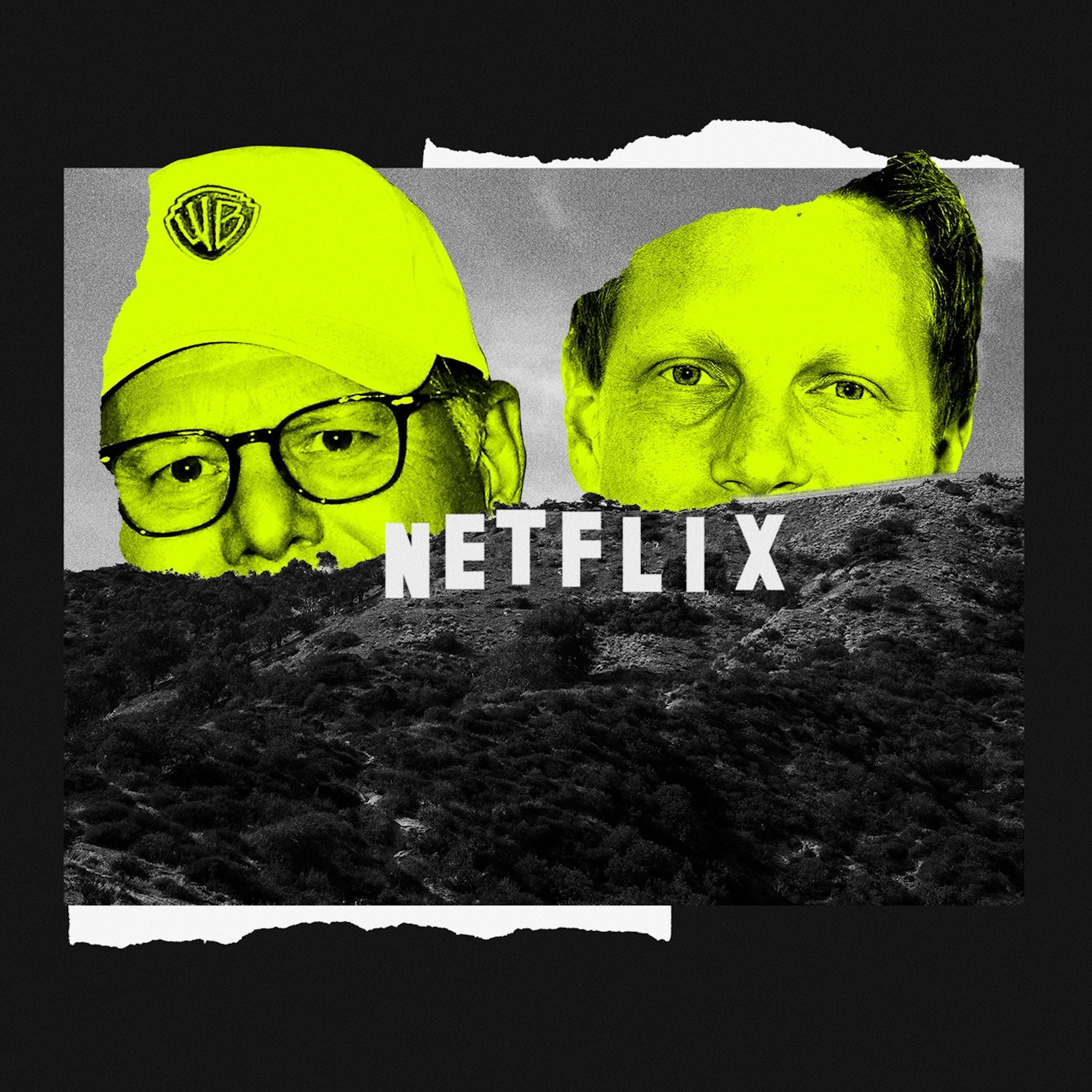
Hello and welcome to Decoder. I'm Eli Patel, editor-in-chief of The Verge, and Decoder is my show about big ideas and other problems. Today I'm talking about the bidding war for Warner Brothers Discovery, which is the biggest story in the entertainment industry right now, and for good reason. It has pretty much everything you could want in a buzzy Hollywood saga. Big names, big money, big drama. Right now, the winning bidder is Netflix. The streaming juggernaut has so far won the bidding process for Warner Brothers, offering $83 billion for the movie studios, but not the cable channels. But Paramount Skydance simply won't go away, even though the official process is over. The company has bid, bid again, and is now attempting a hostile takeover to the tune of $108 billion for everything that Warner has, including those cable channels.
Paramount is run by David Ellison, the son of Oracle co-founder and tech billionaire Larry Ellison, and I have to say his whole vibe feels ripped straight from an episode of Succession. This man is desperate to become a bona fide media mogul, using the combination of Paramount, his dad's ever-growing AI money, and the good graces of the Trump administration to make it happen. caught up in the middle of all this are HBO, CNN, and Warner Brothers Pictures. Despite world-class brand recognition, legitimate mega-hits, and incredible franchises, these companies have been so historically, comically mismanaged under a long series of clueless corporate parents that the whole bundle has ended up sold, merged, or spun off into something new more times than anyone can really count over the past two decades. Seriously, it is mind-boggling how badly these companies have been run over the past 25 years. To help me make sense of all this, I wanted to talk with Julia Alexander, a Virgilum and now media correspondent at Puck News, who's one of the best in the business at analyzing corporate strategy, Hollywood, and what's next in entertainment.
Juliet really helped me break down why Netflix wants Warner Brothers, and why David Ellison seems to think he's got a better, or even different, strategy than current Warner Brothers boss David Zaslav. Perhaps most importantly, we also discussed how the tech industry fits into the puzzle. Because as you'll hear Juliet explain, the central pressure facing Hollywood today is the battle for our attention. And that battle is being fought by everything. Video games like Fortnite and Roblox, and of course, short-form video on YouTube, TikTok, and Instagram. Soon, all of these platforms could be flooded with cheap, endless AI video. And it seems that only a few companies, Netflix's chief among them, seem to have any plan whatsoever for when that wrecking ball finally hits.
If you're a Cutter listener, you know that I love having Julia on, and you know I love talking to her about Hollywood and the entertainment industry. This episode's no different. Okay, talk media correspondent Julia Alexander on the deal for Warner Brothers Discovery. Here we go. Julia Alexander, you're the media correspondent in Puck. Welcome back to Decoder. Thank you so much for having me. How are you? I'm good. I wanted you on because it feels like every day there is new, confusing information about who's going to buy Warner Brothers. It all kind of adds up to the same thing, which is Netflix is going to end up buying it. Paramount is going to make it really noisy until the inevitable. I love talking to you about the streaming business, about what's going on in media. I want to start with a very basic question. This is what I really want to understand. As far as I can tell, every company that has ever bought Warner Brothers has killed itself. Why does Netflix want to buy Warner Brothers so badly?
It's a good question, and I'm sure we'll get into our favorite conversation going back to Randall Stevenson and AT&T back in 2016, 10 years ago. But why Netflix wants to buy it is not because Ted Sarandos or Greg Peters, her co-CEOs, truly wanted to have to do this. They have to do it. They're a modern media company. They have scaled to the point that they are going to scale based on their own capabilities. And so in order to further engagement, in order to increase retention, which is people not canceling the service, which has become the most important number to them as they kind of hit saturation in these big territories, they need big IP, they need big movies, they need a big library, and Warner Brothers Discovery is up for sale.
All right. That was sort of the answer that I was expecting because that is the logical answer. Like that's the right answer. If you just take all the bits and pieces and you put them into the equation and you turn the crank, that's the answer you would get. That's the one that makes sense. Here's what I don't understand. Part of that answer is just because Warner Brothers is for sale, right? The previous regime controlled Warner Brothers killed itself as all previous owners of Warner Brothers do. And they put it up for sale. And so Netflix is like, we have no choice but to do this. Right next to that, Netflix is doing deals with Spotify to put ever cheaper podcasts all over its service. It is making ever cheaper reality television every single day that it can.
It's doing what every big platform does, which is trying very hard to reduce the cost of content and the cost of every minute that people spend watching content on its service because the reality is it's up against TikTok, which pays $0 for content. That's why I'm like, this answer doesn't make sense. Like paying a lot of money or big expensive IP when the reality is your biggest competitor pays $0 for content doesn't make any sense to me. How do you reconcile those two things? Yeah, so I think you and a lot of Wall Street analysts feel very similarly. That's why Netflix's stock has kind of been down ever since the acquisition process was started.
It's a really complicated answer, and I think you have to look at two worlds that are happening at once. So in order to set where Netflix is currently and why the WBD deal is so appealing to them now, Netflix every six months puts out something called the Engagement Report. They basically look at how people are watching 99% of the content on Netflix. That equates to about 96 billion hours of content being viewed. And what we've seen happen over the last year and a half is a slowdown. There's kind of been a stagnation in engagement. And so we saw this year, the most recent engagement report was released a couple weeks ago. There was an increase of 2% overall engagement, but that was really only a 1% increase in engagement for the past six months. And if you compare that to what was happening in 2020, 2021, and of course, taking into account the pandemic, which really had a lot of effect on viewing on Netflix in a positive way, what we've also seen Netflix contend with is that the decrease in that engagement is coming from a decrease in the amount of licensed content on the platform.
seeing Netflix start to realize that although engagement with original content is increasing, it's coming so at the expense of an overall household engagement decreasing. And so if you look at the other trends within streaming, and this gets to WBD, what people are spending a lot more time on is either, to your point, YouTube and Instagram, which is coming for TV sets now, TikTok, which will, I'm sure, relaunch their TV app down the line, and also the free ad-supported television services like Tubi, like the Roku channel, like Pluto TV. We're seeing huge engagement spikes in the U.S. with those specific services. And so the data tells you something very specific. People want to watch free content.
like obviously, and people want to watch library content, which is what these free ad supported services have. So if you're Netflix, there's two roads staring you in the face. One is the user generated content side of the equation, which is what YouTube dominates. It's what Reels dominates. It's what TikTok dominates. And they're trying to figure out, they being Netflix, how to make some of those formats work on its own platform. And then there's the other side of the equation, which is, can we be eventually down the road, a $40 a month premium offering if we have the vast majority of licensed content that people want and original content. So I think you're seeing them make both bets at the same time.
Let me ask you about that split between original content and licensed content. In the before times, when we were both children and you were a Verge reporter, we were both like little babies. And Reed Hastings, the then CEO of Netflix, would run around and he would say this thing. We have to become HBO before HBO becomes us. And this was like a rallying cry for Netflix, especially around originals. And the idea was, at that time, HBO was on a generational run, right? It had Game of Thrones. It had Sex and the City. You name it. HBO's original programming drove every conversation all over the place every single day. And Netflix's goal was to program original material at that level.
We have to become HBO before they become us. HBO never figured out its distribution on the internet in meaningful ways, so we can set that aside. But that was the idea. Netflix had to figure out original content as good as HBO's before HBO figured out internet distribution. Netflix doesn't seem to have done that, right? If the problem is we have to go license someone else's library, the only conclusion you can draw is, well, they didn't figure out how to build their own library. They didn't figure out how to become HBO. Is that like a synthesis of the problem, or is there something else going on?
I think that's part of it. And if you certainly look at why Netflix could never become HBO, we often forget, people in the industry, that HBO was always small. HBO had a small, dedicated base, and it benefited from the cable ecosystem, you know, like the greatest capitalist invention in history. The idea that they could just be a part of a different service or part of a service that people wanted because they also wanted ESPN and ESPN2 and like ESPN8 or whatever else existed meant that they could kind of be within the system and reap the rewards of it, even if they had a very small base overall compared to kind of the Disney networks and the NBC Universal networks and the Paramount networks. When you're Netflix and you're operating at scale, when you have 325 million...
global members, when you're kind of putting out these massive projects and trying to appeal to everyone, you can't be HBO. And so I think part of the realization for someone like Reed Hastings, or now of course Greg Peters and Ted Sarandos, was if we're not going to become HBO, because we're not going to make these kind of offbeat witty comedies or these kind of dense dramas, and that's all we're going to do, then we can just buy them. HBO became much more appealing. post kind of the 2018, 2019 AT&T acquisition, then really going into the 2022 WarnerMedia acquisition, when they started to do more Game of Thrones stuff and spinoffs, they started to do more DC stuff. They started to do a lot more kind of genre IP, which is where they see the vast majority of their big engagement happen is on those IP shows that you can see working under someone like Bella Bajaria, who's the head of content at Netflix, while Casey Boyes, who's the head of HBO, can continue doing what works really well for HBO. The thing about library, which is again...
the most important part of this conversation is that it's really hard to build up a library in the time that Netflix needs to. Warner Brothers, including all the things that come with it, is 100 years old. There's just a lot of stuff in there, including shows like ER and Friends and the things that people really want to watch, the movies that people really want to watch. And so in order for Netflix to get to that point, they would have had to have another 30, 40 years to build up the library. And because of the competition from YouTube and these free ad supported services and Instagram, you know, you have Ted Sarandos saying Instagram is coming in a very Game of Thrones way, right? This way. I think in order to get there, they made...
a very traditional, for kind of this tech disruptor in the media space, they made a very traditional media play, which was just to go out and buy someone and scale quickly in that regard. So let me ask you about the library. And I don't disagree with you, right? It's a hundred year history. It has been mismanaged in all the ways it's been mismanaged. But the IP is there, right? The shows are there, the history is there. Netflix could have been building that library this entire time. What is it about Netflix specifically that has prevented it from making an ER or anything with that kind of longevity? Because if I have to pick on the streamers, what I'll say, specifically Netflix, but I think all the streamers, is that they can't make that anymore.
They've lost the ability to make that. It's actually, it's like the legacy studios that still have those moves. Why hasn't Netflix been able to do it on its own? A big part of it is the economics. So if you look at why a show like ER, which ran 15 seasons, a show like 30 Rock, which ran, I think, six or seven seasons, you know, any of these type of long-running shows, big reason was that the advertising that supported it through the broadcast and even throughout the cable system with the ads they could bring in on top of the affiliate fees they were generating meant that you could take bet on longer shows because you had to fill the shelf space. The ads were going to be there. You needed to have shows in order to do it. And as they built up those audiences, they could kind of go for a longer period of time. The efficiency metric, which is a term that every content planning and analysis team will use within streaming services, the efficiency metric was much, much higher for those types of broadcast shows during the heyday of broadcast.
The efficiency is dollars out versus dollars in, right? You spend a dollar to make a show, you get so many dollars out. Precisely. Yes, precisely. And so if you look at Netflix, up until very recently, they were staunchly gained stats. And so everything that they did, their whole efficiency metric was, are people coming in for this type of show? And are they not canceling because of the show? Something that we call acquisition and retention. And so eventually a show in its second or third season is just going to have less overall acquisition pull. And by that point, if it's not a phenomenal show, or it's only got four or five episodes or six episodes, Netflix loves the limited series in part because of this, you're going to just stop making those seasons. You're going to try a new show and go, well, maybe we can bring in a customer or retain a customer because of this instead. So now that the advertising economics are starting to come much more into play for premium services, especially Netflix, I think you will.
see them try to get to their own ER. They tried with a show called Pulse. I think they had a show called The Residence, which was very kind of procedurally. And these didn't really work out for Netflix. So I think they do want to build it. But again, they feel like they've run out of time in order to do it. If they're going to compete in a heavily consolidated market, and if they're going to compete specifically for sports rights, which is also key to this conversation, and they're going to compete with companies like Amazon and Google on securing those sports rights, then they need to be able to increase their engagement, increase the amount of shows that they can have ads on kind of overnight. And this was just the best opportunity.
This is like the shift from we have to become HBO faster than HBO can become us to we're competing with sleep, right? Like it's just there's only so many minutes you have in the day to consume entertainment and Netflix wants to have all those minutes. The thing that I always think about is it's not as zero-sum as that is made out to be. You know, Ben Affleck and Matt Damon were doing interviews about The Rip, the movie they made, and they were saying Netflix gives us notes to explain the plot throughout the movie because they know people are on their phones. How do you think about that dynamic here?
You just want to acquire Batman for cheap and someone can watch the Michael Keaton Batman, which is long since paid for, right? Like a long since paid for, it doesn't matter. And that can just be on in the background while you're scrolling TikTok. Is that a win for Netflix? If the fact that somebody can put Michael Keaton's Batman on in the background, even if they're playing Candy Crush or watching Instagram reels, the fact that they still are opening Netflix to do so and not opening HBO Max or not going to something like Tubi, which may also have it, like that's the other thing is a lot of these titles are not exclusive. So really the option of where to get them is becoming more of a problem for a company like Netflix in this kind of highly contentious environment for attention. It is still a win.
I think about this a lot with advertisers, and of course, you spend a lot of time thinking about ads and talking to advertisers, and you never can promise the ROI, right? Even if you're saying, we have 325 million subscribers, we have 190 million monthly active users on our ad-supported tier, whether or not those ads are reaching people, unclear. And advertisers don't know. But the fact that they are seeing engagement with something like Batman, and maybe there's four ads on Batman, the hope is that, okay, well, maybe somebody is watching this, not in the background, and they are going to look up. And so I think the question for Netflix really is, Is this going to be valuable for us in this race against YouTube and other potential mega streamers, which they also saw with Paramount? The threat from Paramount was that, okay, if Paramount comes in and buys the Warner Brothers Discovery Library and keeps it exclusively, what does that do to our business? Is this more of an offensive or defensive strategic move from Netflix? The fact that having Batman and Paramount not having it or someone else not having it at the same time that they're trying to compete for slivers of attention with YouTube, I think is a win for Netflix. Now, is it a win at $83 billion? I don't think that's true. I think that's why the stock is down.
I mean, I have to say I think the most offensive move you can make with Warner Brothers is letting someone else buy it and commit inevitable suicide. That's just me. So I wanted to start there because understanding why you would chase Warner, of all companies, in this environment, with this administration, up against Donald Trump's friend Larry Ellison and his son at Paramount, there has to be a good reason. And it seems like the reason here is, well, it's for sale. And if we don't buy it, someone else will. And we're not going to make a Batman on our own. And the economics of making even sitcoms that people like are out of our control, we might as well just have this library.
That's all pretty nihilistic. Like, none of that makes me feel great about art or the art of television, but so be it. We can come back to that in a minute. What's the status of the deal today? Are they just going to win this one and we're just going to wait out more flailing? It feels pretty done. It feels like it's 99 percent there. I mean, obviously, there's the regulatory affair, which is where Larry Ellison and whoever else might want to help push people like the Trump administration or whoever he's talking to and making this a little bit harder for them.
making it a little bit easier for Paramount. And I don't know what's happening there. And there's a lot of like allegedly is being thrown out about what that may look like. But like there was, I was just reading something about how Ari Emanuel calls up Trump all the time. And Ari is very close with a lot of people in Hollywood, including the Paramount side. And so there's just a lot happening at the entertainment level and the Hollywood level with this administration that makes it really interesting. But the deal is done. I think to understand about Larry Ellison and David Ellison, David Ellison, now the head of Paramount Global, is that.
David Ellison went after Paramount in an attempt to then go after a company like Warner Brothers Discovery. The idea was to build this mega streamer based on library and IP. And so that's why you're seeing David Ellison almost act very succession Kendall Roy-like, saying, you know, like, Papa, buy me the train. Like, I want to be able to have this empire. And a big part of it is because after David Ellison bought Paramount, this was a company circling the drain. Sherry Redstone just wanted to get rid of it at this point and go up the heights that she could. David Ellison knew that Paramount on its own was never going to do much against Netflix, or let alone YouTube or Instagram or TikTok. He needed Warner Brothers Discovery to come in. And so I think the fact that he went into that
deal before or attempted to get a deal before Warner Brothers Discovery put itself up for auction. He went to David Zaslav and was like, I want to buy your company. And when David Zaslav opened up the auction process in WBD and Netflix was a key bidder, you could see how much more desperate David Ellison was becoming every single month, raising the bid to $107 billion to include the cable networks, which are worth absolutely nothing, kind of reaching out to Warner Brothers Discovery shareholders and saying, we're going to go in all cash and this is the best deal you can do. At the same time that Warner Brothers Discovery is saying, look, to your point, we are a company under duress. We are a company who believes has good assets, but we need someone else to take these assets and turn them into something.
And we think that's Netflix. You do see how important owning this part of the Hollywood empire is to whether it's David Ellison or Ted Sarandos because David Ellison is becoming much more unhinged in public in his attempts to kind of get it back. But the deal is all but there, although with Trump and this administration, never say never. You mentioned the cable networks here. That is an important distinction. Netflix does not want the cable networks. Paramount has offered to buy all the cable networks. That all seems very silly to me. These things are just getting shut down in the end anyway. Does it matter who ends up with the cable networks?
No, they'll sell to Apollo or someone to private equity and then private equity will do what private equity does and kind of write it out to the end and then just dump them. But those cable networks are done. We need to take a quick break. We'll be right back. Support for the show comes from Quo. You know when you're juggling five things at once and your business phone rings and you just let it go? That call might have been your next best customer. That's why today's episode is brought to you by Quo, spelled Q-U-O, the business phone system built so you never miss a call. All your calls, texts, and voicemails live in one place so anyone on your team can pick up a conversation, see the full history, and respond fast. More than 90,000 businesses rely on Quo to stay reachable and look professional every day. Setup takes minutes and you can keep your existing number and add teammates as you grow.
Quo's optional built-in AI agent handles after-hour calls, answers questions, and even books appointments, even when your team is offline. Money is on the line. Always say hello with Quo. Try Quo for free, plus get 20% off your first six months when you go to Quo.com slash decoder. Spelled Q-U-O dot com slash decoder.
Support for the show comes from Shopify. Starting a business requires you to be resourceful. And the more you flex that muscle, the more you start to see opportunities for growth. For example, launching your business with Black Friday approaching means you can take advantage of the extra online traffic. Shopify is there to help you make it all happen. Shopify is the platform for a record-breaking, reliable holiday selling season for businesses at every stage. Their pre-built website themes and AI site builder make it easy to launch a beautiful, professional-looking store. And you don't ever need to touch a line of code to do it. They also have a mobile app that lets you run your store from anywhere.
Their AI e-commerce expert, Sidekick, can help you manage almost any business task with a single prompt, including holiday discounts. With Shopify, you can easily sell everywhere people shop. Online, in person, across social media, and even in AI chats. If you're ready to launch your business before Black Friday, go to shopify.com slash decoder to start your free trial. That's shopify.com slash decoder. Go to shopify.com slash decoder today to hear your first...
Support for the show comes from OutShift, Cisco's incubation engine for frontier technology. You can find multi-agent AI in every enterprise roadmap right now. But here's the problem everyone's facing. Agents can pass messages, but can't think together. These systems silently underperform through cognitive failures, misreadings, unverified claims, false consensus, and conventional monitoring can't detect them. OutShift by Cisco is building the fix with their new comprehensive resource, the Internet of Cognition. It's an open source guide that's a foundation for building multi-agent systems from design to production. The goal is to give agents shared context, shared memory, and guardrails.
all to drive the results we actually expect from AI. You can lean on this resource to understand agentic AI's evolution and how it's shifted from isolated agents to orchestrated superintelligence. You can gain insights for how to future-proof your business by tackling complex challenges with multi-agent systems. You can read the paper, experience a demo, grab the code from outshift.com. That's O-U-T-S-H-I-F-T dot com.
We're back with Puck Media correspondent Julia Alexander. Before the break, Julia was explaining to me why Netflix even wants to buy Warner Bros. Discovery and what it might do with it. We also started getting the Paramount of it all and how the billionaire Ellison family is trying to swoop in and sabotage the Netflix deal with a hostile takeover bid. But now I want to focus on the media strategy of this all. Because at the end of the day, these mega mergers are at least supposed to be about combining strengths and achieving what a single company can't do on its own. But we've been watching people try this move with Warner for years now. David Zaslav merged Warner Media with Discovery and then utterly failed to do anything meaningful with his massive library of media assets.
Before that, AT&T tried to do this after it acquired Time Warner in 2018, and before that, it was AOL. This idea is not new, and it always seems to end the same way. And so here we have Paramount Chief David Ellison promising to do, well, the same thing. And as unconvincing as it's been to Warner Brothers, which has already accepted Netflix offer, I think it's worth trying to really nail down whether there's any substance at all to David Ellison's promises, or if it's just more Hollywood wishcasting from a wannabe media mogul. And then the other piece of the puzzle, it's funny that David Zaslav seems to be emerging as a master operator here, right? He's pushed a bidding process for a thing that everyone thinks sucks very high, which again is the Warner Brothers way. The mystique of Warner Brothers can overcome any ADSE of the people who run it such that the next buyer thinks that they can do a good job. It's just one of those things about Warner Brothers. This was Zaslav's plan, right? Zaslav's plan was the paramount plan. I'll have a metric ton of reality slop on cable that funds high-end IP and then I'll be a famous movie guy and everyone will think I'm great.
straightforwardly, this was his plan. They would put up matrices of ladies-like reality shows and men-like action comedies, whatever that chart was during that process. And they were going to upgrade the tech stack and merge the streamers. David Ellison has proposed the exact same plans, right? A four-quadrant content matrix that appeals to everyone in America, and he's going to pull together all the streaming tech stacks and find efficiency. The only new thing is I think he's very happy for AI to write the next Mission Impossible movie, which I don't think he's directly proposed to Tom Cruise yet, but he's certainly hinted at. What is different about the Paramount plan versus the existing Zaslav plan?
I think you're giving Zaslav a lot of credit for having a plan. So that's great. I think he's the type of guy. I mean, look, he's the type of guy. He came into Hollywood. He bought Robert Evans's, who's a famous producer. He bought his home. He's sitting behind Jack Warner's desk. He's throwing parties and con with Graydon Carter. Like this is a guy who was always barely a cable magnet over at the NBC side and always wanted to be a Hollywood guy. And so I think he went into this striking a deal with John Stanky, who was still CEO of AT&T. And John Stanky very clearly wanted to just get rid of this and was like, fine, we'll give it to you. And I think when you look at the original plan that David Zaslav had for what HBO Max.
is what it was and what it kind of is today the idea was just that if you have enough content then you'll be able to kind of bring people over and i think paramount is very similar in that regard too to your point is david ellison saying we just need content. We just need to have enough of it that people are willing to spend more time here. And I think if you look at the Netflix side of the equation, they've pointed out some really interesting details and data, obviously coming from their side of why this is such a great deal, that I think does address some of those concerns though, which is that there's already a strong overlap between HBO Max and Netflix subscribers. So the engagement is going to be there, unlike Discovery and HBO customers who are on opposite sides of the equation. You know, you've got Netflix coming out and saying, we think that we can do a better job with IP formation and kind of supporting IP and bringing this out to our global subscribers. We think we can do more with these IPs in different languages, in different areas. We think we can do more with this opportunity for HBO and our internet.
national markets because of the collaborations that we have with different production companies. So they're already addressing all the issues that Zazz Lab and Ellison's plan failed to address. And I think where you see David Ellison really coming in and saying, well, here's how we're going to build on what David Zazz Lab is doing and do it in a more helpful way is, of course, the other big debate at the center of this, which is theatrical. And who is more committed to the theatrical release? And in Hollywood, like to the rest of the world, that might not matter much just based on the data of how little we are going to movie theaters. But to Hollywood, that is the central debate. Because that's where the money is, right? It's where the money was and hopefully the money will be again, right? You buy a ticket to a movie.
That's a very high price compared to a month subscription to Netflix. That money might get distributed differently. Is that the only reason people care about theatrical or is it just the idea of movie theaters? It's certainly the nostalgic factor. I mean, it's a group of creatives built on nostalgia. I do think we have a lot of sentiment analysis data looking at this over the past few years that movies released in theaters.
are more memorable to audiences. I mean, a big part of that is the marketing push that accompanies it. And so people are just more aware of it. But we see that engagement from theatrical releases on streaming is also much higher than streaming originals. And so to your point about money and why Hollywood would be interested in this, it's really hard to build yourself to be the next big Leonardo DiCaprio or Scarlett Johansson if you're not in theaters. And so I think this component of we have a nostalgic love for movie theaters, we want these more communal events, but we also don't want to be relegated to Netflix slop in an era of AI slop is a big reason why I think you saw parts of Hollywood look at Paramount and David Ellison originally as the savior.
help Hollywood. And I think now, once people have started doing the math on it and realize that that would mean Paramount had to release, you know, a movie almost every other week, which is an impossible load for a company like that to do. And precedent, by the way, from the Disney Fox deal tells us that that was never was going to happen, as we've seen kind of happen with Fox Searchlight films going direct to consumer for a lot of them. I think it was worked out in Netflix's favor and saying, like, we're still committed. Even if they're not, it's giving Hollywood enough time to kind of process what may or may not happen, knowing that Paramount is a little bit less likely to kind of come through.
Yeah, I think the last commitment I saw from Netflix was a 45-day theatrical window. And even that's a pretty soft commitment. That's not written down anywhere. That's like, yeah, 45, a month and a half. Then it's just Netflix again. Let me ask you this question again, though, because I think I'm getting it, but I just want to try one more time. What is actually different between Paramount's plan and the Warner Brothers Discovery plan? Because it feels to me like a bunch of cable channels that are dying, subsidizing a bunch of IP that no one has a plan to actually execute on. But the person at the top just wants to be a Hollywood guy.
Yeah, there is no difference. And in part because they have the same businesses. They're coming from the same position. The only difference is that David Ellison has a personal bank from someone valued at a couple hundred billion dollars who can kind of come in and say, you know, his father, Larry Ellison, and we'll just continue to fund this. But there's no discernible difference between what David Ellison wants to do, at least that he's publicly said, versus what David Zaslav tried to do for the last few years. I think if you compare the eras of like Warner Brothers and Warner Media and Warner Brothers Discovery and whatever else it's been over the last 20 years, Time Warner, I think when you look at it.
The only person who really came in and said, I have an idea for what we want to do to make this a differentiated company in 2022, 2021, was Jason Kilar, who was this kind of technologist, futurist, who was the CEO of WarnerMedia for a couple of years, but who also damaged the reputation of that company with Hollywood. And that's because in the pandemic, he said, we're going straight to streaming with every movie. I think he forgot to soften the blow by saying, and then when the pandemic is over, we'll stop that. Yeah, he's more Silicon Valley in that way than he is Hollywood. But I think if you look at what he tried to do...
like with the WarnerMedia assets, he said we should have a CNN streaming service. That was CNN Plus. And like that didn't go anywhere. It launched for a couple of weeks and then it was shut down. And so what are they doing now? Mark Thompson, who runs CNN, is going to launch streaming service. And so like this idea of what Jason Collar wanted to do, which may or may not have worked long term, I think was the last point that there was a plan to do something on the innovation side with the assets as opposed to just collecting more assets. And under Zaslav and under Paramount's plan, it is just a collection of the assets.
So the part of the Ellison plan that is somewhat different is the presence of his father, Larry Ellison. A lot of the argument for why Paramount should get the deal over Netflix is that Larry Ellison exists. I mean, like straightforwardly, they're like, but we have a rich guy. Like, look at how rich this guy is. And I'm looking at that and I'm talking to reporters, especially Liz Lopato about that. And it seems bananas to me that Larry Ellison, whose wealth keeps increasing every day with the hype bubble surrounding AI, wants to trade out of AI money, wants to trade out of Oracle stock to backstop media money, which is the most under pressure, undervalued, right?
If I have Oracle stock, I would not be like, you know what I should do with it is I should buy Warner Brothers. Like, that's not rational. Why do you think Larry Ellison is willing to backstop a Warner Brothers deal with his own Oracle stock? A couple of different theories on this, and they get more outlandish and subreddit-y as they go on. But there's part of me that sees almost as parallel to what...
Larry Ellison might be thinking of doing, and I don't speak to Larry Ellison on the regular, so I'm really just kind of projecting here, what he might want to do to why AT&T originally bought Time Warner, which was this idea of things are happening on phones, and I want to have some level of investment in TikTok. I want to have some level of investment in what people are watching, and can we create some kind of integration using the cloud computing aspects that we have to make this so that we collect a lot of data. So we collect a lot of data and we do something with this. And down the road, what actually is worth the gold bars is not the content, but kind of everything we're collecting around that content, which is very Mark Zuckerberg, right? It's very, like, this is where a lot of the value of what we do comes in. But the issue there is, like, you have to have people on these platforms. In order to collect that amount of data to make it valuable, in order to kind of find what's really fascinating or interesting and worth doubling down on investment-wise, you have to have the audience. And Paramount+, even with a combined HBO Max, makes up...
a sliver of attention and engagement in the United States. Both of them barely have any global presence. They don't have really any global owned and operated presence because all their streaming platforms are in conjunction and partnership with other companies and other distribution platforms in order to kind of try and scale. And TikTok, which was down apparently this weekend in its first US debut again, or re-debut, like whether or not TikTok has the staying power now versus whether people go over to Instagram or YouTube shorts, like that question of who ends up winning that kind of short form battle, I think makes it really questionable. But I agree with you. I don't think someone who, clearly smart, as Larry Ellison, looks at a decaying asset in a decaying industry, in a hyper-competitive attention ecosystem, and goes like, yeah, this thing's worth $110 billion, or whatever, $105 billion, $106 billion cash. And by the way, we're going to go to Warner Brothers Discovery shareholders and say, like, you're going to get a bigger payout, basically, and you should go with us and don't worry about the rest of this business because you're going to get paid out for it. I don't see why he would do that unless there's something far more compelling within what the assets will help generate down the road that are not just...
pure engagement of people watching Michael Keaton's Batman. Because the only other answer is like, he's a dad with guilty father issues. I will say the only things you can do with data at that scale are target advertising or send drones to kill you. And I don't know which one it is. It is unclear, but that's what you can do with the data. There's not much else with data at scale. And I'm not sure Paramount has that ad business. I'm not sure that if you combine Paramount with Warner Brothers, with TikTok, you get that ad business. That's not really TikTok's ad business either. There's just a set of question marks there. I agree. I agree completely. And I think it's a desperate attempt, especially in this kind of...
meta and google age just where it feels difficult to even try and compete at that scale and then again looking at netflix or even disney disney streaming services have pretty strong engagement they've got active subscribers they've got a pretty active ad base and disney famously very good at advertising like they just have a great ad business and so if you're coming in this late to the game on a hail mary in hope that having enough movies and tv shows enough sports right they just paid 7.7 billion dollars for ufc it just debuted on their platform on saturday and you have enough overlap maybe With a TikTok, and even that is like a huge question. That is like, is this even part of it? It becomes further unclear as to why this is the deal to make. And I remember thinking about this, I was talking to an analyst, and I was like, you know, if I had $110 billion in cash, and I do not, if I had that, I would be looking at Epic games. I'd be looking at Roblox. I'd be looking at other areas where there seems to be deep levels of engagement and deep level of young kind of consumers. Let's say they're emerging kind of 15, 16 plus consumer base, where you've got a lot of brands like FIFA who want to partner, Disney who wants to partner with Fortnite. I don't know why.
I would be spending all my efforts on Warner Brothers Discovery unless I deeply love my son. And this is what my son really wanted. He wanted to do this. And if that's the basis for why Paramount is upping their bid and kind of acting so dramatically in public about it, that should be far more concerning to shareholders than anything else. Let me ask you about the other side of this, the Warner Brothers shareholder side. They keep rejecting Paramount. I think they're up to eight times they've said no to Paramount. Is it just the stink of desperation? Or is the Netflix deal that much better? I think the Netflix deal...
includes some kind of optimism for the future of what that could look like. And I think the Paramount deal is a last ditch effort to cling to relevancy. I think shareholders know that, especially shareholders who have been, by the way, with WBD this long. There was a lot of exit points that they could have taken and just like, I'm going to get rid of this. I'm like, I'm not going to be here. Obviously, many of them hoping for like a big sale in this kind of moment. But I do think Netflix, there's a coolness to it. And I was talking to this media investor a while back and we were talking about knowing when to sell.
And the thing they said to me, and they work with a lot of kind of notable athletes, they said to me, they're like, my biggest concern is you have founders and CEOs who do not want to sell because they think that they're still riding the level of cool. But cool is a very quick factor that goes away. And so you have to know when, OK, this is my offer and I'm going to go here. And I think there's a level with Netflix where they are still writing that cool. There is this level of like it's Netflix. We think this could be a really big business. It's exciting to kind of see play out. This is the first major acquisition that Netflix has done. The one before this was, I think, the Roald Dahl library for about $750 million, $800 million versus, again, like the Paramount side where the cool has been gone for years, for decades. And so, again, it just feels like Netflix seems to have a better plan. How much they stick to, to your point, we don't know. How much they actually stick to beyond what they're contractually obligated to stick to, who knows. But the fact that they have the big movies and the big TV shows and they're the number one.
premium streamer, I think really does do a lot for shareholders. We need to take another quick break. We'll be right back. First Citizens Innovation Banking, formerly Silicon Valley Bank, is the bank of the innovation economy. The name may have changed, but for over 40 years, their commitment to bold ideas, relentless ambition, and delivering what's next is as strong as ever. So if you're wondering where the road to innovation starts, it's here. First Citizens Innovation Banking. Head to firstcitizens.com slash innovation to learn more.
Support for the show comes from Framer. The future of website building is seamlessly blending all the tools we have available. And you could use a platform that has it all and stays useful even after you launch. That's what Framer is. Framer is the AI website builder that helps creators, teams, and businesses ship production-ready sites faster than ever while getting every detail right. You're able to prompt, inspect, edit, and publish in one place at a whole new pace. On Framer, agents bring speed and scale while people bring taste, judgment, and control. And that all takes place in the same workspace where the real site is designed, managed, reviewed, and published.
Everyone's ideas land on the canvas, stay editable, and can be published when the team is ready. Thousands of businesses from early-stage startups to Fortune 500s are choosing to build their websites in Framer, where changes take minutes instead of days. Learn how you can get more out of your site from a Framer specialist or get started building for free today at framer.com slash decoder for 30% off our Framer Pro annual plan. That's framer.com slash decoder. Rules and restrictions may apply.
You can get back to the work only you can do. The work that requires a person with ideas and judgment. And you know, a pulse. To learn how to put AI to work for people, visit servicenow.com. We're back with Puck Media correspondent Julia Alexander. Before the break, we were talking about the strategy of the two competing offers for Warner Brothers Discovery and why it seems obvious that Netflix has emerged as the clear winner. But as you've heard Julia say throughout this conversation, the old Hollywood is dying. Linear TV is in permanent decline, and now you have a bunch of entertainment giants reduced to decaying brands whose only value lies in the mountains of old TV shows, movies, and aging franchises that they don't really know what to do with. Netflix is the only one of these companies that you could reliably even call a tech company, and that helps explain why Warner Brothers sees its future in Netflix when it comes to competing against short-form video, gaming, and the dominance of YouTube.
So I wanted to finish this conversation by talking to Julia about what the future of Hollywood might look like, especially now that it's staring down the barrel of an internet rife with AI slop in a tech industry more emboldened than ever to lay claim to our attention. When you think about the reception that these various studios and these various deals got in Hollywood, there has been a pretty quick flip, right? There was an immediate reaction to Netflix from Hollywood that was pretty negative. I think Hollywood did not want Netflix to consolidate even more power, to have even more influence over creative, and then Paramount showed up, and suddenly Netflix, like you said, seems cool again. Why don't people want Paramount? You have a billionaire in Apple Baby who just wants to make big-budget movies, and he's going to spend his dad's money to do it. Why aren't more creatives trying to butter him up to get that cash? It's two names, and they are heavily related to entertainment in a way that Hollywood detests, and it's Neil Mohan and Sam Elman. And at this point...
Netflix is cool because Netflix has proven that it's committed to, maybe not theatrical, but committed to filmmakers, right? They took on the Irishman, the big Martin Scorsese movie when no one else would do it. They're obviously committed to the television side of the equation and they produce a lot of really great TV. No one's ever doubted that. At the same time, when they first came in and they were the disruptors and they were disrupting the theatrical model and kind of how writers and actors are getting paid on the TV side of the equation, it was scary because people don't like change and Hollywood is especially antiquated in its approach to things. And so they especially don't like change.
And then at the same time, you know, Netflix hit 10 years, 11 years of producing original content proved itself. At the same time that Sam Altman came in and was like, we're going to take people's likeness and we're just going to let people do what they want. And the next Star Wars movie is going to come out of Sora 2 or whatever. And Neil Mohan is going out and saying, by the way, television is YouTube. We're premium content. Our creators make premium content. We make up the vast majority of engagement on TV sets. We know that 10 years ago, less than that, you were worried about anti-Semitic content on our platform. And now we're the future of TV partnered with the NFL and the Oscars. But I think when you look at that.
deep concern about Silicon Valley's encroaching impact on the traditional media business, you have a lot of traditional media players who say, okay, well, who's our best bet? Who's our best guy? And the best guy at this point is Netflix and Disney. And so if the fight is like, well, we'd rather Netflix have Warner Brothers Discovery and that creates enough engagement to continue supporting the artistic community so it's not just Mark Rober and Mr. Beast on Netflix and Amazon, then we're going to support that versus the guy who we don't know can get this through. So it's basically just doubt, right? It's doubt in David Ellison to compete with YouTube, to compete with any disruption from AI.
I mean, and to be clear, David Ellison keeps waving at AI as though it's important. I don't know what he thinks is important about AI, but he keeps gesturing at it as though something will happen and he'll be cool because of it. Do you know what David Ellison thinks about AI? Because I have not been able to figure it out. I think it's whatever Bob Iger also thinks about AI. And I think, well, maybe not, because I think Bob Iger looks at OpenAI and says, man, imagine if we didn't sue Google and YouTube in 2007, and instead we just asked for a stake in that business and what that would have become, kind of like AL, Yahoo, and Google. I mean, I would love to know what David Ellison thinks about AI.
I think he's a guy who deeply does love technology. If you read through the letter he sent to staff when the Paramount deal was first done with Skydance, he used the term tech and technology more than film, television, entertainment, streaming. He loves technology. What he thinks he's going to accomplish by loving AI, beyond the enterprise side of it, beyond the like, you know, use this for your Microsoft Word or whatever, and including it in more original content at a time when there was the longest writer's strike in a very long time and actor's strike because of artificial intelligence less than two years ago. I don't know what he's going to think that he's trying to accomplish. But he's a guy who's making a lot of manic moves very publicly. And I think that's off-putting to a town very well known for kind of keeping up a very stoic face at times and kind of moving slowly through technological changes.
Yeah, if David wants to come on the show, I'd love to ask him what he thinks the word technology means specifically. I also would put that right next to, you're trying to buy a library of content made before any of this technology existed. Yeah. Because the thing that audiences find valuable is well-crafted things from the past. And there's no evidence that all this technology can make a well-crafted thing in the future. And in fact, most of the AI slop that I see trades on the IP of the past. Like, you know, Sora does not explode in the public consciousness unless you can make Michael Jackson do things. Like, you need literally a monoculture figure to make the AI seem relevant. Otherwise, you just have literally pure slop, which no one cares about.
I'm unclear. Like I said, David, if you want to come on and tell me what your plan is, I would love to hear it. Let me end by asking one of the more Julia questions I can think of. We keep talking about these things like they're different businesses and they have different scopes, right? YouTube versus Netflix versus TikTok versus whatever. And it feels like the pressure is making them all the same business.
So if you're like, I don't like what Neil Mohan is saying as CEO of YouTube, I'm going to place my bets on Netflix. That feels divorced from the fact that Netflix is just another app on your phone that is soon to introduce vertical video scrolling as a discovery mechanism to get you to do whatever next transaction they're going to do. That is divorced from the fact that Amazon has live shopping notifications in its app today. And that is right next to Instagram turning itself into some sort of chaotic AI-powered QVC. They're all the same. They all have the same economics fundamentally.
Right. Compared to there used to be TV where you had your cable carriage agreements and your guaranteed advertising and that's next to movies, which had a theatrical window and a pay one window and whatever. Right. They're like radically different businesses with different economics and they produce different art. All of these feel like the same business to me right now, no matter what. How does any of that get differentiated ever again? The word that gets passed around a lot in different executive meetings is quality and not in the sense of we need to protect quality, but more from the nihilistic point of view of just quality matter.
The question of no one thought YouTube was TV. A lot of these Hollywood executives still thought it was just cat videos up until like the Nielsen Gage started breaking out YouTube consumption on TV sets. People are worried that if quality doesn't matter and it's just scale, then how do you play into this? And it wasn't a concern until, as you just perfectly outlined, the ad dollars were going across all these same platforms. It used to be that Netflix or even, you know, back in the day, Disney and CBS and whatever it might be had one level of ad spend. And then there was, you know, search ad spend, right? And there was like social video before we called it that ad spending YouTube video, whatever it was. And now all of these companies have started to realize that where the real money is going to be over the next few years outside of the mobile social space and kind of the shopping space happening inside these different apps is on connected TV sets.
We're spending more time with our connected TV sets. And so the amount of dollars that is left over from Linear as they move over to CTV is very, very, very high. It's why the Nielsen gauge has become this big problem in Hollywood because YouTube can use it to say we want these bigger TV brand or ad deals and we can work with the creators on that and the brands on it with the podcast because those are playing out on TV living room sets, all that stuff. It's what's encouraging Adam Mosseri to say let's be on TV sets. And it's also what's concerning the Netflixes and the Paramounts and the WBDs of the world because if they can't rely on that guaranteed collection of revenue going to their services because now you've got these big disruptors coming in, then they have to find out ways to either lean into the lower quality content that people seem to want, and that's not a dissident many YouTubers, I'm saying it's just on average how they think of it, or go the other way and be super high premium content. So kind of going back to what we started this conversation on, why does Netflix want WBD at the same time they want podcasts? They don't know the answer. They don't know. They don't know if the idea is to go $50 a month in 10 years and have the best quality stuff in the world, and that's a differentiator in a world of AI slot, or if they should have more podcasts and more UGC videos in order to kind of glean onto that audience. And so I think...
We used to talk about attention across all these different formats as something completely different. But the reality is that all those little slivers of attention that they once thought they could have are completely melded into each other. Now it's left as crumbs. They're fighting for crumbs. And so the fighting just means that it went from being, you know, maybe we'll bid on a Martin Scorsese movie or we'll bid on the UFC to now we're actually going to spend $83 billion in order to kind of protect our future. It's the most expensive defensive bet in entertainment in a very long time. The last outstanding piece of this puzzle is regulatory approval, which we've been hinting at throughout this conversation. Obviously, Larry Ellison is a big Trump supporter.
David Allison, his son, made enormous changes at CBS News after buying Paramount. Trump seems very pleased with them. In classic Trump fashion, he's not even hiding the idea of a quid pro quo. He's just saying to the anchors of CBS News, like, I got your job. It feels very obvious that Warner shareholders want to go with Netflix. The Trump administration could get in the way of that, right? The Federal Trade Commission could say, we're initiating anti-monopoly review. They could push it towards Paramount. Does that seem likely to happen? Is Netflix ready for that outcome? Netflix is super ready. They had an earnings call a couple weeks ago. They seem to feel pretty confident, although how much of that is just public posturing? We never know. What I will say is they are sowing the seeds.
very, very well of saying that, you know, if this is a conversation about premium video, then yes, we are the biggest. But to your last point, Eli, what is video in 2026? And so they keep pointing out YouTube's advantage and Instagram's advantage. And I think the case I keep thinking about the regulatory stuff is the most recent, you'll have to correct me if I'm wrong. I think it was DOJ meta, right? It wasn't FTC meta. It's FTC meta. It was FTC meta, where meta was like, people come here not to connect with friends. They love video, right? Like they love watching stuff. Now, if you're Ted Sarandos and Greg Peters, you're like, thank God.
Because now we can say, look, people are spending time on Facebook watching video. They're spending time on Instagram. Instagram is coming to TV sets. And they can point to YouTube's growth. If you look at a chart of Netflix versus YouTube in the United States, Netflix has a very little slope in terms of increased engagement. And YouTube is on a huge swing upwards on TV sets. And so I think if they can look at the precedent of what is video on all these major distribution platforms, which Facebook is now a part of, they have, I think, the advantage of being able to say that we're competing against all these guys. But of course, again, as we said earlier, in the Trump administration, in the Trump era, never say never about how this could go.
Do you think if Netflix buys Warner Brothers, they will succeed where literally every company in the past has failed? I think it will ultimately, similar to the 2019 conversation about Disney and Fox, it will ultimately be that it was probably a good thing to own. They probably should have done it at half the price. And somehow David Zaslav and Rupert Murdoch are the two that came out swinging and winning in this world. But no, I think it'll do well for Netflix because they have the audience and it will be vastly, vastly overpriced in three or four years when we look at that deal. Julia, this has been great. We're going to have to have you back soon. Every time I talk to you, I feel like we should just do this every single week. I assume there's going to be more twists and turns in the saga, so we'll have you back real soon. Absolutely.
I'd like to thank Julia Alexander for taking time to speak with me, and thank you for listening to Decoder. I hope you enjoyed it. If you'd like to let us know what you thought about this episode or really anything else, drop us a line. You can email us at decoder at theverge.com. We really do read all the emails. Or you can hit me up directly on Threads with Blue Sky. We're also on YouTube. You can watch full episodes at DecoderPod. And we have a TikTok and an Instagram. They're at DecoderPod as well, and they're a lot of fun. If you like Decoder, please share it with your friends and subscribe wherever you get podcasts. If you really like the show, hit us with that five-star review. Decoder is a production of The Verge and part of the Vox Media Podcast Network. The show is produced by Kate Cox and Nick Statt. It's edited by Ursa White. Our editorial director is Kevin McShane. The Decoder music is by Breakmaster
You work hard for every dollar. So put those dollars to work for you with SoFi, the everything app for smarter money. With SoFi Checking and Savings, you can easily track your spending and saving while earning nine times the national average savings rate. Get paid up to two days early with direct deposit with no account or overdraft fees and earn a cash bonus when you sign up with eligible direct deposit. Terms apply. Open your SoFi Checking and Savings account today at SoFi.com slash Fox Bank. SoFi Checking and Savings is offered through SoFi Bank N.A., member FDIC.
If your best finance people are doing expense reports, chasing receipts, or spending time on month-end close, it's time to get Brex AF, agentic finance that eliminates that work before it starts. Learn more at brex.com slash AF. Running a business shouldn't feel like surviving a software group project. One app for accounting, another for inventory, another for sales, and somehow none of them talk to each other. That's where Odoo comes in. An all-in-one business management software that brings every part of your business together. From sales and accounting to inventory and marketing, all-in-one powerful platform. No messy integrations, no bouncing between tabs, and best of all, no spreadsheets. Stop managing software and start managing your business with one unified system. Try for free today at odoo.com slash vox. That's odoo.com slash vox.