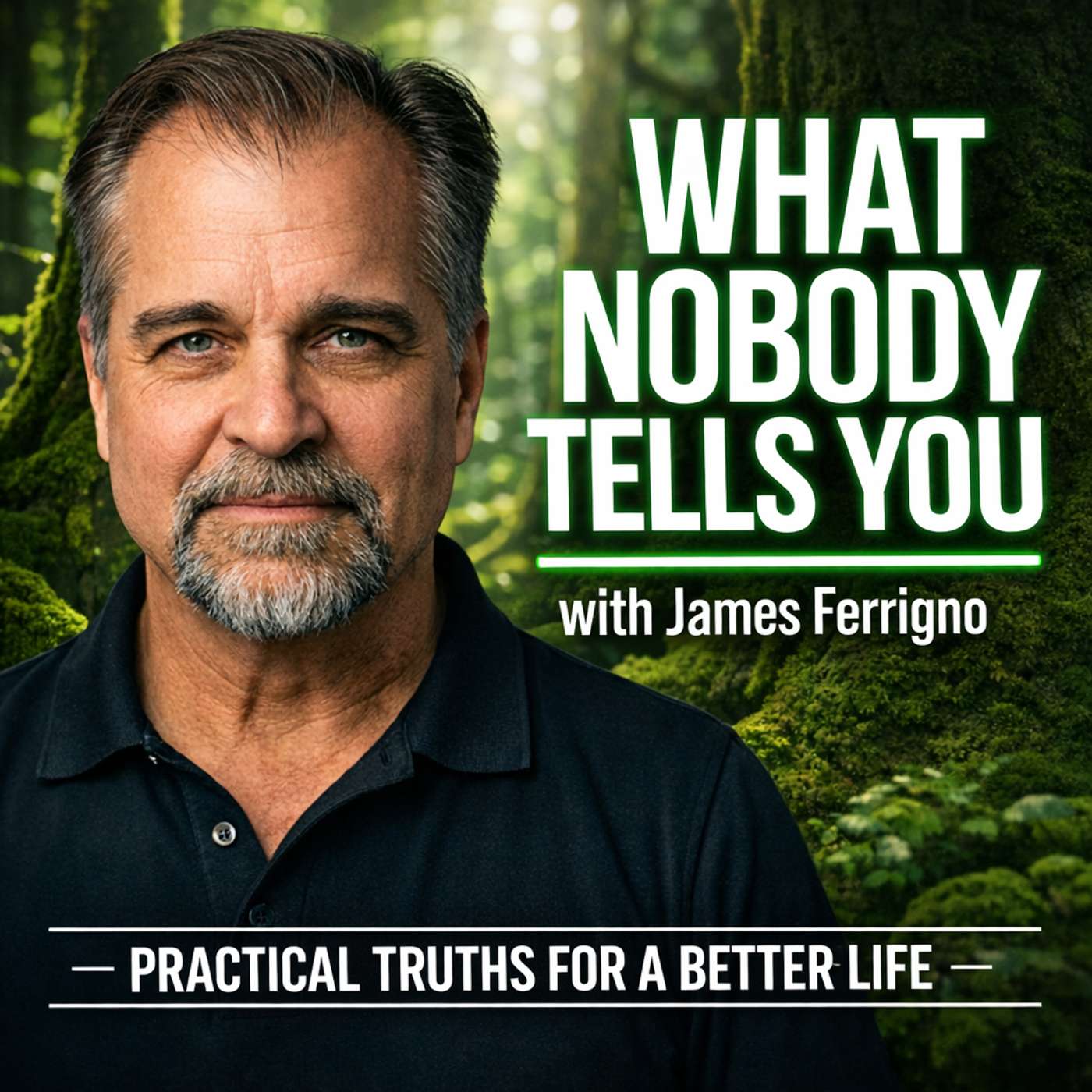
News You Can Trust: A Guide to Finding Accurate Information | James Ferrigno episode artwork

EPISODE · Jun 2, 2026 · 1H 3M

News You Can Trust: A Guide to Finding Accurate Information | James Ferrigno

from What Nobody Tells You · host James Ferrigno

In This EpisodeJames explores one of the most important challenges of modern life: finding accurate information in a world saturated with misinformation, social media content, AI-generated media, and competing narratives.Drawing from his background in journalism, research, politics, and higher education, he discusses how information can be evaluated, what makes a source trustworthy, and why critical thinking has become an essential skill.The episode examines the principles of source verification, the importance of context and analysis, and practical methods listeners can use to assess whether information is reliable before sharing or acting on it.Get updates + new episodes here: https://open.substack.com/pub/wnty/p/ive-moved-my-podcast-updates-here?r=3n46pm&utm_campaign=post&utm_medium=web&showWelcomeOnShare=trueTopics CoveredWhy misinformation has become so widespread The impact of AI-generated content on public trust How journalists traditionally verify information What it means to "vet" a source The importance of corroborating information Why context and analysis matter How reliable organizations handle mistakes Common tactics used by unreliable sources Social media and the challenge of information verification Why independent verification is essential Evaluating online content before believing or sharing it Using reference materials and research tools Developing critical thinking skills Understanding source reliability Building a personal information-verification process Resources MentionedSnopes Wikipedia Foreign Affairs Council on Foreign Relations Greg Palast Glenn Greenwald Jeremy Scahill Dan Rather's Steady Heather Cox Richardson's Letters from an American KPFA Radio Pacifica Radio Common Dreams The Atlantic The Progressive Financial Times Bloomberg The Nation The New Yorker Google Scholar Key TakeawaysNever assume information is accurate simply because it appears online. Cross-check information with multiple sources whenever possible. Reliable sources provide context and analysis, not just isolated facts. Organizations committed to accuracy issue corrections when mistakes occur. Social media content should be independently verified before being trusted. Critical thinking is a skill that improves with practice. Learning how to evaluate information is increasingly important in the digital age. DisclaimerThe views, opinions, and statements expressed in this episode are those of the host and/or guest(s) and do not necessarily represent or reflect the views, opinions, or positions of the producers of Say It Anyway. Say It Anyway does not endorse or assume responsibility for any statements made by guests or the host. The content of this program is intended for informational and entertainment purposes only and should not be considered professional, medical, psychological, legal, or financial advice. Listeners are encouraged to use their own judgment and discretion and to seek appropriate professional guidance for their individual circumstances.

Episode metadata supplied by the publisher feed · Published Jun 2, 2026

In This EpisodeJames explores one of the most important challenges of modern life: finding accurate information in a world saturated with misinformation, social media content, AI-generated media, and competing narratives.Drawing from his background in journalism, research, politics, and higher education, he discusses how information can be evaluated, what makes a source trustworthy, and why critical thinking has become an essential skill.The episode examines the principles of source verification, the importance of context and analysis, and practical methods listeners can use to assess whether information is reliable before sharing or acting on it.Get updates + new episodes here: https://open.substack.com/pub/wnty/p/ive-moved-my-podcast-updates-here?r=3n46pm&utm_campaign=post&utm_medium=web&showWelcomeOnShare=trueTopics CoveredWhy misinformation has become so widespread The impact of AI-generated content on public trust How journalists traditionally verify information What it means to "vet" a source The importance of corroborating information Why context and analysis matter How reliable organizations handle mistakes Common tactics used by unreliable sources Social media and the challenge of information verification Why independent verification is essential Evaluating online content before believing or sharing it Using reference materials and research tools Developing critical thinking skills Understanding source reliability Building a personal information-verification process Resources MentionedSnopes Wikipedia Foreign Affairs Council on Foreign Relations Greg Palast Glenn Greenwald Jeremy Scahill Dan Rather's Steady Heather Cox Richardson's Letters from an American KPFA Radio Pacifica Radio Common Dreams The Atlantic The Progressive Financial Times Bloomberg The Nation The New Yorker Google Scholar Key TakeawaysNever assume information is accurate simply because it appears online. Cross-check information with multiple sources whenever possible. Reliable sources provide context and analysis, not just isolated facts. Organizations committed to accuracy issue corrections when mistakes occur. Social media content should be independently verified before being trusted. Critical thinking is a skill that improves with practice. Learning how to evaluate information is increasingly important in the digital age. DisclaimerThe views, opinions, and statements expressed in this episode are those of the host and/or guest(s) and do not necessarily represent or reflect the views, opinions, or positions of the producers of Say It Anyway. Say It Anyway does not endorse or assume responsibility for any statements made by guests or the host. The content of this program is intended for informational and entertainment purposes only and should not be considered professional, medical, psychological, legal, or financial advice. Listeners are encouraged to use their own judgment and discretion and to seek appropriate professional guidance for their individual circumstances.

PodParley-generated summary based on available episode metadata and transcript content.

NOW PLAYING

News You Can Trust: A Guide to Finding Accurate Information | James Ferrigno

0:00 1:03:47

No transcript for this episode yet

We transcribe on demand. Request one and we'll notify you when it's ready — usually under 10 minutes.

Eat to Live Jenna Fuhrman, Dr. Fuhrman Our health is our most precious gift and smart nutrition can change your life. Each month, join Dr. Fuhrman and his daughter, Jenna Fuhrman as they discuss important topics in the world of nutrition. Eat to Live will change the way you eat and think about food. French Your Way Jessica: Native French teacher founder of French Your Way Boost your French listening skills and test your comprehension with this one of a kind series of podcasts. Get the chance to listen to a real conversation between native speakers talking at normal speed AND customise your learning experience through carefully designed sets of questions (2 levels of difficulty) available for download at www.frenchvoicespodcast.com. All interviews also come with the transcript. French teacher Jessica interviews native speakers of French from around the world who share a bit of their life and passion. Where else would you meet in one same place a French yoga teacher based in Melbourne, a soap manufacturer from Provence, or a couple cycling around the world? DIOSA. Carolina Sanper This podcast is a sacred space created by Carolina Sanper where you connect with your inner wisdom and embody your magnetic feminine power.It is the realization that the mystical realm is where you plant the seeds of your desired reality.It is a portal to your true essence: awareness, presence, and receiving with ease. Welcome home, DIOSA. 🖤 XXX Tech by SOVRYN Dr. Brian Sovryn The crossroads between technology, sensuality, and metaphysics - and the longest running anarchist podcast in the world! Brought to you by Dr. Brian Sovryn.

Frequently Asked Questions

How long is this episode of What Nobody Tells You?

This episode is 1 hour and 3 minutes long.

When was this What Nobody Tells You episode published?

This episode was published on June 2, 2026.

What is this episode about?

In This EpisodeJames explores one of the most important challenges of modern life: finding accurate information in a world saturated with misinformation, social media content, AI-generated media, and competing narratives.Drawing from his background...

Can I download this What Nobody Tells You episode?

Yes, you can download this episode by clicking the download button on the episode player, or subscribe to the podcast in your preferred podcast app for automatic downloads.
URL copied to clipboard!