
EPISODE · Aug 1, 2026 · 35 MIN
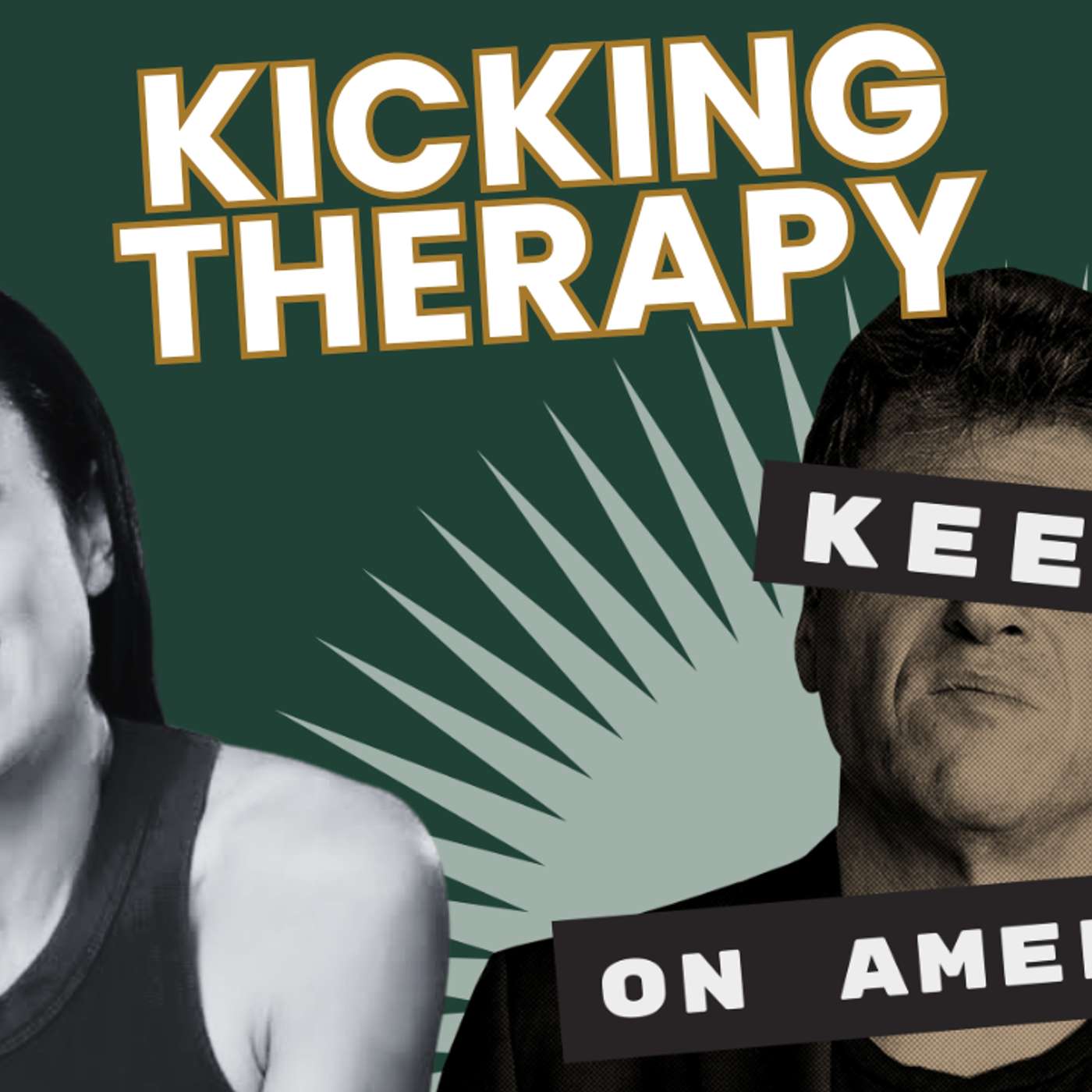
No, Not Everybody Needs a Therapist: Amy Morin on America's Epidemic of Mental Weakness
from Keen On America · host Andrew Keen
“Not everybody needs therapy. I’m a therapist and I’ll tell you first.” — Amy Morin Is an epidemic of mental weakness sweeping America? Readers of the Wall Street Journal certainly might think so, given a couple of recent articles. In one, it reports on burnt-out singles who are using spreadsheets to evaluate their dates. In the other, young adults are taking their phones to social events and letting AI do their talking. Sad. So I invited Ms Mental Strength herself, Amy Morin — host of the Mentally Stronger podcast and author of The Mental Strength Playbook — to ask what’s happened to American self-confidence in our AI age. Morin sees it daily in her own therapy office with patients relying on ChatGPT to set boundaries with their mothers-in-law. In a world of information overload, she argues, we’ve come to believe there must be a medical solution to all our complexities — forgetting that relationships are an art, not a science, and that conflict and awkward silences are features of human life rather than bugs. So the dinner-party guests who sneak off with their pocket supercomputers to the bathroom to ask ChatGPT for five “interesting” questions come back with canned questions that make them sound even less interesting. In contrast, Morin argues, real social confidence is built by taking risks. And it’s no longer a risk, she suggests, to go to a therapist. It’s become the equivalent of slinking into the bathroom with your phone to prompt conversation. Yes, this therapist worries we live in an overly therapeutic culture. Anxiety is normal, Morin says. But ADHD diagnoses and even autism have become a kind of moral passport in America. It’s almost as if people should be anxious if they’re not anxious. Her prescription is free. Not even the cost of a therapy session. Ask yourself, at the end of every day, what did I do today to grow mentally stronger? It’s like going to the gym. Build up your mental strength. Become self-reliant. The standard American fix. That will kick your therapy habit. That will end the epidemic of mental weakness now engulfing the United States. Five Takeaways • AI Is Doing Our Talking. The Wall Street Journal reports singles running spreadsheets on their dates and young adults letting AI script their conversations in person — and Morin sees the same thing in her therapy office, where clients ask ChatGPT how to set boundaries with their in-laws. The root, she argues, is information overload: because we can look up how to fix a sink, we assume there’s a scientific way to reject a suitor or confront a friend. But relationships are an art, not a science. There is supposed to be tension; conflict isn’t horrible; real human conversations — with questions, uncertainty, and lulls — are essential. What could be more important than managing your own relationships yourself?• Avoidance Never Builds Confidence. The dinner-party guest who hides in the bathroom asking ChatGPT for five interesting questions comes out asking canned questions and listening to no one — panicking about what was next on the list. Relying on technology for what makes us insecure, Morin argues, is avoidance dressed as help: skills we don’t practice diminish, so the app makes us worse, not better. Nor is the polished online persona sustainable — like fake photos on a dating profile, the eloquence collapses at the second coffee. Connection comes from vulnerability, not perfection: “I really struggle with X” bonds people; the perfect question does not.• Thirteen Things, Fifty Million Readers. Morin’s authority is autobiographical. Her mother died when she was 23; on the third anniversary of that death, her 26-year-old husband died of a heart attack; later her father-in-law received a terminal cancer diagnosis. On one of the worst days of her life she wrote herself a letter — 13 things mentally strong people don’t do — and read it over and over. Published online for what she assumed would be five readers, it reached fifty million and became seven books in more than 45 languages. Mental strength, she learned, isn’t resilience-as-bracing: it’s getting the most out of life on the emotional roller coaster — good times included.• Not Everybody Needs Therapy. Asked whether we live in an overly therapeutic culture, this therapist says yes. Anxiety is a normal emotion — without it you wouldn’t look both ways — but pandemic-era applause for disclosure watered down the difference between sadness and clinical depression, awkwardness and social anxiety disorder. TikTok quizzes hand out ADHD; “burnout” now means tired; autism risks becoming a passport; and self-diagnosis becomes self-fulfilling prophecy. Meanwhile 96 percent of college students say they arrived academically prepared — and most say they arrived emotionally unprepared. As editor-in-chief of Verywell Mind, Morin went undercover on the online-therapy platforms: some therapists were excellent; others gave canned advice that frightened her. And the worried well, she warns, clog the six-month waiting lists the seriously ill cannot afford.• Your Body Believes What Your Brain Tells It. The Guardian’s Emma Beddington recently asked whether Morin’s “power phrases” could turn a self-described spineless worm into a go-getter. Answer: yes — walk into a room thinking nobody likes me and your body language obliges; walk in resolved to do your best and it obliges again. Nobody changes their life by sitting on the couch thinking positive — action is required — but thought is the first step. Her daily practice: ask, what did I do today to grow mentally stronger? And the anger all around us? How we treat others reflects how we feel about ourselves — the troll’s cruelty is a quick boost for a self he can’t stand. Technology, finally, cuts both ways: never has expert advice been this free. Feed your mind well or feed it junk. Up to you. About the Guest Amy Morin is a psychotherapist, mental strength trainer, and internationally bestselling author whose books — including 13 Things Mentally Strong People Don’t Do — have sold more than a million copies in over 45 languages. She has practiced therapy for more than twenty years, served as editor-in-chief of Verywell Mind, and hosts the award-winning Mentally Stronger podcast; her TEDx talk, “The Secret of Becoming Mentally Strong,” is among the most viewed of all time with more than 25 million views. Her new book is The Mental Strength Playbook: 50 Tools to Cope with Stress, Thrive Under Pressure, and Gain a Competitive Edge in the Workplace (Rodale, April 2026). She lives on a sailboat in the Florida Keys. References: • The Mental Strength Playbook by Amy Morin (Rodale, April 2026). Lori Gottlieb: “Amy Morin shows you how to feel better and do better — starting right...
Embed this episode
Ready to play
No, Not Everybody Needs a Therapist: Amy Morin on America's Epidemic of Mental Weakness
No transcript for this episode yet
Similar Episodes
No similar episodes found.
Similar Podcasts
No similar podcasts found.