
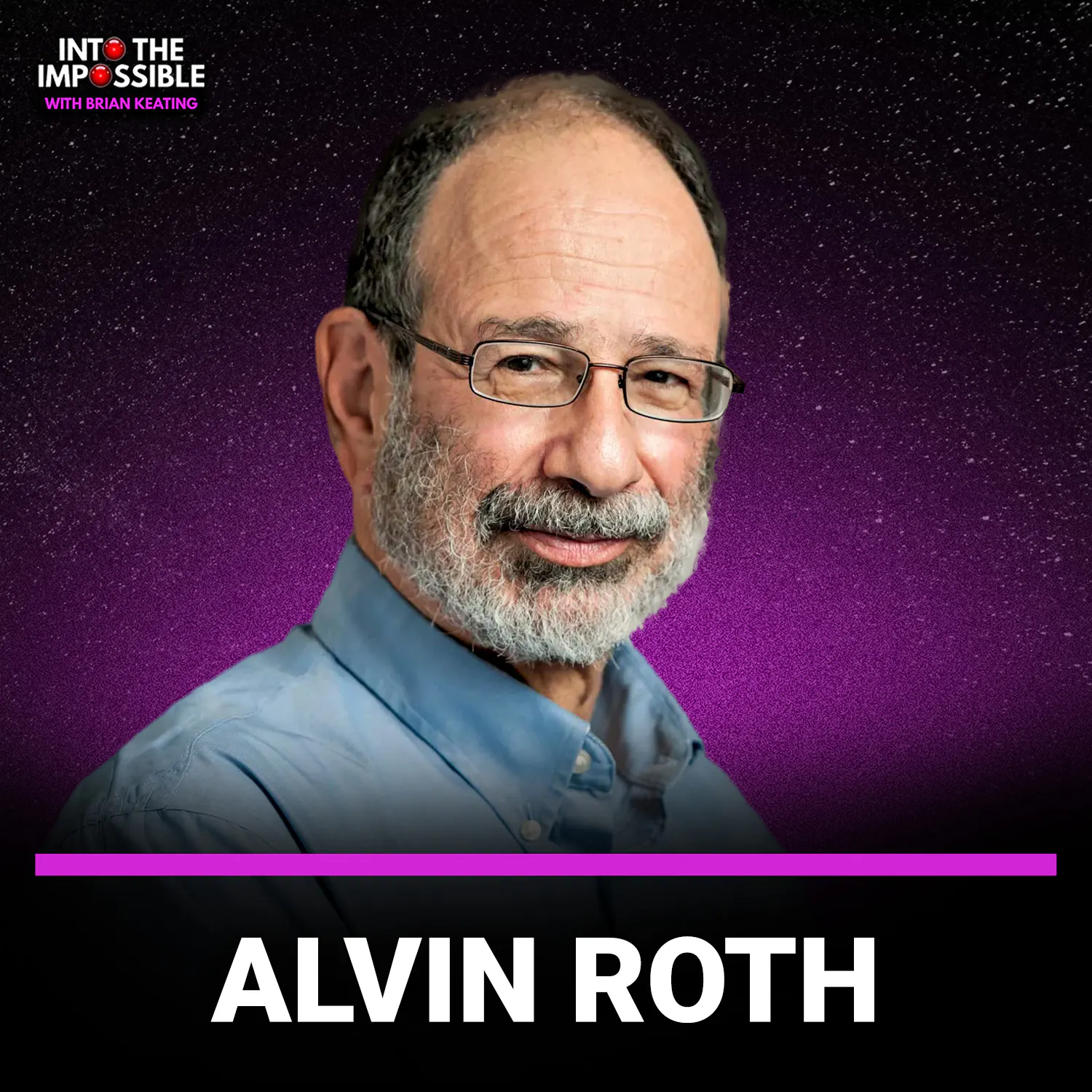
EPISODE · Jun 30, 2026 · 1H 21M
Nobel Economist: The Market That Lets People Die
from Into the Impossible With Brian Keating · host Big Bang Productions Inc.
A Nobel laureate in economics argues the bans we pass to protect our morals are quietly killing people and the data backs him up. Why the line between a market we allow and one we forbid is mostly an accident of disgust. Subscribe if you want science with evidence, not speculation. My guest won the 2012 Nobel Prize for designing the systems that match kidney donors to patients who would otherwise die waiting. We cover why it’s easy to buy heroin but hard to hire a hitman, what surrogacy bans actually do to the babies they’re meant to protect, why paying kidney donors could end a shortage that kills thousands a year, and the trade-off statement he wants every lawmaker to say out loud. He has been called an organ trafficker. He explains why that’s the point. What you’ll hear: Why banning something that people want often makes it more dangerous The kidney market America won’t build and what that silence costs What the hitman vs. heroin ban asymmetry tells us about effective prohibition The McCormick statement: the trade-off acknowledgment most policy debates refuse to make How prediction markets are eroding the boundary between public and private information Whether Milton Friedman was right to be embarrassed by the economics Nobel There’s no such thing as a solution. There are only trade-offs. CHAPTERS 00:00 Who gets called an organ trafficker? 02:26 What makes a transaction repugnant? 03:14 Why bans without support create black markets 03:36 Heroin is easy. Hitmen are not. Why? 04:44 Prohibition, NASCAR, and moonshine 07:26 Surrogacy: legal here, criminal in Europe 12:30 When money turns something legal into a crime 14:28 Can religion corrupt a market? 15:56 Who actually pays for college? 21:38 The Enhanced Games: drugs as a marketing platform 25:30 Adderall, Erd0151s, and the science of getting sharper 30:58 Why AI makes market congestion worse before better 35:00 100,000 kidney failures a year. 30,000 transplants. 36:44 Portland decriminalized heroin. It failed. 39:22 The trade-off statement politicians refuse to make 41:14 Can you legalize sex work and shrink trafficking? 47:42 Kahneman chose to die. Who should decide? 48:30 Should we put GLP-1 drugs in the water? 56:12 America is the Saudi Arabia of blood plasma 01:00:54 Prediction markets and inside information 01:01:34 Sports gambling is more addictive than it looks 01:11:40 Peter Nobel called economics a marketing stunt 01:13:32 Is economics a real science? Get the transcript, fascinating bonus content, and my Monday M.A.G.I.C. Message: https://briankeating.com/yt Have a .edu email and live in the USA? You automatically win a meteorite: https://BrianKeating.com/edu Subscribe: https://www.youtube.com/DrBrianKeating?sub_confirmation=1 Support Into the Impossible on Patreon, get my weekly M.A.G.I.C. Message, unfiltered bonus content, and live monthly Office Hours with me: https://www.patreon.com/drbriankeating Join this channel for perks, monthly Office Hours, and your name in the Member Roster at the end of every episode: https://www.youtube.com/channel/UCmXH_moPhfkqCk6S3b9RWuw/join Get your three free gifts when you join my Multiverse of Minds: https://BrianKeating.com/cosmic Featured Guest: Alvin Roth website: https://web.stanford.edu/~alroth/ Moral Economics (book): https://www.amazon.com/Moral-Economics-Prostitution-Controversial-Transactions/dp/1541702018 My books: Losing the Nobel Prize (memoir): http://amzn.to/2sa5UpA Think Like a Nobel Prize Winner: https://a.co/d/03ezQFu Focus Like a Nobel Prize Winner: https://a.co/d/hi50U9U Galileo’s Dialogue (first-ever audiobook): https://a.co/d/iZPi9Un Twitter/X: https://x.com/BrianKeating Substack: https://briankeating.substack.com Blog: https://briankeating.com/blog Audio-only: https://briankeating.com/podcast #intotheimpossible #briankeating #economics #NobelPrize #AlvinRoth #marketdesign #podcast Learn more about your ad choices. Visit megaphone.fm/adchoices
Embed this episode
NOW PLAYING
Nobel Economist: The Market That Lets People Die
No transcript for this episode yet
Similar Episodes
No similar episodes found.
Similar Podcasts
No similar podcasts found.