
EPISODE · Mar 28, 2026 · 57 MIN
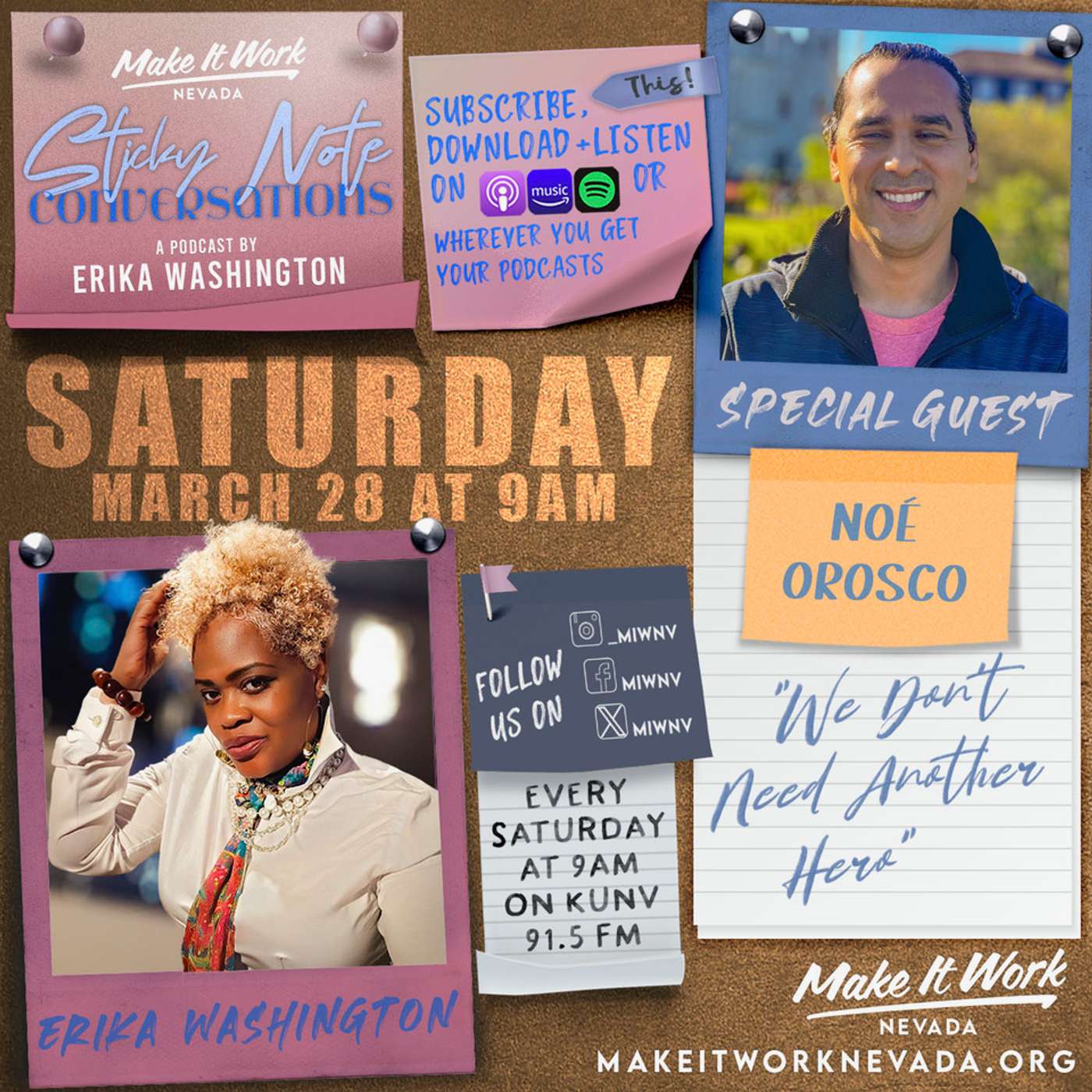
Noé Orosco - "We Don't Need Another Hero"
from Sticky Note Conversations · host Erika Washington
Host and executive producer Erika Washington and guest Noé Orosco discuss reactions to a New York Times investigation alleging Cesar Chavez was a rapist and child molester, and what the news could mean for the Latino community, civil rights movements, solidarity, and women and girls. Noé, a Las Vegas resident and former seasonal farmworker from California’s Central Valley, shares experiences harvesting and planting orchards, describing long, piece-rate workdays involving whole families and the impact of weather on income. He reflects on how labor organizing improved conditions (including limits on pesticide spraying over workers and banning the short-handle hoe) while noting tensions between the UFW and undocumented workers. They emphasize separating the movement from a single figure, discuss renaming Chavez-linked honors to better recognize Dolores Huerta, and argue for accountability and checks and balances within movements. (00:00) - Content Warning Intro (00:32) - Why Chavez Story Matters (02:44) - Meet Noé Orosco (03:51) - Identity and Indigeneity (05:58) - Growing Up Farmworking (07:39) - Inside the Orchard Grind (12:25) - Families and Child Labor Reality (14:53) - Did the Movement Improve Safety (18:32) - Chavez in His Family History (22:53) - NYT Allegations Gut Punch (25:22) - Separating Man from Movement (27:08) - Will This Derail Progress (29:17) - Movement Over Heroes (29:57) - Dolores Huerta Sacrifice (31:14) - Silence And Derailing (34:02) - Gender Dynamics Machismo (36:24) - Renaming And Reckoning (38:27) - Dangers Of Idolization (42:16) - Checks And Balances (45:09) - Training Behind Movements (51:21) - Accountability In Community (53:31) - Democracy And Storytelling (56:14) - Closing Thanks And Credits
Embed this episode
NOW PLAYING
Noé Orosco - "We Don't Need Another Hero"
No transcript for this episode yet
Similar Episodes
No similar episodes found.
Similar Podcasts
No similar podcasts found.