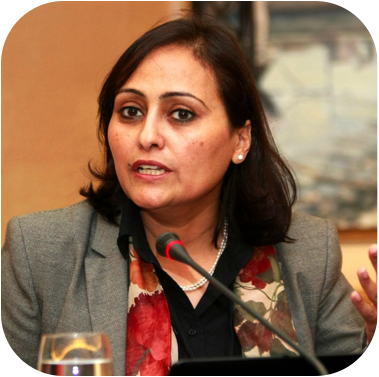
Non-State Actors and State-Building in Libya after 2011 episode artwork

EPISODE · Feb 25, 2021 · 28 MIN

Non-State Actors and State-Building in Libya after 2011

from Maghrib in Past & Present | Podcasts · host themaghribpodcast.com

Episode 111: Non-State Actors and State-Building in Libya after 2011 In this podcast, Professor Amal El-Obeidi discusses power struggles in Libya, as well as the country's instability since 2011. In the absence of a central state after the fall of Qaddafi's regime, processes of national reconciliation and transitional justice have been ineffective. Additionally, the increased number of municipalities after 2014 has led to new political divisions. El-Obeidi argues that local-level governing coalitions have often filled the void of state sovereignty and worked to reduce marginalization, as well as ensure equal access to resources. She focuses specifically on the increasing role of non-state actors in national reconciliation. In this context, tribes played a significant role in Libya's political and social life through ‘urf, or customary law. El-Obeidi highlights the position of women in local reconciliation dialogs within male-dominated councils. In addition to her research, El-Obeidi also speaks of the ways in which academic life has changed significantly for Libya scholars since 2011. The conflict in Libya has not only impacted academic facilities, but has made field research difficult, if not impossible.    Amal El-Obeidi is Professor of Comparative Politics in the Department of Political Science at the University of Benghazi, Libya. Currently she is a fellow researcher at the Institute for African Studies at Bayreuth University, Germany. She is a founding member and vice president of the Libyan Experts Forum for Development since 2017. Author of Political Culture in Libya, her work has appeared in Open Democracy and Middle East Monitor. Prof. El-Obeidi's research interests include gender issue, local reconciliation, governance and security issues, migration, conflict resolution, and peace building. Her current research addresses tribalism in Libya from a gender perspective.    Jacob Mundy, Associate Professor of Peace and Conflict Studies at Colgate University, conducted this interview on November 23, 2020. This podcast is part of the "Supporting Critical Research and Strengthening Scholarly Capacity in Algeria, Libya, and Tunisia" project organized by the Centre d'Études Maghrébines à Tunis (CEMAT) and the Centre d'Études Maghrébines en Algérie (CEMA), and funded by the Carnegie Corporation of New York. Prof. Mundy heads the contemporary Libya studies research unit, of which Prof. El-Obeidi is a member.   Posted by: Hayet Lansari, Librarian, Outreach Coordinator, Content Curator (CEMA).

In this podcast, Professor Amal El-Obeidi discusses power struggles in Libya, as well as the country's instability since 2011. In the absence of a central state after the fall of Qaddafi's regime, processes of national reconciliation and transitional justice have been ineffective. Additionally, the increased number of municipalities after 2014 has led to new political divisions. El-Obeidi argues that local-level governing coalitions have often filled the void of state sovereignty and worked to reduce marginalization, as well as ensure equal access to resources. She focuses specifically on the increasing role of non-state actors in national reconciliation. In this context, tribes played a significant role in Libya's political and social life through ‘urf, or customary law. El-Obeidi highlights the position of women in local reconciliation dialogs within male-dominated councils. In addition to her research, El-Obeidi also speaks of the ways in which academic life has changed significantly for Libya scholars since 2011. The conflict in Libya has not only impacted academic facilities, but has made field research difficult, if not impossible.    Amal El-Obeidi is Professor of Comparative Politics in the Department of Political Science at the University of Benghazi, Libya. Currently she is a fellow researcher at the Institute for African Studies at Bayreuth University, Germany. She is a founding member and vice president of the Libyan Experts Forum for Development since 2017. Author of Political Culture in Libya, her work has appeared in Open Democracy and Middle East Monitor. Prof. El-Obeidi's research interests include gender issue, local reconciliation, governance and security issues, migration, conflict resolution, and peace building. Her current research addresses tribalism in Libya from a gender perspective.    Jacob Mundy, Associate Professor of Peace and Conflict Studies at Colgate University, conducted this interview on November 23, 2020. This podcast is part of the "Supporting Critical Research and Strengthening Scholarly Capacity in Algeria, Libya, and Tunisia" project organized by the Centre d'Études Maghrébines à Tunis (CEMAT) and the Centre d'Études Maghrébines en Algérie (CEMA), and funded by the Carnegie Corporation of New York. Prof. Mundy heads the contemporary Libya studies research unit, of which Prof. El-Obeidi is a member. Posted by: Hayet Lansari, Librarian, Outreach Coordinator, Content Curator (CEMA).

NOW PLAYING

Non-State Actors and State-Building in Libya after 2011

0:00 28:50

No transcript for this episode yet

We transcribe on demand. Request one and we'll notify you when it's ready — usually under 10 minutes.

MG Show MG Show The MG Show, hosted by Jeffrey Pedersen and Shannon Townsend, is a leading alternative media platform dedicated to uncovering the truth behind today’s most pressing political issues. Launched in 2019, the show has grown exponentially, offering unfiltered insights, comprehensive research, and real-time analysis. With a commitment to independent journalism and factual integrity, the MG Show empowers its audience with knowledge and encourages active participation in the political discourse. Eat to Live Jenna Fuhrman, Dr. Fuhrman Our health is our most precious gift and smart nutrition can change your life. Each month, join Dr. Fuhrman and his daughter, Jenna Fuhrman as they discuss important topics in the world of nutrition. Eat to Live will change the way you eat and think about food. French Your Way Jessica: Native French teacher founder of French Your Way Boost your French listening skills and test your comprehension with this one of a kind series of podcasts. Get the chance to listen to a real conversation between native speakers talking at normal speed AND customise your learning experience through carefully designed sets of questions (2 levels of difficulty) available for download at www.frenchvoicespodcast.com. All interviews also come with the transcript. French teacher Jessica interviews native speakers of French from around the world who share a bit of their life and passion. Where else would you meet in one same place a French yoga teacher based in Melbourne, a soap manufacturer from Provence, or a couple cycling around the world? XXX Tech by SOVRYN Dr. Brian Sovryn The crossroads between technology, sensuality, and metaphysics - and the longest running anarchist podcast in the world! Brought to you by Dr. Brian Sovryn.

Frequently Asked Questions

How long is this episode of Maghrib in Past & Present | Podcasts?

This episode is 28 minutes long.

When was this Maghrib in Past & Present | Podcasts episode published?

This episode was published on February 25, 2021.

What is this episode about?

Episode 111: Non-State Actors and State-Building in Libya after 2011 In this podcast, Professor Amal El-Obeidi discusses power struggles in Libya, as well as the country's instability since 2011. In the absence of a central state after the fall of...

Can I download this Maghrib in Past & Present | Podcasts episode?

Yes, you can download this episode by clicking the download button on the episode player, or subscribe to the podcast in your preferred podcast app for automatic downloads.
URL copied to clipboard!