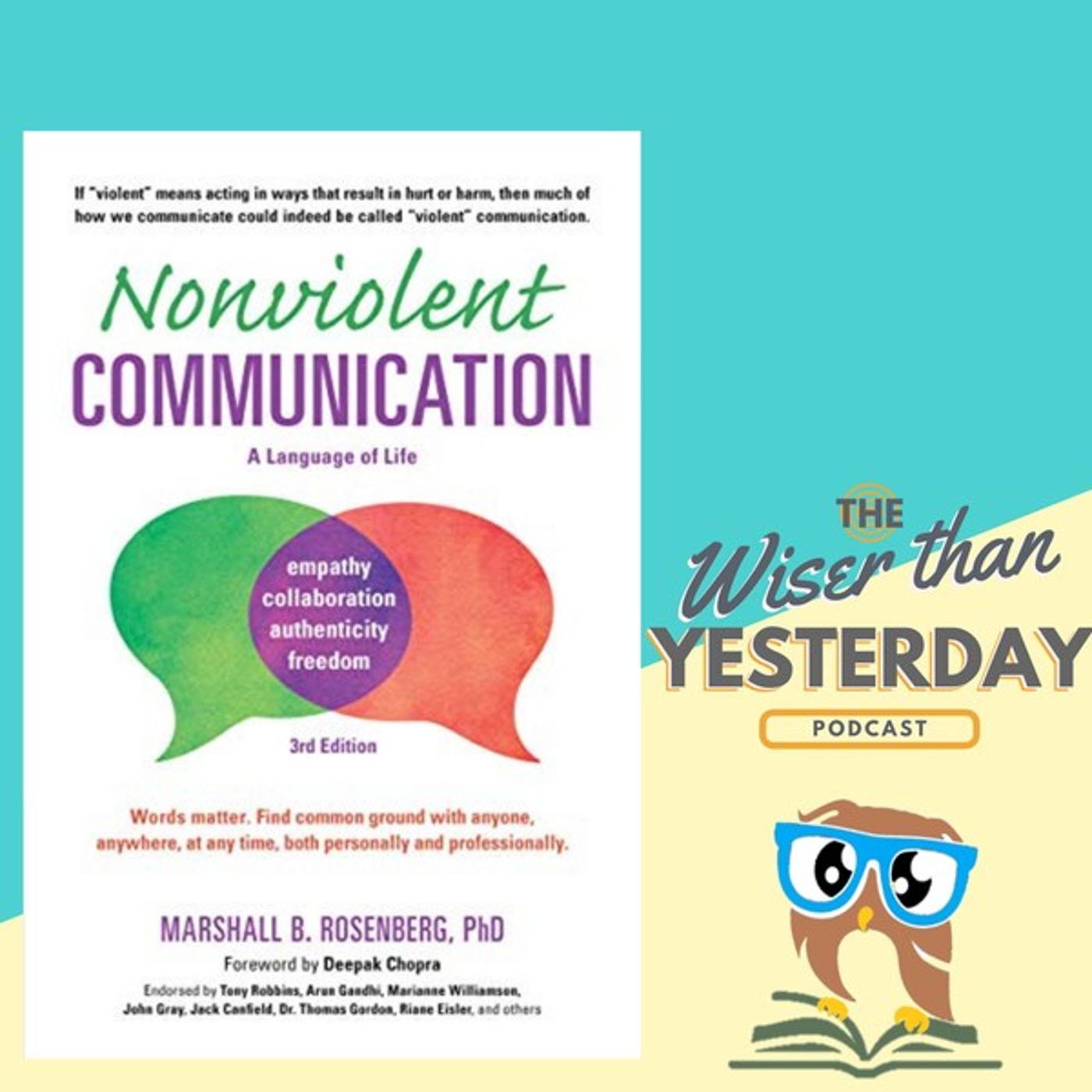
Nonviolent Communication - Marshall Rosenberg episode artwork

EPISODE · Sep 14, 2020 · 29 MIN

Nonviolent Communication - Marshall Rosenberg

from Wiser Than Yesterday: Educational Book Reviews and Summaries

Nonviolent Communication is based on the assumption that all human beings have capacity for compassion and empathy and that people only resort to violence or behavior harmful to others when they do not recognize more effective strategies for meeting needs.The purpose of Nonviolent Communication is to help us connect to ourselves and others in a way that makes being compassionate natural. It is not about making people do what we want, but by creating connections with others so that everyone’s needs are met.Nonviolent Communication theory supposes that all human behavior stems from attempts to meet universal human needs, Connection, Physical Well-Being, Honesty, Play, Peace, Autonomy, Meaningand that these needs are never in conflict; rather, conflict arises when strategies for meeting needs clash. Nonviolent Communication proposes that people should identify shared needs, which are revealed by the thoughts and feelings surrounding these needs, and then they should collaborate to develop strategies and make requests of each other to meet each other's needs. The goal is interpersonal harmony and learning for future cooperation.Nonviolent Communication centers round 2 questions:What is alive in youWhat would make your life more wonderfulMost conflicts between individuals or groups arise from miscommunication about their human needs, due to coercive or manipulative language that aims to induce fear, guilt, shame, etc. These "violent" modes of communication, when used during a conflict, divert the attention of the participants away from clarifying their needs, their feelings, their perceptions, and their requests, thus perpetuating the conflictCertain ways of communicating tend to alienate people from the experience of compassion* Moralistic judgements implying wrongness or badness on the part of people who don't act in harmony with our values* Demands that implicitly or explicitly threaten listeners with blame or punishment if they fail to comply.* Denial of responsibility via language that obscures awareness of personal responsibility. ‘I had to’ because of others, my condition, group pressure, …* Making comparisons* A sense of ‘deserving’How to practice Nonviolent Communication?ObservationThe facts (what we are seeing, hearing, or touching) as distinct from our evaluation of meaning and significance. It is said that "When we combine observation with evaluation others are apt to hear criticism and resist what we are saying."FeelingsFeelings are said to reflect whether we are experiencing our needs as met or unmet. Identifying feelings is said to allow us to more easily connect with one another, and "Allowing ourselves to be vulnerable by expressing our feelings can help resolve conflicts."NeedsUniversal human needs, as distinct from particular strategies for meeting needs. It is posited that "Everything we do is in service of our needs. Connection, Physical Well-Being, Honesty, Play, Peace, Autonomy, MeaningRequestRequest for a specific action, free of demand. Requests are distinguished from demands in that one is open to hearing a response of "no" without this triggering an attempt to force the matter. If one makes a request and receives a "no" it is recommended not that one give up, but that one empathize with what is preventing the other person from saying "yes," before deciding how to continue the conversation. It is recommended that requests use clear, positive, concrete action languageThere are three primary modes of application of Nonviolent CommunicationSelf-empathyInvolves compassionately connecting with what is going on inside us. This may involve, without blame, noticing the thoughts and judgments we are having, noticing our feelings, and most critically, connecting to the needs that are affecting us.Receiving empathicallyIn Nonviolent Communication involves "connection with what's alive in the other person and what would make life wonderful for them...Nonviolent Communication suggests that however the other person expresses themselves, we focus on listening for the underlying observations, feelings, needs, and requests. It is suggested that it can be useful to reflect a paraphrase of what another person has said, highlighting the Nonviolent Communication components implicit in their message, such as the feelings and needs you guess they may be expressingExpressing honestlyIn Nonviolent Communication, is likely to involve expressing an observation, feeling, need, and request. Don't Forget to leave a comment on this episode See podvine.com/privacy-policy for podcast listener privacy info. Hosted on Acast. See acast.com/privacy for more information.

Nonviolent Communication is based on the assumption that all human beings have capacity for compassion and empathy and that people only resort to violence or behavior harmful to others when they do not recognize more effective strategies for meeting needs.The purpose of Nonviolent Communication is to help us connect to ourselves and others in a way that makes being compassionate natural. It is not about making people do what we want, but by creating connections with others so that everyone’s needs are met.Nonviolent Communication theory supposes that all human behavior stems from attempts to meet universal human needs, Connection, Physical Well-Being, Honesty, Play, Peace, Autonomy, Meaningand that these needs are never in conflict; rather, conflict arises when strategies for meeting needs clash. Nonviolent Communication proposes that people should identify shared needs, which are revealed by the thoughts and feelings surrounding these needs, and then they should collaborate to develop strategies and make requests of each other to meet each other's needs. The goal is interpersonal harmony and learning for future cooperation.Nonviolent Communication centers round 2 questions:What is alive in youWhat would make your life more wonderfulMost conflicts between individuals or groups arise from miscommunication about their human needs, due to coercive or manipulative language that aims to induce fear, guilt, shame, etc. These "violent" modes of communication, when used during a conflict, divert the attention of the participants away from clarifying their needs, their feelings, their perceptions, and their requests, thus perpetuating the conflictCertain ways of communicating tend to alienate people from the experience of compassion* Moralistic judgements implying wrongness or badness on the part of people who don't act in harmony with our values* Demands that implicitly or explicitly threaten listeners with blame or punishment if they fail to comply.* Denial of responsibility via language that obscures awareness of personal responsibility. ‘I had to’ because of others, my condition, group pressure, …* Making comparisons* A sense of ‘deserving’How to practice Nonviolent Communication?ObservationThe facts (what we are seeing, hearing, or touching) as distinct from our evaluation of meaning and significance. It is said that "When we combine observation with evaluation others are apt to hear criticism and resist what we are saying."FeelingsFeelings are said to reflect whether we are experiencing our needs as met or unmet. Identifying feelings is said to allow us to more easily connect with one another, and "Allowing ourselves to be vulnerable by expressing our feelings can help resolve conflicts."NeedsUniversal human needs, as distinct from particular strategies for meeting needs. It is posited that "Everything we do is in service of our needs. Connection, Physical Well-Being, Honesty, Play, Peace, Autonomy, MeaningRequestRequest for a specific action, free of demand. Requests are distinguished from demands in that one is open to hearing a response of "no" without this triggering an attempt to force the matter. If one makes a request and receives a "no" it is recommended not that one give up, but that one empathize with what is preventing the other person from saying "yes," before deciding how to continue the conversation. It is recommended that requests use clear, positive, concrete action languageThere are three primary modes of application of Nonviolent CommunicationSelf-empathyInvolves compassionately connecting with what is going on inside us. This may involve, without blame, noticing the thoughts and judgments we are having, noticing our feelings, and most critically, connecting to the needs that are affecting us.Receiving empathicallyIn Nonviolent Communication involves "connection with what's alive in the other person and what would make life wonderful for them...Nonviolent Communication suggests that however the other person expresses themselves, we focus on listening for the underlying observations, feelings, needs, and requests. It is suggested that it can be useful to reflect a paraphrase of what another person has said, highlighting the Nonviolent Communication components implicit in their message, such as the feelings and needs you guess they may be expressingExpressing honestlyIn Nonviolent Communication, is likely to involve expressing an observation, feeling, need, and request. Don't Forget to leave a comment on this episode See podvine.com/privacy-policy for podcast listener privacy info. Hosted on Acast. See acast.com/privacy for more information.

NOW PLAYING

Nonviolent Communication - Marshall Rosenberg

0:00 29:38

No transcript for this episode yet

We transcribe on demand. Request one and we'll notify you when it's ready — usually under 10 minutes.

MG Show MG Show The MG Show, hosted by Jeffrey Pedersen and Shannon Townsend, is a leading alternative media platform dedicated to uncovering the truth behind today’s most pressing political issues. Launched in 2019, the show has grown exponentially, offering unfiltered insights, comprehensive research, and real-time analysis. With a commitment to independent journalism and factual integrity, the MG Show empowers its audience with knowledge and encourages active participation in the political discourse. Breaking News Show | eTurboNews Juergen Thomas Steinmetz News is relevant to the global travel and tourism industry, human rights and global issues.Breaking news when it happens and only from the source. Eat to Live Jenna Fuhrman, Dr. Fuhrman Our health is our most precious gift and smart nutrition can change your life. Each month, join Dr. Fuhrman and his daughter, Jenna Fuhrman as they discuss important topics in the world of nutrition. Eat to Live will change the way you eat and think about food. French Your Way Jessica: Native French teacher founder of French Your Way Boost your French listening skills and test your comprehension with this one of a kind series of podcasts. Get the chance to listen to a real conversation between native speakers talking at normal speed AND customise your learning experience through carefully designed sets of questions (2 levels of difficulty) available for download at www.frenchvoicespodcast.com. All interviews also come with the transcript. French teacher Jessica interviews native speakers of French from around the world who share a bit of their life and passion. Where else would you meet in one same place a French yoga teacher based in Melbourne, a soap manufacturer from Provence, or a couple cycling around the world?

Frequently Asked Questions

How long is this episode of Wiser Than Yesterday: Educational Book Reviews and Summaries?

This episode is 29 minutes long.

When was this Wiser Than Yesterday: Educational Book Reviews and Summaries episode published?

This episode was published on September 14, 2020.

What is this episode about?

Nonviolent Communication is based on the assumption that all human beings have capacity for compassion and empathy and that people only resort to violence or behavior harmful to others when they do not recognize more effective strategies for meeting...

Can I download this Wiser Than Yesterday: Educational Book Reviews and Summaries episode?

Yes, you can download this episode by clicking the download button on the episode player, or subscribe to the podcast in your preferred podcast app for automatic downloads.
URL copied to clipboard!