
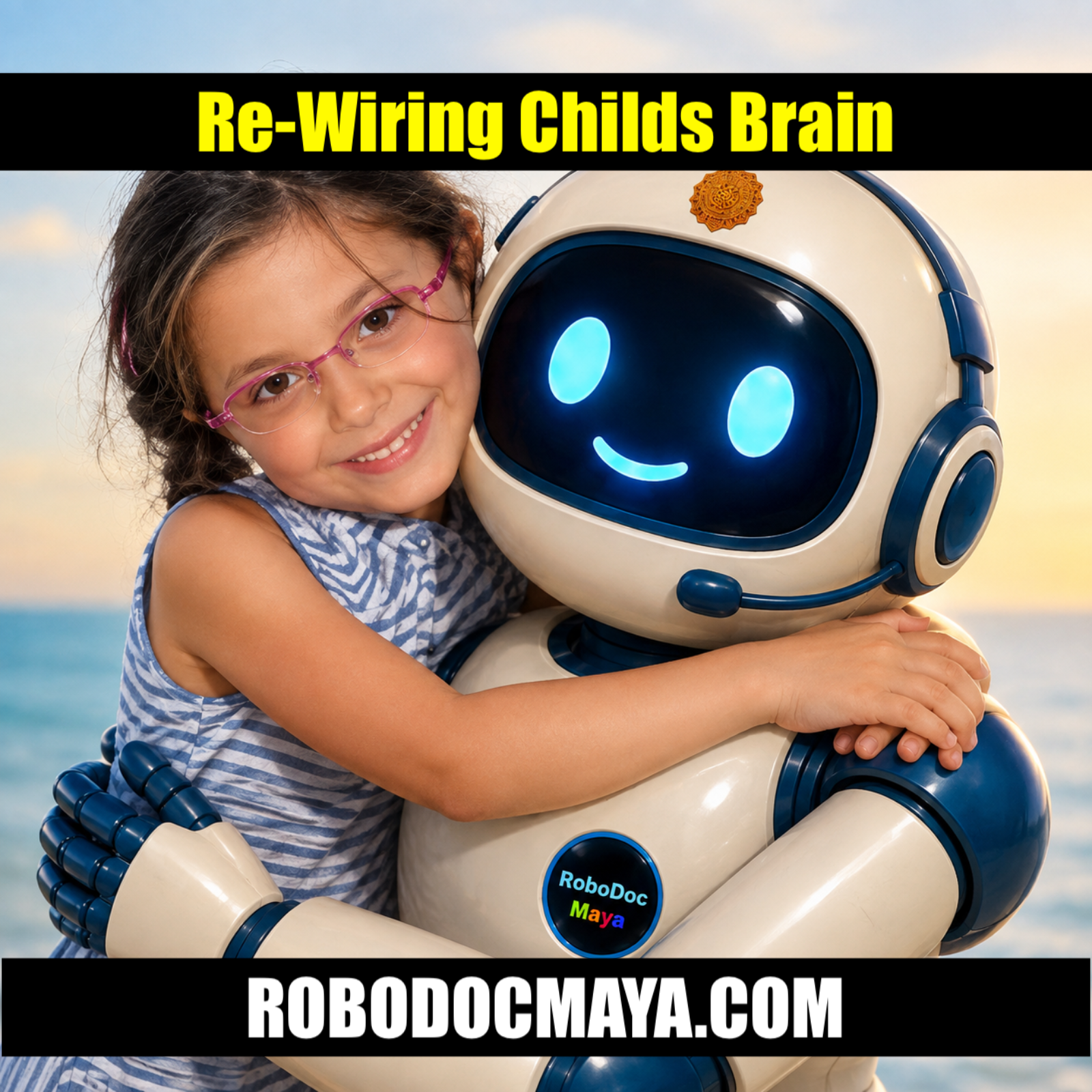
EPISODE · Aug 31, 2026 · 8 MIN
Not Recognising Early Childhood Behavior Lead to Behaviour Problem and Failure to Conquer Fear and Passed on From Generation to generation
from The Dr Maya Way
Why early behaviour is so much more than just a passing phase. If you've ever felt completely overwhelmed by a child's sudden outburst, or wondered whether their sleep struggles were normal, you're absolutely in the right place. Let's get right into it. So picture this. You're at the park. It's time to go, and you give a crystal-clear five-minute warning, but leaving still ends in an explosive meltdown. If you've ever dealt with an intense reaction like that, is it boundary testing, or a subtle sign of something deeper?Sometimes what we perceive as pure defiance is actually a tiny brain genuinely struggling to process time and shift its focus. To understand what's really happening during these highly charged moments, we have to zoom out and look at the powerful connection between a caregiver and a baby, specifically during those highly sensitive first three years of life. That physical and emotional bond isn't just comforting for the baby.Let's look at Section 1, the critical first years. Get this. Epidemiological data shows that anywhere from 10 to 20% of children and adolescents experience mental health problems. And the developmental precursors to these conditions? They often begin incredibly early, sometimes as early as the perinatal and infant periods. This means we need to pay close attention from the start so we can address these issues before they snowball into lifelong struggles. Now, we're talking about things like excessive crying, which affects up to 26% of babies, or severe sleeping disturbances or feeding difficulties. These are all extremely common. But here's the catch. For a subset of children, when these issues persist, they aren't just transient phases you can wait out. They're actually foundational precursors to later psychological and functional impairments, both in childhood and way into adulthood.Moving on to Section 2, uncovering the subtle signs here is practical. Check you can do it at home tonight. We call it the bedtime story test. It's a simple test of sustained attention. By 6 to 9 months old, a baby should generally be able to follow a very short board book right to the end, even if they try to chew on it first. But if your child consistently squirms, flips pages rapidly without even looking, or immediately crawls away, it could be an early, subtle sign of an attention-regulation issue like ADHD. And this brings us to a crucial distinction. N versus dangerous impulsivity. Think about it. All toddlers test boundaries by taking a few steps away from you to explore. That's normal. But dangerous impulsivity, often seen in early ADHD, involves suddenly running full speed towards a busy car park or traffic without any awareness of consequences. It is a terrifying moment for a parent, and it's driven entirely by a brain acting on raw impulse. As kids get older, executive-functioning challenges become more apparent and incredibly diverse. It could be spacing out and responding inconsistently to their own name. It could be taking over 45 minutes to fall asleep every night. Maybe it's having explosive reactions to transitions because they literally cannot estimate time. 5 minutes feels like 30 seconds to them. Or constantly interrupting conversations with this extreme urgency.
Embed this episode
Ready to play
Not Recognising Early Childhood Behavior Lead to Behaviour Problem and Failure to Conquer Fear and Passed on From Generation to generation
No transcript for this episode yet
Similar Episodes
No similar episodes found.
Similar Podcasts
No similar podcasts found.