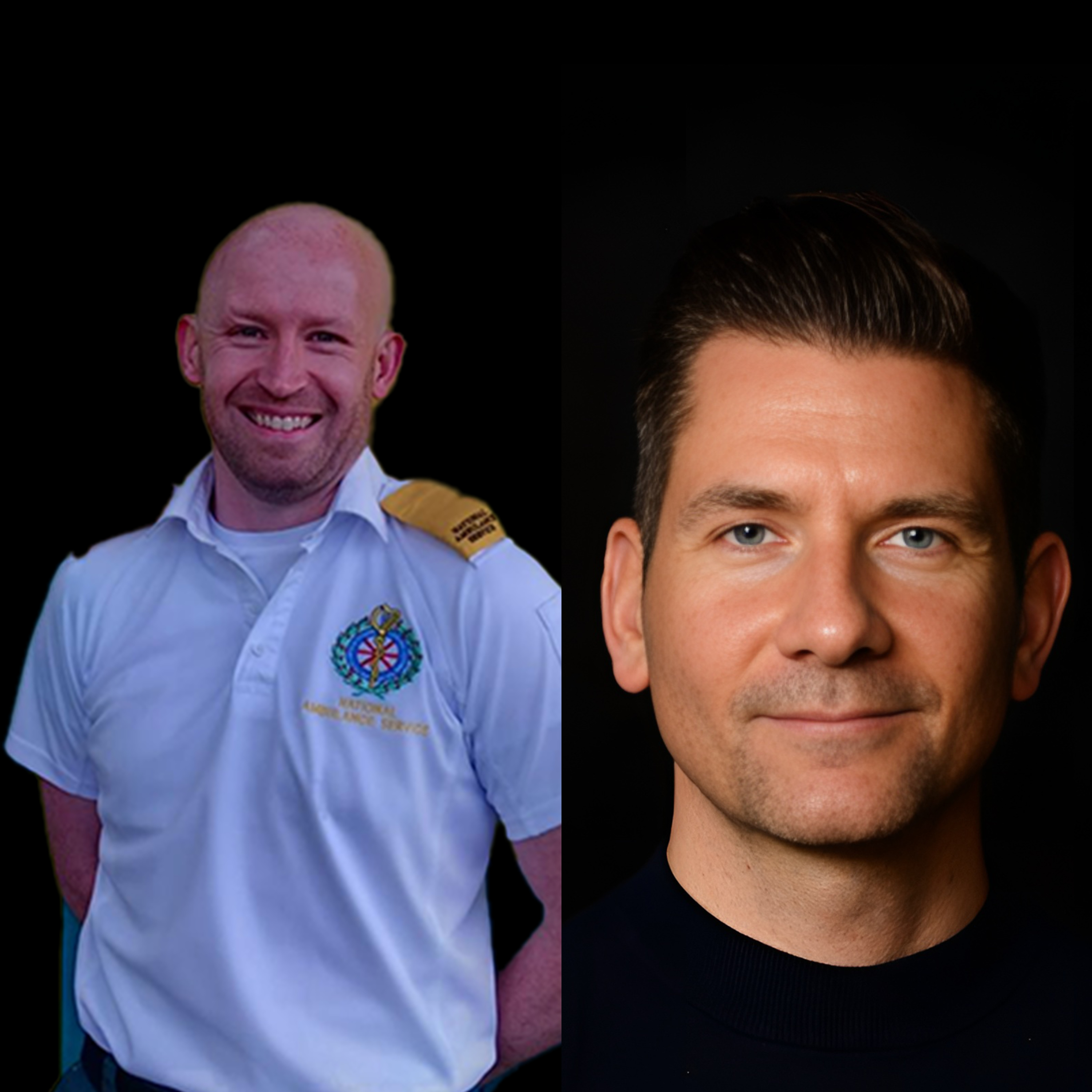
Not So FAST: Rethinking Stroke Recognition in Pre-Hospital Care with Shane Devlin and Ronan Walker  episode artwork

EPISODE · May 18, 2026 · 49 MIN

Not So FAST: Rethinking Stroke Recognition in Pre-Hospital Care with Shane Devlin and Ronan Walker

from Pre-Hospital Care Podcast · host Eoin Walker

In pre-hospital care, few diagnoses carry the same urgency as stroke. But not all strokes present the way we expect, and that’s where the risk lies. In this episode, we explore the challenge of recognising posterior circulation strokes, using both clinical insight and lived experience. I’m joined by Shane Devlin, a registered paramedic and newly appointed PhD researcher focusing on posterior stroke recognition. His work builds on frontline experience and a growing body of evidence that highlights just how easily these patients can be missed.Alongside Shane, this conversation is grounded in a personal story: my brother, Ronan Walker, who suffered a posterior stroke 4 years ago in his late 30's. His presentation didn’t fit the traditional mould. There was no clear FAST-positive picture, just subtle, evolving symptoms that required a different kind of clinical suspicion.This episode sits at the intersection of science and story. We unpack the limitations of current assessment tools, the cognitive challenges clinicians face in the field, and what needs to change to improve recognition. Because in a posterior stroke, the issue often isn’t treatment, it’s getting patients to treatment in time.Shane has published both case studies and qualitative research on PCS. Both can be found here: Paramedic recognition of posterior circulation stroke: a vignette and focus group studyhttps://pubmed.ncbi.nlm.nih.gov/37674916/Not so FAST: pre-hospital posterior circulation stroke:https://pdfs.semanticscholar.org/06a1/f16d9062708b6f4ff8bb29efb7d9a61b43db.pdf⁠This episode is sponsored by PAX: The gold standard in emergency response bags.When you’re working under pressure, your kit needs to be dependable, tough, and intuitive. That’s exactly what you get with PAX. Every bag is handcrafted by expert tailors who understand the demands of pre-hospital care. From the high-tech, skin-friendly, and environmentally responsible materials to the cutting-edge welding process that reduces seams and makes cleaning easier, PAX puts performance first. They’ve partnered with 3M to perfect reflective surfaces for better visibility, and the bright grey interior makes finding gear fast and effortless, even in low light. With over 200 designs, PAX bags are made to suit your role, needs, and environment. And thanks to their modular system, many bags work seamlessly together, no matter the setup.PAX doesn’t chase trends. Their designs stay consistent, so once you know one, you know them all. And if your bag ever takes a beating? Their in-house repair team will bring it back to life.PAX – built to perform, made to last.Learn more at ⁠https://www.pax-bags.com/en/⁠

In pre-hospital care, few diagnoses carry the same urgency as stroke. But not all strokes present the way we expect, and that’s where the risk lies. In this episode, we explore the challenge of recognising posterior circulation strokes, using both clinical insight and lived experience. I’m joined by Shane Devlin, a registered paramedic and newly appointed PhD researcher focusing on posterior stroke recognition. His work builds on frontline experience and a growing body of evidence that highlights just how easily these patients can be missed.Alongside Shane, this conversation is grounded in a personal story: my brother, Ronan Walker, who suffered a posterior stroke 4 years ago in his late 30's. His presentation didn’t fit the traditional mould. There was no clear FAST-positive picture, just subtle, evolving symptoms that required a different kind of clinical suspicion.This episode sits at the intersection of science and story. We unpack the limitations of current assessment tools, the cognitive challenges clinicians face in the field, and what needs to change to improve recognition. Because in a posterior stroke, the issue often isn’t treatment, it’s getting patients to treatment in time.Shane has published both case studies and qualitative research on PCS. Both can be found here: Paramedic recognition of posterior circulation stroke: a vignette and focus group studyhttps://pubmed.ncbi.nlm.nih.gov/37674916/Not so FAST: pre-hospital posterior circulation stroke:https://pdfs.semanticscholar.org/06a1/f16d9062708b6f4ff8bb29efb7d9a61b43db.pdf⁠This episode is sponsored by PAX: The gold standard in emergency response bags.When you’re working under pressure, your kit needs to be dependable, tough, and intuitive. That’s exactly what you get with PAX. Every bag is handcrafted by expert tailors who understand the demands of pre-hospital care. From the high-tech, skin-friendly, and environmentally responsible materials to the cutting-edge welding process that reduces seams and makes cleaning easier, PAX puts performance first. They’ve partnered with 3M to perfect reflective surfaces for better visibility, and the bright grey interior makes finding gear fast and effortless, even in low light. With over 200 designs, PAX bags are made to suit your role, needs, and environment. And thanks to their modular system, many bags work seamlessly together, no matter the setup.PAX doesn’t chase trends. Their designs stay consistent, so once you know one, you know them all. And if your bag ever takes a beating? Their in-house repair team will bring it back to life.PAX – built to perform, made to last.Learn more at ⁠https://www.pax-bags.com/en/⁠

NOW PLAYING

Not So FAST: Rethinking Stroke Recognition in Pre-Hospital Care with Shane Devlin and Ronan Walker

0:00 49:54

No transcript for this episode yet

We transcribe on demand. Request one and we'll notify you when it's ready — usually under 10 minutes.

That Hoarder: Overcome Compulsive Hoarding That Hoarder Hoarding disorder is stigmatised and people who hoard feel vast amounts of shame. This podcast began life as an audio diary, an anonymous outlet for somebody with this weird condition. That Hoarder speaks about her experiences living with compulsive hoarding, she interviews therapists, academics, researchers, children of hoarders, professional organisers and influencers, and she shares insight and tips for others with the problem. Listened to by people who hoard as well as those who love them and those who work with them, Overcome Compulsive Hoarding with That Hoarder aims to shatter the stigma, share the truth and speak openly and honestly to improve lives. The Small Business Startup School – Business Notes | Financial Literacy | Retail Psychology – For Professionals & Entrepreneurs The Small Business Startup School Inc. Starting or buying a small business? While personal circumstances may vary, business patterns remain timeless. On The Small Business Startup School, we explore strategies, insights, and practical solutions to help entrepreneurs confidently navigate their journey.Hosted by Ola Williams—a retail entrepreneur, fintech founder, and financial coach with over two decades of experience—this podcast marries financial awareness and retail psychology with optimism to deliver actionable takeaways.Join us to learn, grow, and connect as we uncover the keys to business success.Let’s continue to learn together and be encouraged to keep on connecting! DIOSA. Carolina Sanper This podcast is a sacred space created by Carolina Sanper where you connect with your inner wisdom and embody your magnetic feminine power.It is the realization that the mystical realm is where you plant the seeds of your desired reality.It is a portal to your true essence: awareness, presence, and receiving with ease. Welcome home, DIOSA. 🖤 XXX Tech by SOVRYN Dr. Brian Sovryn The crossroads between technology, sensuality, and metaphysics - and the longest running anarchist podcast in the world! Brought to you by Dr. Brian Sovryn.

Frequently Asked Questions

How long is this episode of Pre-Hospital Care Podcast?

This episode is 49 minutes long.

When was this Pre-Hospital Care Podcast episode published?

This episode was published on May 18, 2026.

What is this episode about?

In pre-hospital care, few diagnoses carry the same urgency as stroke. But not all strokes present the way we expect, and that’s where the risk lies. In this episode, we explore the challenge of recognising posterior circulation strokes, using both...

Can I download this Pre-Hospital Care Podcast episode?

Yes, you can download this episode by clicking the download button on the episode player, or subscribe to the podcast in your preferred podcast app for automatic downloads.
URL copied to clipboard!