
EPISODE · Nov 21, 2024 · 10 MIN
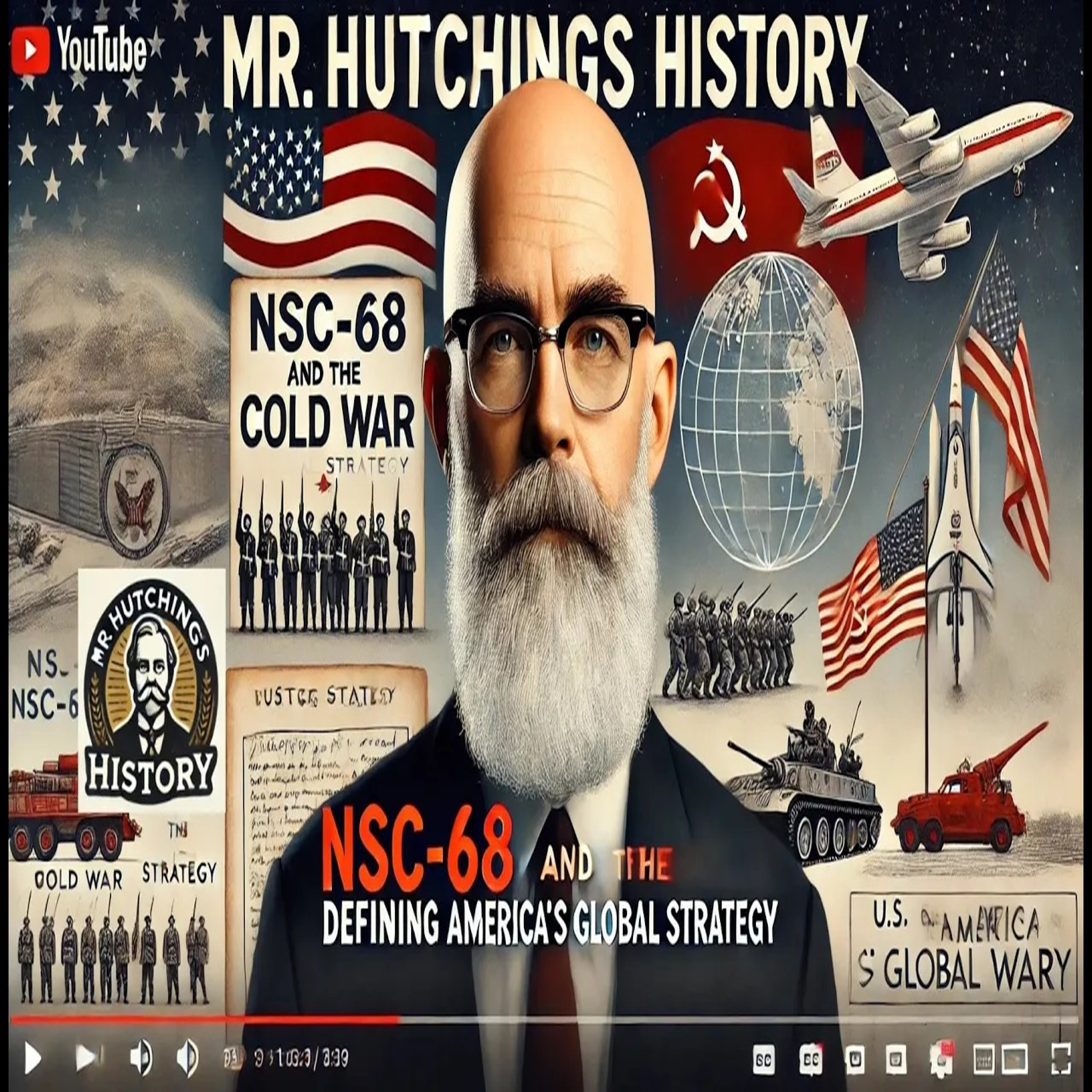
NSC-68 and the Cold War – Defining America's Global Strategy
from Mr. Hutchings History · host Produced, created, and written by Harold M. Hutchings
Welcome back to Mr. Hutchings History! In this episode, we explore the pivotal document NSC-68, which redefined the U.S. approach to the Cold War. Written in 1950, NSC-68 called for a dramatic increase in military spending and an aggressive global strategy to contain Soviet expansion. We’ll dive into its core ideas, compare it to the earlier Truman Doctrine, and analyze the historical debates surrounding its implementation. How did NSC-68 shape U.S. foreign policy, and what were the long-lasting effects on Cold War dynamics?Key Topics:The Soviet threat as defined in NSC-68How NSC-68 shaped U.S. military and economic commitmentsThe transition from the Truman Doctrine to NSC-68’s more aggressive stanceCriticism of NSC-68 by historians like Andrew BacevichThe legacy of NSC-68 in shaping U.S. Cold War strategy#Paper2WorldHistory #ColdWar #NSC68 #TrumanDoctrine #SovietThreat #USForeignPolicy #Containment #ColdWarStrategy #KoreanWar #MilitaryIndustrialComplex #Gaddis #Bacevich #HistoryDebates #ColdWarTensionsWorks CitedBacevich, Andrew. The New American Militarism: How Americans Are Seduced by War, 2005.Gaddis, John Lewis. Strategies of Containment, 1982.Leffler, Melvyn. A Preponderance of Power: National Security, the Truman Administration, and the Cold War, 1992.Schlesinger, Arthur M. Jr. Origins of the Cold War, Foreign Affairs, 1967.Chapters(0:00) Introduction – The Cold War at a CrossroadsUnpacking NSC-68, the document that shaped U.S. policy for decades.(1:07) The World in 1950 – Rising Cold War TensionsWhy the U.S. saw the Soviet Union as an existential threat.(2:06) Soviet Expansion & Communist InfluenceHow the U.S. perceived global communist movements.(2:59) The Core Message of NSC-68A call for military buildup, economic strength, and containment.(3:58) The Shift from Reaction to Proactive StrategyWhy NSC-68 marked a turning point in U.S. foreign policy.(4:55) Containment & Military-Industrial ExpansionThe impact of NSC-68 on global alliances and military spending.(6:01) Criticism – Did NSC-68 Fuel Endless Conflict?Historians debate whether it escalated tensions unnecessarily.(7:00) Cold War Echoes – NSC-68’s Legacy TodayHow its ideas still shape U.S. foreign policy.(8:10) Lessons from the Past – What Can We Learn?The dangers of oversimplifying global conflicts.(9:20) Final Thoughts – The Future of Global StrategyHow future historians might judge today’s world policies.
Embed this episode
NOW PLAYING
NSC-68 and the Cold War – Defining America's Global Strategy
No transcript for this episode yet
Similar Episodes
No similar episodes found.
Similar Podcasts
No similar podcasts found.