
EPISODE · Jan 23, 2026 · 17 MIN
Nuclear Rockets and Cosmic Mergers: Exploring the Future of Space Travel and Galactic Evolution
from SpaceTime with Stuart Gary · host Stuart Gary
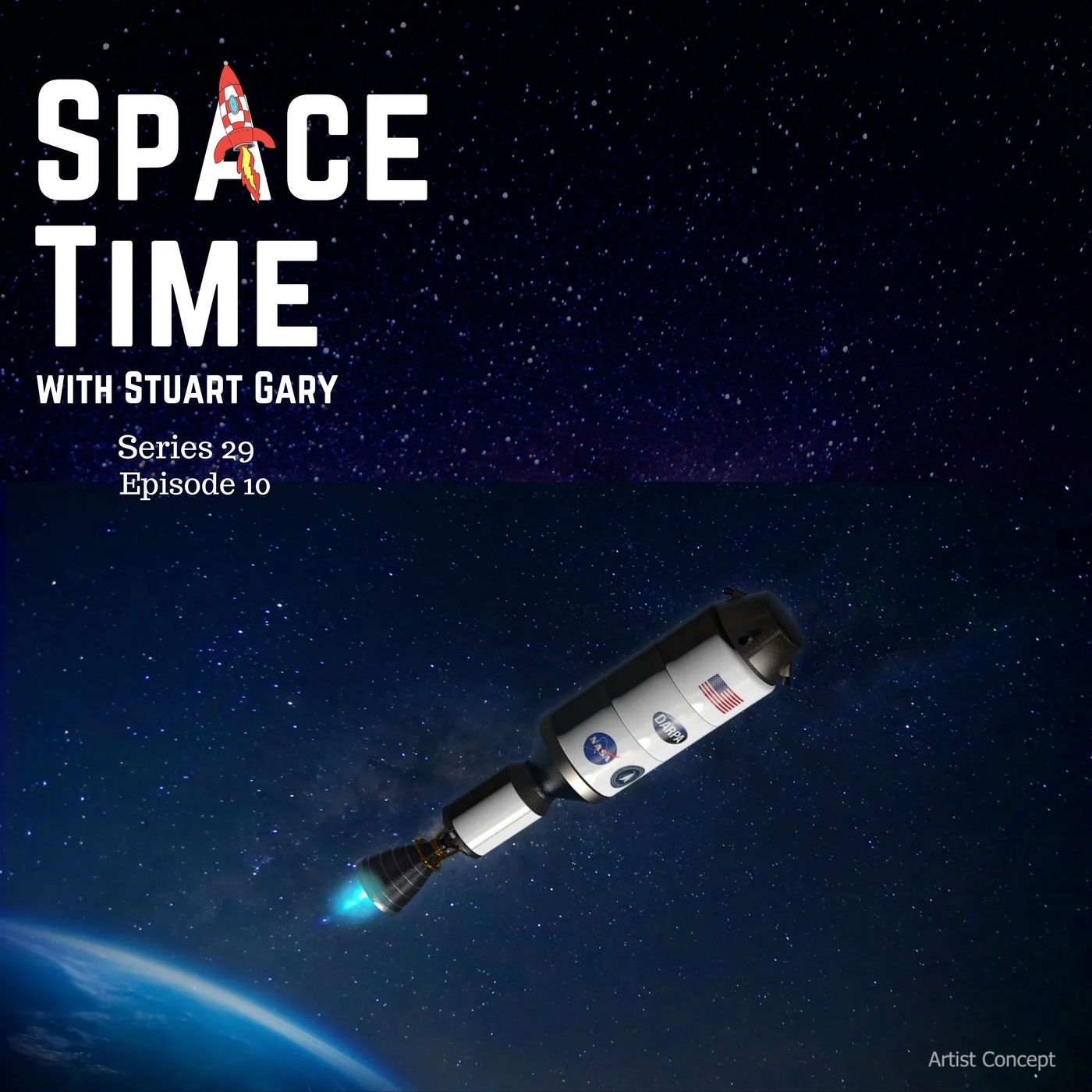
SpaceTime with Stuart Gary Gary - Series 29 Episode 10In this episode of SpaceTime, we explore groundbreaking developments in space exploration, including the imminent launch of the first nuclear-powered rocket, the merging of low mass dwarf galaxies, and the intriguing connection between Earth-like planets and gas giants.The Dawn of Nuclear Rocket TechnologyHistory is set to be made as NASA and DARPA prepare to test the world’s first fully operational nuclear-powered orbital rocket. This innovative vehicle utilizes a nuclear thermal propulsion system that heats liquid hydrogen propellant through nuclear fusion, achieving nearly double the efficiency of conventional rockets. The test aims to validate reactor operation in orbit, potentially revolutionizing space travel by reducing transit times to Mars and allowing for larger payloads.Merging Dwarf Galaxies: A New DiscoveryA recent study published in the Astrophysical Journal Letters confirms that low mass dwarf galaxies can merge with one another. Observations of the Ursa Minor dwarf spheroidal galaxy reveal previously hidden stellar structures, suggesting that even the smallest galaxies experience mergers. These findings challenge traditional views on galaxy formation and evolution, indicating that interactions between dwarf galaxies may be more common than previously believed.The Connection Between Earth-Like and Gas Giant PlanetsAstronomers have found that rocky planets similar to Earth are more likely to exist in star systems that also contain large gas giants like Jupiter. This research, reported in Astronomy and Astrophysics, shows that cold Jupiters, which orbit beyond the snow line, play a significant role in the formation of super Earths in the inner regions of their planetary systems. The study offers new insights into the complex dynamics of planetary formation and the conditions that lead to the development of terrestrial planets.www.spacetimewithstuartgary.com✍️ Episode ReferencesAstrophysical Journal LettersAstronomy and AstrophysicsScience AdvancesBecome a supporter of this podcast: https://www.spreaker.com/podcast/spacetime-your-guide-to-space-astronomy--2458531/support.(00:00:00) NASA and DARPA prepare to test the first nuclear-powered orbital rocket(00:10:15) New study confirms mergers among low mass dwarf galaxies(00:20:45) Link discovered between Earth-like planets and gas giants(00:30:00) China breaks through barriers in nuclear fusion reactor development(00:35:20) The impact of ultra-processed foods on global health.
Embed this episode
NOW PLAYING
Nuclear Rockets and Cosmic Mergers: Exploring the Future of Space Travel and Galactic Evolution
No transcript for this episode yet
Similar Episodes
No similar episodes found.
Similar Podcasts
No similar podcasts found.