Nutritional Needs Across the Human Lifespan episode artwork

EPISODE · Feb 3, 2026 · 32 MIN

Nutritional Needs Across the Human Lifespan

from Whole Life Studio · host Norse Studio

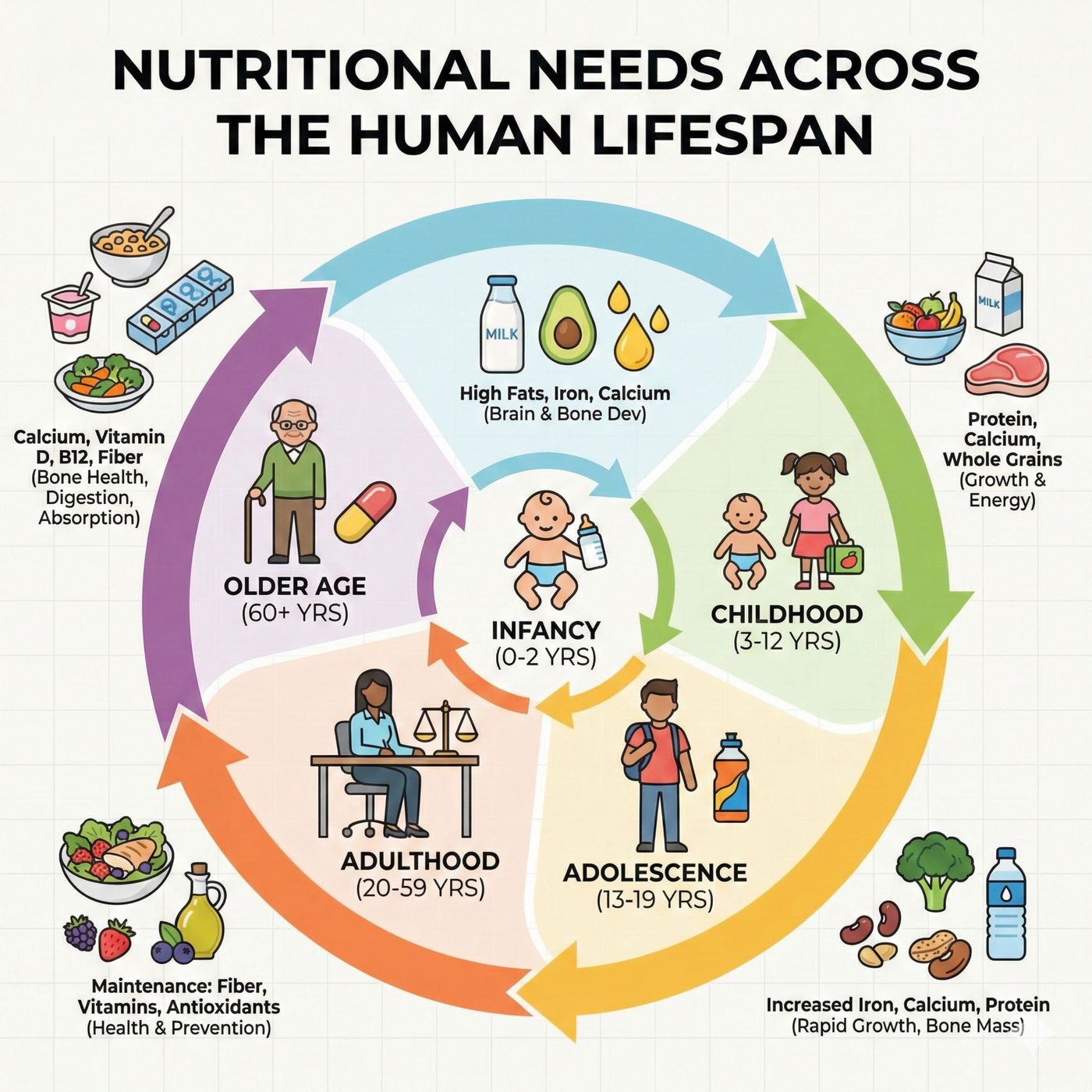
Nutritional requirements undergo a profound transformation as people move through different stages of existence. Research suggests that the foundation for long term health is often laid even before birth and during the very early years of life. Restricting sugar intake during these formative stages can significantly reduce the risk of developing cardiovascular issues, heart failure, or experiencing a stroke later in adulthood. While young children require energy dense foods including fats from dairy and whole milk to support their rapid growth, this type of diet is less suitable for those in their later decades. During these early years, the body focuses on building bone mass, making calcium and vitamin D essential. These nutrients are found in products like milk, yogurt, and eggs, and they help lower the risk of fractures and osteoporosis in the future.As individuals move into adolescence and their early twenties, the body completes the construction of bones and muscles. This phase of life often brings increased demands from education and work, which raises the need for various nutrients. Iron becomes particularly important for those who menstruate, while protein and group B vitamins support general development. Experts suggest that establishing healthy habits during this time can protect the heart and brain. A diet centered on plants, including plenty of vegetables, fruits, whole grains, and legumes, is recommended to prevent the early stages of heart disease which can begin silently during young adulthood.Middle age brings new challenges, especially regarding the optimization of health for the senior years. For women approaching the end of their reproductive years, the decline in estrogen can lead to a loss of bone density and muscle mass. This period is also associated with a higher risk of heart disease and weight gain. To counter these effects, it is beneficial to focus on heart and bone health by consuming omega three fatty acids from fish like salmon or mackerel. Increasing protein intake slightly and adopting a Mediterranean style diet rich in olive oil, nuts, and vegetables can support cardiovascular health and improve the balance of the gut microbiome.In the final stages of life, the composition of the body changes and energy requirements decrease, meaning fewer calories are needed. However, the importance of nutrient density remains high. Seniors must continue to prioritize calcium and vitamin D to maintain bone strength and prevent injuries. Furthermore, the community of bacteria in the gut changes with age, often seeing a decrease in beneficial microbes. Maintaining a diverse gut microbiome is a common trait among people who live to be a century old, as it helps the body better absorb nutrients and protects against various age related conditions. By adjusting dietary choices to meet the specific biological needs of each life stage, individuals can better support their overall well being and longevity. Hosted on Acast. See acast.com/privacy for more information.Become a supporter of this podcast: https://www.spreaker.com/podcast/whole-life-studio--6886552/support.

Nutritional requirements undergo a profound transformation as people move through different stages of existence. Research suggests that the foundation for long term health is often laid even before birth and during the very early years of life. Restricting sugar intake during these formative stages can significantly reduce the risk of developing cardiovascular issues, heart failure, or experiencing a stroke later in adulthood. While young children require energy dense foods including fats from dairy and whole milk to support their rapid growth, this type of diet is less suitable for those in their later decades. During these early years, the body focuses on building bone mass, making calcium and vitamin D essential. These nutrients are found in products like milk, yogurt, and eggs, and they help lower the risk of fractures and osteoporosis in the future.As individuals move into adolescence and their early twenties, the body completes the construction of bones and muscles. This phase of life often brings increased demands from education and work, which raises the need for various nutrients. Iron becomes particularly important for those who menstruate, while protein and group B vitamins support general development. Experts suggest that establishing healthy habits during this time can protect the heart and brain. A diet centered on plants, including plenty of vegetables, fruits, whole grains, and legumes, is recommended to prevent the early stages of heart disease which can begin silently during young adulthood.Middle age brings new challenges, especially regarding the optimization of health for the senior years. For women approaching the end of their reproductive years, the decline in estrogen can lead to a loss of bone density and muscle mass. This period is also associated with a higher risk of heart disease and weight gain. To counter these effects, it is beneficial to focus on heart and bone health by consuming omega three fatty acids from fish like salmon or mackerel. Increasing protein intake slightly and adopting a Mediterranean style diet rich in olive oil, nuts, and vegetables can support cardiovascular health and improve the balance of the gut microbiome.In the final stages of life, the composition of the body changes and energy requirements decrease, meaning fewer calories are needed. However, the importance of nutrient density remains high. Seniors must continue to prioritize calcium and vitamin D to maintain bone strength and prevent injuries. Furthermore, the community of bacteria in the gut changes with age, often seeing a decrease in beneficial microbes. Maintaining a diverse gut microbiome is a common trait among people who live to be a century old, as it helps the body better absorb nutrients and protects against various age related conditions. By adjusting dietary choices to meet the specific biological needs of each life stage, individuals can better support their overall well being and longevity. Hosted on Acast. See acast.com/privacy for more information.Become a supporter of this podcast: https://www.spreaker.com/podcast/whole-life-studio--6886552/support.

NOW PLAYING

Nutritional Needs Across the Human Lifespan

0:00 32:50

No transcript for this episode yet

We transcribe on demand. Request one and we'll notify you when it's ready — usually under 10 minutes.

Eat to Live Jenna Fuhrman, Dr. Fuhrman Our health is our most precious gift and smart nutrition can change your life. Each month, join Dr. Fuhrman and his daughter, Jenna Fuhrman as they discuss important topics in the world of nutrition. Eat to Live will change the way you eat and think about food. French Your Way Jessica: Native French teacher founder of French Your Way Boost your French listening skills and test your comprehension with this one of a kind series of podcasts. Get the chance to listen to a real conversation between native speakers talking at normal speed AND customise your learning experience through carefully designed sets of questions (2 levels of difficulty) available for download at www.frenchvoicespodcast.com. All interviews also come with the transcript. French teacher Jessica interviews native speakers of French from around the world who share a bit of their life and passion. Where else would you meet in one same place a French yoga teacher based in Melbourne, a soap manufacturer from Provence, or a couple cycling around the world? That Hoarder: Overcome Compulsive Hoarding That Hoarder Hoarding disorder is stigmatised and people who hoard feel vast amounts of shame. This podcast began life as an audio diary, an anonymous outlet for somebody with this weird condition. That Hoarder speaks about her experiences living with compulsive hoarding, she interviews therapists, academics, researchers, children of hoarders, professional organisers and influencers, and she shares insight and tips for others with the problem. Listened to by people who hoard as well as those who love them and those who work with them, Overcome Compulsive Hoarding with That Hoarder aims to shatter the stigma, share the truth and speak openly and honestly to improve lives. The Lee Olsen Show Lee Olsen CJF I want to help you improve all areas of your life by 3 types of podcasts!👉Blood, Sweat & Blessings-Interviews of normal people that have achieved BIG things!👉Series!!! For Love of the Horse- Brad Jackman DVM & Lee Olsen CJF, how to help your horse!👉Business Tips- Proven Life Changing Business Strategies with Lee Olsen

Frequently Asked Questions

How long is this episode of Whole Life Studio?

This episode is 32 minutes long.

When was this Whole Life Studio episode published?

This episode was published on February 3, 2026.

What is this episode about?

Nutritional requirements undergo a profound transformation as people move through different stages of existence. Research suggests that the foundation for long term health is often laid even before birth and during the very early years of life....

Can I download this Whole Life Studio episode?

Yes, you can download this episode by clicking the download button on the episode player, or subscribe to the podcast in your preferred podcast app for automatic downloads.
URL copied to clipboard!