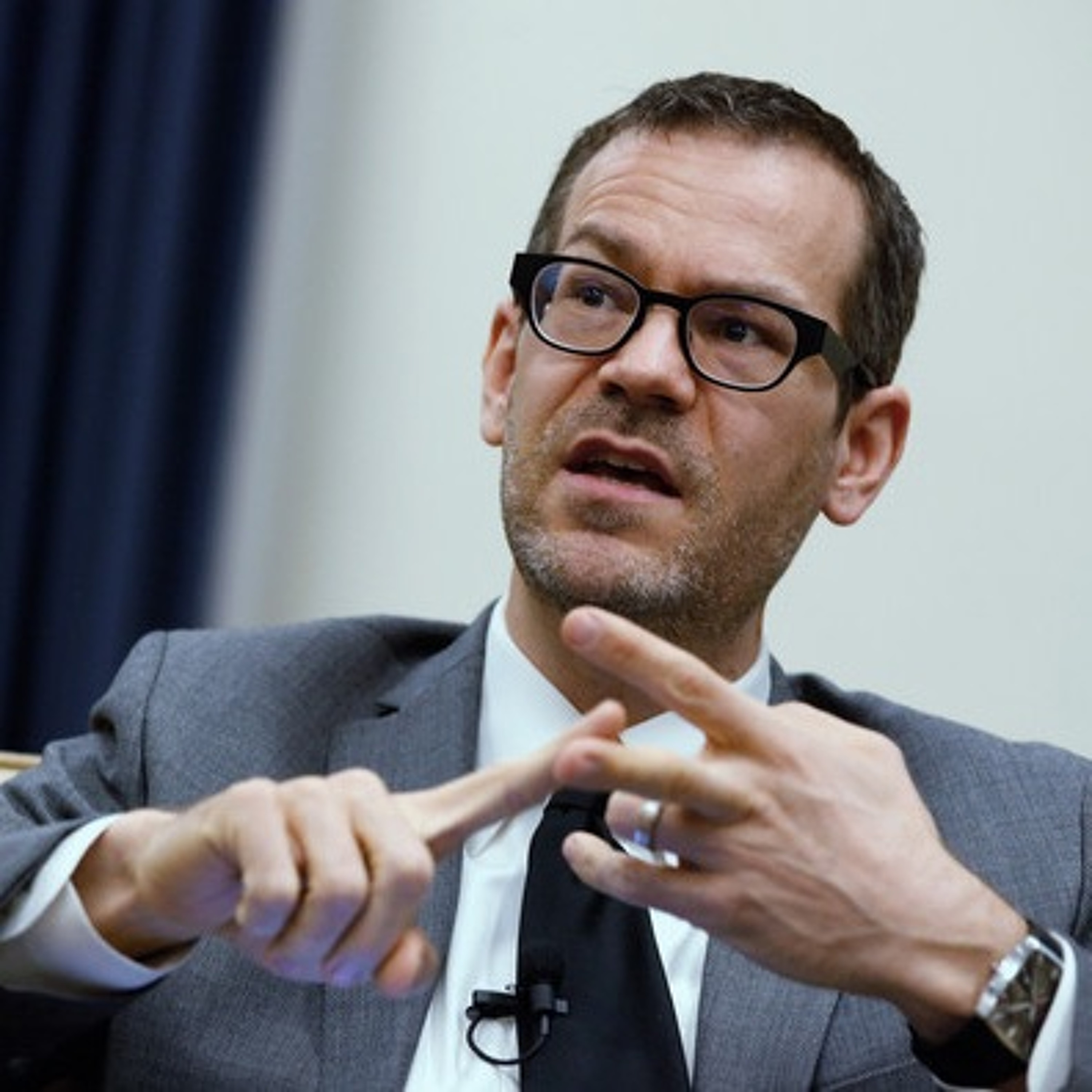
Obama’s Foreign Policy: A Conversation with Colin Kahl (S. 5, Ep. 27) episode artwork

EPISODE · Feb 21, 2017 · 30 MIN

Obama’s Foreign Policy: A Conversation with Colin Kahl (S. 5, Ep. 27)

from POMEPS Middle East Political Science Podcast · host Marc Lynch

Colin Kahl speaks with Marc Lynch about U.S. foreign policy during the Obama administration. Kahl is an associate professor in the Security Studies Program at Georgetown University’s Edmund A. Walsh School of Foreign Service. From October 2014 to January 2017, he was Deputy Assistant to the President and National Security Advisor to the Vice President. On Iran, Kahl spoke about the strategy behind the JCPOA. "I can't think of an actual bonafide Iran expert on on planet Earth that believed that you were going to resolve this problem without giving the regime some face-saving way out on enrichment. And that was, I think, an inflection point in the decision of the Obama administration, which was ultimately not to drive the program to zero— not because we wouldn't prefer a world in which every nut and bolt of Natanz and Fordow enrichment facility was dismantled— but because that's a perfect world that perfect scenario was impossible to achieve. No matter how much pressure you were going to you were going to put on the regime." "We found that in the case of countries— like Israel, Saudi Arabia or others— they want us to do two things, ultimately that the president was unwilling to do because of his overall theory of the role of military force in the region. One was they very much wanted us to engage in regime change— especially as it related to Iran. At the end of the day, the Israelis and the Saudis will never will never tolerate an Iran that's a strong actor in the region as long as this regime is in power. At the end of the day, they were more concerned about the regime and its had hegemonic ambitions than its nuclear program— even though the Israelis continually dialed up the existential language on the nuclear program. They did not believe that the threat from Iran— whether its nuclear or anything else— could be settled with anything short of regime change. And so, that was their preference: to basically leave the sanctions in place until the regime in Tehran went out of existence. And if they crossed some mythical red line, smash them like we smashed Saddam. The president wasn't going to go in for that." "The second issue is the president was extraordinarily clear about: defending our allies from external aggression. Which is why we did so much to bolster their own capabilities— unprecedented amounts of military assistance to Israel, unprecedented steps to maintain their qualitative military edge— even as we were providing unprecedented degrees of security assistance to our partners in the Gulf, to Jordan, and otherwise. But what we weren't going to do is give them a blank check to drag us into conflicts that we believed didn't serve their interests. And certainly didn't serve our interests," Kahl said. " I think it all goes back to Obama's fundamental humility about what military forces can and can't accomplish." Kahl also addressed criticism of foreign policy during the Obama administration. "Probably no area of the Obama administration's foreign policies came under more criticism than the approach to Syria. And yet every proposal— whether it was arming the opposition, putting in place a no fly zone or safe zones, or standoff strikes, or even you name it— whatever big idea was was out there in think tank land or in the academic world. They were deliberated over and over and over again. And so it doesn't mean that policy makers always make the right decision. They're human beings. They have incomplete information. They make wrong decisions all the time. But they're a lot smarter than you think." "The last point I will make just briefly is that I also think academics probably don't appreciate the degree to which things that seem relatively banal— like process, budgets and whether human beings are getting enough sleep— actually affect the outcome of certain things. And those are just constraints— bureaucratic and human."

Colin Kahl speaks with Marc Lynch about U.S. foreign policy during the Obama administration. Kahl is an associate professor in the Security Studies Program at Georgetown University’s Edmund A. Walsh School of Foreign Service. From October 2014 to January 2017, he was Deputy Assistant to the President and National Security Advisor to the Vice President. On Iran, Kahl spoke about the strategy behind the JCPOA. "I can't think of an actual bonafide Iran expert on on planet Earth that believed that you were going to resolve this problem without giving the regime some face-saving way out on enrichment. And that was, I think, an inflection point in the decision of the Obama administration, which was ultimately not to drive the program to zero— not because we wouldn't prefer a world in which every nut and bolt of Natanz and Fordow enrichment facility was dismantled— but because that's a perfect world that perfect scenario was impossible to achieve. No matter how much pressure you were going to you were going to put on the regime." "We found that in the case of countries— like Israel, Saudi Arabia or others— they want us to do two things, ultimately that the president was unwilling to do because of his overall theory of the role of military force in the region. One was they very much wanted us to engage in regime change— especially as it related to Iran. At the end of the day, the Israelis and the Saudis will never will never tolerate an Iran that's a strong actor in the region as long as this regime is in power. At the end of the day, they were more concerned about the regime and its had hegemonic ambitions than its nuclear program— even though the Israelis continually dialed up the existential language on the nuclear program. They did not believe that the threat from Iran— whether its nuclear or anything else— could be settled with anything short of regime change. And so, that was their preference: to basically leave the sanctions in place until the regime in Tehran went out of existence. And if they crossed some mythical red line, smash them like we smashed Saddam. The president wasn't going to go in for that." "The second issue is the president was extraordinarily clear about: defending our allies from external aggression. Which is why we did so much to bolster their own capabilities— unprecedented amounts of military assistance to Israel, unprecedented steps to maintain their qualitative military edge— even as we were providing unprecedented degrees of security assistance to our partners in the Gulf, to Jordan, and otherwise. But what we weren't going to do is give them a blank check to drag us into conflicts that we believed didn't serve their interests. And certainly didn't serve our interests," Kahl said. " I think it all goes back to Obama's fundamental humility about what military forces can and can't accomplish." Kahl also addressed criticism of foreign policy during the Obama administration. "Probably no area of the Obama administration's foreign policies came under more criticism than the approach to Syria. And yet every proposal— whether it was arming the opposition, putting in place a no fly zone or safe zones, or standoff strikes, or even you name it— whatever big idea was was out there in think tank land or in the academic world. They were deliberated over and over and over again. And so it doesn't mean that policy makers always make the right decision. They're human beings. They have incomplete information. They make wrong decisions all the time. But they're a lot smarter than you think." "The last point I will make just briefly is that I also think academics probably don't appreciate the degree to which things that seem relatively banal— like process, budgets and whether human beings are getting enough sleep— actually affect the outcome of certain things. And those are just constraints— bureaucratic and human."

NOW PLAYING

Obama’s Foreign Policy: A Conversation with Colin Kahl (S. 5, Ep. 27)

0:00 30:59

No transcript for this episode yet

We transcribe on demand. Request one and we'll notify you when it's ready — usually under 10 minutes.

MG Show MG Show The MG Show, hosted by Jeffrey Pedersen and Shannon Townsend, is a leading alternative media platform dedicated to uncovering the truth behind today’s most pressing political issues. Launched in 2019, the show has grown exponentially, offering unfiltered insights, comprehensive research, and real-time analysis. With a commitment to independent journalism and factual integrity, the MG Show empowers its audience with knowledge and encourages active participation in the political discourse. That Hoarder: Overcome Compulsive Hoarding That Hoarder Hoarding disorder is stigmatised and people who hoard feel vast amounts of shame. This podcast began life as an audio diary, an anonymous outlet for somebody with this weird condition. That Hoarder speaks about her experiences living with compulsive hoarding, she interviews therapists, academics, researchers, children of hoarders, professional organisers and influencers, and she shares insight and tips for others with the problem. Listened to by people who hoard as well as those who love them and those who work with them, Overcome Compulsive Hoarding with That Hoarder aims to shatter the stigma, share the truth and speak openly and honestly to improve lives. The Small Business Startup School – Business Notes | Financial Literacy | Retail Psychology – For Professionals & Entrepreneurs The Small Business Startup School Inc. Starting or buying a small business? While personal circumstances may vary, business patterns remain timeless. On The Small Business Startup School, we explore strategies, insights, and practical solutions to help entrepreneurs confidently navigate their journey.Hosted by Ola Williams—a retail entrepreneur, fintech founder, and financial coach with over two decades of experience—this podcast marries financial awareness and retail psychology with optimism to deliver actionable takeaways.Join us to learn, grow, and connect as we uncover the keys to business success.Let’s continue to learn together and be encouraged to keep on connecting! DIOSA. Carolina Sanper This podcast is a sacred space created by Carolina Sanper where you connect with your inner wisdom and embody your magnetic feminine power.It is the realization that the mystical realm is where you plant the seeds of your desired reality.It is a portal to your true essence: awareness, presence, and receiving with ease. Welcome home, DIOSA. 🖤

Frequently Asked Questions

How long is this episode of POMEPS Middle East Political Science Podcast?

This episode is 30 minutes long.

When was this POMEPS Middle East Political Science Podcast episode published?

This episode was published on February 21, 2017.

What is this episode about?

Colin Kahl speaks with Marc Lynch about U.S. foreign policy during the Obama administration. Kahl is an associate professor in the Security Studies Program at Georgetown University’s Edmund A. Walsh School of Foreign Service. From October 2014 to...

Can I download this POMEPS Middle East Political Science Podcast episode?

Yes, you can download this episode by clicking the download button on the episode player, or subscribe to the podcast in your preferred podcast app for automatic downloads.
URL copied to clipboard!