October 2024 Flash💥Devos~Thank You!
from Marianne's FLASH💥DEVOS Podcast Hosted by Marianne Abel-Lipschutz
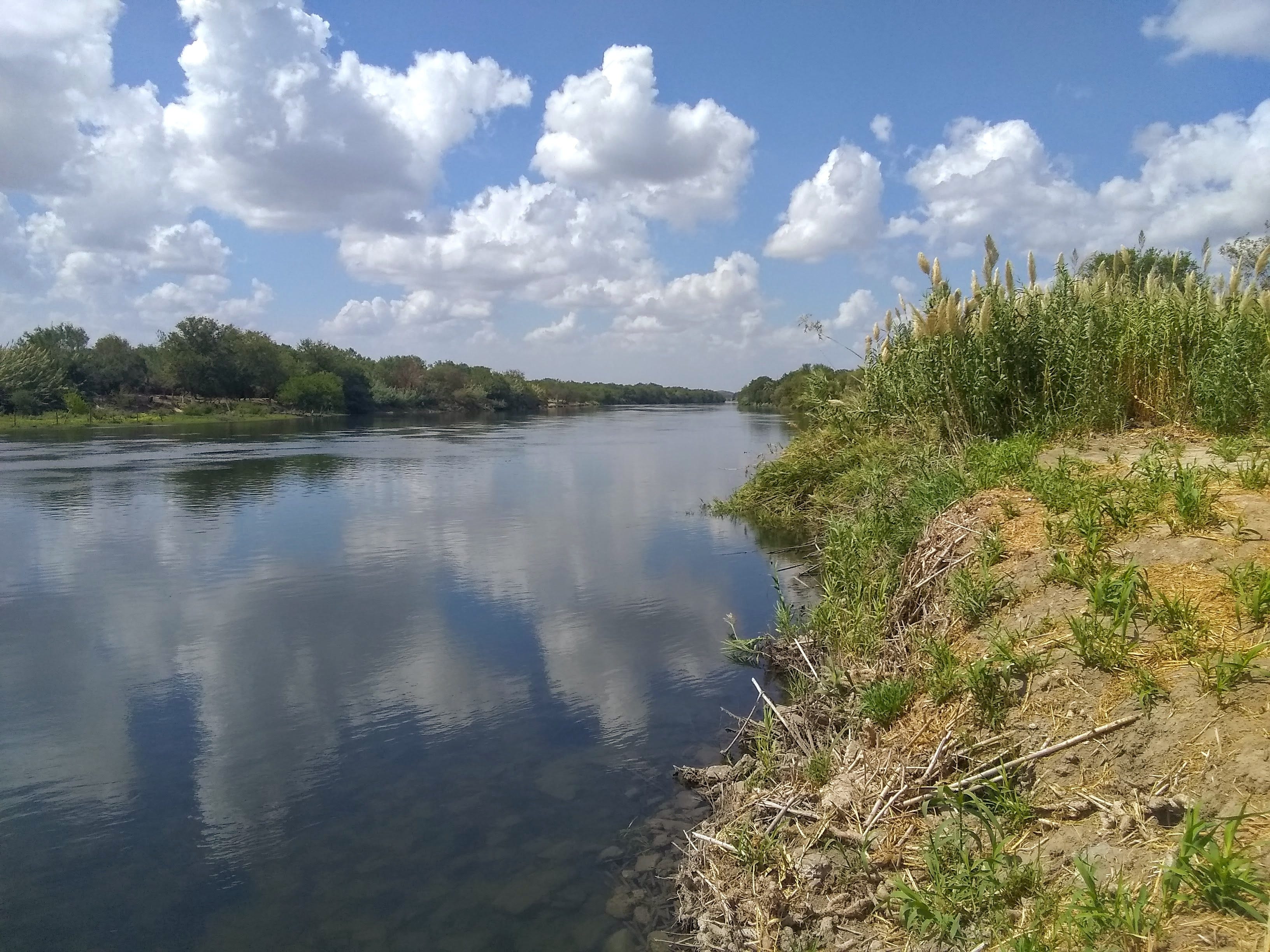
To thank you for reading and listening to my Flash💥Devos in October, I offer my article “Take Me to the Border with You” about my week serving at the Mexico/U.S. border. Sharing ministry of presence and welcoming migrants humbled me with valuable perspectives about the plight of immigrants worldwide. Today is National Immigrants Day which celebrates the unveiling of the Statue of Liberty in 1887. I honor those who seek new lives in the United States, including my ancestors who emigrated from Poland, Ireland, Germany, and Alsace-Lorraine. Take Me to the Border with You by Marianne Abel-Lipschutz The Del Rio area looked simple from the airplane window. The river cut a path, paralleled by a fence, between two mirrored cities that were surrounded by vast, open brushland. Questions prickled the edges of my awareness as I watched the land come into view: How did our society get to this point? Whose border is this? What can we do? Will we do what we can? So many migrants congregated along the Rio Grande between Texas and Mexico in 2019 that I felt compelled to go too. The hundreds, and thousands, and then hundreds of thousands of people migrating northward astonished me. I wanted to witness that yearning for change among so many people from so many places, those who escaped terror and trauma as well as those who saw their only hope for a future on the other side of the border. I wanted to feel swept along in that human vortex from over fifty countries—pushing strollers, walking side by side, riding buses, hiding behind trees, waiting in food lines, moving ahead, seeking a future, everyone breathing at once. I quickly said, “Yes!” when a Christian crisis-response team asked me to join them as a bilingual chaplain in Del Rio, Texas, for a week. I wanted to stand with others in their struggle for a new life. My voice rose with a thousand yeses in many languages, like uncountable monarchs released to the open sky. “Yes,” we cried. “Take me to the border with you.” *** I live and work in both Iowa and Guatemala, and I’ve listened to people in both places describe their quest for the border. One year ago, a slight boy named Elver approached me in a rural church. We were volunteering with a mission team on a hilltop overlooking Guatemala, the farthest we could get from a border without trying. There was hardly any work or water. A robin’s-egg-blue, button-down shirt draped lightly and formally over this boy. Eleven years old, Elver had an elegant air, even when giggling and scampering around the churchyard with friends. He had studied me all morning while mothers and children coloured pages on the pews. Finally he sat beside me and confided a raw and tender worry. “Will my father ever make it to the United States?” His dad hadn’t left town yet, but the threat of his absence already affected him profoundly. Elver had probed the options as thoroughly as an adult, seeing danger overflow with impossibilities. “Will my father come back?” “Why can’t I go with him?” His persistent questions ached both his heart and mine. “How far away is your country?” There was no easy answer, though the distance could be measured. A factual reply would only sting. We coloured the same page for a while, the scrape of the pew shifting on the floor the only sound between us. Guatemalans had welcomed me into their country. I didn’t believe this child’s dad would find the same welcome in my country. Our hearts were united, but our countries were worlds apart. *** The community shelter where our team volunteered had opened in the spring, organized by city, business, and church leaders. The Border Patrol had requested assistance with the extraordinary influx of people across the international border, so these community leaders had formed the Val Verde Border Humanitarian Coalition to offer hospitality and hope. The Coalition converted an old municipal building a mile from the river into a resource and respite centre for migrating children and families. Other organizations and people from all over the state and country donated thousands of hours and supplies. Coalition volunteers and staff intentionally welcomed people for months from countries as diverse and far-flung as Angola and Chile. These men, women, and children had come across the bridge or “through the water,” as they called it. Once Border Patrol determined that individual migrants and families could be released into Texas with provisional documents, officers delivered them to the shelter. Over the summer, the shelter averaged 60 people a day. One day Val Verde served 226 people. Anticipating new federal laws restricting migrants’ passage, the daily average dropped to two dozen people by the end of August. The Migrant Protection Protocols that took effect in late September effectively closed the border. The change at the Val Verde shelter was dramatic: The well-organized camp had more volunteers and staff than migrants needing respite. Thousands of people were still leaving their home countries daily. But most of these people were nowhere to be seen—with thousands more held in detention, and hundreds being deported monthly. In early October, the epic human migration through the southern US border had slowed to the point of becoming almost invisible. I felt bewildered and speechless on my first day of deployment, alienated from the reality I knew was somewhere right in front of me. Thousands of people from dozens of countries were out of sight—quieted, quarantined, and controlled. Most people were turned away in accordance with the new protocols. We waited for Border Patrol to call us when someone could be delivered to the shelter. After months of hosting thousands of the world’s people, those were solemn days of waiting to see what would happen in Del Rio. Sharing snacks and juice boxes and hot coffee in the presence of the Lord, we lived together briefly in the sacred space between the now and the not yet. On Monday afternoon, Border Patrol brought over a twenty-eight-year-old woman named Selia and her four-year-old daughter Paola. They’d come from El Salvador, eighteen hundred miles south, where Selia’s husband was involved in gang violence and drug trafficking. To preserve her daughter’s future, Selia had resolved two years before to meet the legal requirements for US entry. One day in 2017 she grabbed Paola’s hand and they just started walking. We met on the day they legally crossed the bridge over the Rio Grande and entered the United States in 2019, one step closer to reaching her goal to appeal for asylum. She spoke like a person in shock, hoarding details as if they were a scarce resource. Paola played with shelter staff in another room decorated with cartoon murals over the institutional cinder-block walls. After a shower, a few meals, a good night’s sleep, and the assurance of safety, Selia began to relax. By the next day, she spoke with more ease. Selia talked straight through the morning. She worked along the way at various jobs—at a store selling clothes, cooking for a street vendor, styling hair at a salon, cleaning a boarding house where they could stay. She confessed a deep shame that she also worked at a bar with other migrants in order to earn money for food. “They made you drink beer to get you drunk then they could do whatever they wanted,” she admitted. Selia eventually found stable employment as a waitress at a restaurant whose owner treated her well. Once she had saved enough money for the final stage of the trip, she and Paola spent fifteen days moving from Tapachula closer to the northern border, and waited for most of the last ten days in a Mexican shelter for a court hearing at the Del Rio crossing. On Saturday and Sunday night, they had slept in a public park because the shelter had shut down as part of the effort to reduce access to the border. Communicating with officials at the point-of-entry office on Monday morning, perhaps the most… Get full access to Marianne’s Substack at marianneabellipschutz.substack.com/subscribe
Embed this episode
No transcript yet.