
Just a quick note, this story contains some profanities. You're in there. You're in there. Couple.
So just know that before we get going. Oh, wait. You're listening to RadioLab from WNYC. Hey, I'm Jonathan Ron.
I'm Robert Krollich. This is RadioLab. And today we're going to start. OK, so let's start with our producer, Latif Nasser.
OK, well, let's just go back to San Francisco on a particular day at a particular time. And a particular woman. Hello. Hi.
Is this Sarah Jane? Yes, it is. Woman named Sarah Jane Moore. Sarah Jane.
OK. So this is San Francisco. The particular date was September 22, the particular time. 1975.
It's a Monday morning. It was a nice day. Oh, yeah. I don't remember anything different.
So I assume it was a nice day. I was kind of in my own head. So Sarah Jane, on this Monday morning, she wakes up early, drops her nine-year-old off at school, runs a few errands. Then she drives downtown to this big fancy hotel.
What was the name of the hotel? I think it's the St. Francis, isn't it? I'm 87 years old.
Don't expect me to remember little details like that. OK, fair enough. But at any rate, I parked in the parking garage right across the hotel as a park. But there's a parking garage underneath, walked over and walked across the street.
There were sidewalks on both sides of the street. There were people on both sidewalks. She joins the crowd across the street from the hotel. It was very crowded.
Couple of thousand people. It's like a big scene. And there was a barrier, a rope barrier, keeping us back on the sidewalk. And my plan had always been to be back in the crowd.
And I was dressed like every other middle-aged woman that was there. What were you? Do you remember what you were wearing? I'm sure there's.
Oh, there are pictures of it. Yes, I was wearing slacks. That was at the beginning of when it was natural for women to wear a slacks. I had a coat on.
And I was carrying a purse. And I went back into the middle of the crowd as I had planned to do. Anyway, I thought a man come up against me. And socialized as I was in that day and time, I spun around a slappy's face.
She sees this guy there, big strong guy, Blond Tear. Look at him and realized that it was crowd pressure. That he had not done anything out of ordinary. So I turned back around and went on about my business.
I was then pushed up. The crowd pressure was such. I tried to stay back in the crowd. But I got pushed up almost onto the ropes in the front, right up on the curb of the sidewalk.
That's why I had not planned to be. And he apparently was still right behind me. So maybe he was pushed up in the crowd also. And so Sarah Jane is just crammed into this crowd and she's just standing there.
Yes. Were you nervous? Oh, no. You set out to do something.
I was just going about doing what I'd set out to do. So she waits. And she waits. And an hour goes by.
And two and three. And then finally out of the hotel comes. None other than the president of the United States, Gerald Ford. And he has police and Secret Service.
And they're all coming and walking out of the hotel to get in his car, which was parked there on the street. But he sees the crowd. Sarah Jane actually says he looks directly at her. And he waves.
He waves to the crowd. Everyone starts applauding and cheering. Now, right at that moment, Sarah Jane reaches her right hand into her purse. And pulled the gun out of my purse.
A 38 caliber revolver. She cocks it. And then she takes aim right at Gerald Ford's head. And then.
But Mr. Ford did not fall. The bullet flies a few feet to the right of Ford. Chips the wall behind him.
Ford freezes in place. Sarah Jane. Never planned to take a second shot. Now she's just still standing there.
With my hand still in the air holding the gun. Looking over the smoking barrel of the gun. And she's got enough time if she wants it. But before she can take that second shot, the blonde man behind her lunges at her, grabs her gun arm, pulls it down, and deflects it for just that crucial second that these police officers nearby need to get to her.
They tackle her. They take her gun and they pin her to the ground. So I couldn't move. And by that point, the Secret Service has whisked off the president into the limousine.
And I was immediately picked up and carried across the street. Into the hotel. The rest did. And eventually she went to prison.
And she served 32 years in prison. And then after that was released on parole. And then we talked to her. We had that.
I was not prepared to be told the first person from the perspective of someone who's about to accept the president that was not what I was expecting. I was hoping that. Can you explain to her why it is she decided to shoot the guy? Yeah, why did she shoot?
Well, Sarah James ever fully explained that. And in fact, when I asked her. Well, this is not, she was like, I'm not going there. This is not an interview about what was driving me or about what I did or why did it.
This is an interview about Mr. Sippel. Sippel? Yeah, Oliver Sippel.
He's the random blonde guy who just happened to be standing next to Sarah James Worth, that guy who grabbed her arm and saved the president's life. And he paid dearly for that. I actually called up Sarah Jane and had her tell that whole story because I was actually interested in what happened to Oliver Sippel after that. Because had he not reached out and put his hand on my arm, none of this would have happened to him.
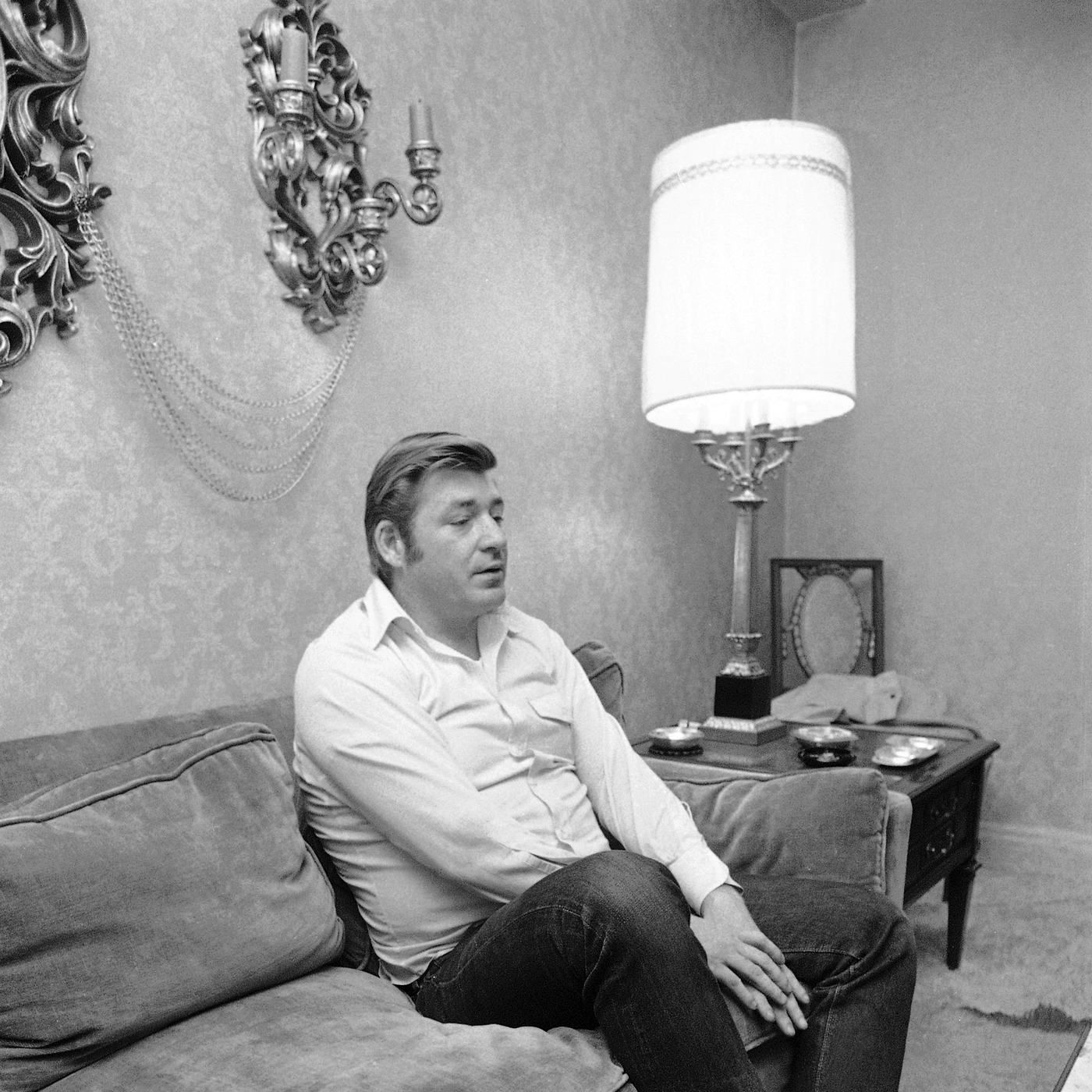
Wait, what happened to him? So Oliver Sippel actually died in 1989. But before we get to this story, I just want to give you a picture of the guy. So just Google search Oliver Sippel for something.
Wait, okay, wait. I see the picture. I'm not saying like that. He's a muscular guy, kind of blonde hair.
He's a he's a he's a he's a handsome guy. Yeah, he's a little bit. James Dean and Marlon Brando had a baby kind of. He feels like an all American.
He feels all American. There's something all American about him. Well, thank you. Yeah, we're bringing in another All American for the story.
Daniel Loopser. And editor at Oxford University Press. And a few years ago, it was like probably more than five years ago, I wrote an article about Oliver Sippel. But anyway.
To get back on track. September 22nd, 1975. Sarah Jane Moore fires that shot. All of her Sippel grabs her arm.
The police wrestled more to the ground. And then the police actually grabbed Oliver too, pulled him inside the hotel to question him. Because there's initially some confusion about what he was doing there and some thought that he might have been a suspect. And so he's in this hotel trying to light a cigarette, but he just couldn't do it.
Because he was shaking so hard. Turns out Oliver had served two very rough tours in Vietnam. Loud noises would make him very unhappy. I think this is the sort of thing we might call post-traumatic stress disorder now.
But when eventually Oliver started to calm down, the Secret Service were like, what are you even doing here? It was kind of hard for him to answer because it's like, he didn't even really know. He was like, I don't know. I was taking a walk.
And I just bumped into this huge crowd of people asked what was going on. People were like, oh, like Gerald Ford is going to be here. You know, the president is going to be here. So he said he thought I might as well see him.
He saw a flash of metal. Realized it was a gun. Reacted quickly, instinctively. And then you guys all pulled me in here.
That's how I came to be here. So he's questioned for three hours. He goes home, home to his fourth floor walk up. And there's a reporter that waiting for him.
But he just wants to sort of be left alone. And he told this reporter, quote, I'm a coward. I don't know why I did it. It was the thing to do at the time.
And then even after that, he just keeps getting phone calls from reporters. And some of them learned that he was a Marine. And so they would ask him questions like, oh, was it your training? Is that why you did this heroic thing?
But he said, oh, listen, don't mention any of that stuff about the Marines. Let's keep that under wraps. Quote, I'm no hero or nothing. But the next day.
Yesterday in San Francisco, a shot fired. Oliver's story shot across the country. He aimed deflected by an ex-marine. The Vietnam veteran named Oliver Sippel.
His name's on television. That Marine Oliver Sippel. On the front page of newspapers, where there's headlines like, ex-marine deflects a weapon as women shoots. That's the early time.
The power tribune hero tells how he deflected women's arm. And so despite his best efforts, Oliver becomes a national hero for a day. And it appears that he thought that would be it. Maybe his friends would give him a pat on the back of the line a couple rounds.
And then, you know, over the next couple days, it all sort of like, rippled out of control. Because that very same day that Oliver was being painted as a hero, this guy named Herb Kane. The longtime San Francisco columnist. Walked into his office and on his answering machine were two messages saying, hey, that guy Oliver Sippel, the hero?
Who saved the president's life? He's gay. Huh. Was he out?
Well, he was sort of out and sort of not. What does that mean? Well, to explain, you got to understand this particular time and place. So let's just, you know, take a magic carpet ride.
Close your eyes and let the sound take you away. A city has emerged where homosexuality is not always tolerated, but thrived. San Francisco, sometimes labeled with a flying after the Queen City of the Way. So San Francisco is a great day.
It's a happy day. Happy day. It was one of the first cities in America to have a gay pride parade. And in the 70s, it's a wonderful city.
Boys got a bit of boys and girls got a bit of girls. For gay people, San Francisco was like this shelter from the storm. Many of us were immigrants from somewhere. This is Ken Meily.
Long time San Francisco resident. And gay activist with the age of 19 came to San Francisco from Kansas. I escaped from Kansas. Because what the West offered was the ethereal promise, if you will, of reinvention.
You could cross a line in which your past stayed behind you. It was a place where you could be out, but to the people you left behind, you could still be in. So for Oliver, he came from Michigan. From a working class family, he had a lot of brothers and sisters.
I think he was one of eight children. And so after the war, when he got to San Francisco, he actually started going by the name Billy. Billy, Billy Sippel. And he was perfectly open about his sexual orientation and would tell anybody who asked that he was a gay man.
But he never told his family. And so Oliver lived, like a lot of gay people at the time, this double life. And do we know that this is the reason why San Francisco or was there a different? It may have just been because Harvey Milk was there.
The Harvey Milk, famous gay activist San Francisco politician. He was friends with Harvey Milk, the New Yorker. And immigrant from New York. Turns out Oliver had actually met Harvey a decade earlier in New York.
And I just want to mention this because it's so cool. At different points of time, they actually dated the same guy. Who was the inspiration for Sugar Plum Fairy? Sugar Plum Fairy came and hit the streets.
In Lou Reed's walk on the wild side. Look at this old boot in and a place to eat. It's just a fun fact. Just a fun fact.
That's it. But Oliver and Harvey, they were pretty good friends. They corresponded, stayed in touch when they lived in different places in the country. Actually, Harvey even loaned Oliver money sometimes because Oliver didn't have a job.
He collected disability from his time in the Marines. But anyway. By the beginning of the 70s. When Oliver got to San Francisco, reconnected with his old friend.
Harvey was, shall we say, evolving into a gay public figure. Gay public figure. Ken was actually friends with Harvey. Worked on one of his campaigns.
But this, I'm sorry. No, no, no. And I'm just thinking like one of the things we were talking about on the phone was about sort of the kind of two different schools or two different. I'm just about to segue to that.
Oh, perfect. Yeah, yeah. Go for it. They were content to go to tea with the mayor or public official of some kind.
They would show up to like a rally wearing jackets and ties. And like after the rights politely. They really weren't, shall we say, activists. Because according to Ken, the activism came.
When in the late 60s, early 70s, young gay men and women who came out of the Vietnam War protests into the world took a look around. The CBS News Early shows that two out of three Americans like upon all those actions we've discussed, discomfort or fear. The police are still rating bars. What they consider discrimination in jobs and housing.
People are still getting beaten. One of them has said a queer faggot, we're going to be the shit out of you. Something out of fact. We're going to kill you both violently and non-violent.
Got up in the middle of the street. They knocked me down and started beating me with their hands and their feet, their elbows, tried to muffle my screams. And after a while, a body of people get to a point where they just will not take oppression anymore. So in came the activists like Harvey.
Ponytail mustache. He was a banker turned hippie. You know you're lying. You know you're changing the statements around.
He was very outspoken. That question. What is your real motive behind it? Very militant.
It's not the spony issue that you know is a phony issue. And Harvey. We are saying that a gay person should have the right to say gay people were living in a half-life opportunity. I am gay.
That is a part of society. Period. Not being able to be who they were. Every gay person must come out.
Yeah. So as it is, you must tell your immediate family. You must tell your relatives. You must tell your friends if indeed they are your friends.
You must tell your neighbors. You must tell the people you work with. You must tell the people the stories you shop in. And once you do, you will feel so much better.
And so cut back to. September 22nd, 1975. In the blink of an eye, Oliver Sibyl becomes this hero. And that's a night Oliver's friend, Harvey.
Here's about all this news. And kind of senses, wait, maybe there's an opportunity here. So he picks up the phone and calls. The columnist Herb Kane, a very, very well-known, well-loved, cost-a-call missed.
And Kane isn't there, so Milk leaves a message on his answering machine. And he basically says, look, I'm a friend of Oliver Sibyl's. I've known him for years. Oliver Sibyl worked on my campaign for supervisor.
So basically, without Sibyl's consent. Harvey outed him. Milk outed him. But what was Harvey Milk thinking that he would do this?
Well, for Harvey... I think the stereotypes, the lies, the innuendos... The gay people as limp-risted and drag queens and stuff. The distortions, all gay people at child molasses.
Well, here's a true gay hero. A square-jawed, heroic, marine. It seemed to be a sort of regular, like, red-blooded American. And so Harvey said, and this was written down by his biographer, who I'm quoting, it's too good an opportunity for once we can show that days do heroic things, not just all that cocka about molesting children and hanging out in bathrooms.
Wasn't there somebody saying, no, no, no, you gotta ask the guy. You can't just do that. Harvey just did it, really. Yeah, he just did it.
So Kane, the next morning, Kane arrives at his office. He listens to the message. And Kane tries to call Sibyl, but he can't reach him. But there was another guy who was a gay activist.
His name was the Reverend Ray Brochiers. He was the head of what's called the Lavender Panthers. And he also independently called Herb Kane to say, oh, that guy Oliver Sibyl everyone's talking about on the news? Gay.
So you got two independent sources, both of people, who said that they were friends with Sibyl and that he was gay. And for Kane, I think this was juicy. This was a juicy thing. And he was like, let me just go back and get this.
So two days after the assassination attempt, Kane's column comes out. And the way that he wrote it up, this is the precise paragraph. One of the heroes of the day, Oliver Billy Sibyl, the ex-marine who grabbed Sarah Jane Moore's arm, just as her gun was fired, and thereby may have saved the president's life, was the center of midnight attention at the Red Lantern, a Golden Gate Avenue bar he favors. Reverend Ray Brochiers, head of helping hand center and gay political Harvey Milk, who claimed to be among Sibyl's close friends, described themselves as proud.
Maybe this will help break the stereotype. And then that day, this guy named Darryl Lemke. Lemke, L-E-M-B-K-E. Picks up his issue with the chronicle, sees Herb Kane's column.
Read it, and I reported it to the office. The office of the Los Angeles Times. I was a reporter for the LA Times in San Francisco, and so my office told me, get an interview without a Rispl. But really quickly, before we get there, we actually managed to find the recording of this very specific interview in the LA Times collection at the Huntington Library in Los Angeles.
And I think the reason they hung on to it was because it was kind of controversial. So the night that Kane's article comes out, Darryl goes to Oliver's house, Oliver's there. Two reporters for the Sentinel were there also. I don't know where they are.
That right there is Darryl. Can you speak English with me? I'm not a camera man, is it? Sure.
So they're all sitting in Oliver's living room, and what the reporters aren't wondering is, have you heard from the president? The president hadn't bothered to thank him at that point. The president didn't word what they called. Met was a freedom to people without standing acts.
They offered, you know, the head of the back of the lighthouse was there, certainly, would you like to meet him? Well, yeah, I spent a line for three hours to see him. And that voice right there? That's Oliver.
You didn't have time to meet your dedication. I didn't. Have you heard from the mayor? No.
I've heard from number. No. I've heard only from the president and reporters and reporters in the press. And that's where you have been already.
You've got to hold off. I've heard we have to dig. But then I'm sure the mayor could find you. He has access to police records.
OK, can we go on that one? Yeah. OK. For some reason, Sam's is the first department.
He has now referred any inquiries about you to the sex crimes in this prison's detail. That's something I think you should know. Something Oliver should know, because this is, again, a set of time when the assumption was that all gay men were just pedophiles pervert. And when I said background, this is information that cannot be played.
Well, can I come all that I'm talking about? Darryl actually asked if he can call somebody and ask about it. Yeah, would you take that right now? Yeah.
No, I don't want to know what you want. Darryl, any reason as to why. The number is 5, 3, 1, 3, 6, 1. Who was the guy who talked to?
Pop me in Sullivan or Pethig. Now, if you've got that. Darryl calls local authorities, but he can't get hold of anyone. Anything yet?
He can call back around 1. This is what I'm saying. I think you get about that. Do you have any sex crimes on your record?
I've never had sex events in my entire record. I've been arrested by a couple of times. I don't think there's a number in the world. I've been drunk for five years to check that out for her to see if there's more than they're giving it.
And then the tape recorder goes off, comes back on. Well, who do I call with some authority? The police department. And now Oliver's on the phone with the police department.
Yeah. Can you just talk about it? Yeah, well, my name is Oliver Sippel. And I'd like to know why I've been turned over to your department, sex crimes in this person.
This is my yes. That's correct, sir. Yes, sir. I'd like some information.
A bunch of press came over a bunch of people from the press came over this afternoon. And they said they were trying to get some information about the police department. And I was turned over to sex crimes. I asked what the hell is all that about?
Oh, I see. Well, Jesus God. I mean, I said, what the hell is going on? Okay, guy.
I tried to call the mayor's office just now and I tried to call the chief of police office just now. What? The Sam Hill's going on? Okay.
Thanks a lot, guy. Yeah. I was just involved with the assassination, or the assassination attempt is in that department. That's all.
That's why it's being turned. Is that making sense to you? You got me very shook up, young man. Well, I was just about to go downtown and whip some ass somewhere.
We find out anymore about what's going on. Now, the reason this tape is so controversial is because according to Oliver, before the interview began, before the recorder started rolling, he had said to the reporters from the Sentinel, Okay, I'm going to talk to you guys about my sexuality. But then he had said to Daryl, I don't want you to write anything about that. I don't want that in a national paper.
Daryl says he doesn't remember that. But then right here in this interview, this thing happens where Daryl says, I'll make one more try on the gay thing. I'll make one more try on the gay thing. You don't want to change your mind on it.
You don't want to change your mind on that. No. I just don't want to change your mind on that. We put your thing on the sexuality, it has nothing to do with this.
You can call me the saying that if I were almost actually where I was not, it doesn't make any less of a man than what I am. But I think that it has nothing to do with the actor or himself. So I don't think she would be pushing for that. That would quote.
And eventually... Okay. Interview ends. And Daryl says that when he left that interview, he felt like when it came to all of her sexuality...
He didn't want to be quoted. That was it. Like just don't quote me on it. But still...
I was trying to report from all sides about it. The big side for me was that he was a hero and the President of the United States was very slow on the take in thanking him for saving his life. And Daryl thought that all of her sexuality, the fact that he was gay, might have something to do with that because just seven months earlier... On March 6th, Sergeant Leonard Mapple bitch disclosed to a supervising officer at Langley Air Force Base in Virginia that he was a homosexual and wanted to stay in the Air Force.
This Air Force Sergeant named Leonard Mapple bitch who had the Purple Heart, had the Bronze Star, he comes out that he's gay and he's kicked out of the Air Force. In conversation, people say that we're just charging this queer, that queer, thrown out of the Air Force. And inside I just burn up with... Am I a coward here?
I understand here. I never really come up to protection of my fellow minority group and just keep him quiet. My conscience just went mad to do it anymore. I had to come forward and say, no more America.
And now you've got this former Marine, save the President's life, and it's two days later, he still hasn't heard from the President. So that's what I knew. So for Daryl, even though Oliver had said, don't make this about my sexuality... I still thought it was a national story and it was pretty hard to ignore it after Herb King had started the ball rolling.
So that night, after the interview, Daryl calls in his story to the LA Times office and he uses this phrase. He says that Oliver's a former Marine who was quote, a prominent figure in the gay community. He put it down a ways in the story, but the rewrite guy put it in the lead and made it the big thing. And so three days after the assassination attempt, the LA Times runs the story with the headline, no call from President, hero in ford shooting active among SF gays.
And the LA Times got a new service. And so Daryl's story goes everywhere. Another strange twist to the story. Headlines are like, gay vet or homosexual hero.
It's been reported that the X Marine who deflected Mrs. Moore's shot on Monday is well known in San Francisco's gay activist circles. And so it was not just running in Los Angeles, it's also running in Chicago, it's running in Dallas, it's running in Indianapolis, and it's running, you know, of all places in all of our sips home town in Detroit. I guess what I'm wondering is if you have a guy who says, please don't talk about this, there's nothing to do with what I did yesterday.
Shouldn't that play some role in what you decide to write or not to write? Well, you know, these news sources are always reluctant to talk. And so I guess I took it as my duty to take up that angle, especially since it's involved in the President of the United States. Right.
But if you were to do it all over again, would you do anything differently? I don't know, I hadn't taken into account maybe the potential harm of saying it. I don't know if I'd do it over again or not, but not able to turn back the clock for something like that. The clock marches forward after the break.
My name is Jazz Adam and I'm calling from Los Angeles. RadioLab is supported in part by the Alfred P. Sloan Foundation, enhancing public understanding of science and technology in the modern world. More information about Sloan at www.slone.org.
This is RadioLab. We're back with the story of Oliver Sippel, from reporter producer, Latif Nasir. So the assassination attempt was on Monday and on Thursday, Sippel and his lawyer call a press conference. Well, I think you all know this is Oliver Sippel, who saved the President's life, and he has a prepared statement on a subject that's appeared in the press today.
In the past few days, I have been asked many questions, having to do with my sexual preferences to it. I have been asked whether or not I am gay or homosexual. This is my reply to the line in question. The first reason you are interested in me is the fact the woman who tried to shoot the President, say I'm sorry, I'm sorry, I'm sorry, excuse me.
This is a handwritten statement and he's having a little difficulty reading it. We use your oxygen in order to get it to you this afternoon. First reason you were interested in me is the fact that I could get the word there. My sexual orientation has nothing at all to do with saving the President's life, just as the color of my eyes or my race has nothing to do with what happened in front of the St.
Francis Hotel on Tuesday. My sexuality is a part of my private life, and I have no bearing on my response to the act of a person seeking to take the life of another. I'm first and foremost a human being who enjoys and respects life. I feel that a person worth is determined by how he or she responds to the world in which they live, not on how or what or with whom a private life is here.
He basically says, stop, stop. It's kind of as simple as that. But there's something else that happens in the press conference today, it makes the whole thing so much more personal. And it actually was the very reason that Oliver called the press conference in the first place.
I want you to know that my mother told me today that she could not walk out of her front door or even go to church because of the pressures she feels, because of the press, stories concerning my sexual orientation. Naturally, I never participated such interference with my family's relationship, which I supposedly say the President's life. Oliver would later say that when he was talking on the phone with his mother, she said to him, I don't want to speak to you ever again. She hung up on him and also hung up.
Did you call him Uncle Oliver? Yes, I called him Uncle Oliver. This is George Sippel Jr. Oliver's nephew.
He told me that most of Oliver's family stayed in Detroit. Oliver's two brothers and his dad worked together in an auto plant there. They all worked for General Motors. And the stories that I've heard is that...
The day after Oliver saved the life of President Ford... They walked in and everyone wanted to buy them a beer. Everybody on the factory floor was congratulating them, heading on the back. Your brother's a hero.
Your son's a hero. When they would take their shift break. This is the old days, right? They'd take a shift break and they'd go to the bar.
Everybody wanted to buy them a round of drinks. So then the news comes out, whatever, a couple of days later, that he's this gay marine and there's teasing on the factory floor. Tazing or teasing? Yeah.
Yeah. And George says what happened is reporters back in Detroit just descended on Oliver's parents. To get more of the story. And so they kept knocking on my grandmother's door.
And I guess apparently told them to go away. I guess neighbors were harassing her. She thought the media was harassing her. My grandmother just said I don't want to deal with it.
And so don't come knock on the door, leave us alone. They just wanted it to go away. They went back to their private lives. Now, one of the things that I found actually after talking to George were these interviews done with Oliver's family.
After the news broke that Oliver was gay. And I just want to read you this one particular passage. Here, have you talked to any other members? This is from George F.
Sippel, who is Oliver Sippel's brother. Have you talked to any other members of your family since September 1975 of Oliver? I mentioned it once to my father question. And what was his response?
What did he say? And if you can remember, I was on after noon's then and I had seen him because I had come in early. And he mentioned the fact that the next person that even said he had a son named Oliver, he was going to literally break their damn neck. Whoa.
So his dad was like, this is from his brother talking about his dad's reaction. Brother talking to the dad. Yeah. And then to the brother says, and he told me quite clearly in two letter words, just forget you got a brother.
And I let him alone. I never participated such interference with my family's relationship with I when I suppose I'll be saying the president's lie. This is all I have to say on this subject. Thank you very much.
Ladies and gentlemen, any questions to go to minister to my lawyer? I'd like to ask him if it's a simple question like this. What would you like to see happen? I don't know.
I'm just a very sure I may have to go and see a doctor over this. I'm very emotional to check out. And I just I feel very sorry for my family to just talk. Just off.
I've nothing to say. Can you tell us the story of letter? Well, I wish I would have brought it. I do have it, but I didn't bring it today.
The same day is at press conference, which was three days after the assassination attempt. Gerald Ford actually did write a letter to Oliver Sible, which was then released publicly. It's a nice letter. It's a White House stationary, White House envelope.
It's basically Ford telling my uncle that, you know, he's thankful to him for this heroic deed. And he signed it Jerry Ford, which I've been told that Gerald Ford signed different ways. So if he signed Jerry Ford, it meant something. It was like a personal touch.
Well, there's this other chapter where your uncle says to the president, I guess, writes that. So we found a letter. We found a letter in the Gerald Ford library. It's from your uncle to the president.
Wow. I did not know about that letter. Really? I have the letter right now.
So it's a date on it. September 30, 1975. So here's what it says. Dear Mr.
President. Wait, wait, wait, wait, wait. You said it was what? September 30, 1975.
So that would be a couple days after he got the letter from Ford. So obviously, obviously, he got my grandmother, must have hung up on him. And then he wrote the letter. Sounds like he couldn't.
Yeah. Yeah. That's really interesting. Well, then, stop me anytime if you have thoughts or reactions.
Dear Mr. President, thank you for taking the time to write to me. In view of some of the events since the unfortunate attempt on your life on Monday, September 22, I really appreciate your publicly thanking me. As you probably know, there have been a number of stories concerning my personal sexual orientation in the news media.
These stories have caused great anguish to my parents and to the rest of my family, I am sure. My mother hung up on me when I first called her after these stories began to be published. I know you are concerned with very many matters, which are too important and pressing for you to be concerned with the details of my private life. However, the unexpected and glaring publicity which has been given to my private life has very seriously disrupted my family relationships.
Mr. President, it is a very hard thing to have your mother and family not want to have any contact with you. I know that your schedule is heavily occupied, but I respectfully request that you take the time to see my family or at least call my family. The telephone number is 313-80.
I love my family and I do not want to be separated from their love and companionship. Your help will be gratefully appreciated, respectfully, all of our W-civil. Well, that's sad. Sadder to think that nothing came of it.
You know? Yeah. We tried really hard to find out if Ford ever made that call. The archivist at the Ford Library, they went through his call logs and there was no evidence that he ever made that call.
And then we talked to George Jr. and he talked to everybody in his family and they don't remember it either. Anyway, you can't say for sure, but as far as we can tell that call never happened. But we did find out that the same day that Oliver sent that letter back to Ford, he and his lawyer filed a $15 million lawsuit against the press.
Really? Saying what? That the newspapers, when they publicized that he was gay without his consent, they violated his privacy. Okay, you're walking out of Civic Center Bart onto Civic Center in San Francisco.
It's one of those cases where it pulls your head in one direction and it pulls your heart in the exact opposite direction. And so we wanted to get into the legal case files and we could not find them. We looked and looked and looked and then we found them. We found them.
Where'd you find them? So the clerk's office is, I guess, not surprisingly, right off City Hall? They were at this court in San Francisco. And so we recruited this guy, this researcher, historian of the gay movement in San Francisco, a great name, Joey Plaster.
And he... Okay, so I'm going to need your ID. Okay. ...went and got the files for us.
And then when we found them it turned out there were like thousands and thousands and thousands of pages. Is that everything? That's everything, okay. So the issue, you know, it's a very fundamental issue for those of us in journalism.
And to help us make sense of the arguments, you know, lurking in those pages. What is privacy and what is invasion of privacy? We talked to Dan Moraine, editorial page editor of the Sacramento Bee. He actually first heard about the case in journalism school and also wrote about all of her civil way back in 1980s.
So anyway. Okay, so here's the first page of the file. The lawsuit was against the Chronicle. The case is Oliver W.
Sippel, plaintiff versus the Chronicle publishing company. Was against the LA Times. The Des Moines Register, the Chicago Sun Times, the Denver Post, Indianapolis, and the San Antonio Express. Let's see.
So this is the deposition of Oliver W. Sippel. So one of the arguments that the lawyers were making is that Oliver's sexuality was not actually private. Lawyer, were there any people that you knew in San Francisco in say September 1975 who knew that you were homosexual?
Sippel, yes. Lawyer. Approximately how many people? Sippel.
I have no idea. More than 10? Yes. More than 50?
Yes. More than 100? Yes. There were people in New York who knew he was gay.
There were people in Dallas who knew he was gay. And it kind of settled in the like in the hundreds. I tell anybody before in September of 1975 that you were homosexual. If I were asked, I am asking you.
I don't know what you were asking. And they make the arguments and newspapers lawyers that, hey, this was already somewhat public a fact. But his personal business was his personal business. I've never attempted to obtain publicity with the fact that I am gay or predominantly homosexual in my sexual orientation.
He was a private citizen. I have made my home approximately 1,800 miles away from home of my parents and my family so that I could move so much freely in the gay community without the fact of my sexual orientation getting back to my parents and family. But the newspapers made this other argument that was like, okay, whether or not you're living a double life, whether or not you wanted to or whether or not you had to, there's something here that's bigger than that. That's bigger than you.
Which was he was a private citizen who thrust himself as anybody would hope they would do. He ran toward he went toward danger. And when he did, he also thrust himself into the public eye. And a journalist, when you're in the public eye, you become something else entirely.
You become a public figure. Pastor Dan San Francisco is shot fired. When that happened to Oliver, he lost his right to privacy. I'll make one more try on the gay thing.
And the newspapers argued when it came to Oliver's sexuality, it was news at the time. It is, and at all pertinent times has been my judgment that Mr. Sipples' activities in the gay community are highly significant and newsworthy for two important reasons. On March 6th, Sergeant Leonard Matlabitz disclosed that he was a homosexual.
So, like we said, when Daryl Lemke was writing that article about Oliver, you had this big story about the US Air Force trying to kick this guy Leonard Matlabitz out because he was gay. And Oliver has heard nothing from the president. The president later said that he had nothing to do with Oliver being gay, but to people at the time... The suggestion that the president's expression of gratitude to Sipples might have been affected by rumors of Sipples' activities in the gay community.
That was new. The news secretary, Nesson, was asked if that was the reason President Ford has not yet personally thanked him. Second. Lies.
The innuendos. Sipples' public display of heroism and saving the life of the president of the United States. The distortions or gay people of child molestus. Presented an image.
The gay people are like everybody else. That they're heroes. An image certainly contrary to the stereotype of persons associated with the gay community as weak and unheroic figures. Which is to say this is newsworthy.
This is worth knowing, and it is something that the whole country wants to know, and the value of that is more than anything else. The value of that is more than the value of this individual person's privacy. Do they make it that explicitly? I mean, putting it in terms of the public benefit outweighs the privacy.
Yeah. So Oliver's case dragged on for nine years. From 1975 to 1984. But this is quoting the judgment.
The record shows that the publications were not motivated by morbid and sensational prying into a palance private life. But rather were prompted by legitimate political concerns. I mean, if you think about it, it is weird that a journalist can just take a person's most private details. And then if it feels relevant, like if they can make that argument, they just put it out there.
If we were to go silent because somebody says, don't say that about me, then the government backs him up. But if it's meaningful, then the person out of which the meaning is being pulled painfully has nothing to say about it. Which is weird. It's really hard.
I was thinking about this even sort of on the train coming over here. Again, Daniel Lutzer. And it's like the thing that makes journalism law so complicated and the things that make an invasion of privacy discussion so difficult is that like what makes something not an invasion of privacy is not that it's okay. It's that it's politically relevant.
So the fact that the private details of his life are politically relevant means that it's not an invasion of privacy. It doesn't mean that it isn't rude or that it doesn't hurt. It means that it's an appropriate story to publish. But I do think why should the journalist be the only ones to decide what is newsworthy?
Why is it that then journalist, you just pick up a notepad and a pencil and all of a sudden you have so much more power to say what's sayable than anybody else? Well, I mean, we have a long tradition of that in the United States. I mean, that's what the first amendment is. I mean, I don't know, it's like, yeah, sure, it's like, why do journalists get to decide that?
Well, who would you rather have decided? It's not a perfect system, but it's, you know, it kind of works. So is Oliver just like this? This is producer Tracy Hunt who was in on the interview.
Somebody whose life is basically kind of sacrificed to the altar of the First Amendment and it's like, sad way? Yes. Yeah. That feels like he was sacrificed from all sides, actually.
Yeah, it feels like there's this one kind of man in the middle and then there are all these forces around him, these like, these larger than life forces, like the White House, there's the gay movement, there's the freedom of the press, and all these people are sort of batting around, all these enormous and important abstractions, and then in the middle of it, there's this guy that just is trampled by all of them. And so what ends up happening to him in the end? Well, apparently some people in the gay community during and after the lawsuit felt that he was trying to go back in the closet, so they sort of turned their backs on him. He, surprisingly, he was friends with Harvey Milk till the end.
Like when Harvey Milk was assassinated, Oliver Sippel went to his funeral and he did have one brother, George Sr., who stuck by him throughout, but his parents did not. And they never fully accepted the fact that he was gay. And to when his mom died, it was so bad that Oliver Sippel's father didn't let him go to the funeral. And because he sort of, he had so few people, I guess, at the end, and because there weren't, you know, a lot of news articles about him, and because a lot of people in the gay community from that time have died, because of the AIDS crisis, it was really hard to find out what happened to Oliver Sippel in those last five years of his life.