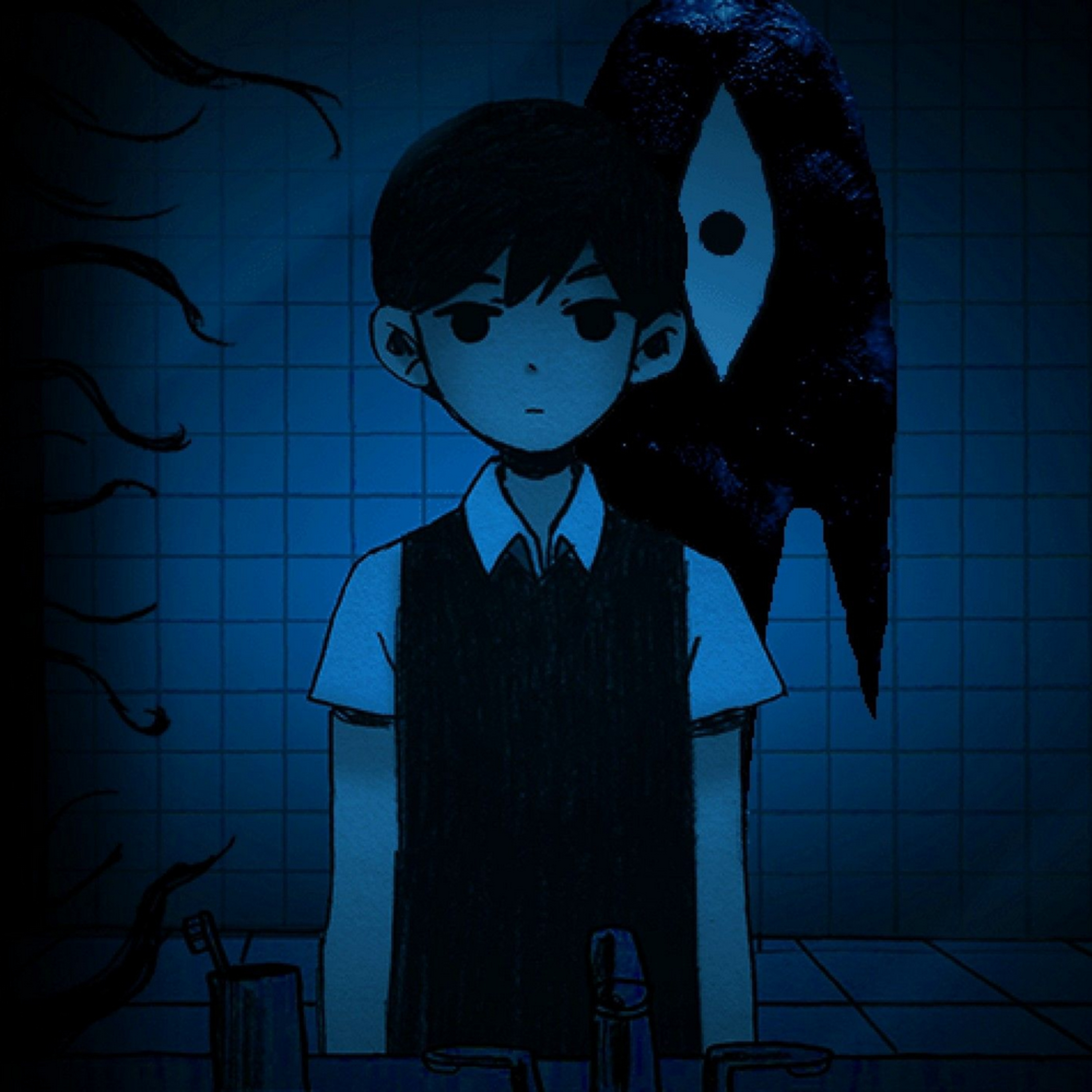
Welcome back to Dreamscape Archives. Tonight, we're diving into one of indie gaming's most haunting psychological journeys, a tale that blurs the line between dream and nightmare, between memory and trauma, between the boy who once was and the shadow he became. This is the complete lore of Omori, a story about guilt, grief, friendship, and the devastating weight of secrets that refuse to stay buried. Over the next hour or so, we'll unravel the intricately woven narrative of a boy named Sonny and his monochrome alter ego, Omori, exploring the vibrant fantasy world of headspace, the melancholic reality of faraway town, and the pitch-black depths of repressed trauma that connect them both.
We'll discover how a single moment of anger shattered five lives forever, how four years of silence transformed childhood friends into strangers, and how the human mind constructs elaborate prisons to protect itself from unbearable truth. So settle in, get comfortable, and prepare yourself for a journey through one of gaming's most profound explorations of mental health, trauma, and the painful process of healing. Let's begin. The two worlds of Omori.
Omori is a game that exists in duality, split between two distinct yet interconnected realities. On one side, we have headspace, a vibrant dreamscape filled with colorful friends, whimsical adventures, and the kind of carefree childhood joy that feels almost too perfect to be real. On the other side sits faraway town, a quiet suburban neighborhood where reality is muted. Relationships are strained, and a 16-year-old boy named Sonny has spent four years locked away from the world, drowning in guilt and self-imposed isolation.
The game's structure mirrors this split perfectly. During the day, we follow Sonny as he navigates the real world, confronting the decay of friendships that once seemed unbreakable. At night, we enter headspace as Omori, Sonny's black and white alter ego, where the same friends exist as their idealized younger selves forever caught in an endless loop of adventure and happiness. This alternating rhythm between dream and reality creates a hypnotic pace, pulling players deeper into both worlds simultaneously, never allowing them to fully settle into either.
But Omori isn't content with simple escapism. In the very beginning, something feels wrong. The contrast between Omori's grayscale appearance and his friends' vibrant colors hints at a fundamental disconnect. The way he stares blankly during celebrations, lingering in the background of group photos, suggests a presence that doesn't quite belong.
And then there's something, a shadowy entity with a single, staring eye that appears at the edges of perception in reflections and shadows, a constant reminder that no amount of fantasy can fully suppress what lies beneath. The game's opening moments establish this unsettling atmosphere immediately. We begin in white space, a completely blank void illuminated paradoxically by a black light bulb hanging from an invisible ceiling. Here Omori has existed for as long as he can remember, accompanied only by a laptop, a sketchbook, a tissue box for wiping away sorrows and a cat named Mewo.
This sterile, empty room serves as the gateway to everything else, a liminal space between consciousness and unconsciousness between the waking world and the dreaming mind. The black light bulb itself carries profound symbolism, where a normal light bulb represents the birth of an idea, illumination, and clarity. A black light bulb represents the opposite, the active repression of thought, the smothering of truth beneath layers of manufactured darkness. As the game progresses, this light bulb pulses with increasing intensity.
Its darkness, growing more oppressive, as the truth struggles to break free from the mental prison, Sonny has constructed around it. To escape white space and enter headspace proper, Omori must first retrieve his knife. This weapon, permanently bound to both Omori and Sonny throughout the game, carries its own dark significance. While other characters can swap their weapons freely, using toys and household items, the knife remains constant, an unchangeable fixture that hints at deeper psychological implications.
It serves simultaneously as a tool of self-defense and something far more sinister, a implement of escape through violence turned inward, the vibrant fantasy of headspace. Once the knife is obtained and the white door opens, we step into headspace, and the shift is immediate and overwhelming. Colors explode across the screen, the sky shimmers in shades of purple and pink, trees sprout in impossible formations, strange creatures wander peaceful meadows, and most importantly, Omori's friends are here, exactly as they should be. There's Aubrey, with her bright pink hair and boundless energy, wielding her stuffed toy as both comfort object and weapon.
There's Kael, orange and enthusiastic, always ready with a joke or a challenge, his basketball never far from hand. And there's Hiro, the dependable older brother figure, calm and collected, keeping everyone together with his steady presence. Together, this group explores the vast interconnected world of headspace, helping neighbors, battling strange creatures and searching for their missing friend, Basil. Basil's disappearance serves as the initial narrative hook, the quest that drives Omori and his friends forward through the dream world.
He's described as sensitive and gentle, a boy who loves flowers and photography, who captured the friend group's happiest moments in a photo album that becomes increasingly important as the story unfolds. But Basil has vanished into the far reaches of headspace, and finding him becomes the group's primary objective. The locations they traverse in this search reveal the incredible creativity embedded within Sunny's subconscious mind. His first forest serves as the starting area, a sprawling woodland filled with quirky residents, hidden secrets, and the kind of gentle, low-stakes adventures that define childhood play.
You might help a girl find her missing jump rope or reunite a lost son with his father. Everything feels safe, manageable, a world designed to protect rather than challenge. As you venture deeper, headspace expands into increasingly surreal territory. Otherworld presents a space-age landscape where Captain Space Boy, a melancholic astronaut, rehearsing a broken heart, searches desperately for his lost love.
Pyrofly forest glimmers with bioluminescent insects, creating patterns of light that guide travelers through darkness. The underwater highway stretches beneath the ocean's surface, accessible only by following a massive whale named Humphrey, who eventually swallows the party hole, forcing them to navigate through his digestive system to escape. Perhaps the most elaborate location is Sweetheart's Castle, an enormous pink palace where the narcissistic Sweetheart prepares to marry herself, having concluded that only she is perfect enough to deserve her own love. The castle serves as a dungeon-crawling adventure complete with puzzles, boss battles, and a theatrical wedding ceremony that ends in chaos when Captain Space Boy crashes through the ceiling to declare his love, winning Sweetheart's heart and whisking her way in his space shuttle.
These adventures feel deliberately childlike in their logic and progression, reflecting the way Sonny's mind has regressed to preserve his friends as they were before everything changed. The threats they faced are never truly dangerous. Death in Headspace simply means respawning at the picnic blanket where Marry waits with healing snacks and gentle encouragement. It's a world without permanent consequences, where mistakes can always be undone and the worst outcome is temporary inconvenience.
Beyond these major locations, Headspace sprawls outward into countless smaller areas, each revealing something about Sonny's inner world. The playground serves as the friend group's home base, a nostalgic recreation of the park where they spent countless afternoons together. Here dream versions of neighborhood kids pursue their own simple quests, helping lost toys, find their way home, or searching for missing items. The atmosphere radiates safety and innocence, exactly the feeling Sonny associates with his happiest childhood memories.
Deeper well represents one of the more unsettling areas, a vast underwater cavern where the boundary between Headspace and something darker begins to thin. Ancient ruins dot the landscape, suggesting depths to this dream world that even Sonny doesn't fully understand or control. Mysterious creatures inhabit these depths, entities that seem older than the conscious creation of Headspace itself, hinting at the vast unconscious territories that lie beneath the surface of Sonny's constructed fantasy. Dorn Joasis offers a stark desert landscape, a place of isolation and heat that contrasts sharply with the lush forests and comfortable towns that dominate most of Headspace.
This area introduces Dino's Dig, where prehistoric fossils can be excavated, and the Junkyard, where discarded objects accumulate in heaps. The symbolism becomes clear. These are places where things from the past get buried or thrown away, reflecting Sonny's attempts to dispose of memories and feelings that don't fit the perfect childhood narrative he's trying to maintain. The last resort represents perhaps the most elaborate location outside of Sweetheart's Castle, a massive hotel in Casino Complex run by Mr.
Jossum, a lone shark literally depicted as a shark. Here, the cheerful children from the playground have been transformed into wage slaves, working endless shifts to pay off debts they can never escape. The darkness underlying this scenario, children trapped in exploitative labor, unable to return to their innocent play, reflects Sonny's awareness that childhood innocence once lost, cannot be reclaimed. The friends must navigate this complex, solving the mystery of missing employees and confronting the reality that even in fantasy there are systems and forces that trap and exploit.
Throughout these locations, the emotion system adds another layer of psychological depth. Like typical RPGs where status effects are simply mechanical conditions, Omori's emotion system reflects genuine psychological states. Characters can become happy, sad, or angry, with each emotion creating advantages and disadvantages in combat. Happy characters have improved luck but reduced accuracy, their optimism making them reckless.
Sad characters gain increased defense but suffer reduced speed weighed down by melancholy. Angry characters deal more damage but become easier to hit, their rage making them powerful but vulnerable. These emotions can escalate into more extreme forms. Happy becomes ecstatic, becomes manic, sad becomes depressed, becomes miserable, angry becomes enraged, becomes furious.
The progression mirrors how emotions when left unchecked spiral into increasingly destructive territory. The system serves as a constant reminder that even in the dream world psychological states have tangible consequences, that feelings are forces that shape reality in profound ways. The battle system itself carries psychological weight beyond its mechanical function. When characters perform follow-up attacks together, the game calls these team moves requiring energy that accumulates when taking damage.
This mechanic reflects how trauma and hardship can sometimes create the conditions for deeper connection and cooperation. The group's strongest abilities emerge from their wounds, from the pain they've endured together. Mari's healing role in these battles takes on added significance when considered alongside the truth of her death. In headspace, she provides unconditional support, never criticizing, never pushing too hard, always there with exactly what the party needs.
She represents Sunny's idealized memory of his sister, the supportive presence he wishes had existed without the pressure that led to their fatal argument. This Mari would never push Sunny past his limits, would never set expectations too high, would never create the conditions for tragedy. Mari's presence in headspace deserves special attention. She appears throughout the dream world, always waiting at key locations with her signature picnic blanket, offering food that restores health and words of encouragement that restores spirits.
She plays the older sister role not just to Omori, but to the entire group, providing comfort and guidance without judgment. Her relationship with Hero is clearly romantic, characterized by gentle teasing and affectionate concern. She represents everything stable and nurturing in Sunny's memories, the idealized version of his sister before tragedy struck. But even in this carefully constructed paradise, cracks appear.
Sometimes the dream friends forget what they're doing, their dialogue suggesting confusion about their own purpose and existence. Occasionally, residents of headspace make unsettling comments about the nature of their reality, hinting that they're aware of being trapped in someone else's dream. And throughout it all, something lurks at the edges, that one-eyed shadow creature that appears in reflections behind trees hovering over the ocean, a constant intrusion of trauma into the fantasy. The progression through headspace also reveals careful attention to detail in how Sunny's mind has reconstructed his friends.
Dream Aubrey is pure sweetness, with just enough mischief to feel authentic. Dream Kale is energetic and occasionally thoughtless, but always well-meaning. Dream Hero is patient and kind without the weight of grief that will define his real-world counterpart. They're preserved at the exact moment before loss changed everything, kept in stasis within the amber of Sunny's imagination.
When the party finally locates Basil, he's found in a hidden area called the Lost Library, a vast collection of books where knowledge and memories accumulate. But something is wrong. Basil seems frightened, constantly looking behind himself at something only he can see. Before Omori can reach him, something appears that horrifying eye shadow creature manifests fully, and the encounter ends abruptly with Omori being violently expelled from headspace stabbed by unseen hands and thrust back into white space.
This violent ejection serves as the transition point between dream and reality, the moment when Sunny's carefully maintained fantasy fails to contain the truth pressing against its boundaries. Each time, Omori is forced out of headspace, it signals that the repression is weakening, that the memories buried beneath years of denial are beginning to surface whether Sunny is ready for them or not. The melancholy reality of faraway town. When Sunny wakes up, we see reality for the first time, and the contrast is striking.
Where headspace bursts with color and energy, faraway town feels muted, subdued, drained of vitality. Sunny's house is dim and mostly empty, furniture covered with sheets, rooms left abandoned. He moves slowly, mechanically through basic tasks like picking up items and checking the refrigerator, his actions feeling hollow and automated. The game takes place over three days, the final weekend before Sunny and his mother move away from faraway town forever.
Four years ago, something terrible happened, something that shattered the friend group and left Sunny unable to face the world. Since that day, he's lived as a hikikomori, a term describing people who withdraw from society so completely that they rarely, if ever, leave their homes. For four years, Sunny has existed in this limbo, sustaining himself on minimal food, sleeping away most of his existence, avoiding all contact with the friends he once cherished. On the first day, Kell knocks on Sunny's door.
This moment represents the game's critical branching point, the choice that determines which route the story will follow. If Sunny answers the door, the Sunny route begins, allowing players to explore faraway town, reconnect with childhood friends and gradually uncover the truth behind Mari's death, four years ago. If Sunny ignores the knock and retreats back into isolation, the hikikomori route activates, trapping him in an extended dream sequence where Omori takes increasingly complete control over his mind and body. Assuming Sunny chooses to answer, he finds Kell on his doorstep, older now but still recognizably the same energetic friend from headspace.
Kell has spent the last four years watching his friend group disintegrate, seeing Sunny retreat into his house, watching Aubrey transform into someone angry and bitter. Having heroes struggle with depression severe enough that he nearly failed out of college, but Kell has maintained his optimism and seeing Sunny at the door fills him with hope that maybe, just maybe, things can start healing before Sunny moves away. Their first outing together reveals how much faraway town has changed, the park where they used to play feels smaller and emptier. The convenience store is run by a clerk who makes cutting remarks about freeloaders.
The church where Mari is buried stands as a constant reminder of loss, and when they encounter Aubrey and her new gang of delinquent friends at the park, the encounter turns hostile almost immediately. This Aubrey bears little resemblance to her headspace counterpart. Her hair is now dyed pink rather than naturally so, styled into a rough, rebellious cut. She wears a tough exterior surrounding herself with a gang called the Hooligans who vandalize property and intimidate other kids.
Most shockingly, she's taken Basil's photo album, the precious collection of photographs documenting the friend group's happiest memories together, and in her anger and pain, she's marked up some of the photos obscuring faces and moments with dark scribbles. The confrontation at the park establishes the deep wounds that have festers for four years. Aubrey feels abandoned by everyone. After Mari's death, the friend group fractured completely.
Hero withdrew into grief, eventually leaving for college to escape the memories. Kel tried to maintain normalcy, but couldn't bridge the gaps opening between everyone. Basil became withdrawn and strange, and Sunny disappeared entirely, refusing to answer his door or respond to any attempts at contact. Feeling alone and rejected, Aubrey sought out new friends, people who didn't know about her past or judge her for her loss.
She built walls around herself, transforming grief into anger, sadness into aggression. When she sees Sunny and Kel together after four years of silence, it feels like a betrayal, like they're moving on without her, forming connections while she's been suffering in isolation. Retrieving the photo album becomes a priority, not just as an object, but as a symbol of their shared past. The album contains pictures Basil took throughout their friendship, documenting birthday parties, flower crown making sessions, trips to the beach, lazy summer afternoons spent at the lake.
Each photo captures a moment of pure childhood joy, a time when the biggest concerns were whose turn it was to choose the game or who got the last popsicle. But several photos are missing, torn out and lost, creating gaps in the visual narrative that mirror the gaps in everyone's memory and understanding of what really happened. The captions Basil wrote for each photo reveal his careful attention to detail and his desire to preserve every moment. He notes not just what's happening in the image, but the feelings and atmosphere surrounding it.
A photo of everyone eating watermelon on a hot summer day includes observations about the exact flavor of popsicles each person chose. A picture from Sunny's birthday mentions how surprised Sunny looked when his friends revealed they'd pooled their money for the violin, how his eyes lit up with joy, before the reality of having to learn the instruments set in. These captions become increasingly poignant when viewed through the lens of what came after. Basil was creating a record of perfection, documenting happiness so thoroughly that it could never be forgotten, building a monument to their friendship that would survive whatever challenges lay ahead.
He had no way of knowing that his careful preservation would make the loss even more acute, that these frozen moments of joy would become painful evidence of everything that was destroyed. The confrontation at the church adds another layer of complexity to the group dynamics. Aubrey has been visiting Mari's grave regularly, treating it as one of the few places where she can still feel connected to the friend group's past. When she discovers that Sunny and Kel have retrieved the photo album from her house, she feels violated as if they've stolen the last piece of Mari she had left.
The anger that erupts isn't really about the album itself, but about four years of abandonment, grief, and the desperate need to feel like she still matters to the people who once meant everything to her. The church itself carries symbolic weight throughout the game. It represents not just a place of mourning, but a location where people come seeking answers to unanswerable questions, comfort for uncomfortable truths, and forgiveness for unforgivable sins. The priest who tends the church offers generic platitudes about heaven and peace, words that ring hollow and confronted with the specific horror of Mari's death, and the complex web of guilt and grief it created.
His presence suggests that traditional sources of spiritual comfort may be inadequate when dealing with the depths of trauma the characters face. The visits to various locations around faraway town reveal how the entire community has been affected by Mari's death in subtle ways. The woman at the park mentions how the neighborhood hasn't felt the same since that tragedy. The shopkeeper at Fixit speaks about how Hiro used to help him with repairs before he went away to college.
The old couple at the church discusses how they saw the friend group grow up together, and how heartbreaking it's been to watch them drift apart. These small conversations build a picture of Mari as someone who was beloved, not just by her immediate friends, but by the entire community, someone whose loss created a vacuum that's never been filled. The lake at Hangman's Cliff becomes a recurring location, heavy with meaning. This is where the friend group used to swim and play during summer, where they'd have picnics on the shore and race each other across the water.
And now it's associated with danger and fear, the place where Aubrey's push nearly resulted in Basil's death, where Sonny froze in panic instead of helping his friend where the trauma from four years ago almost replicated itself in a terrible echo. The lake represents how places that once held only joy can become tainted by tragedy, how nowhere is truly safe from the intrusion of painful memories. The progression of time across the three days creates a mounting sense of urgency and inevitability. The first day, everything still feels potentially recoverable.
Maybe the friends can reconnect. Maybe the move won't happen. Maybe things can go back to how they were. By the second day, cracks appear in this optimism as old wounds reopen, and the depth of the group's dysfunction becomes clear.
By the third day, with Sonny's impending move looming hours away, the window for resolution is closing rapidly, forcing confrontations that can no longer be avoided. When Hero returns from college, the reunion is bittersweet. He's older, more mature, but the pain of losing Mari has left permanent scars. Hero and Mari were in a relationship young love that felt destined to last forever, and her sudden death devastated him completely.
He threw himself into academics as a coping mechanism, burying himself in studies to avoid confronting his grief. Seeing his younger brother, Cal, and his old friend Sonny together again stirs up emotions he's tried to keep buried, forcing him to confront how much he's lost and how much he's avoided dealing with that loss. The group's attempts to reconnect with Aubrey lead them to her house, where they discover the difficult circumstances that have shaped her transformation. Her mother has descended into alcoholism, leaving Aubrey to care for herself in a home filled with empty bottles and neglect.
The revelation adds context to Aubrey's anger, showing how the loss of Mari and the subsequent dissolution of the friend group removed her primary support system exactly when she needed it most. The friends she made memories with, the second family who provided what her home life lacked all disappeared simultaneously, leaving her completely alone. Basil becomes another focal point as the days progress. He's even more withdrawn than Sonny, spending his time in his grandmother's garden, taking care of flowers that seem to be his only remaining source of comfort.
When the group finally visits him, they find someone haunted, someone barely holding himself together under the weight of a secret that's been destroying him from the inside. He and Sonny share something, a knowledge that no one else possesses, a truth that has poisoned both their lives for four years. The visits to Basil's house reveal his obsession with flowers and their meanings. Throughout the game, flower symbolism appears repeatedly, with each character associated with specific blooms that reflect their personalities and roles in the story.
Basil has documented these associations carefully, his knowledge of fluorography serving as another way he's tried to preserve and understand the friendships that have slipped away from him. As the three days progress, tensions escalate. The group manages to retrieve the photo album, but the confrontation turns physical when Aubrey pushes Basil into the lake at Hangman's cliff. The event nearly ends in tragedy, with Basil unable to swim and Sonny frozen in panic until Hero dives in to save him.
The incident forces everyone to confront how damaged their relationships have become, how four years of separation and unprocessed grief have transformed them all into strangers, wearing the faces of childhood friends. The real world sections are paced deliberately slowly, allowing players to explore faraway towns many locations, talk to neighbors and piece together what happened four years ago through environmental storytelling and fragmented conversations. Every location holds memories from the park where they used to play to the street where Kelle and Sonny first met Aubrey after she lost her shoe. The town itself becomes a character.
A repository of ghosts and echoes, places that once meant joy, now heavy with the weight of loss. The terrible truth. On the final night after a disastrous encounter at Basil's house that leaves both Sonny and Basil hospitalized, the barriers holding back the truth finally crumble. Sonny's consciousness is dragged into black space, the dark counterpart to white space, where all his repressed memories and fears have been locked away.
Here in this pitch black void dotted with doors leading to nightmare scenarios, the full story of what happened four years ago finally surfaces. The truth begins with a violin. For Sonny's twelfth birthday, his friends pooled their money to buy him the instrument inspired by his admiration for Mari's piano playing. The idea was that the siblings could perform together, creating music as a duet, strengthening their already close bond.
Sonny began practicing, and Mari, ever supportive, pushed him to improve, to perfect his technique, to prepare for their first recital together. But as the recital date approached, the pressure mounted. From Sonny's perspective, Mari's expectations felt impossibly high, beyond what he could meet. She was a natural musician, talented and dedicated.
And in Sonny's experience, the practice sessions grew increasingly intense. Whether Mari truly pushed too hard, or whether Sonny's anxiety amplified normal encouragement into overwhelming pressure. The result was the same. The weight became unbearable for a 12-year-old boy already struggling with the instrument.
On the day of the recital, just hours before they were supposed to perform, something inside Sonny snapped. The weight of expectation, the fear of failure, the exhaustion from constant practice. It all crystallized into a moment of pure frustration and anger. He grabbed his violin and threw it down the stairs, watching it tumble and break, destroying the instrument that had become a symbol of everything overwhelming him.
Mari, hearing the crash, came to investigate. When she saw what Sonny had done, she was shocked, hurt and angry. How could he destroy the gift their friends had worked so hard to give him? How could he throw away something they'd been preparing for together?
An argument erupted, siblings yelling at each other at the top of the stairs, both too overwhelmed by their own emotions to step back and breathe. And then it happened. In a moment of blind rage, Sonny pushed his sister. He didn't think.
He didn't intend what came next. He just pushed, trying to make the argument stop, trying to make the pressure end, trying to make everything go away. Mari stumbled backward, she fell. In the stairs, those ordinary household stairs they'd climbed thousands of times before, became the instrument of a tragedy that would haunt everyone involved for the rest of their lives.
Mari tumbled down, her body hitting each step, the sound echoing through the house. When she reached the bottom, she didn't move. She didn't call out. She didn't react at all.
Sonny stood at the top of the stairs, frozen in horror, unable to comprehend what had just happened. Time seemed to stop. The whole world narrowed to that terrible, unchangeable moment. Basil arrived soon after.
He'd come early to help prepare for the recital, excited to support his friends during their special day. Instead, he found Sonny at the bottom of the stairs, trying desperately to wake Mari, calling her name over and over, convinced she was just unconscious, that she would open her eyes at any moment and everything would be okay. But Mari's eyes didn't open. Her chest didn't rise and fall.
She was gone, and nothing could change that. Seeing his best friend in complete psychological collapse, Basil made a decision that would doom both their futures. In his child's understanding of the world, all he could see was that the truth would destroy Sonny. If people knew that Sonny had pushed Mari, even accidentally, they would never forgive him.
He would be taken away, punished, marked forever as the boy who killed his sister. Basil couldn't allow that to happen. He needed to protect Sonny. He needed to save his friend from the consequences of this terrible accident.
So Basil proposed a horrifying plan to stage Mari's death as a suicide. Together, the two 12-year-old boys carried Mari's body back upstairs to her bedroom. Basil, convincing Sonny that she just needed to rest. But when she didn't wake, when the reality of her death became undeniable, Basil moved to the next phase of his plan.
They carried Mari's body out to the large tree in their backyard. The tree where the friend group used to play and climb, where they'd spent countless happy afternoons in the shade. Using a jump rope, they hanged her body from the branches, creating the scene of a suicide. The physical act of doing this, of lifting their friend and sister, of tying the rope, of stepping back to look at what they'd created, traumatized both boys in ways that would never fully heal.
The choice of the tree itself compounds the horror. This wasn't just any tree, but their tree, the specific location associated with their happiest memories together. Sonny, Mari, Basil, and the others had climbed those branches, sat in that shade, taken countless photographs beneath those leaves. By using this sacred space as the site of their deception, Basil and Sonny corrupted their own sanctuary, ensuring that even in memory, they could never return to that innocent place without confronting what they'd done.
The mechanics of what they did, two 12-year-old boys managing to stage this scene, raises questions that the game deliberately leaves ambiguous. The truth sequence shows them carrying Mari's body, but doesn't detail every moment of the process. What's clear from the game's imagery is that Basil directed the actions, while Sonny, already fragmenting psychologically, followed in a state of deep shock. The photo-album descriptions and memory fragments suggest Basil took the lead, driven by a desperate need to protect his friend that overrode any other consideration.
The jump rope, they used, carries its own symbolic weight. Jump ropes represent childhood play, innocent games of rhythm and coordination. To transform such an object into an instrument of death, to repurpose something associated with laughter and exercise into a noose, reflects the complete perversion of innocence that occurred in that moment. Nothing could remain untainted.
Everything connected to their childhood became contaminated by this single act. As they looked back at what they'd done, both boys saw something that would haunt them forever. According to the memory sequences revealed in the game's climax, Mari's face was partially hidden by her hair. But through that veil, one eye seemed to be staring directly at them.
Whether her eye was actually open, or whether this was how their traumatized minds interpreted what they saw, the image seared itself into their psyches. That eye, wide and accusatory in their perception became the focal point of their guilt, the moment they couldn't unsee or forget. This image crystallized into something, the shadow creature with a single staring eye that has haunted both sunny and basil ever since. Something represents the trauma of that moment.
The guilt and horror frozen in their minds, manifesting as a presence that follows them constantly, appearing in mirrors and shadows. A reminder that they can never truly escape what they've done. The cover-up succeeded in its immediate goal. Adults arrived to find Mari's body hanging from the tree and concluded she had taken her own life.
The funeral was held, condolences were offered, the community mourned the loss of a promising young woman who seemed to have everything ahead of her. No one suspected foul play, no one investigated further. The official narrative became fixed. Mari had committed suicide, and everyone accepted it as tragic, but true.
But the cost of this deception was catastrophic. Mari immediately retreated into himself, unable to cope with the reality of what happened, and his role in creating it. He stopped going outside. He stopped talking to friends.
He stopped engaging with life in any meaningful way. His mind, desperate to protect itself from the unbearable guilt, began constructing elaborate defenses. This is where White Space was born, a blank void where Sunny could exist without being himself, where memories couldn't intrude, where the truth couldn't reach him. And from White Space emerged Omori, the black and white alter ego who could bear the weight of existence when Sunny himself could not.
Omori was intended as a dream avatar, a hollow vessel that Sunny could inhabit within his dreams, so he wouldn't have to face being himself, to confront his own identity as the boy who killed his sister. From Omori and White Space, Headspace grew outward, an elaborate dreamscape populated with idealized versions of his friends and sister. A world where Mari was alive, where childhood continued uninterrupted, where the recital never happened and life remained perfect. By inhabiting Omori within Headspace, Sunny could experience happiness again, could be with his friends again, could see Mari again, all without confronting the truth that made such things impossible in reality.
But complete repression proved unsustainable. The memories refused to stay buried. They seeped into Headspace as black space, a dark counterpoint where all the repressed trauma accumulated, where something lurked in countless forms, where nightmare scenarios played out variations on the theme of Sunny's guilt. The game's structure implies that to maintain Headspace's illusion of perfection, these invasive memories had to be periodically suppressed, with the dream world being reconstructed to preserve its protective function, each cycle buying more time before the truth broke through again.
The game shows that Dream Basil acts differently from the other dream friends, seeming to remember things that disturb the fantasy, seeing things that others don't. This could imply that because real Basil shared knowledge of the truth, his dream counterpart couldn't be fully integrated into the idealized vision Sunny tried to maintain. The recurring motif of Basil being separated from the group during key moments suggests a psychological need to keep even his imagined version at a distance. Over four years, this cycle repeated.
Sunny would sleep, enter white space, transform into Omori, explore Headspace with his dream friends, then be violently ejected when the repression failed and memories broke through. White space would reset, Headspace would reconstruct, and the pattern would continue, trapping Sunny in an endless loop of avoidance and temporary escape. In the real world, Basil suffered his own psychological deterioration. Unlike Sunny, he couldn't retreat completely into fantasy.
He had to continue living in faraway town, going to school, interacting with the community, all while carrying the terrible secret of what they'd done. The guilt consumed him slowly, manifesting in anxiety, paranoia, and an obsession with flowers that represented his desperate attempt to find meaning and peace in something innocent. The friend groups collapsed, added another layer of suffering. Hero retreated into grief.
Nearly destroying his academic future in his depression, over losing Mari. Aubrey felt abandoned by everyone, transforming her sadness into anger as a defense mechanism. Kel tried to hold everything together, but couldn't bridge the gaps between people all processing trauma in isolation. And no one, not a single person, knew the real reason why everything had fallen apart, because the truth remained locked away in Sunny and Basil's minds, poisoning them both.
The final confrontation and multiple endings. The game's climax occurs in the hospital after Sunny and Basil's confrontation leaves both boys injured and hospitalized. In this moment, with all defenses crumbling, Sunny can no longer avoid the truth. His consciousness is pulled into black space, where he must finally confront the memories he spent four years suppressing.
Black space manifests as a vast dark void filled with doors, each leading to a nightmarish scenario. Representing different aspects of Sunny's trauma and guilt, he encounters variations of something in multiple forms, battles, manifestations of his deepest fears, and gradually pieces together the complete picture of what happened that day. The stranger, a shadowy figure resembling Basil, guides him through this darkness, speaking in cryptic phrases about truth, memory, and whether any hope remains for salvation. Eventually, Sunny emerges from black space having recovered his memories.
He sees the truth clearly now, without the distortion of repression. He remembers the argument, the push, the fall, the cover-up, all of it flooding back with devastating clarity. This knowledge brings him to a critical decision point where the game branches into multiple possible endings, depending on the player's choices. If Sunny chooses to continue to persist, despite the weight of truth, he returns to white space one final time, but now he's present as himself, not merged with a mori.
The two exist as separate entities for the first time, Sunny as the real boy confronting his trauma, Omori as the defense mechanism that no longer serves its purpose. Sunny moves toward the black light bulb, symbol of his repression, and smashes it, ending his denial once and for all. This action triggers the final battle, Sunny versus Omori, in a fight for control over Sunny's psyche and future. Omori appears in various forms throughout this confrontation, eventually transforming into a very complex form.
Eventually transforming into a massive red and black version of himself, seated on a throne in red space. He tears into Sunny verbally, listing his failures and sins, insisting that someone so unforgivable should simply die. That suicide is the only appropriate atonement for killing his sister. Mechanically, Omori cannot be defeated through normal combat.
He's an insurmountable opponent because depression and self-hatred aren't monsters that can be killed with a knife. Sunny will inevitably fall in battle, but when he does, he's given a choice. To give up or to continue. Choosing to give up results in Omori, absorbing Sunny completely, taking permanent control over his mind and body, which leads to the bad ending where Sunny walks onto the hospital balcony and jumps to his death.
But if Sunny chooses to continue, choosing to persist despite being unable to win, something changes. The battle space shifts. Spirit Mari appears with her piano. Sunny picks up his violin, the instrument he once destroyed, and the siblings perform their duet together, the recital that was meant to happen four years ago.
As they play, Sunny's good memories return, reminding him of all the joy he experienced before tragedy struck, giving him strength to face himself and his future. The duet breaks Omori's hold. The manifestation of self-hatred and guilt fades away, accepting defeat, and Sunny wakes up in the hospital room with his friends gathered around him. He's crying, finally allowing himself to feel emotions he's suppressed for years.
The something that has haunted him appears one last time, but Sunny is no longer afraid. He faces it directly, and it dissolves. It's power over him, finally broken. At this point, the game gives Sunny one more critical choice.
He can open the door to Basil's hospital room and confess everything to his friends, or he can leave without saying anything. Opening the door leads to the game's good ending, though good is a complex term for what follows. Sunny tells his friends the truth about Mari's death, about the accident, about the cover-up, about four years of lies and suffering. The game doesn't show the friends reactions directly.
Instead, it cuts to mourning, with Sunny leaving the hospital and getting into his mother's car to move away. Aubrey, Kel, Hiro, and Basil stand outside watching him leave. Their expressions are ambiguous, leaving it uncertain whether they've forgiven Sunny, or if this confession has shattered the group permanently. What's clear is that Sunny and Basil no longer carry the secret alone.
The truth is out, and whatever comes next, they can face it without the crushing weight of deception. If Sunny chooses not to open the door, the neutral ending occurs. The game shows that in the aftermath, Basil takes his own life. The exact details vary depending on whether Sunny returns home or goes back to sleep at Basil's house, but the outcome remains the same.
Sunny and his mother drive away from faraway town and one way or another. Basil is gone. In this ending, nothing is truly resolved. Sunny escapes physically, but remains trapped psychologically, unable to take the final step toward healing, and his inability to confront the truth has caused Basil his life.
The Hiki-Komori route offers even darker alternatives. If Sunny never answers Kel's knock, never ventures into the real world, he remains in his house for all three days. On the final day, overwhelmed by something's presence and his own guilt, he can no longer maintain the separation between himself and Omori. The game shows Omori merging with Sunny permanently, assuming complete control and condemning him to exist in the dream world, never facing reality, never processing his trauma.
In this route's endings, Basil takes his own life, unable to bear the secret any longer without Sunny's support. The player can then encounter what the game refers to as neutral endings. If Sunny picks up a knife before sleeping one last time, the connection between Omori's actions in white space, and Sunny's body in reality becomes tragically literal, resulting in Sunny's death. If he doesn't take the knife, he continues in his dissociated state, moving away with his mother, while Omori maintains control, with Sunny's true self lost somewhere in the depths of headspace.
Each ending serves to illustrate the game's central themes about the necessity of confronting trauma rather than avoiding it. The good ending, while bittersweet and uncertain, offers the only path toward genuine healing, because it requires Sunny to face the unbearable truth and accept the consequences. The neutral endings show the limited nature of escape, how physical distance doesn't resolve psychological wounds, and the bad endings demonstrate the ultimate cost of perpetual avoidance, how running from trauma forever can lead only to destruction. Symbolism, themes, and emotional resonance.
Omori operates on multiple levels simultaneously, functioning as both a straightforward narrative about a boy processing trauma and an elaborate symbolic exploration of psychological defense mechanisms, mental illness, and the way human minds cope with unbearable guilt. The game's use of color carries significant weight throughout. White represents dissociation and sterility. The blank emptiness Sunny retreats into when reality becomes too much.
Black symbolizes fear and the unknown. All the things pushed into black space that Sunny cannot bear to acknowledge. Purple dominates headspace, representing dreams and fantasy. The idealized past preserved in imagination.
Pink appears repeatedly in association with innocence defiled from Aubrey's dyed hair to the game's major bosses, all representing things that once were pure, but have been corrupted or twisted. Red symbolizes self-loathing, guilt, and suppression, appearing in red space and the red hands that empower Omori to destroy. The friends themselves serve as aspects of Sunny's psyche. Aubrey represents the anger he suppressed, the rage at his sister for pushing too hard, at himself for his moment of violence, at the universe for allowing tragedy to occur.
Kel embodies the desire to maintain normalcy and optimism, despite overwhelming darkness, the part of Sunny that wants to believe everything can be okay. Hero represents the mature, responsible self that Sunny wishes he could be, someone capable of moving forward despite grief, and Basil, more than any other, serves as Sunny's shadow self, the one who shares his guilt and understands the weight of their shared secret. Maori's dual presence as loving sister in headspace and accusing Spectre in the form of something represents Sunny's conflicted feelings about his sister's death. Part of him remembers her love and support, believing she would want him to forgive himself and move on.
Another part cannot escape the horror of that final moment, her eyes staring through her hair, seeming to judge him for what he's done. The good ending's resolution comes when Sunny integrates these two aspects, accepting both Maori's love and his responsibility for her death. No longer allowing either to define him completely. The game explores mental health with nuanced sensitivity rarely seen in any medium.
Sunny's HIKI KOMORI LIFESTYLE authentically represents severe depression and anxiety, the way trauma can paralyze someone into complete withdrawal from the world. His inability to face reality isn't portrayed as weakness, but as a psychological defense mechanism, his mind's desperate attempt to protect itself from unbearable knowledge. Similarly, the way different characters process grief feels genuine and varied. Heroes near academic failure, Aubrey's transformation into aggression, Kells forced optimism, Basil's deterioration into paranoia.
Each represents a different but equally valid response to overwhelming loss. The game doesn't judge these responses as right or wrong, but presents them as human reactions to trauma, each person doing the best they can with inadequate tools and no support system. The game's approach to suicide and self-harm deserves specific mention. The knife that Sunny and Aubrey carry represents both violence turned outward and the constant temptation to turn it inward.
Throughout the game, Aubrey must repeatedly stab himself to wake from white space, a disturbing metaphor for self-destructive behaviors as a form of escape from emotional pain. The bad ending suicides aren't glorified or presented as solutions, but as tragedies that compound the original loss, demonstrating how trauma can destroy not just the way that trauma can be destroyed, not just one life, but ripple outward to devastate everyone connected to it. The music throughout Aubrey contributes enormously to its emotional impact. White space's theme is unsettling in its emptiness, using silence and minimal notes to create a sense of void and dissociation.
Headspace locations feature upbeat, whimsical tracks that sound slightly off, creating cognitive dissonance between the cheerful melodies and the underlying darkness players know exists. The final duet between Sunny and Aubrey, where they finally perform their recital together, serves as the emotional climax, using music to express healing and connection that words alone couldn't capture. The photo album serves as another powerful symbol, representing both preserved memories and the painful gaps where truth has been hidden. Each photograph captures a moment of genuine happiness, proof that before tragedy struck, these friends shared something real and valuable.
But the missing photos, torn out and hidden, represent the truth that's been excised from the narrative, the parts of the story too painful to acknowledge. Basil's careful captions for each photo show his desperate attempt to hold on to these memories to preserve something of the friendship, even as it crumbles around him. The game's achievement lies in how it makes players feel the weight of Sunny's guilt without necessarily condoning his actions or absolving him of responsibility. We understand the accident without excusing the cover up.
We sympathize with a 12-year-old boy's panic while recognizing the damage his choices caused. We want healing for all the characters while acknowledging that some wounds may never fully close. This moral complexity elevates Omori beyond simple storytelling into something that wrestles genuinely with questions of guilt, forgiveness, and whether redemption is possible after unforgivable actions. The message behind the nightmare.
At its core, Omori tells us that confronting painful truths, no matter how unbearable they seem, is the only path to genuine healing. Sunny's four years of avoidance brought him no peace, only temporary respite that required increasingly elaborate mental gymnastics to maintain. The fantasy of headspace couldn't satisfy him because it was built on a foundation of lies. White space offered no comfort because emptiness can never replace substance.
Only by smashing the black light bulb by destroying his own repression and facing reality directly could Sunny begin to move forward. The game also explores how trauma operates not in isolation but through networks of relationships. Mory's death and the subsequent cover-up devastated not just Sunny and Basil, but everyone connected to them. Heroes grief, Aubrey's anger, Kael's desperate optimism all stem from the same event but manifest in different ways.
The friends inability to help each other process this trauma collectively, their isolation from one another at the moment they most needed support created individual prisons that trap them all. This highlights the importance of community and honest communication in healing from trauma. When Sunny finally confesses the truth to his friends regardless of their reaction, the act of confession itself represents a crucial step. He's no longer carrying the burden alone, he's trusting others with his darkest secret, allowing them to be part of his healing process rather than shutting them out.
Whether they forgive him immediately or need time to process, at least now they all exist in the same reality. Working with the same facts, able to potentially rebuild relationships on a foundation of truth rather than lies. The game suggests that forgiveness, both of others and oneself, is possible but not guaranteed or easy. Sunny's act of confession doesn't magically fix everything.
His friends may never fully forgive him, he may never fully forgive himself. But the possibility of moving forward, of building something new from the ruins of what was destroyed, that possibility only exists once truth replaces deception. Omori also examines how children process trauma with different tools and understanding than adults. Sunny and Bezel were 12 when tragedy struck, still children trying to navigate an adult-sized catastrophe.
Their decisions, while destructive, came from childish logic and panic. The game asks us to hold space for both recognizing the harm they caused and understanding their limited capacity at that age to make better choices. This doesn't excuse their actions, but adds crucial context that deepens our understanding of the tragedy. The game's refusal to show the friend's reactions to Sunny's confession serves a deliberate purpose.
By leaving that moment ambiguous, Omori shifts focus from whether Sunny deserves or receives forgiveness to the fact that he finally told the truth. The outcome becomes less important than the act itself, suggesting that healing requires doing the right thing, regardless of whether it leads to the outcome we desire. For players struggling with their own guilt, trauma, or mental health challenges, Omori offers both a mirror and a map. The mirror shows how avoidant strategies, while providing temporary relief, ultimately trap us in cycles of suffering.
The map suggests that the path forward, though painful, requires facing what we've been running from, accepting help from others, and choosing persistence even when giving up seems easier. Conclusion. The complete lore of Omori presents one of gaming's most profound explorations of trauma, guilt, and the painful process of healing. Through its dual-world structure, it shows us both the comforting fantasy of denial and the harsh reality that must ultimately be faced.
Through its cast of damaged but sympathetic characters, it demonstrates how trauma ripples outward, affecting not just the immediate victim, but everyone connected to them. Sunny's journey from complete dissociation to confession represents the difficult but necessary path anyone carrying unbearable guilt must walk. His creation of Omori and Headspace illustrates the elaborate defenses our minds construct to protect us from pain, while the ultimate failure of those defenses reminds us that repression is not the same as resolution. The game's multiple endings show different possible outcomes, some hopeful, some tragic, but all emphasizing that facing truth requires courage and brings uncertain results.
The story of Omori refuses easy categorization. It's a tale of childhood friends and innocent adventures. It's a psychological horror about the monsters our minds create. It's an exploration of guilt and grief that doesn't offer simple answers or guaranteed redemption.
It's a reminder that sometimes the hardest battles we fight are with ourselves in the space between what we remember and what we've forgotten, between who we were and who we've become. For a game that begins in the sterile emptiness of white space, Omori ultimately affirms the messy, complicated, painful richness of genuine human experience. It suggests that feeling everything, even the unbearable things, is better than feeling nothing at all. That truth, however painful, is superior to comforting lies.
That connection, even when difficult and uncertain, beats isolation every time. As we've explored the complete lore of this remarkable game from the vibrant fantasy of Headspace to the melancholic reality of faraway town, from the blank void of white space to the nightmare depths of black space, we've traced the journey of a boy learning to face himself after four years of running away. We've seen how a single moment can shatter multiple lives, how secrets poison everything they touch, and how the only way out is through. If you've enjoyed this deep dive into Omori's complete lore, please consider leaving a like and subscribing to Dreamscape Archives for more comprehensive explorations of gaming's greatest stories.
Share your thoughts about the game in the comments below. Have you played Omori? Which ending did you get? How did the story affect you?
I'd love to hear your experiences with this profound and haunting narrative. Until next time, thank you for joining me on this journey into the depths of guilt, grief, and the painful path toward healing. Sweet dreams, and remember, sometimes the truth is the only thing that can set us free, even when freedom comes with a heavy price. Take care, everyone.