
EPISODE · May 8, 2026 · 11 MIN
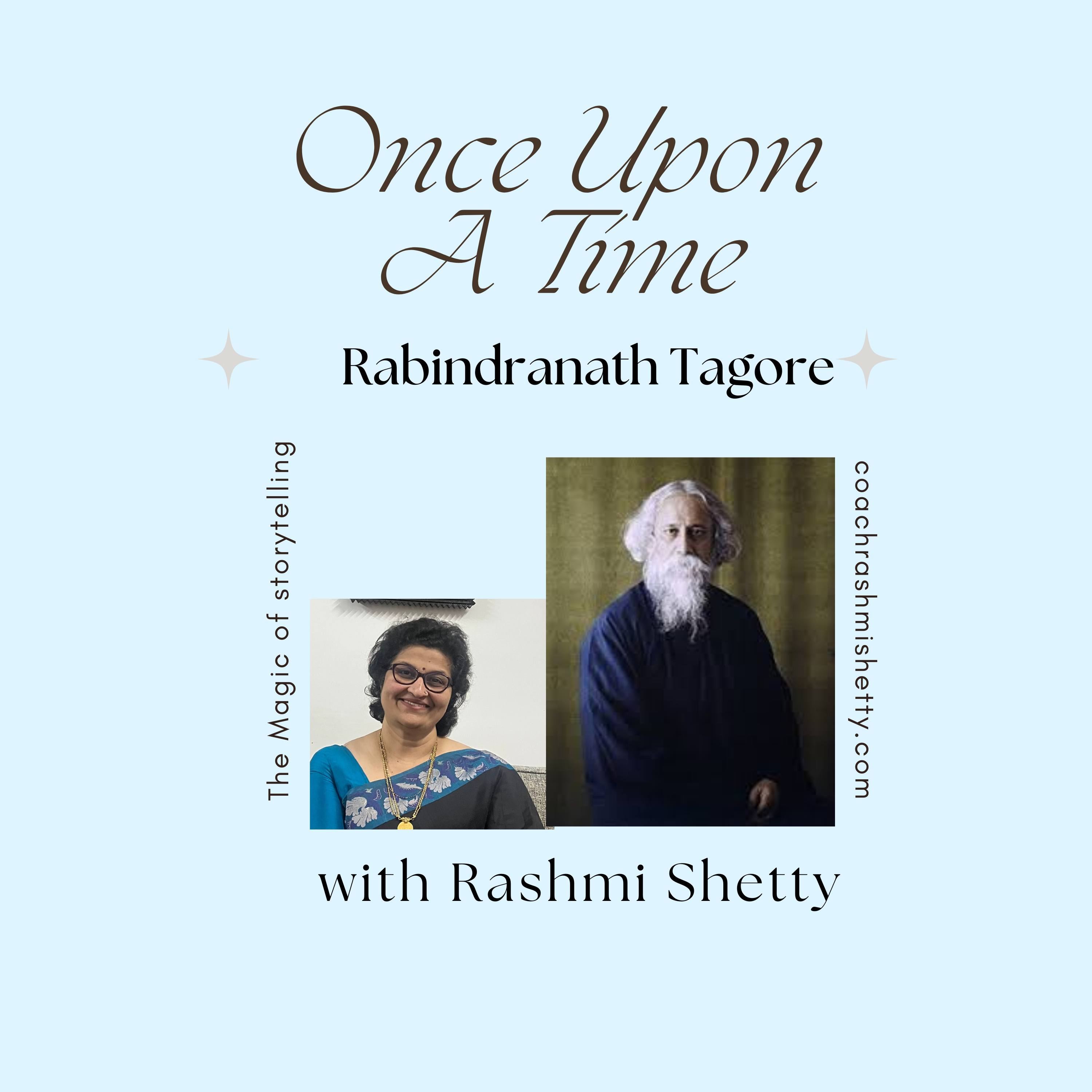
Once Upon A Time- Rabindranath Tagore
from Once Upon A Time - Stories that have stood the test of time · host Rashmi Shetty
In the sprawling, high-ceilinged corridors of the Jorasanko mansion in Calcutta, the air was perpetually thick with the sounds of the Bengal Renaissance. It was here, on May 7, 1861, that the thirteenth surviving child of the illustrious Tagore family was born: Rabindranath, affectionately known as "Rabi."While his father, the reformer Debendranath, was often away on distant travels and his mother, Sarada Devi, passed during his early childhood, Rabi’s world was far from empty. He was raised in a "nest of giants," a household that functioned more like a vibrant cultural laboratory than a traditional home.A Dynasty of IntellectThe Tagore family lived at the cutting edge of art, politics, and philosophy. To grow up in Jorasanko was to be tutored by the very architects of modern Indian thought:Dwijendranath (Brother): A deep-thinking philosopher and poet.Satyendranath (Brother): A trailblazer who became the first Indian to join the elite Indian Civil Service.Jyotirindranath (Brother): A versatile musician and playwright who, along with his wife Kadambari Devi, provided the young Rabi with his most profound creative encouragement.Swarnakumari (Sister): A pioneering novelist in her own right.The Symphony of JorasankoYoung Rabi’s education didn't just come from books; it was absorbed through the walls. The mansion echoed with:Classical Mastery: Professional Dhrupad musicians lived within the house, filling the halls with the rigorous beauty of Indian classical music.Literary Ferment: The family-run magazines and theatrical recitals blurred the lines between Bengali tradition and Western classical influence.In this atmosphere of constant rehearsal and intellectual debate, the boy nicknamed "Rabi" began to find the voice that would eventually resonate across the globe.Rabindranath Tagore's journey was never a straight line. As a young man, he was sent to manage his family’s river estates in what is now Bangladesh. Living on a houseboat, he watched the Padma River flow, observing the simple, profound lives of the villagers. It was here that he realized true leadership isn’t about power—it’s about resonance. He began to write stories like Kabuliwala, bridging the gap between a rugged Afghan fruit-seller and a little girl, proving that the language of the heart is universal.But the world soon came knocking. In 1912, while sailing to England, he translated a collection of poems called Gitanjali just to pass the time. Those "Song Offerings" hit the West like a tidal wave of calm in a world bracing for war. A year later, he became the first non-European to win the Nobel Prize in Literature. Suddenly, the boy who hated school was the teacher to the world.Yet, Tagore knew that fame was a hollow "badge of honor" if it didn't serve justice. When British forces committed the horrific Jallianwala Bagh Massacre in 1919, he did the unthinkable: he gave back his knighthood. He chose the "Physics of Presence" over prestige, standing in silent, powerful protest. He became the "Gurudev" to Mahatma Gandhi, the man who named Gandhi the "Great Soul," even as he warned that loving a country should never mean hating the rest of the world.Starting Shantiniketan was Tagore’s way of proving that authority doesn't have to be loud or restrictive. True authority comes from creating a space where others can find their own resonance. By building this "nest," he ensured that his philosophy of peace, creativity, and connection would continue to breathe long after his own voice fell silent.Rabindranath Tagore passed away on August 7, 1941, just years before seeing India walk free. But he didn't leave behind just books or medals; he left behind a map. He showed us that whether you are a student, a poet, or a leader, your greatest work is to find your own "Internal Signal" and live it so loudly that the world can't help but sing along.
Embed this episode
Ready to play
Once Upon A Time- Rabindranath Tagore
No transcript for this episode yet
Similar Episodes
No similar episodes found.
Similar Podcasts
No similar podcasts found.