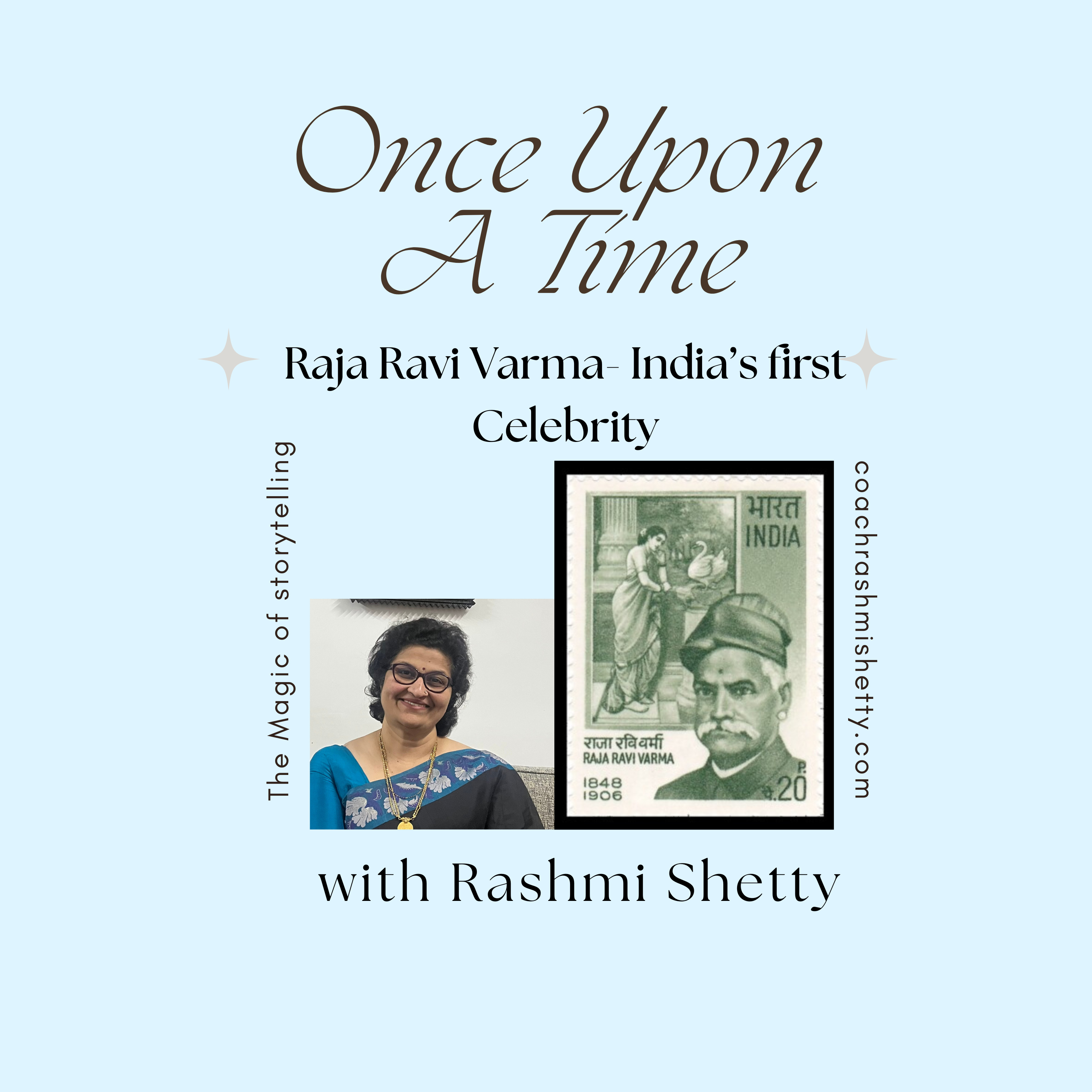
Once upon a Time - Raja Ravi Varma- India's First Celebrity episode artwork

EPISODE · Apr 29, 2026 · 8 MIN

Once upon a Time - Raja Ravi Varma- India's First Celebrity

from Once Upon A Time - Stories that have stood the test of time · host Rashmi Shetty

On this day, April 29th, we celebrate the birth of a man who changed the way an entire nation visualizes its own soul. Born in 1848 in Kilimanoor, Kerala, Raja Ravi Varma’s life was more than just a collection of masterpieces; it was a masterclass in breaking barriers and democratizing excellence. He is known as the Father of Modern Indian Art— was a commoner within the palace ecosystem, a gifted boy who was once scolded for "defacing" the pristine white walls of the estate with charcoal sketches of animals and people.gifted boy who was once scolded for "defacing" the pristine white walls of the estate with charcoal sketches of animals and people.In his youth, Ravi Varma faced a locked door. The court painters of the time were fiercely protective of their craft, refusing to teach him the secrets of oil painting. Instead of complaining about a lack of mentorship, Ravi Varma turned to the power of The Silent Observe. He watched the visiting Dutch artist Theodore Jensen from the shadows, decoding the play of light and shadow with his eyes.You can learn almost anything by being a silent, focused observer of those who are already masters.For years, Ravi Varma’s work was the exclusive property of the elite. But he realized that as long as his "gods" stayed in palaces, they belonged only to the few. In 1894, he took a massive risk by setting up a lithographic press in Lonavala. He moved art from the "Gilded Frame" to the "Common Home."He showed us that When you find something beautiful or helpful, don't keep it to yourself. The more you share your talents, the bigger your world becomes.Varma was often criticized for making his subjects look "too real." But that was his genius. In his masterpiece, Yashoda and Krishna, he didn't just paint a deity; he painted the universal frequency of a mother’s love and exhaustion. This is why, in April 2026, his work continues to break auction records, recently reaching ₹167.2 crore. People don't buy "art"; they buy "resonance."You don't have to be perfect to be special. Even the heroes in stories have feelings just like you.As his fame grew, Varma made a choice that would change India forever. He realized that as long as his paintings stayed in palaces, the "gods" belonged only to the rich. In 1894, he moved to Lonavala and set up a lithographic printing press.It allowed people from marginalized communities, who were often barred from entering temples, to have the divine in their own homes. A farmer in a remote village could own the same image of Goddess Lakshmi as a Maharaja. This "democratization of the divine" turned him into a national hero. He became India’s first true celebrity; the sheer volume of letters from fans, orders for prints, and notes of gratitude was so overwhelming that the government had to establish a dedicated post office just to handle his mail.Perhaps the most powerful fact of his life is that the title "Raja" was not an inheritance. It was a recognition bestowed upon him in 1904. He wasn't born a king; he earned the crown through the stroke of a brush. He proved that excellence is a "Self-Made" territory.You don't need a title to lead. You lead by doing what you love with all your heart.Raja Ravi Varma passed away on October 2, 1906, but he never truly left. Every time you see a calendar with a deity, a scene in an Indian mythological film, or a classic comic book, you are looking at his vision.He proved that you don't need a crown to be a king. By merging the techniques of the West with the soul of the East, he became the King of Modern Indian Art—a title earned not by bloodline, but by the enduring frequency of his creative spirit.

On this day, April 29th, we celebrate the birth of a man who changed the way an entire nation visualizes its own soul. Born in 1848 in Kilimanoor, Kerala, Raja Ravi Varma’s life was more than just a collection of masterpieces; it was a masterclass in breaking barriers and democratizing excellence. He is known as the Father of Modern Indian Art— was a commoner within the palace ecosystem, a gifted boy who was once scolded for "defacing" the pristine white walls of the estate with charcoal sketches of animals and people.gifted boy who was once scolded for "defacing" the pristine white walls of the estate with charcoal sketches of animals and people.In his youth, Ravi Varma faced a locked door. The court painters of the time were fiercely protective of their craft, refusing to teach him the secrets of oil painting. Instead of complaining about a lack of mentorship, Ravi Varma turned to the power of The Silent Observe. He watched the visiting Dutch artist Theodore Jensen from the shadows, decoding the play of light and shadow with his eyes.You can learn almost anything by being a silent, focused observer of those who are already masters.For years, Ravi Varma’s work was the exclusive property of the elite. But he realized that as long as his "gods" stayed in palaces, they belonged only to the few. In 1894, he took a massive risk by setting up a lithographic press in Lonavala. He moved art from the "Gilded Frame" to the "Common Home."He showed us that When you find something beautiful or helpful, don't keep it to yourself. The more you share your talents, the bigger your world becomes.Varma was often criticized for making his subjects look "too real." But that was his genius. In his masterpiece, Yashoda and Krishna, he didn't just paint a deity; he painted the universal frequency of a mother’s love and exhaustion. This is why, in April 2026, his work continues to break auction records, recently reaching ₹167.2 crore. People don't buy "art"; they buy "resonance."You don't have to be perfect to be special. Even the heroes in stories have feelings just like you.As his fame grew, Varma made a choice that would change India forever. He realized that as long as his paintings stayed in palaces, the "gods" belonged only to the rich. In 1894, he moved to Lonavala and set up a lithographic printing press.It allowed people from marginalized communities, who were often barred from entering temples, to have the divine in their own homes. A farmer in a remote village could own the same image of Goddess Lakshmi as a Maharaja. This "democratization of the divine" turned him into a national hero. He became India’s first true celebrity; the sheer volume of letters from fans, orders for prints, and notes of gratitude was so overwhelming that the government had to establish a dedicated post office just to handle his mail.Perhaps the most powerful fact of his life is that the title "Raja" was not an inheritance. It was a recognition bestowed upon him in 1904. He wasn't born a king; he earned the crown through the stroke of a brush. He proved that excellence is a "Self-Made" territory.You don't need a title to lead. You lead by doing what you love with all your heart.Raja Ravi Varma passed away on October 2, 1906, but he never truly left. Every time you see a calendar with a deity, a scene in an Indian mythological film, or a classic comic book, you are looking at his vision.He proved that you don't need a crown to be a king. By merging the techniques of the West with the soul of the East, he became the King of Modern Indian Art—a title earned not by bloodline, but by the enduring frequency of his creative spirit.

NOW PLAYING

Once upon a Time - Raja Ravi Varma- India's First Celebrity

0:00 8:22

No transcript for this episode yet

We transcribe on demand. Request one and we'll notify you when it's ready — usually under 10 minutes.

Frequently Asked Questions

How long is this episode of Once Upon A Time - Stories that have stood the test of time?

This episode is 8 minutes long.

When was this Once Upon A Time - Stories that have stood the test of time episode published?

This episode was published on April 29, 2026.

What is this episode about?

On this day, April 29th, we celebrate the birth of a man who changed the way an entire nation visualizes its own soul. Born in 1848 in Kilimanoor, Kerala, Raja Ravi Varma’s life was more than just a collection of masterpieces; it was a masterclass...

Can I download this Once Upon A Time - Stories that have stood the test of time episode?

Yes, you can download this episode by clicking the download button on the episode player, or subscribe to the podcast in your preferred podcast app for automatic downloads.
URL copied to clipboard!