NPR. This is the indicator from Planet Money. I'm Ricky Mulvie. And I'm Adrian Ma. It can feel rare these days to find a hot button political issue that unites Americans across the ideological spectrum.
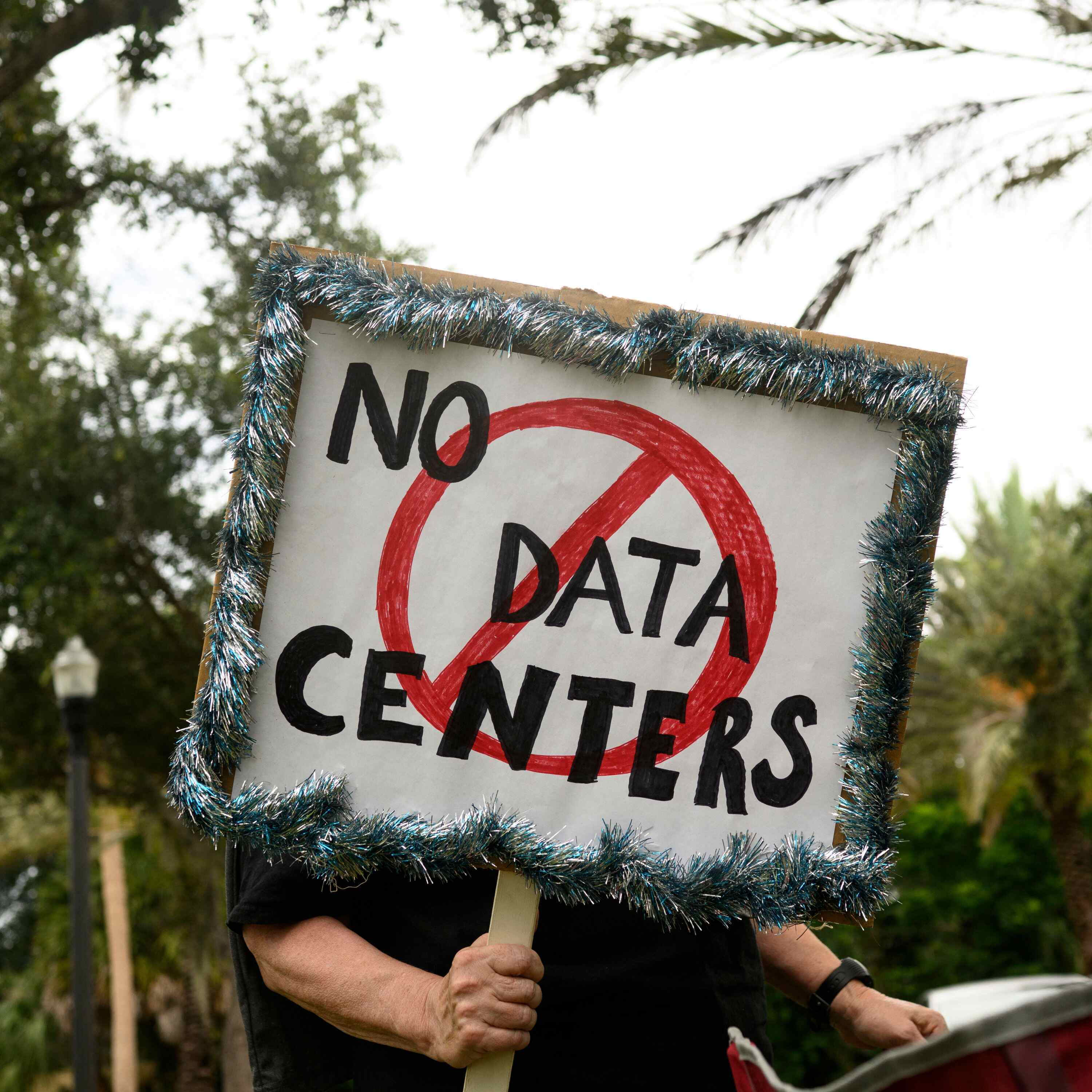
But AI data centers might be it. AI data centers. They're big and noisy and they guzzle energy. And in some cities around the country, they're putting a strain on local power grids. No wonder in a recent Pew survey, 50% of Americans said they think data centers will be mostly bad for home energy bills.
Yeah. And at a time when millions of Americans are seeing rising costs for utilities and a whole lot more, this is just one more thing for them to worry about. But today on the show, our guest argues that this isn't a reason to panic. When we come back, economist Julia Cartwright brings us a few examples from history to argue why the current boom in data centers doesn't mean we're doomed to high electricity prices. This message comes from WISE, the smart way to manage your money around the world.
With WISE, you can send, spend, and receive money in over 40 currencies at the mid-market rate. Learn more at WISE.com. The report's authors saw oil prices rising, fossil fuels becoming scarce, and a rapidly
growing population. In the end, they said consumers will pay the price for this growing scarcity. This conclusion seems so dire, Julia says that the media nicknamed this document, Dun Dun Dun, the Doomsday Report. But by the turn of the century, Julia says, the Doomsday predictions didn't pan out. What actually happens is that the real price of electricity did not increase by 150%.
It actually decreased more than 25% in that 25 years. This report, not only was it wrong in magnitude, it was wrong in the direction. So what happened? Well, basically, the report assumed that the energy scarcity of the time would continue. It underestimated how human behavior and technology would adjust to high energy prices, things like fuel-efficient cars, or new ways of oil and gas drilling that would eventually lead the U.S. to become the world's largest oil producer.
So this is, I think, a very exciting and a very important example to illustrate the power of American ingenuity. Julia wrote this in a recent op-ed for the Washington Post. This ingenuity she thinks is being undersold when it comes to the concerns about data centers and energy prices. Just to put a little bit of context here, I read one analysis that electricity usage from data centers will double or triple in the next few years. And half of Americans think data centers will result in higher home energy bills.
And the rationale here, classic supply and demand, right? Data centers have huge power requirements. There's limited energy. And that is going to put pressure on prices to rise. You say this fear rests on the same broken assumptions as the Doomsday Report.
What do you mean by that? What I mean by this is that higher prices indicate to entrepreneurs to go into a specific type of industry. If a price is rising, this signals to somebody with an entrepreneurial bone in their body, saying, hey, I can actually solve this problem. And this is what I mean by the price. I'm going to be made here.
Exactly. So I'll just give you a little example. Whale oil used to provide oil for lamps all around the nation. How many whales are there in the world? There is a limited number of whales, right?
Right. And so what happens, right? That price is going up. That price is going up. Boom.
A kerosene comes in and makes basically whale oil obsolete. You're saying somebody was like, oh, whale oil is too expensive. What else can we burn? How about kerosene? Exactly.
Exactly. And that is the beauty of the price mechanism. Of course, the federal government helped with that by giving kerosene a tax advantage compared to some other forms of fuel at the time. Either way, Julia says, look at another example, copper wire. Folks were very concerned that the price of copper was going to go so high and we weren't going to be able to build new homes and businesses because the price of copper was prohibitively high.
So what happens? Fiber object comes in and boom, we don't need as much copper anymore. And that is exactly what I anticipate happening in our data center moment. So Julia believes American ingenuity will help us solve our data center dilemma. And on that score, the threat of higher energy prices is already spurring innovation in both the private and public sectors.
So let's start with the private sector. Some of the biggest data centers are hundreds of acres. I mean, just absolutely massive, massive, massive buildings. And so these companies are realizing that they're putting strain on the grid. And so they're investing in bringing their own power.
To feed some of their needs for electricity, companies like anthropic, alphabet, meta, open AI and Amazon, they're investing into building new power plants or restarting old ones. They're even investing in building new nuclear power plants. Although we should say data center can be built in a matter of months, whereas a power plant takes years. True. And still, that's not the only way companies can bring down costs.
The price of computers going up. Therefore, we need to get savvy about how to innovate and bring this down, make things more efficient. And as a result, AI models are getting more efficient fast. Last year, a study from Stanford researchers estimated the cost of running an AI query. And they found that over a two year period, the cost dropped over 280 fold.
I mean, don't tell the stock market that we need all the costs we can get. It's not just the hyperscalers innovating to deal with rising electricity prices. Julia says local governments are too. There's also been a big clamoring to try to sort up local grid capacity and also local regulation to try to meet the moment of these data centers. That might mean upgrading local energy infrastructure or municipalities changing the way they deal with data centers.
For example, it's long been common for local governments to offer subsidies and tax breaks to companies building these data centers. These subsidies can cost states hundreds of millions of dollars a year in lost revenue. But with the political climate turning against data centers, that's starting to change. Taxpayers are less willing to subsidize these projects. And Julia thinks that's a good thing.
If you're not subsidizing them, you're making them pay their own way. That's even more of an incentive for them to figure out an efficient way to do what they're trying to do. So for all these reasons, Julia says the data center boom may cause energy prices to increase in some places in the short run. But in the long run? I have full confidence in the American entrepreneur to meet this moment.
Obviously, we love economists on this show. But I think you could accuse a lot of economists of having sort of like terminally long run thinking where they're like, well, the long run, everything works out. But in the short run, there may be a lot of pain for a lot of people. Yep. What do you say to that?
Well, I say get involved with your local government and remind them that your rights and property are just as important as these flashy new data centers and big companies. Don't panic. Get involved. Exactly. Well, easier said than done.
Although one thing that's not scarce right now is anger over data centers in states like Texas, Virginia, Ohio, Georgia, and a bunch of others, the backlash against data centers has resulted in pauses on things like new construction and subsidies or implemented new environmental rules. We just need to come up with a new supply demand graph that has a line for anger. It's like the anger session. We've got a new one. Instead of vibes session, we've got anger session.
The AI anger curve. This episode is produced by Corey Bridges with Engineering by Jimmy Keeley. It was fact checked by Sierra Juarez. Katie Kennedy is our editor in the indicators production of NPR. American journalist Austin Tice vanished in Syria over a decade ago.
For years, we've been searching for him. And now we finally have some answers. This is the person that Austin was in. Oh my God. We found Austin's file.
Listen to where is Austin Tice from NPR's Embedded and BBC Radio 4 on the NPR app or wherever you get your podcasts. This election season, let the NPR Politics podcast save your time and your sanity. We'll help you understand key races, which polls you can safely ignore, and what might happen if power shifts in Congress. Our short daily episodes come out every afternoon so you can spend less time scrolling through each chaotic news cycle. Make NPR Politics your hub for midterm election coverage.
Follow our podcast on the NPR app or wherever you get your podcasts.