
EPISODE · Mar 3, 2026 · 33 MIN
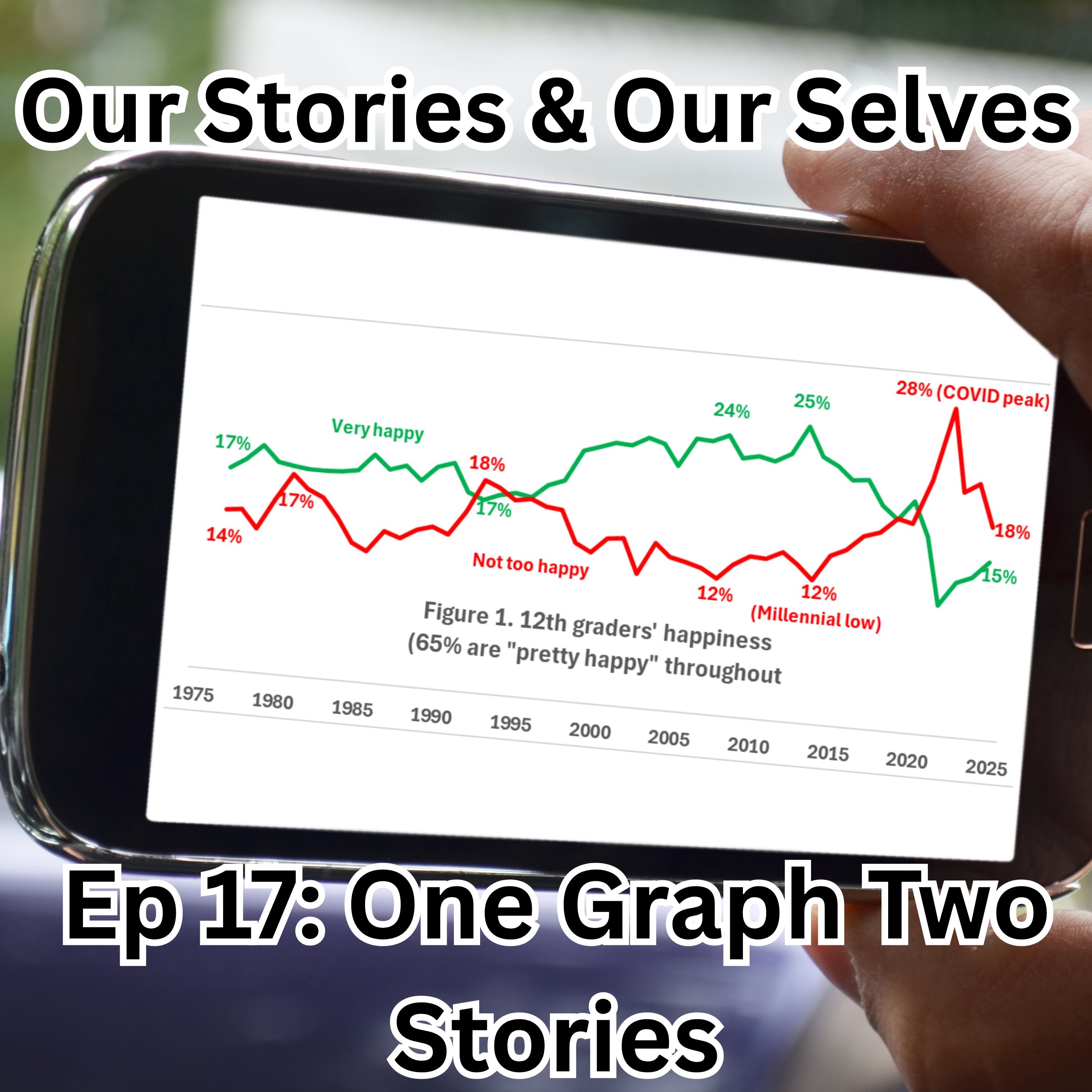
One Graph Two Stories: how statistics can be misused to tell stories, and what the numbers actually tell us about young peoples mental health
from Our Stories and Our Selves: Why the narratives we tell shape the way we think about the world
Statistics can be used, and abused to tell all sorts of stories. This episode I dig into some of the ways that statistics can be misrepresented and how the same graph can be used to tell different stories, depending on how someone looks at it. This is especially the case when it comes to young people, mental health and social media use.Source list available at https://www.ourstoriesandourselves.com/Get in touch on [email protected] or @ourstories.bsky.socialMusic from https://pixabay.com/users/good_b_music-22836301/Support the show by buying a book from: https://uk.bookshop.org/shop/ourstoriesandourselvesOr back the patreon patreon.com/OurStoriesandOurSelvesCover image created from https://pixabay.com/users/creapark-6555204 and https://mikemales.substack.com/p/todays-teenage-mental-health-crisisThe article and graph which prompted me to write this episode:Males, M. (2025, November 25). Today’s “teenage mental health crisis” and social media panic are founded in nostalgic myths [Substack newsletter]. Mike’s Substack. https://mikemales.substack.com/p/todays-teenage-mental-health-crisis
Embed this episode
Ready to play
One Graph Two Stories: how statistics can be misused to tell stories, and what the numbers actually tell us about young peoples mental health
No transcript for this episode yet
Similar Episodes
No similar episodes found.
Similar Podcasts
No similar podcasts found.