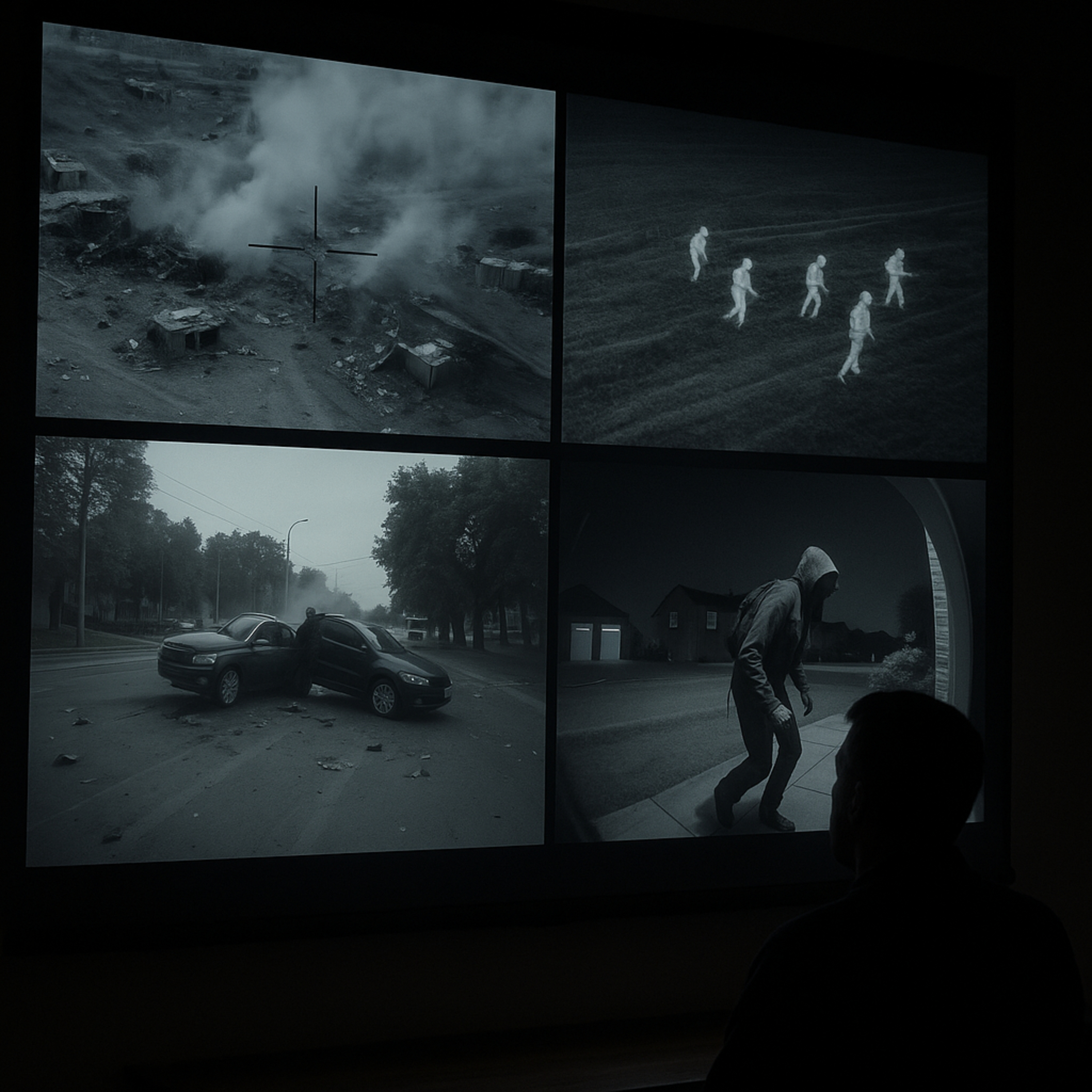
OSINT as OSENT episode artwork

EPISODE · Aug 2, 2025 · 33 MIN

OSINT as OSENT

from The Chris Abraham Show · host Chris Abraham

When Open Intelligence Becomes EntertainmentThere was a time when intelligence was secret, locked away in dossiers and government vaults. Today, the cameras never stop. Data streams from satellites, drones, traffic cams, and smartphones. Open Source Intelligence—OSINT—once meant careful analysis of public data. Now it’s something else. Intelligence has turned into entertainment. OSINT has become OSENT.Ukraine and Gaza have become live-streamed conflicts. No need for classified reports—just open Twitter, Telegram, TikTok. Drone footage shows tanks erupting. Satellite images reveal troop movements. Civilians post bombed streets. Algorithms boost the shocking, not the true. War looks like a video game. Explosions loop. The audience cheers or scrolls for the next clip.Gaza follows the same script, but with sharper emotions. Images—crying children, collapsing buildings—arrive packaged to provoke outrage or sympathy. Israel curates footage to defend itself; Hamas curates footage to condemn. NGOs, aid workers, journalists—they’re part of the drama. Suffering is real, but it’s edited, filtered, and fed as content.OSINT was once a tool for accountability. Now it’s a genre. After shootings, Reddit sleuths hunt for clues, often ruining lives. True crime podcasts turn open data into serialized dramas. YouTube analysts dissect satellite images for millions. The thrill isn’t in facts—it’s in the chase.This shift is clear in domestic policing. Body and dash cam footage, often public, fuels an entire content economy. Cop pull-overs, high-speed chases, and arrests rack up millions of views. Audiences watch for adrenaline, not justice. Cops did this decades ago, but now the feed is endless and raw.Crash cams feed the same hunger. Russian dash cams pioneered it—every accident online, every near miss a viral moment. Road rage, four-way stop failures, cars flipping end-over-end—it’s bingeable. Crashes, like explosions, need no context. They just need to play.Before TikTok, there was WorldStarHipHop. WorldStar made fights, street chaos, and viral humiliation daily consumption. Violence became shareable; suffering became a spectator sport.Now, Ring cameras bring that ethos to suburbia. Every porch is a set, every delivery a scene. Porch pirates get tackled, Amazon drivers toss packages, neighbors scream. Millions watch Ring compilations. Security becomes entertainment.The difference with OSENT is participation. The audience doesn’t just watch; they investigate. They geolocate strikes, identify suspects, connect dots. Sometimes they expose truth. Sometimes they ruin lives. Gamified investigation is addictive. Solving online feels like detective work—until the wrong person goes viral.Platforms love OSENT. YouTube monetizes chases. TikTok pushes Ring footage. Twitter feeds on war clips. Telegram channels collect donations. OSINT may help governments, but OSENT prints cash. And when spectacle is monetized, truth bends. Context disappears. Footage is edited for impact, not accuracy.This is the problem with OSENT: the show never ends. Intelligence used to conclude. OSENT loops. There’s always another clip, another explosion, another chase. Wars stream. Crimes trend. Investigations play live.OSINT was meant to reveal truth. OSENT reveals feeling. Gaza bleeds, Ukraine burns, and the world watches—scrolling, sharing, consuming. The suffering is real. The feed is endless.Open-source intelligence has become open-source entertainment.The cameras never stop, the curtain never falls, and the show goes on.

When Open Intelligence Becomes EntertainmentThere was a time when intelligence was secret, locked away in dossiers and government vaults. Today, the cameras never stop. Data streams from satellites, drones, traffic cams, and smartphones. Open Source Intelligence—OSINT—once meant careful analysis of public data. Now it’s something else. Intelligence has turned into entertainment. OSINT has become OSENT.Ukraine and Gaza have become live-streamed conflicts. No need for classified reports—just open Twitter, Telegram, TikTok. Drone footage shows tanks erupting. Satellite images reveal troop movements. Civilians post bombed streets. Algorithms boost the shocking, not the true. War looks like a video game. Explosions loop. The audience cheers or scrolls for the next clip.Gaza follows the same script, but with sharper emotions. Images—crying children, collapsing buildings—arrive packaged to provoke outrage or sympathy. Israel curates footage to defend itself; Hamas curates footage to condemn. NGOs, aid workers, journalists—they’re part of the drama. Suffering is real, but it’s edited, filtered, and fed as content.OSINT was once a tool for accountability. Now it’s a genre. After shootings, Reddit sleuths hunt for clues, often ruining lives. True crime podcasts turn open data into serialized dramas. YouTube analysts dissect satellite images for millions. The thrill isn’t in facts—it’s in the chase.This shift is clear in domestic policing. Body and dash cam footage, often public, fuels an entire content economy. Cop pull-overs, high-speed chases, and arrests rack up millions of views. Audiences watch for adrenaline, not justice. Cops did this decades ago, but now the feed is endless and raw.Crash cams feed the same hunger. Russian dash cams pioneered it—every accident online, every near miss a viral moment. Road rage, four-way stop failures, cars flipping end-over-end—it’s bingeable. Crashes, like explosions, need no context. They just need to play.Before TikTok, there was WorldStarHipHop. WorldStar made fights, street chaos, and viral humiliation daily consumption. Violence became shareable; suffering became a spectator sport.Now, Ring cameras bring that ethos to suburbia. Every porch is a set, every delivery a scene. Porch pirates get tackled, Amazon drivers toss packages, neighbors scream. Millions watch Ring compilations. Security becomes entertainment.The difference with OSENT is participation. The audience doesn’t just watch; they investigate. They geolocate strikes, identify suspects, connect dots. Sometimes they expose truth. Sometimes they ruin lives. Gamified investigation is addictive. Solving online feels like detective work—until the wrong person goes viral.Platforms love OSENT. YouTube monetizes chases. TikTok pushes Ring footage. Twitter feeds on war clips. Telegram channels collect donations. OSINT may help governments, but OSENT prints cash. And when spectacle is monetized, truth bends. Context disappears. Footage is edited for impact, not accuracy.This is the problem with OSENT: the show never ends. Intelligence used to conclude. OSENT loops. There’s always another clip, another explosion, another chase. Wars stream. Crimes trend. Investigations play live.OSINT was meant to reveal truth. OSENT reveals feeling. Gaza bleeds, Ukraine burns, and the world watches—scrolling, sharing, consuming. The suffering is real. The feed is endless.Open-source intelligence has become open-source entertainment.The cameras never stop, the curtain never falls, and the show goes on.

NOW PLAYING

OSINT as OSENT

0:00 33:38

No transcript for this episode yet

We transcribe on demand. Request one and we'll notify you when it's ready — usually under 10 minutes.

Frequently Asked Questions

How long is this episode of The Chris Abraham Show?

This episode is 33 minutes long.

When was this The Chris Abraham Show episode published?

This episode was published on August 2, 2025.

What is this episode about?

When Open Intelligence Becomes EntertainmentThere was a time when intelligence was secret, locked away in dossiers and government vaults. Today, the cameras never stop. Data streams from satellites, drones, traffic cams, and smartphones. Open Source...

Can I download this The Chris Abraham Show episode?

Yes, you can download this episode by clicking the download button on the episode player, or subscribe to the podcast in your preferred podcast app for automatic downloads.
URL copied to clipboard!