Our Universal Hierarchy
from Gnostic Reformation, Clear and Simple Hosted by Cyd Ropp
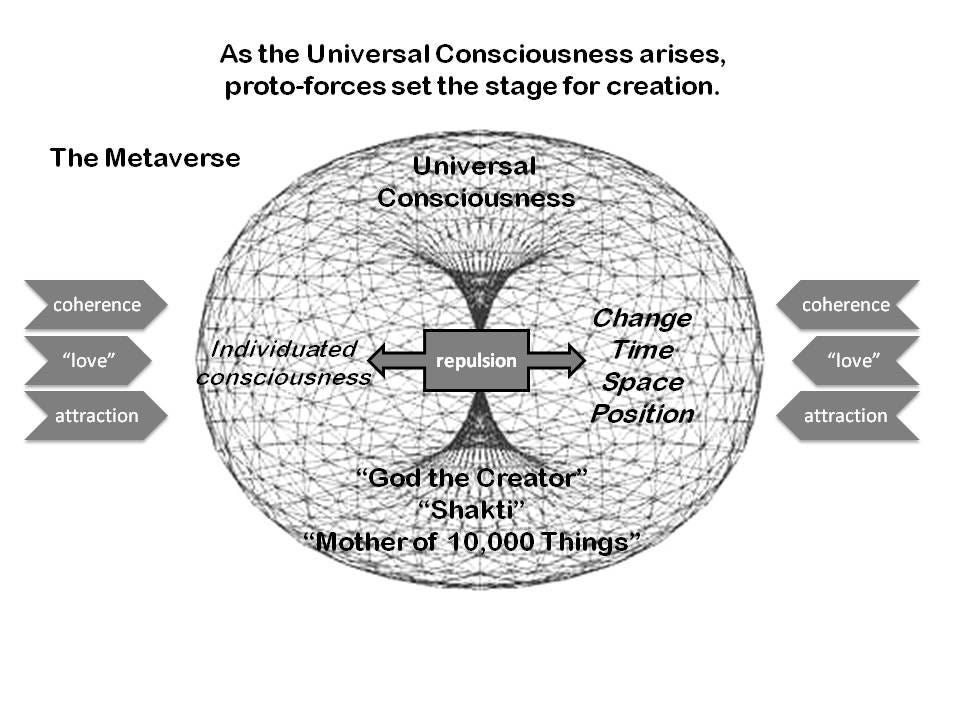
This episode begins and ends with samples from the audio version of A Simple Explanation of the Gnostic Gospel narrated by Miguel Conner. I've been listening to the recording of Miguel Conner reading A Simple Explanation of the Gnostic Gospel, and it's beautiful. It is thrilling. You're absolutely going to want a copy of this because you can listen to it while you're doing other things. I've been monitoring it, listening for audio errors, and doing all of my household tasks and ironing and washing dishes and whatnot while I'm listening to A Simple Explanation of the Gnostic Gospel. It's really neat. Here's a sample. Naturally, if you only read the transcript here and don’t listen to the podcast audio, you’re not going to hear what I’m talking about. So, click open your audio player or go to The Universal Hierarchy pt. 2 – Gnostic Insights to hear it. Chapter 2, The Emanation of the Son and the All. The purpose of this book is to help us all remember the Gnosis we were born with, the knowledge of where we come from, and the nature of the originating consciousness that existed before us. Gnosis also involves understanding our personal relationship to that originating consciousness. Chapter 1 began by sharing information about the Father, which is the name given to the originating consciousness. Imagine that this Father then gives birth to an emanation of itself. In the Simple Explanation philosophy, we call this emanation a fractal. We'll look at fractals later in the book because they play a big part in creation. In the religious texts, they call this emanation the Sun. Now we have a Father and a Son. In the silence of the Absolute, the Father brings forth the first and only Son. By knowing Himself in Himself, the Father bore Him without generation, so that He exists by the Father having Him as a thought. That is, His thought about Himself, His sensation of Himself, and of His eternal being. The Son is not the generalized, diffuse, no-thought consciousness of the Father, but more like a bucket dipped into the ocean, with the Father being the ocean. The Son is the essence of the Father now contained within the bucket. The Son is exactly the same consciousness as the Father, now realized as a particularity. The Son reflects the Father's boundless greatness and love. Boundless because the Father's greatness continues to flow unimpeded through the Son. The Father brought Him forth while He remained united with the One from whom He had gone forth, receiving glory together. The Son possesses every trait of the Father, for the Son is a complete encapsulation of the Father in which it dwells. Every trait of the Father is now expressed as a singularity, and that singularity is called the Son. We will also be looking at singularities, monads, and points of view in more depth later in the book. And yet, although it was a singular manifestation of the Father, the moment the Son was formed, it was no longer alone. For not only the Son, but what is called the All, and all the totalities arose at once. The All immediately appeared as aspects of the Son, because the Son could not help itself from bringing others into existence, even as it was brought into existence by the Father. The Son embodies the Father's creativity. The Father knows itself and creates the Son, and the Son knows itself as the body of the All. The Tripartite Tractate says, “He was given them as delight and nourishment, joy and abundant illumination. And this is His compassion, the knowledge He provides, and His union with them. And this is He who is called, and who is the Son. He is the sum of the All, and they have understood who He is, and He is clothed.” The word clothed means the Son wears the All like a garment the same way our Self wears our body. In the Tripartite Tractate, the All is known as the preexistent church. This is not the same as your church down on the street corner with people singing hymns on Sunday, but rather this is called the true preexistent church. The Tripartite Tractate says, “For not only the Son, but also the church exists from the beginning. His offspring, the ones who are, are without number and limit, and at the same time indivisible.” This indicates that the Son and the church arose simultaneously. This makes sense when we consider the All is the body of the Son. They are infinite in scope and indivisible because they fully reflect the Father's illimitable scope. In last week’s episode, I began sharing an article I wrote in 2019, when I first began interpreting gnosticism through the lens of my theory of everything called “A Simple Explanation of Absolutely Everything.” We’re picking up where I left off in that episode, so if you have not listened to it or read it yet, you may wish to begin there at last week’s episode. We’re talking about the fall of consciousness away from the purity of the ethereal realm as represented by our One Self, and spreading out into the myriad units of consciousness down here in the material universe. According to Gnostic texts, our universe was created when one of the Aeons deviated from its place in the Fullness of God and headed out on its own without consent. Most books of the Nag Hammadi identify this Aeon as "Sophia," while others identify it as the Aeon called "Logos." My own interpretation of the Gnostic gospel, presented in The Gnostic Gospel Illuminated andA Simple Explanation of the Gnostic Gospel identifies this Aeon with Logos. By the way, "Logos" in Greek means "the Word" or knowledge. "Sophia" in Greek means "wisdom," so they are obviously related terms, possibly referring to the same Aeon. The Gnostic gospels are religious books, and their rendition of these events carries implicit religious moral judgments. The Aeon who left to strike out on its own is said to have "Fallen," which is typically considered a bad thing. This "Fall" is the original Fall referenced in the Bible, not the Fall of Adam and Eve in the Garden, although we may consider the Garden as another word for the Paradise dreamt by the Fullness, and a reference to the same Fall as that of the Aeon. In either event, Adam and Eve’s Fall is a fractal of the same archetypal concept. In my view, the Fall represents the rise of the Ego away from true Self, as this archetypal Aeon acted on its own presumptuous thought and motives, apart from the will of the Father and the Fullness. Here is where we catch back up with the Simple Explanation cosmogony. The Simple Explanation characterizes the Fall as simply the Metaverse having a Thought: Then consciousness had a thought. This multidimensional Metaverse still lacked space and time but it now quivered with limitless mathematical potential unfolding into countless dimensions. In a twinkling, our entire universe was imagined in the fullness of its complexity, from the tiniest quanta through the greatest astral body; every animal, vegetable, and mineral; every element. Every thing and every function. Once the Metaverse had a particular thought, thought became an object in the great sea of no-thought... On this day that time began, consciousness wrapped itself around our universe, forming a border between us and infinity. Mind took on a shape. In the Simple Explanation, this shape is a torus-shaped container composed of conscious thought and its concept of this universe, which I call the Universal Unit of Consciousness (Universal UC). In Gnostic terms, this universal "border" was thrown around the Fallen Aeon to limit its influence and hold it away from the Fullness until such time as the Fallen can be redeemed and brought back into the Pleroma. The Universal Unit of Consciousness "sits" within the Metaverse and remains in communication with it, although in the case of the Demiurge it is not aware of it. As I said, Gnostic texts differ in their identification of the Fallen Aeon as either Sophia or Logos, although they seem to agree the Fallen produced this universe and its ruler. Once the Aeon fell, its abilities and plans spread t… This is a public episode. If you'd like to discuss this with other subscribers or get access to bonus episodes, visit cydropp.substack.com/subscribe
Embed this episode
No transcript yet.