
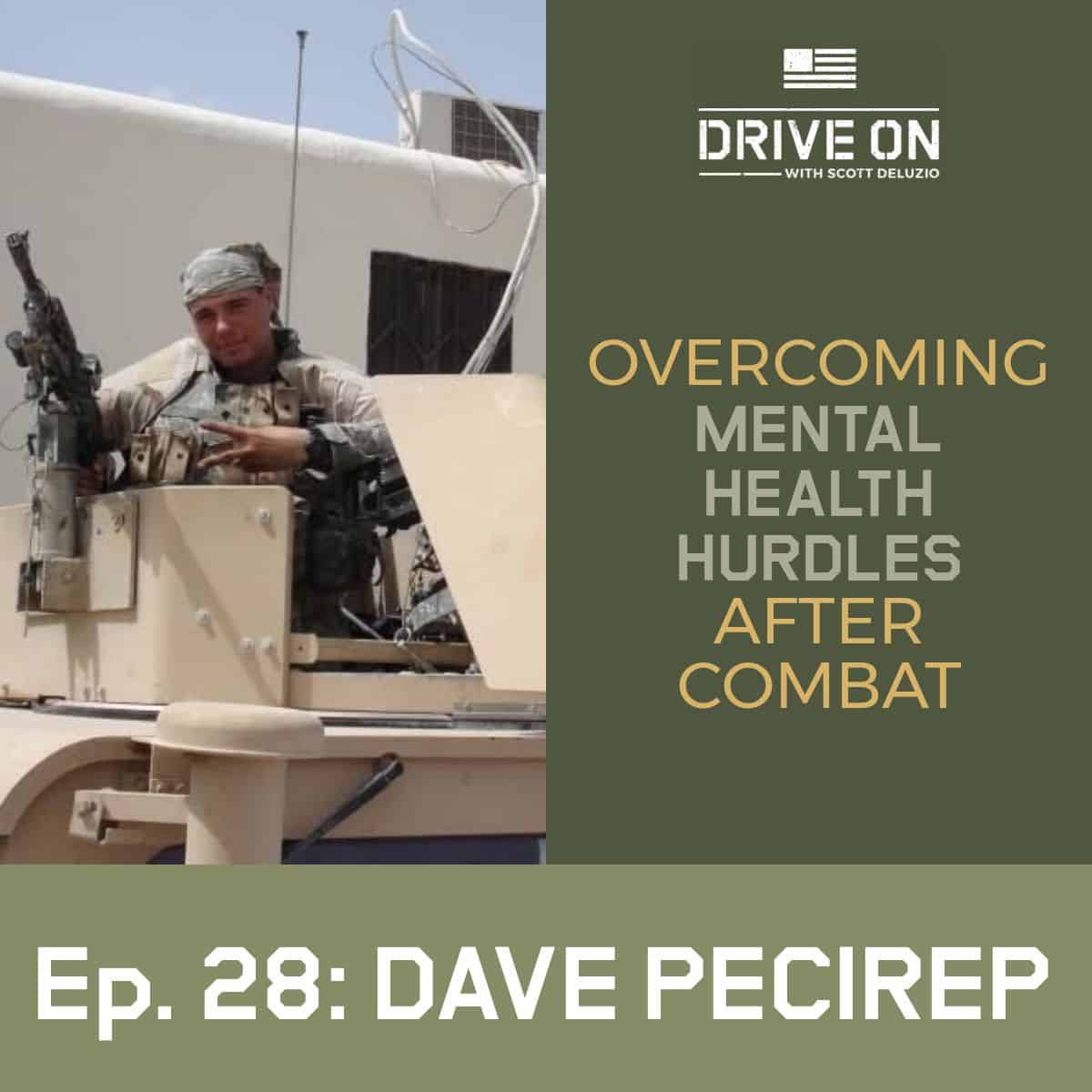
EPISODE · Dec 10, 2019 · 36 MIN
Overcoming Mental Health Hurdles After Combat
from Drive On: Helping Veterans Navigate PTSD & Life After Military Service · host Scott DeLuzio
Dave Pecirep was a combat veteran who struggled with his own mental health after returning home from Afghanistan. He spent some time getting his own mental health in order before eventually returning to college to get his Master’s in psychotherapy. He’s since researched PTSD and traumatic brain injuries (TBI) with the Department of Veterans Affairs. He is now a psychotherapist in a private practice in the central Connecticut area treating adults and children who suffer with depression, anxiety, and bipolar. Links & Resources Cornerstone Counseling PRIME Transcript Scott DeLuzio: 00:00 Hey everybody, this is the Drive On Podcast where we talk about issues affecting veterans after they get out of the military. I’m your host, Scott DeLuzio, and now let’s get on with the show. Scott DeLuzio: Hey everyone, thanks for tuning in to the Drive On Podcast. Before we get started, I wanted to take a minute to ask a quick favor from the listeners. So, the point of this show is to help veterans through sharing stories like the one we’re about to hear but it can’t really help if no one hears the story. So, if you wouldn’t mind, hit pause for a second and head on over to DriveOnPodcast.com/subscribe where you can find links to subscribe to and review the show on all of your favorite podcasting apps. And if you wouldn’t mind taking a second to share the podcasts on social media or email or whatever or even directly to a friend who you think might benefit by listening to the podcast, I’d really appreciate it. Today my guest is Dave Pecirep. Dave deployed to Afghanistan in 2006 and was wounded by an IED. After the deployment, he graduated college and went on to research PTSD and traumatic brain injuries with the Department of Veteran Affairs. Dave, welcome to the show. Why don’t you tell us a little bit about yourself, a little bit about your background and everything like that. Dave Pecirep: 01:17 Thanks for having me first off. I guess to put this within the confines of our conversation, I think we should probably start where I was originally wounded and then sort of work our way from there. So, it was 2006 and a little back story to that, I was in my senior year of college at University and the apex of both a social experience and the academic experience and the best of the four years. I had been giving a great deal of thought too things. I’d already been on one deployment and it wasn’t what I had hoped it would be. I’d given a lot of thought, a lot of thought, walking around thinking, my God, I can’t believe I really haven’t gone yet. Dave Pecirep: 02:08 And then people would find out you were in the service and they’d say, “Where have you been?” And my heart would just sink. So, finally towards the end of my senior year, stick it out through the senior year, graduate or my unit was going to get deployed. And if I went and signed a waiver, it was a done deal. You’re going to Afghanistan. So, I didn’t consult my parents. I knew that there’d be a big “no” from them. I think everybody’s parents probably say a hard, no. I signed, came home, told them and that was that. Six months later or so, we’re in Afghanistan, I was infantry 11 Bravo, with the 110 2nd light infantry. And we went in with a 10th mountain and then we actually ended up getting attached to special forces group at this forward operation base in the Province Dave Pecirep: 02:58 Afghanistan, right near a little town called . So, I’ve been there for some time. We went on a mission; I was in the turret of the third vehicle leaving this town and we got hit and I got hit. So, the whole thing was what you would imagine, pretty terrible. The people that were with the guys that were like the mid-range at NCO...
Embed this episode
NOW PLAYING
Overcoming Mental Health Hurdles After Combat
No transcript for this episode yet
Similar Episodes
Feb 11, 2026 ·45m
Oct 3, 2025 ·19m
Similar Podcasts
No similar podcasts found.