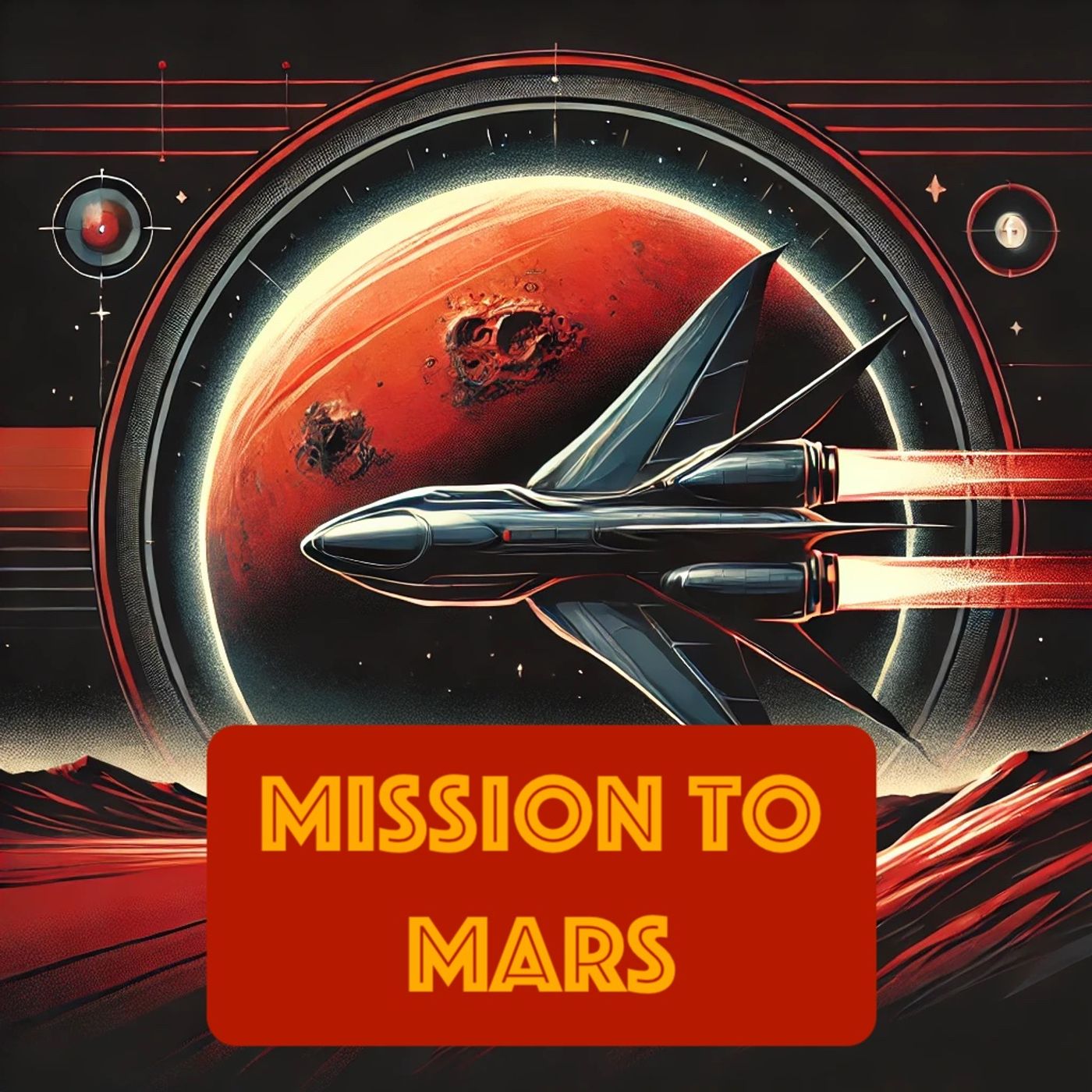
"Overcoming the Formidable Challenges of a Manned Mission to Mars" episode artwork

EPISODE · Sep 15, 2024 · 3 MIN

"Overcoming the Formidable Challenges of a Manned Mission to Mars"

from Mission to Mars · host Inception Point AI

Mars has long captured the human imagination as a possible destination for exploration and even colonization. Advancements in technology and ambitious plans from organizations like NASA and private entities such as SpaceX have fueled dreams of setting foot on the Red Planet. However, despite considerable progress, transforming the dream of manned Mars missions into reality remains a formidable challenge. The journey to Mars is fraught with complexities and obstacles that are gradually being addressed through technological innovation and international cooperation. One of the most critical issues is the distance: Mars is about 140 million miles from Earth at their closest approach, which occurs approximately every 26 months. This vast distance necessitates prolonged space travel, making it imperative to develop spacecraft that can support life for several months. Mars' hostile environment is another significant hurdle. With temperatures dropping as low as minus 125 degrees Fahrenheit and an atmosphere comprised mainly of carbon dioxide, ensuring human survival on the Martian surface involves intricate life support systems and appropriate habitat constructions. Furthermore, Martian dust storms, which can envelop the planet and last for months, pose additional risks for both astronauts and equipment. Radiation exposure is another serious concern. Without Earth's protective magnetic field and atmosphere, astronauts are at a higher risk from cosmic rays and solar radiation. Prolonged exposure can increase the risk of cancer and other health problems. Developing shielding techniques or anti-radiation medications is critical for the safety of the crew on such long-duration missions. The gravity on Mars is another aspect to consider, as it is only about 38% of Earth's gravity. This could lead to health issues such as muscle atrophy and bone density loss. Preparing astronauts to live in reduced gravity environments will require rigorous physical training and possibly pharmacological interventions. Economically, the cost of sending humans to Mars is enormous and continues to be a significant barrier. Developing the necessary technology and infrastructure for a Mars mission demands substantial financial investment. Collaborative efforts between governments and private sectors can help fund these ambitious projects. Despite these challenges, progress continues. Missions like NASA’s Mars Rover explorations and SpaceX's plans to build a Martian transport infrastructure show significant advancements in making a manned mission to Mars a possibility in the future. The global interest in Mars exploration highlights a compelling aspect of human nature: the unending quest for discovery and pushing the boundaries of human capabilities. Thus, while a manned mission to Mars may still be years away, the ongoing research, planning, and testing will inch humanity closer to turning this dream to reality. This content was created in partnership and with the help of Artificial Intelligence AI.

Mars has long captured the human imagination as a possible destination for exploration and even colonization. Advancements in technology and ambitious plans from organizations like NASA and private entities such as SpaceX have fueled dreams of setting foot on the Red Planet. However, despite considerable progress, transforming the dream of manned Mars missions into reality remains a formidable challenge. The journey to Mars is fraught with complexities and obstacles that are gradually being addressed through technological innovation and international cooperation. One of the most critical issues is the distance: Mars is about 140 million miles from Earth at their closest approach, which occurs approximately every 26 months. This vast distance necessitates prolonged space travel, making it imperative to develop spacecraft that can support life for several months. Mars' hostile environment is another significant hurdle. With temperatures dropping as low as minus 125 degrees Fahrenheit and an atmosphere comprised mainly of carbon dioxide, ensuring human survival on the Martian surface involves intricate life support systems and appropriate habitat constructions. Furthermore, Martian dust storms, which can envelop the planet and last for months, pose additional risks for both astronauts and equipment. Radiation exposure is another serious concern. Without Earth's protective magnetic field and atmosphere, astronauts are at a higher risk from cosmic rays and solar radiation. Prolonged exposure can increase the risk of cancer and other health problems. Developing shielding techniques or anti-radiation medications is critical for the safety of the crew on such long-duration missions. The gravity on Mars is another aspect to consider, as it is only about 38% of Earth's gravity. This could lead to health issues such as muscle atrophy and bone density loss. Preparing astronauts to live in reduced gravity environments will require rigorous physical training and possibly pharmacological interventions. Economically, the cost of sending humans to Mars is enormous and continues to be a significant barrier. Developing the necessary technology and infrastructure for a Mars mission demands substantial financial investment. Collaborative efforts between governments and private sectors can help fund these ambitious projects. Despite these challenges, progress continues. Missions like NASA’s Mars Rover explorations and SpaceX's plans to build a Martian transport infrastructure show significant advancements in making a manned mission to Mars a possibility in the future. The global interest in Mars exploration highlights a compelling aspect of human nature: the unending quest for discovery and pushing the boundaries of human capabilities. Thus, while a manned mission to Mars may still be years away, the ongoing research, planning, and testing will inch humanity closer to turning this dream to reality. This content was created in partnership and with the help of Artificial Intelligence AI.

NOW PLAYING

"Overcoming the Formidable Challenges of a Manned Mission to Mars"

0:00 3:05

No transcript for this episode yet

We transcribe on demand. Request one and we'll notify you when it's ready — usually under 10 minutes.

MG Show MG Show The MG Show, hosted by Jeffrey Pedersen and Shannon Townsend, is a leading alternative media platform dedicated to uncovering the truth behind today’s most pressing political issues. Launched in 2019, the show has grown exponentially, offering unfiltered insights, comprehensive research, and real-time analysis. With a commitment to independent journalism and factual integrity, the MG Show empowers its audience with knowledge and encourages active participation in the political discourse. Breaking News Show | eTurboNews Juergen Thomas Steinmetz News is relevant to the global travel and tourism industry, human rights and global issues.Breaking news when it happens and only from the source. Eat to Live Jenna Fuhrman, Dr. Fuhrman Our health is our most precious gift and smart nutrition can change your life. Each month, join Dr. Fuhrman and his daughter, Jenna Fuhrman as they discuss important topics in the world of nutrition. Eat to Live will change the way you eat and think about food. French Your Way Jessica: Native French teacher founder of French Your Way Boost your French listening skills and test your comprehension with this one of a kind series of podcasts. Get the chance to listen to a real conversation between native speakers talking at normal speed AND customise your learning experience through carefully designed sets of questions (2 levels of difficulty) available for download at www.frenchvoicespodcast.com. All interviews also come with the transcript. French teacher Jessica interviews native speakers of French from around the world who share a bit of their life and passion. Where else would you meet in one same place a French yoga teacher based in Melbourne, a soap manufacturer from Provence, or a couple cycling around the world?

Frequently Asked Questions

How long is this episode of Mission to Mars?

This episode is 3 minutes long.

When was this Mission to Mars episode published?

This episode was published on September 15, 2024.

What is this episode about?

Mars has long captured the human imagination as a possible destination for exploration and even colonization. Advancements in technology and ambitious plans from organizations like NASA and private entities such as SpaceX have fueled dreams of...

Can I download this Mission to Mars episode?

Yes, you can download this episode by clicking the download button on the episode player, or subscribe to the podcast in your preferred podcast app for automatic downloads.
URL copied to clipboard!