
EPISODE · Jun 26, 2026 · 41 MIN
P***phelia & Pronatalism: How Whites Crashed Global Birth Rates By Banning ****
from Based Camp | Simone & Malcolm Collins · host Based Camp | Simone & Malcolm
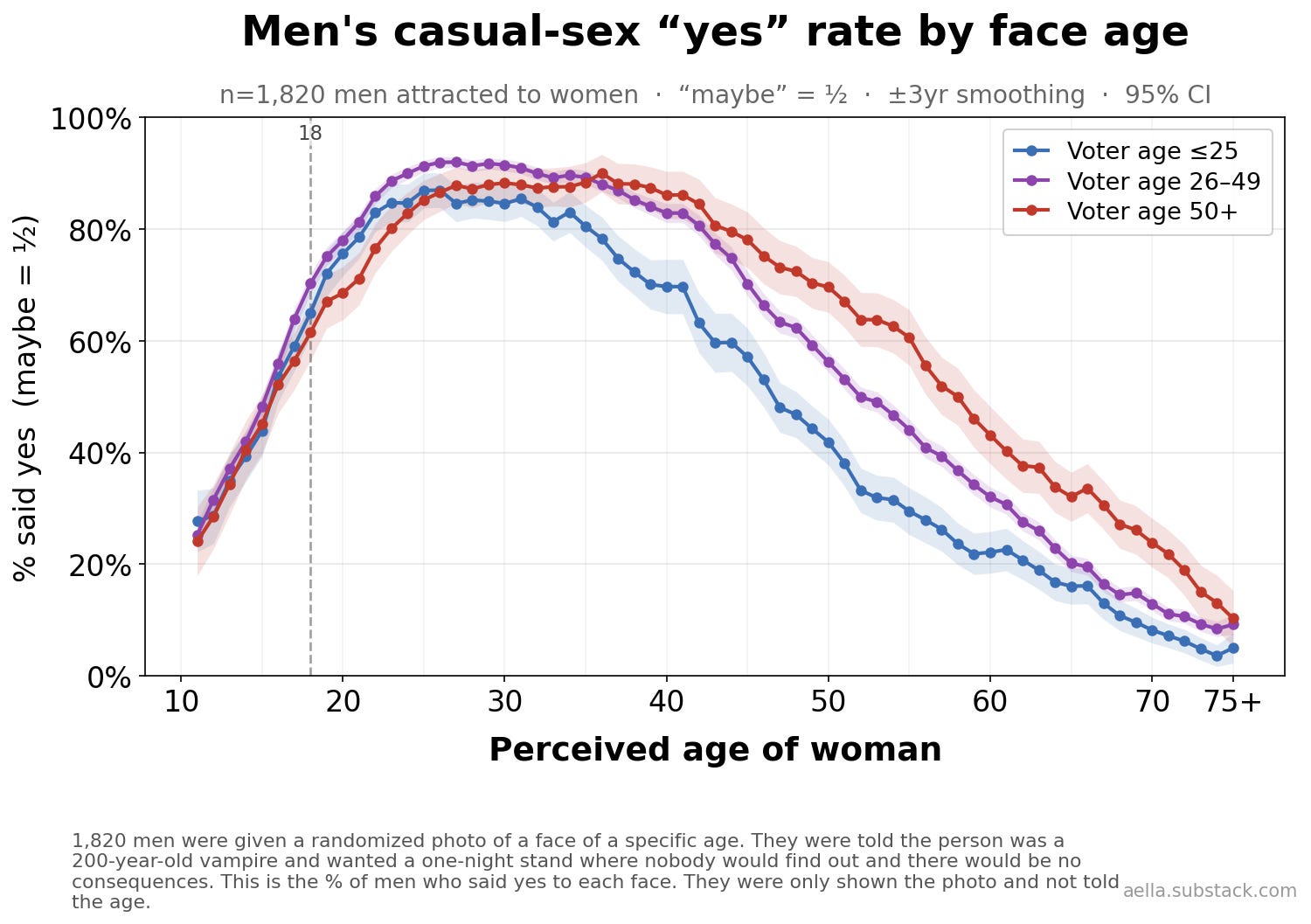
In this raw and data-packed episode of Based Camp, Simone and Malcolm Collins ask a provocative question: Are Europeans the only people on Earth historically into adult pairings?While most cultures around the world historically married in the early-to-mid teens, Europeans (especially Northern and Western) stood out by commonly delaying marriage until the mid-20s — even in the Middle Ages. The hosts explore whether this European norm, later exported globally through colonialism and cultural influence, may be contributing to today’s fertility crashes in East Asia, Latin America, India, and beyond.They dive into:* Aella’s “Hotness Curve” study and what percentage of men find different ages attractive* The e-girl phenomenon and why so many popular internet aesthetics look phenotypically 15* Genetic and regional differences in fertility windows and menopause age (Europeans go into menopause ~2–3 years later on average)* Historical first-marriage ages across Europe, China, India, Japan, Korea, Africa, and the Americas* Global ages of consent today and when different countries criminalized CSAM* Disney princess ages (Snow White was 14, Jasmine 15, Ariel 16…) and why normalizing teen marriage might be necessary for demographic survivalThis is a no-holds-barred, truth-seeking conversation about culture, biology, attraction, and whether some populations are simply not built for the modern delayed-marriage timeline.If you’re interested in pronatalism, human biodiversity, evolutionary psychology, or why fertility is collapsing everywhere except where European norms never fully took hold — this episode is for you.Show NotesAella’s FindingsAella also just released a substack post titled The Hotness Curve (how age changes a woman’s appeal).Using photos of women of various ages (some real, some AI generated), Aella asked various questions, including: “Casual Sex: A 200 year old vampire shows up in your window at night. She wants a one-night stand. There are no consequences, and nobody will know. Do you say yes?”Here are the answers:Aella found that “Sexual interest climbs very fast, and generally hits a cresendo around women who appeared to be ~24 years old (or 28yo for the older men).”“15% of men said yes they would have casual sex with a vampire in the body of an 11 year old. This rose to a third of men for the body of a 13 year old, and a half of men agreeing to the body of a 15 year old. By 18 we’re at roughly 70%, and by the time a 24 year old is hypothetically entering your window, ~90% of them were down.”Just a small aside: “One interesting thing to note is that the dropoff in fuckability for women - what we might call The Wall - happens for women in their mid 30’s just as predicted, but only in the eyes of men under the age of 25. For older men, we find the ‘wall’ occurs in a woman’s early 40’s. Older men assigned equivalent ‘yes I’d have sex with her’ ratings to an 18 year old as they did to a woman in her early 50’s!”Also: You should play Aella’s ageguesser game.(Simone got better than 67% of players… not very good.)The e-girl phenomenonFrom our friend Bruno: “Why does a certain “e-girl” or “internet girl” face seem to resonate so consistently with online audiences across different eras? Highly recognizable women in online subcultures seem to converge around a similar look; why does that look perform so well with netizens?Early internet figures like Boxxy, later YouTube personalities like Shoe0nHead, cosplay and streamer-adjacent figures, and then more recent cases like Belle Delphine and the current wave of TikTok, cosplay, and Twitter/X e-girl aesthetics. The more interesting question is why a particular facial and stylistic grammar keeps recurring: large expressive eyes, youthful proportions, soft or rounded features, dark hair or bangs, a slightly anime-coded presentation, and a mix of cuteness, irony, awkwardness, and sexual ambiguity.”Malcolm’s first answer: BECAUSE THEY ALL LOOK LIKE LITTLE GIRLS AND PEOPLE ARE PEDOS.The sick sad truth: Most of the world is full of pedosBasically, Europeans are the only non pedos.Maybe the concept of pedos wouldn’t exist if it weren’t for EuropeansMaybe a contributing factor to falling birth rates involves modern norms around late marriage among groups that, for hundreds of years, married much younger.Let’s explore this!Variation in Fertility WindowsA large meta‑analysis across 24 countries estimated the global mean age at menopause at 48.8 years, and by continent:* Europe: about 50.5 years* Asia (overall): about 48.8 years* Africa: about 48.4 years* Latin America: about 47.2 years* Middle East: about 47.4 yearsWHO similarly notes that most women worldwide experience menopause between ages 45 and 55.Variation in Average Ages of MarriageAverage female age at first marriage, approximate, pre‑1800* England (pre‑1800) - ~22–26 - Many parishes ~25–26; Western Europe relatively late.* Western/Northern Europe - ~20–25 - Late marriage pattern; some locales up to 27.* China - ~14–18 - Legal norms ~14–15; practice mid‑teens.* India - ~12–16 - Strong early arranged marriage; big regional variation.* Japan - ~17–19 - Village data show late‑teen marriage.* Korea (Joseon) - ~16–18 - Upper‑status women mid‑teens; similar for many commoners.* Aztec/Nahua - ~14–17 - Girls early‑mid teens; men ~18–22.* Maya - ~16–19 - Most married by ~20; post‑15 coming‑of‑age.* Sub‑Saharan Africa (major) - ~15–18 - Many societies mid‑late teens for women.Sources:* https://journals.sagepub.com/doi/10.1177/036319907800300103* https://www.sciencedirect.com/science/article/abs/pii/S1081602X08000894* https://voxdev.org/topic/institutions-political-economy/economic-shocks-and-age-marriage-sub-saharan-africa-and-india* https://historymyths.wordpress.com/2014/07/06/myth-136-women-married-very-young-in-the-olden-days/* https://keatschinese.com/china-culture-resources/general-standards-of-ancient-chinese-marriage-age/* https://childmarriagedata.org/country-profiles/india/* https://www.aztec-history.com/aztec-society-family.html* https://mayas.mrdonn.org/marriage.htmlAges of ConsentIn the most populous countries:* Pakistan - 18 (requires marriage)* India - 18* Indonesia - 18* Nigeria - 18* Japan - 18* Ethiopia - 18* Egypt - 18* DR Congo - 18* Turkey - 18* United States - 16-18 Varies by state* Philippines - 16 (general), 14 for close‑in‑age minors* Iran - 15–18 with marriage required* Thailand - 15–18* France - 15 (16 in FRA report)* Germany - 14–16 (practical 14–18)* Bangladesh - 14–16* Italy - 14–16* Mexico - 12-18 Varies by state* Russia - 16* Vietnam - 16* United Kingdom - 16* South Africa - 16* South Korea - 16* China - 14* Brazil - 14More detail on Pakistan: Minimum ages for marriage* National framework (historical): The Child Marriage Restraint Act 1929 originally set the minimum age at 18 for males and 16 for females.* Sindh province: Since 2013, Sindh’s own Child Marriage Restraint Act has set the minimum legal marriage age at 18 for both boys and girls.* Islamabad Capital Territory (ICT): The Islamabad Capital Territory Child Marriage Restraint Act 2025 now sets the minimum age at 18 for both sexes, with significant penalties for under‑18 marriages.* Balochistan: In November 2025, Balochistan raised the legal age to 18 for girls (and 18 for boys), banning child marriage in the province.* Punjab and Khyber Pakhtunkhwa (KP): Until very recently, these provinces still had 16 as the legal minimum for girls and 18 for boys, though Punjab has now moved to raise the age to 18; advocacy and legislation are ongoing to harmonize all provinces at 18.Despite recent legal reforms raising the minimum marriage age to 18 in several parts of Pakistan, child marriage remains a significant, ongoing problem, especially for girls from poor, rural, and religious‑minority communities.UNICEF and other analyses report that around 18% of women aged 20–24 in Pakistan were married before 18, which corresponds to roughly 20.5 million girls, and about 4% were married before 15* The Borgen Project reports: Child brides usually come from impoverished families who sell them to older men for a price as high as 2.5 million Pakistani rupees, which is more than $8,000.”Anti-Pedo LawsJapan has had laws against sexual exploitation of minors for decades, but it only criminalized possession of child pornography involving real children in 2014.They really had to ease into it:* 1999 – Japan bans the production and distribution of child pornography involving real minors, aligning partially with other OECD countries but still allowing simple possession.* June 2014 – The Diet passes a revision to the Child Pornography Law that makes possession of child pornography (photos and videos of real children under 18) a criminal offense, punishable by up to one year in prison or a fine.* The 2014 law explicitly excludes manga, anime, and computer‑generated imagery, so fictional depictions remain legal even if they portray minors in sexualized contexts, which is why international observers still criticize Japan as being comparatively permissive about some forms of sexualized images of minors.When various countries instituted CSAM laws* 1973: Germany* 1973–1980s – German Criminal Code provisions against pornography involving minors are introduced and strengthened, banning production and distribution.* 1990s–2000s – EU‑driven harmonization and national reforms explicitly criminalize possession of CSAM (including online images).* 1978: USA* 1978 – Child pornography first becomes illegal at the federal level via the Protection of Children Against Sexual Exploitation Act of 1977 (effective 1978), targeting production, sale, and transport.* 1980s–1990s – Additional federal statutes criminalize possession and receipt of CSAM, with later clarifications (e.g., PROTECT Act 2003) covering digital and some computer‑generated material.* 1978: UK* 1978 – Protection of Children Act 1978 criminalizes taking, making, distributing, showing, and possessing with intent to distribute “indecent photographs” of children, effectively a national child‑pornography ban.* Later acts expand offences and penalties; recent reforms (2020s) start to tackle AI‑optimized CSAM models.* 1980s: Australia* 1980s–1990s – Federal and state laws criminalize child pornography production and distribution.* By the late 1990s/early 2000s, possession of CSAM, including digital content, is clearly illegal nationwide.* 1983: Canada* 1983 – Criminal Code amendments explicitly criminalize child pornography (production and distribution).* Late 1980s/early 1990s – Possession of child pornography is expressly criminalized, including digital material.* 1990: Brazil* 1990 – Statute of the Child and Adolescent (ECA) bans child pornography (production/distribution).* 2008 – Law 11.829 criminalizes possession of child pornography, bringing Brazil into line with international CSAM standards.* 1996: Russia* 1996 – New Criminal Code introduces offences for producing and distributing pornographic materials involving minors.* 2000s – Later reforms explicitly criminalize possession and strengthen provisions for online CSAM.* 1997: China* 1997 – Revised Criminal Law criminalizes organizing, producing, duplicating, publishing, and disseminating pornographic material involving minors.* Subsequent regulations in the 2000s and 2010s reinforce bans on online CSAM and clarify penalties.* 2000: India* 2000 – Information Technology Act criminalizes publishing or transmitting material depicting children in sexually explicit acts online.* 2012–2013 – Amendments (e.g., Criminal Law (Amendment) Act 2013) strengthen bans on using children in pornographic material, expanding offences and penalties.* 2003: Nigeria* 2003 – Child Rights Act, plus later cybercrime legislation, introduce offences related to child sexual exploitation and online child pornography.* 2007: South Africa* 2007 – Criminal Law (Sexual Offences and Related Matters) Amendment Act criminalizes creation, distribution, and possession of child pornography, including electronic images.Episode Transcript[00:00:00] Simone Collins: Okay. Hello, Malcolm.[00:00:00] I’m excited to be with you today because today we’re gonna talk about how maybe Europeans are the only people who aren’t kind of into, if you know what I mean, really young people, and that possibly our colonizing, imposing of older ages of marriage onto all the other peoples of the world could be contributing to demographic collapse.[00:00:22] Because apparently we’re the weirdos in the room. We’re the, the, the outlier.[00:00:26] Malcolm Collins: Okay, I, I need to go over some stats. So this rabbit hole started with me being like, are Japan... ‘Cause if you look at Japanese not-safe-for-work art it is, has an unusually high rate of phenotypically young-looking women.[00:00:40] Simone Collins: Yeah.[00:00:40] Malcolm Collins: If, if you catch my drift. And I started to think, I was like, “Could there be a genetic reason for this?” Right? Like, when did Japanese people get married historically? When would have been their first sexual encounter historically? And as I went through that, I was like Oh, wait a second. Everyone but Europeans got married at these super young ages at a historic level.[00:01:04] And now this makes sense why you have these super young age marriages in Africa, in the Middle Easterners, right? Like we, we keep seeing this, oh, Aisha is six, nine, et cetera, right? Like, they, they... This would be weird for European. What’s, what may surprise you is that in Europe, even in the Middle Ages, it was very common for women to not get married until their mid-20s.[00:01:28] Simone Collins: And we’re gonna go into that. We’re gonna go into that ...[00:01:29] Malcolm Collins: which is very rare for any other culture. But hold on, it gets weirder. Before we go, ‘cause I, I wanna get all the, the fun stuff out of the way. It turns out that Europeans... Remember how I’ve always said that Northern Europeans have weirdly high fertility rates compared to every other group on Earth?[00:01:44] Well, Nor- Northern Europeans are also genetically unique among all of the ethnicities on Earth, and that we have significantly, like multiple years longer fertility windows. Euro-[00:01:56] Simone Collins: And we’re gonna go into that too ... pean women go into menopause- Yeah, which people should know about ...[00:01:59] Malcolm Collins: much later. People should know.[00:02:01] So when we started to tell other people around the world, “You can’t start being sexual, you know, with-” Yeah,[00:02:09] Simone Collins: like the appropriate time to start is in your 20s ...[00:02:12] Malcolm Collins: mid-20s. Yeah. We were actually sniping more than half of many of these groups’ reproductive windows. Mm-hmm. And now we’re seeing fertility rates crash around Latin America.[00:02:24] We’re seeing fertility rates crash in East Asia. We’re seeing them crash in India, and it could partially be in results of this. But go, go into the data.[00:02:31] Simone Collins: Yeah. Well, first, some little, here are some of the breadcrumbs that kind of got me to this episode that I think are really fun. Aella just released a Substack post called The Hotness Curve: How Age Changes a Woman’s Appeal, and she used photos of women at various ages.[00:02:46] Some were AI-generated, some were real, including real photos of her throughout her life and her friends. She asked questions like, “Casual sex. A 200-year-old vampire shows up in your window at night. She wants a one-night stand. There are no consequences and nobody will know. Do you say yes?” And then she says this paired with various photos of women, right?[00:03:07] So the resulting graph is a little concerning, I guess. You can see it here On WhatsApp.[00:03:17] What you’ll find and I’ll just read from Aella’s post here. Okay. Aella found that sexual interest climbs very fast and generally hits a crescendo around women who appear to be 24 years old, or 28 years old for older men.[00:03:31] But 15, and I’m quoting from her Substack article, “15% of men said yes, they would have casual sex with a vampire in the body of 11- an 11-year-old.” Sure. “This rose to a third of men for the body of a 13-year-old, and half of men agreeing to the body of a 15-year-old. By 18, we’re at roughly 70%, and at the time a 24-year-old is hypothetically entering your window, 90% of them were down.”[00:03:56] I, I was shocked.[00:03:57] Malcolm Collins: Wait, wait, wait, wait. Hold on. So the midpoint for men is 15? [00:04:00][00:04:00] Simone Collins: Yeah, basically. But I mean, I was just shocked that at the age of 11, 15% of men were like, “Yeah.”[00:04:06] Malcolm Collins: Well, this is actually really fascinating because if this is the actual midpoint of, you know, attractiveness for men-[00:04:14] Simone Collins: Yeah ...[00:04:15] Malcolm Collins: the, the way in society that we treat this, right?[00:04:19] Like, “Oh, you’re aroused by something that looks like that. You must be, like, a wildly deviant individual.”[00:04:27] Simone Collins: Yeah. “You must be a monster. You must need to be arrested,” et cetera. When[00:04:30] Malcolm Collins: literally 50% of men... 15 is astonishingly young. For, yeah, but for 11 is yeah,[00:04:37] Simone Collins: but yeah, 15 as well,[00:04:38] Malcolm Collins: yes. Yeah, but the, the, I’m going, I’m not going with the tw- the 25% of men. I’m going with the average man. The average man-[00:04:44] Simone Collins: Yeah, yeah, yeah, yeah ... is[00:04:45] Malcolm Collins: 15. And that is the reason why it’s important to, like, make this known to people is because if a guy gets into their head that they’re some absolutely monstrous deviant within one category, then they can begin to engage in monster, the, they begin to excuse other types of monstrously deviant behavior because they’re like, “Well, that’s what I am.[00:05:09] That’s how I am- Yeah,[00:05:10] Simone Collins: I’m a monster ... hardwired.” Who cares if I drown a puppy, et cetera? Yeah,[00:05:14] Malcolm Collins: I’m just a bad guy because-[00:05:16] Simone Collins: Yeah ...[00:05:17] Malcolm Collins: yeah. Whereas I think that you can say even if 15 is the average age at which a male may start finding a female form attractive that one, Europeans it’s likely gonna be later, so this is likely held down by, by non-Europeans to some extent.[00:05:33] Mm-hmm. But, but two it, it’s, it’s, it’s normal, but you don’t act on it, right? Like, there’s- Yeah ... a big difference between something being normal and something being a mandate for you to act on. Mm-hmm. If I can give you, it is normal for me to be aroused by a random woman who walks by. It is bad for me to hold her down and have sex with her simply because I was aroused that she walked by, right?[00:06:01] Like- For our[00:06:02] Simone Collins: culture at least, yes.[00:06:03] Malcolm Collins: No, I’m just saying that the, the, the way that we have in our society drawn these very, very thin lines when it comes to this one category of arousal I think is hugely deleterious and leads to a lot more PDA behavior than we would otherwise see if we categorized it more the way that it’s like, yeah, you can find a woman who’s married to another guy arousing.[00:06:34] Don’t sleep with her. That’s morally negative and has morally negative externalities for society, right? But anyway, continue.[00:06:42] Simone Collins: Right. Just a little aside too about the wall, because that’s a fun thing to see what her findings indicated. She wrote, “One interesting thing to note is that the drop-off in affability for women, what we might call the wall, happens for women in their mid-30s, just as predicted, but only in the eyes of men under the age of 25.[00:07:02] For older men, we find the wall occurs in a woman’s early 40s. Older men assign equivalent ‘Yes, I’d have sex with her’ ratings to an 18-year-old as they did to a woman in her early 50s.” Basically the spread of people who would be interested in both dating or having sex with women at older ages was astonishing per this research.[00:07:23] You should go check out the actual post. I’m linking to it in my show notes, as I link to everything else I, I was just shocked by the range of, of, of interest in women. I guess older women are better off now than they have been in the past maybe, or they always have been. But also you should play her Guess Their Age game. She vibe coded it. It’s super fun and you can probably beat me because I could only get better than 67% of players.[00:07:48] I apparently cannot tell people’s age, which is probably good. Also our friend Bruno wrote to us about the e-girl phenomenon. He wrote, “Why does a certain e-girl or internet girl face seem to [00:08:00] resonate so consistently with online audiences across different eras? Highly recognizable women in online subcultures seem to converge around a similar look.[00:08:07] Why does that look perform[00:08:09] so well with netizens? Early internet figures like Boxxy, later YouTube personalities like Shoe0nHead, cosplay, and streamer adjacent figures, and then more recent cases like Belle Delphine and the current wave of TikTok cosplay and Twitter X e-girl aesthetics. The most interesting question is why a particular facial and stylistic grammar keeps recurring.[00:08:28] Large expressive eyes, youthful proportions, softer rounded features, dark hair or bangs, a slightly anime coded presentation, and a mix of cuteness, irony, awkwardness, and sexual ambiguity.” And when I talked about this with Malcolm when we got the email, you’re like[00:08:45] Malcolm Collins: Because they look like children. Yeah.[00:08:48] Like Bella Delphine looks like a 15-year-old.[00:08:50] Simone Collins: Yeah ...[00:08:50] Malcolm Collins: y- she could easily pass as a 15, w- in, in her, the height of her fame. Boxxy I think was literally 15 at the height of her fame. I[00:08:58] Speaker: I realize one of the reasons why other people don’t realize this is because they think 15-year-old girls look like lollies, and they don’t. , People think 15-year-old girls look way younger than they actually do. So here I’m gonna put the pictures of the celebrities we’re talking about next to a bunch of pictures of actual real 15-year-old human girls.[00:09:18] And when you see this, you’ll be like, “Oh, 15-year-old girls look a lot older than I expected.” And it’s like, yeah, they do. And that’s why this is so scary[00:09:26] Speaker 2: And note, this isn’t me being selective. This is me just choosing all the top images when you look up 15-year-old girl. And I’d go so far now that I’m looking at the images side by side to say that these e-celebs that we’re talking about look slightly younger, than your average 15-year-old girl[00:09:41] Octavian Collins: think[00:09:41] Malcolm Collins: so, yeah. Juon Head I don’t think fits into this category. She was never really a thirst trap influencer. But if you look at the various thirst trap influencers CreepyChan fell into this as well.[00:09:52] Mm. ... like they, they all have the, the phenotypical features that make them look different than Simone. And I’ll put images on screen here so you guys can see. I’m not, I’m not joking about this. They just look very young. Yeah. But either because it was considered okay to thirst after them on the internet during that period, or because they technically weren’t actually 15, like Vampire Girls or whatever, everyone was like, “This is fine.”[00:10:16] Now again, I actually think it’s really, really bad to stereotype, Like in, in Australia, I don’t know if you know this, but in Australia you actually can’t have pornography where women have too small of breasts because they say that if the woman’s breasts, even if they’re a totally normal above age woman, it is illegal for them to participate in pornography if their breasts are too small.[00:10:36] So they’ll,[00:10:36] Simone Collins: like, pull up a thing and be like, “Insufficiently busty,” and then it says online- Yeah,[00:10:40] Malcolm Collins: because they say it makes them look too young, right? Like-[00:10:42] Simone Collins: So do erotic actresses have to get boob jobs? Like what happens if you’re interested? By[00:10:46] Malcolm Collins: the way, have you seen that immensely creepy show about the girl who looks like a, like 12-year-old and who’s dating?[00:10:55] Simone Collins: No.[00:10:56] Malcolm Collins: You need to Google this and just watch a clip from this, because I’ll put it here before we go further. I need to call- ‘Cause I need to get your thoughts on the ethics of this. .[00:11:04] Speaker 3: It’s not worth it. I would just completely ignore them. I try to let it just roll off my shoulders. Hearing Thomas’ views shows me a new perspective and allows me to understand a new perspective. He grew up with this mentality, just pick yourself and get up and do it, and I have a lot of social trauma. So I think he’s definitely a more go-getter, less worried about what people think, and I know what people think[00:11:29] Speaker 6: I love how we’re like, “Japan, the Japanese, so gross.” They’re like, “Oh, she the 300-year-old vampire, so it’s okay.” Meanwhile, middle-aged moms watching TLC[00:11:41] Speaker 8: And then fertility and where we go from there, I think the best option for you would be to get you established with an OBGYN- Hmm ... who can kinda dig into safely carrying a child, and would you be able to do it to term, and all of that.[00:11:53] Simone Collins: What?[00:11:54] Malcolm Collins: Look, look up a clip of this[00:11:55] Simone Collins: show. Oh, no. She looks like a child. No. [00:12:00] Oh, TLC, of course. Of, oh, great. Of course. It’s TLC. Oh, no. No, no, no, no, no, no, no, no, no. Okay. I’ve seen, I’ve seen enough.[00:12:10] Malcolm Collins: Yeah, I, th- then so I’m in this range where I’m like, if you look like 15 in the way that like Bella Delphine does or whatever, right, you know-[00:12:19] Simone Collins: Yeah[00:12:19] Malcolm Collins: I’m like, whatever with that. I’m like, I get it, you know, whatever. Right. With this girl and this show, I’m like, even if she’s technically a 300-year-old vampire, like, we need to have a conversation about this because she’s she’s like 27, by the way, Simone.[00:12:37] Simone Collins: Okay.[00:12:38] Malcolm Collins: Sure she is. She has a very rare disorder that caused her to look-[00:12:41] Simone Collins: No, I know.[00:12:42] I know. TLC is, it’s, it’s the dwarves and it’s the, yeah, it’s,[00:12:46] Malcolm Collins: it’s all the, it’s, it’s the freak show people on Earth. But then should she never be able to have a... Hold on. I’m actually thinking through this. Should she never be able to have a sex life because,[00:12:52] Simone Collins: you know- She should. Man, the, the whole point you make in The Pragmatist’s Guide to Sexuality is if you have a thing that some people’s kink or arousal pathway, whatever, like if for example you are obese, you should go after chubby chasers who are way out of your[00:13:06] Malcolm Collins: league.[00:13:06] So you’re basically saying that’s one PDA file off the streets.[00:13:09] Simone Collins: She could get a very high value ‘cause like she’s not a supermodel looks-wise, right? She may not be like the world’s smartest person. She may not be a billionaire. But she could probably find a man who’s way out of her league on one of those measures or multiple because he’s super into...[00:13:23] Yeah,[00:13:27] Malcolm Collins: I mean, like the reason why it’s bad, and we’ve pointed this out before, it’s, is not due to consent. This isn’t why underage stuff is, is bad. It’s because it has negative developmental effects. The reason I point out it’s not due to consent is nobody cares when two, like, mentally disabled people have sex.[00:13:43] Nobody cares when a super elderly person has sex. But like when we’re talking about a 15, 16-year-old who’s almost certainly smarter than most people in their like late 90s or something like that.[00:13:53] Simone Collins: Yeah, yeah.[00:13:53] Malcolm Collins: And it’s because of the negative developmental effects. But I think one of the things that I’m realizing is are those negative developmental effects the same for non-Europeans as they are for Europeans?[00:14:04] Simone Collins: That’s a really good question. I did not think to look at birth complications or pregnancy complications for non-European teenagers. And by[00:14:13] Malcolm Collins: the way, the next time I’m talking, make sure you look up the average age for Jews historically, ‘cause I wanna see if they went with the European standard or they went with- Oh[00:14:19] the non-European standard. But like This is one of these interesting fields to talk about, or I find it to be interesting to talk about because there is so much just, like, reflective and reactive signaling around this stuff where individuals attempt to show that they are, Like, just y- y- to, to, to shout at someone, to clown on someone, to yell at someone, to, you know, whatever.[00:14:51] And it’s, it’s super unproductive because a lot of the fight is not where it should be. Like, consider the leftist activists, right, who constantly badger, like, anime companies, but do nothing about the immigrant communities where this is normalized, right? Like we’ve pointed out countless times, the religious court in Pakistan made a hearing, this is the primary religious court of the country that it was Islamophobic to raise the age of marriage from, I think, nine.[00:15:20] Like, how dare you? But this is normal in those countries and, and if you actually cared about this, that’s what you would be targeting and not anime that actually, Now, we can argue whether it leads to radicalizing people in this direction. Mm. Even if it does lead to radicalizing people in this direction, the number of, like, standard Westerners who ever get radicalized in this direction is so dwarfed by where this is happening outside of the West.[00:15:51] But then you have to ask is it even bad where it’s happening outside the West? Because maybe they’re, like, genetically built for... But anyway, what’d you find about the Jews?[00:15:57] Simone Collins: So, for per [00:16:00] European standards of when marriages took place, it looks like pre-1800s, which is what I looked at for the other groups many Jewish communities married what was considered way younger than most of them.[00:16:11] Like, in their teens. So that is interesting. They were, like, the weird outliers in Europe at the time, I guess. Well, now- Probably among other groups ...[00:16:22] Malcolm Collins: now, now hold on. Hold on. Does this explain the Epstein networks?[00:16:28] Simone Collins: Oh, no. Stop. No. Malcolm. Mm, we’re just gonna, we’re gonna skate right over that. No, we’re gonna skate right over this one.[00:16:38] And whatever you wanna say, you can save it for the comments. All right? Uh-uh. You can find whatever code word you wanna use for Epstein this time. Let’s just talk about it there. I’ll start by, this is actually something another friend of ours told me, or, like, mentioned in, in a text conversation, and I just had no idea.[00:16:53] And she’s like, “Well, you understand that non-European women have earlier onset menopause. Like, their fertility window is way shorter, and people should really talk to them about this.” And I had no idea. And then I look it up, and the estimated global mean age at, of menopause is only 48.8. But for Europe, it’s around 50.5 years.[00:17:17] In Asia, it’s 48.8.. In Africa it’s 48.4 years. In Latin America it’s 47.2 years, and in the Middle East it’s 47.4 years. 47, like that, 47 versus 50 is, is very significant. I- I had no idea, and also it’s, it’s crazy that we’re not telling people this, but the f- when you look at this in comparison to the average ages of marriage pre-1800 across different parts of the world, it kind of makes sense that fertility windows[00:17:49] Malcolm Collins: got pushed back for Europeans.[00:17:49] Well, and mostly Europeans have had a strong genetic pressure for a- Yeah ... very long time-[00:17:54] Simone Collins: Yeah ...[00:17:55] Malcolm Collins: for higher fertility windows.[00:17:56] Simone Collins: Because of norms around marriage. In England pre-1800, the typical arage, marriage ar- we’ll say average female age at first marriage. Keep in mind, this is average, right? This is not, you know, there are lots of younger than this.[00:18:10] But average was 22 to 26, which is kind of what modern society has rested at now, right? And maybe that’s because- Mm ... of colonialism and, and the influence of European and especially English culture, but it’s 22 to 26 pre-1800s. In Western and Northern Europe it was a little bit lower. It was 20 to 25.[00:18:29] And in China, by comparison, it’s 14 to 18 average. India, 12 to 16. Japan, 17 to 19. Korea, 16 to 18. I, I checked about, like Aztec, 14 to 17. Maya, 16 to 19. And then in Sub-Saharan Africa, 15 to 18. So when you look at these earlier onsets of menopause, they kind of track pretty well to historical marriage patterns, and I think that kind of helps to make sense.[00:19:02] Now y- when you look also at, I, one thing I decided to look at, and I’m sending you a graph of this so that you can look at it more visually. But I looked at the ages of consent today in the highest population countries, though this, the global map that I sent to you from d- Our Data Is Beautiful is also just everything.[00:19:20] But the age of consent in Pakistan, do you know what it is?[00:19:25] Malcolm Collins: What, what’s the age of consent in Pakistan?[00:19:27] Simone Collins: It’s 18.[00:19:30] Malcolm Collins: Oof.[00:19:31] Simone Collins: I know. I was like, “Wait a second. How? Why?” And no, like actually, so there’s this Child Marriage Act of 1929- Oh ... that originally set the minimum age at, at 18 for males and 16 for females Okay, I,[00:19:42] Malcolm Collins: I, I, by the way, take it back.[00:19:44] Younger Siwan head definitely looks 15.[00:19:46] Simone Collins: Okay. I’ll let it go. All of[00:19:47] Malcolm Collins: these girls look[00:19:48] Simone Collins: 15. I, I think she still looks super young. And I think she said she was in her mid-30s. Oops. I think she also just has, like, a phenotypically young-looking face.[00:19:56] Malcolm Collins: Yeah, she has a phenotypically- But yeah ... that’s what it is.[00:19:58] That’s, that’s... Guys are like, [00:20:00] “There’s this certain type of girl that I’m really into.” And it’s like, I hate to tell you this, brother, but that, that look is the look of a teenager[00:20:10] Simone Collins: Yeah, yeah. Long story short with Pakistan, basically, they have a lot of different laws and efforts. There’s the 1929 Child Marriage Restraint Act.[00:20:21] There’s the Child Marriage Restraint Act in a different province. They’re like in, in Sindh province, in Islamabad Capital Territory, in Balochistan, in Punjab, in Khyber Pakhtunkhwa. India has a[00:20:35] Malcolm Collins: super old first age of marriage.[00:20:37] Simone Collins: Yeah, no, they, yeah, they, they’re very, like they have... what’s weird is when I was like, wait, but h- how long has it been 18?[00:20:44] ‘Cause we keep hearing about these really young marriages in Pakistan. Like, all these laws show up. And then I, I, I dug a little deeper and it’s kind of like, well, they have all these laws because people keep marrying kids super young. Like, the laws are there ‘cause they’re like, “No, no, no stop. But like, actually stop.[00:20:59] Can we...” They’re like, “For, super for real this time, guys. Like, let’s do[00:21:03] Malcolm Collins: this.” But I mean, throughout Africa, Africa’s the place where it’s Africa and Indonesia where you see the 11 average age.[00:21:10] Simone Collins: Yeah. But I mean, still UNICEF, for example, reports that around 18% of women age 20 to 24 in Pakistan were married before 18.[00:21:19] So it’s, it’s, yeah, but you’re right. Pakistan’s not the worst. Anyway, that surprised me. Other, other ages of consent. So India’s also high at 18, Indonesia 18, Nigeria 18, Japan 18, Ethiopia, Egypt, Democratic Republic of Congo, Türkiye. United States is actually a little different. Some of our states go as low as 16, I think.[00:21:41] In the Philippines it’s 16 in general. Iran 15 to 18, Thailand 15 to 18, France 15 Germany 14 to 16. So go Germans. But I kinda think, like, it’s so normatively weird for Germans. They’d be like, “Well, but of course we don’t need the rule because we would never. We’re German.” In Bangladesh 14 to 16, Italy 14 to 16, in Mexico it’s 12 to 18, it varies by the state.[00:22:07] Russia is 16, Vietnam is 16, United Kingdom 16, South Africa 16, South Korea 16, China and Brazil are both 14. So China’s still super low, which is wild. But you had mentioned this to me and I thought it was insane that Japan only criminalized possession of, we’ll call it CSAM involving real children in 2014.[00:22:32] Though it should be noted that the law explicitly excludes manga, anime, and computer-generated imagery, and I just love Japan for being so Japan on that front.[00:22:43] Malcolm Collins: So Japan.[00:22:44] Simone Collins: Yeah, they’re like- I- But not the mang- I mean, not the manga.[00:22:47] Malcolm Collins: That would outlaw- A little bit ... like, more than half of anime, right?[00:22:50] Simone Collins: I know, they would, yeah, they would, like, destroy the entire anime industry if they were to, like, actually follow through with that.[00:22:57] Yeah. So I totally understand, But[00:23:00] Malcolm Collins: again, we need to, in America, understand that Japanese males and females are genetically and sociologically different from us.[00:23:09] Simone Collins: Yeah, historically- Like, it- ... they married a lot younger. Their fertility window ends sooner. They, they need to marry younger, and now that they live in a culture where marriage is severely delayed, they’re gonna see a bigger hit from that.[00:23:21] Malcolm Collins: Yeah. I mean, I personally will be encouraging my kids to date from, to marry starting probably around 16 to 17. I think that’s when you start dating and learning to date with the intention of eventually marrying.[00:23:35] Simone Collins: Yeah, we’re gonna have to work on them with this because Octavian just picked up At More Birth’s report that’s been sitting around our house.[00:23:42] Yeah. And started leafing through it, and he was looking at this graph of average age of first marriage- ... over time.[00:23:49] Malcolm Collins: Mm-hmm.[00:23:50] Simone Collins: And I asked him how old he wanted to be when he got married, and at first he’s like, “Mm, 40?” And I’m like, “Really?” And he’s like, “Okay, maybe when I’m, like, a teenager.” And I’m like, “Oh, [00:24:00] okay, so like 18?”[00:24:00] He’s like, “No, like a hun- 100.” So I don’t know where he’s at. We need to be like, “This is the right age. After this, you gotta worry.”[00:24:09] Malcolm Collins: Well, we used to get this. Princesses, like Disney princesses, actually look this up, look up the ages of various famous Disney princesses. Wait, hold on. Let[00:24:16] Simone Collins: me get my phone.[00:24:16] Malcolm Collins: But they’re often quite young for when they, they, they got married.[00:24:20] And I think that normalizing that, normalizing not the Hallmark wedding of the divorce or whatever, but the I’m gonna get married when I’m... What, what are the ages- ... of the Disney princesses?[00:24:33] Simone Collins: Snow White is 14.[00:24:35] Malcolm Collins: Yeah. That’s[00:24:36] Simone Collins: what we need- Jasmine is 15. Aurora is 16. Ariel is 16. Mulan is 16. Hey, legal in the UK.[00:24:43] Merida from Brave, 16. Moana, 16. Belle, usually treated as 17 years old, though sources vary between 17 and 18. Now, hold on. Pocahontas is 18. Do you want me to play a little[00:24:55] Malcolm Collins: fun game? Rapunzel, 18. Now look up the ages of their partners in each of those movies.[00:25:03] Simone Collins: Okay. I mean, obviously because the men are just so unimportant in most of these, especially early movies, it’s hard to tell. But so Snow White, 14. Prince Florian, 18 to 31. So either-[00:25:19] Malcolm Collins: 18 to 31 with a 14-year-old ...[00:25:21] Simone Collins: is that, let’s see. So the half plus seven rule, that’s seven pl- s- the half, yeah, seven- No,[00:25:26] Malcolm Collins: no, keep going.[00:25:27] Just go. Just[00:25:28] Simone Collins: go ... okay. Yeah, anyway ... keep going ... the, the half plus seven rule is my, my... Okay. Cinderella’s 19. Prince Charming, 21. Appropriate. That’s a two-year age gap. Aurora and Prince Phillip in Sleeping Beauty 16 versus 20, four-year age gap. Ariel- ... and Prince Eric, she’s 16, he’s 18 to 19. Where is the biggest gap here?[00:25:47] The biggest ga- oh, it’s Rapunzel and Flynn. Because she’s 18 and he’s 26. That’s eight years.[00:25:55] Malcolm Collins: But she’s older- That’s, that’s not too bad ... so it’s okay. What about the, the Muslim one? Wh- what about the, the-[00:26:00] Simone Collins: Oh well, come on. The, the street urchin? J- that’s plus three years. She’s 15 and he’s 18.[00:26:06] Malcolm Collins: That’s, that’s[00:26:08] Simone Collins: a very normal marriage for that region ... but Pocahontas and John Smith is, is less clear. It is, it is e- it is between two or nine years. But- So that is unclear ...[00:26:17] Malcolm Collins: getting women excited about marrying in their teens, I think is where we need to be as a culture again.[00:26:22] Simone Collins: Oh, boy. Yeah. Yeah. I, yeah. W- but when, and we, I guess we have to get over this European Puritanical view shaming teen marriage.[00:26:33] And you can actually really see it in, in where various countries instituted CSAM laws basically being like, “Young looking people, no good in images. Stop.” You c- the first, all the first countries to start this are Western. All the last countries to institute these laws, not Western. So we start with 1973 in Germany, 1978 in the USA and UK, 1980s in Australia ‘83 for Canada, 1990 for Brazil.[00:27:03] That’s our first non-super Western country, even though Brazil’s pretty Western. 1996 Russia, 1997 China, 2000 India, 2003 Nigeria,[00:27:14] 2007 South Africa. Like the re- Wait. Wait,[00:27:17] Malcolm Collins: what, what is this, what is this when?[00:27:18] Simone Collins: This is when CSAM laws were instituted, when, when, when it wasn’t okay to create or possess the, the stuff that you’re not allowed to create or possess the, the bad, the images Very[00:27:32] Malcolm Collins: recently in most of these non-Western countries.[00:27:34] Simone Collins: Right? Yeah. And, and Japan’s the worst, of course with the- unique[00:27:38] Malcolm Collins: case there ...[00:27:39] Simone Collins: really dragging their feet. But n- but not for, not for anime and manga. It’s okay. Don’t worry about it. It’s gonna be okay. Your manga... God, what was that anime where, like, the- The succubus looks like she’s a child[00:27:55] Malcolm Collins: No- Naomi or whatever I told you about.[00:27:58] The w- yeah, where she, like, actually looks like a [00:28:00] child a child, and she can only survive by drinking-[00:28:04] Simone Collins: Things ...[00:28:04] Malcolm Collins: ex- things. And- Oh my God ... the whole thing’s supposed to be... Oh, hold on. R- remember I said it’s a show about being a father, right? Like, that’s, that’s the, the- Oh, yeah. Yes I had forgotten that the main character is actually literally her father, but he’s 14.[00:28:23] Simone Collins: This is worse than that anime who, like, the guy’s hand was just a girl one morning. Remember that? Just like- I did look that up. A girl[00:28:32] Octavian Collins: That’s ridiculous. That’s a girl.[00:28:34] Simone Collins: Japan’s the best. Who thinks of these things? There’s like-[00:28:38] Malcolm Collins: When I was on Linkfest streams, the, the, the manga where a guy’s willy became a girl, right?[00:28:43] Like, th- that’s, like, the whole manga People said it was funny. I don’t know. I, I, I don’t know why- I[00:28:50] Simone Collins: mean, it would be, I think. Yeah, I don’t Yeah, they just have to, like, find the weirdest people in the country, and they’re like, “You, you’re hired. Write a manga.” I like it. Anyway, this- The[00:29:03] Malcolm Collins: weirdest people ...[00:29:04] Simone Collins: this has changed.[00:29:05] I mean, I, I, I, I’ve been having a conversation with, with someone, and w- we’ve talked about things like teen marriage, and just the, the stigma that we have around, for example, even getting married in college. You know, people see it as really weird, and I think a lot of people even who are very pronatalist who understand that it’s an issue that people are putting off marriage would be kind of weirded out by the idea of their son or daughter getting married right out of high school or in college.[00:29:30] I,[00:29:30] Malcolm Collins: by the way, would not, and when our kids start dating and when I start trying to do arranged marriage for them, I think the appropriate age for a kid to get married is, perfect age is probably 19 or 20.[00:29:42] Simone Collins: Yeah, and at that age, too, the young couple can, if they need to, like while they’re still getting their footing, live at our house.[00:29:49] You know, like, live with the parents if, if they help out and everything. Like, it, it’s such an easier way to start your life. Build savings, you know, while you’re young enough to- And if[00:29:57] Malcolm Collins: we start having kids at that age, we just take care of the kids.[00:30:00] Simone Collins: Exactly. It’s, it’s the smartest thing. And guess what?[00:30:03] That, that is actually what my parents did. When my parents came back from Japan with me, for a while they lived at my dad’s parents’ house. And th- this is, this is a very normative thing. Like, the reason we had baby showers wasn’t because people wanted some bougie party that cost $10,000. It was because this was a young 20-year-old couple right out of high school, and they didn’t have money to buy diapers, and so people chipped in and bought them diapers and, like, t- taught them baby things and whatnot.[00:30:32] Like, there’s a reason for these traditions. The same for bridal showers. It was that, oh, this is a new couple. And wedding gifts. You bought them silverware because they hoped to buy a house together and get silverware, not like they were already 30 and living in an apartment and they owned everything they’d ever need in their life.[00:30:48] Anyway, apparently we just need to get over the fact that, Everyone else likes young girls especially. This is... We’re the weird ones.[00:30:58] Malcolm Collins: We’re the weird ones- That’s all. Yeah ... for thinking that this is not cool?[00:31:02] Simone Collins: Yeah. This, well, this has significantly changed my views. Like, the, in, in, in, in, in a am I the a*****e situation, we Europeans are the a*****e.[00:31:11] We’re sorry. This was our mistake. Bring back teen marriage, bring back my Big Fat Gypsy Wedding, bring back teen pregnancy. We were wrong. We are prudish m- procrastinating Europeans. And also, if you are not of European ancestry, please adjust your childbearing years accordingly because who knew?[00:31:39] I didn’t know. I hope everyone else[00:33:56] knows this, but I don’t think they do. Anyway, I love you, Malcolm.[00:33:59] Malcolm Collins: I love you too. Have a good time. This was a, a really interesting what, there was something I was gonna- About Japan or something. Now we’re just all of these other groups. I mean, what’s, what’s your takeaway on all of this in regards to the way we as a society...[00:34:16] I mean, I just think that some groups were never really designed, or not designed, but, like, cultures are different in a way where some may genuinely not be, be compatible. And this is one of those areas wh- fascinatingly that, that Europeans may have psy-oped the rest of the world into eradicating themselves.[00:34:38] Simone Collins: Hmm. Oh, yeah, I mean, you did an, an episode once on are some countries just not compatible with democracy. Apparently some countries are just not compatible with later onset marriage for example.[00:34:48] Malcolm Collins: Yeah.[00:34:49] Simone Collins: So yeah, I, I, I think you’re onto something there. Are we becoming skeptical of the benefits of colonialism?[00:34:55] I don’t know.[00:34:56] Malcolm Collins: Well, I mean, we, we just need to colonize them harder until, you know-[00:35:01] Simone Collins: Until their fertility windows are moved, but we will force them back. It’s fine.[00:35:05] Malcolm Collins: Colonize me harder, Daddy.[00:35:07] Simone Collins: Yeah. It’s, it... You’ll like it. Don’t worry.[00:35:10] Malcolm Collins: You’ll like it. You’ll like it at the end of the day. Come on.[00:35:14] Simone Collins: Okay.[00:35:14] Malcolm Collins: They, they, r- I mean, there’s been countries that have asked to be colonized in the past.[00:35:19] Simone Collins: Yeah. And were there some countries that asked for their colonizing forces to not go?[00:35:24] Malcolm Collins: Yeah, yeah. Like, the, the idea that, like, colonization was this like a universal negative is as, you know, i- it’s, it’s like, do some people in America not like the US government?[00:35:36] Yes, a big chunk. You can get people to protest, but a lot of them like it as well.[00:35:40] Speaker 5: There’s a great quote from an Indian under the early stages of occupation, , and they asked him like, “What, what do you think of occupation? What do you think of having to pay taxes to the British government?” And he was like ecstatic about it. He’s like, “, now with the British government, every year a taxpayer comes around once.[00:35:56] It used to be every year all of the local [00:36:00] warlords sent taxpayers to my house.” , So basically the idea is that before the British came in, there was a bunch of overlapping regions that might have power, or at least the power to force you to give them money, and they’d all send , , tax collectors to you, , at least within this region of India.[00:36:14] And he was, , he felt so out from under , , the burden of that under the British system. We act like everyone was saints before the colonial system came in, but in a lot of these regions, the people were, , comically cruel compared to what the West did[00:36:29] Speaker 9: Again, if we’re talking about India here, you can look at the practice of sati, where they would burn a wife alive when her husband died. , And there’s the famous case of the English general who’s, , working with Indian troops, and they start to build a pyre to burn a woman alive because her husband had died.[00:36:47] And he looks at them and he goes, “, don’t do that.” And they’re like, “What? We’re your allies. This is our practice.” And he goes, “Well, okay then, , we have a practice in Britain, and when men burn a woman alive, we hang them. So I’ll just set up the gallows right here, and as soon as you’re done with this fire, we can hang all of you.”[00:37:05] , And they’re like, “Oh, okay, okay. I guess we won’t do this.” But, , , the reality , is that a lot of these places were far more cruel and brutal than is portrayed in, in the common narrative today[00:37:15][00:37:15] Speaker 10: And note here, this isn’t just in the words of the quote-unquote colonizers who were recording this. One of, like, the big moments I remember from childhood is we were reading this book called Things Fall Apart, which was supposed to be about how bad the colonization of Nigeria was, and there’s this scene where they take a baby and they leave it to slowly die alone in the woods simply because it was a twin, and they believed twins were evil.[00:37:42] And the complaint was that the Europeans wanted to stop this practice. And I remember, like, looking around in the woods, , the room and being like, “Wait, so, like, w- like, th- uh, like, everyone else here thinks this was a bad thing that we stopped this?” , The level of horrors of things that we stopped through colonization are almost unspeakable in many of these regions[00:38:07] Speaker 11: And I say this as someone who has a British background because my own ancestors before they were colonized from Rome practiced human sacrifice regularly, practiced the sacrifice of children regularly. They would bury them under bridges to like keep them from collapsing or something. , They f- monstrous, monstrous stuff.[00:38:26] , Before colonization we were all animals[00:38:28] Simone Collins: Well, and I think that’s kind of what China was trying to sell with the Belt and Road Initiative. They’re like, “Don’t you wanna be colonized? Wouldn’t you like me to build some infrastructure for you? Let’s do this.” I- it’s, it’s colonizing 2.0 with different branding.[00:38:41] So I agree with you. Yeah, I see it. Okay, bye.[00:38:45] Malcolm Collins: Bye.[00:38:48] Whoa, I didn’t ask you to bring it and fill it, but thank you. Octavian, come here. Come here. We’re gonna say happy birthday.[00:38:54] Simone Collins: I gave you 2% milk. That’s really nice of you. Oh, Octavian, that’s[00:38:55] Malcolm Collins: so nice. Did you spill any? Did you make a mess?[00:38:58] Simone Collins: No.[00:38:59] Malcolm Collins: Okay,[00:38:59] Simone Collins: by the way, I don’t know if you saw. Did you see the basically, like, lore encyclopedia that’s super interactive and full of fun, like, games and cool elements that Leaflet built?[00:39:10] Malcolm Collins: No.[00:39:12] Simone Collins: Oh my gosh, it’s amazing. I have to send you a link. Did you[00:39:14] Malcolm Collins: share it with me?[00:39:16] Simone Collins: Yeah no. I, I didn’t share it with you. I just learned about it. It’s at clyo.angelsword.com. I’m sending it to you.[00:39:23] Malcolm Collins: It’s- Is this the one where she has, like, the cartridges that you can put in, or are you talking about something else?[00:39:27] Simone Collins: There is a, there’s a combat training game. There’s a library with books to go through. There... Y- you basically get to explore the lore and learn about the RPG, but in a very immersive, interactive, game-like way. Not even game-like. It, as a game. Like, it’s- So[00:39:43] Malcolm Collins: do you wanna hear the crazy thing-[00:39:44] I think it should be ready to go live tomorrow, which I’m absolutely shocked about. But it is a new standalone app that you can download for free on RFAB. And what it does is it, for reasons, like if you [00:40:00] ever had a reason to do this, but in terms of the type of- Who[00:40:02] Simone Collins: knows why?[00:40:03] Malcolm Collins: Image generation- I don’t know why ... and video generation on RFAB you can open, like, a collection of images or videos, and then it auto-sizes them to the size of the app’s screen and puts them in order. So, you don’t, like... You can say, like, “Oh, I want five images open on my screen,” and it will automatically size them to use maximum screen real estate.[00:40:25] Oh ... and the thing that I’m still working on is dragging and dropping one folder of this into another folder of this so it’s even, the UI is even easier. Okay. But it also works with clicking on opening images or videos, and that it will auto open them in a very lightweight screen that’s very easy to both resize, but also that, like, doesn’t, like, it- If you’re using, like, VLC, it, like, puts the title in front of it and stuff like that.[00:40:49] Yeah. And it doesn’t auto loop, and it’s very annoying if you’re creating AI videos. But no, this is all handled automatically by this system.[00:40:56] Speaker 12: Basically, this is a totally free app that you can download from the, , image generation page or the page that allows you to search every not safe for work database at the same time, , from that link up there. And, , if you set it to your default viewer, uh, you can just drop any additional image into the, , another image, and it will equally space them in relation to each other, as well as some other quality of life features[00:41:21] Malcolm Collins: And then it does other useful things that you might run into with RFAB, like, if you’re using the not safe for work image search feature, because it allows you to download zips from various websites- Okay[00:41:30] You can get, like, an entire folder full of zips, and now this has a feature that automatically unzips them all and can automatically take them all out of their subfolders if you want them all in the, the parent folder. Now it’s being-[00:41:40] Simone Collins: This just sounds like it’s for a very specific type of person.[00:41:42] Malcolm Collins: It’s being... Chud, Chud backs it. Yeah, it’s, it’s being built right now. But it’s getting close. Like, like, like, it’ll be improved because I just started working on it today, but at a base level it works right now.[00:41:54] Simone Collins: Okay. Wow.[00:41:56] Malcolm Collins: But, Wow ... yeah. Well, I’d say if, if you... I mean, even, it even has, like, normal safe for work uses.[00:42:03] Like, if you’re just doing a lot of like image creation and you want to go through tons of images at once it’s a really intuitive way to do that that’s incredibly lightweight. Okay. Now, right now it’s only for Windows because I have to send it to Simone if we wanna make a Mac version. So if people want a Mac version you can let me know[00:42:22] Simone Collins: Thanks.[00:42:22] I don’t know, Macs are more used by women. Women are less likely to want this use.[00:42:27] Malcolm Collins: Well, yeah. I know it’s only th- th- those are women things.[00:42:31] Simone Collins: Yeah, I feel like the, the overlap between the type of, let’s just say it, guy who wants to use this and their, like, computer use, like, they’re gonna use gaming PCs.[00:42:41] They’re, they’re not gonna be idiots who use Macs like me. Sorry. But yes. No, I mean, anyway, it sounds really cool. I will-[00:42:49] Malcolm Collins: Oh, and I, I hugely improved the not safe for work video generation feature to the point where it’s basically unrec- Well, because the problem that I realized I had is the text to video was not using not safe for work CDance, which is the best if you want to describe a scene.[00:43:05] And now it works really well for scene descriptions.[00:43:09] Simone Collins: Huh. Interesting[00:43:14] I’m gonna have to- And,[00:43:14] Malcolm Collins: and you can generate quite long videos, like 15 seconds[00:43:17] Simone Collins: I need to do video generation on this. Okay. Well, I’m excited to do that then. But for now I will, I will kick us off. Okay. Ready? Yeah?[00:43:29] Speaker 13: I know which one it is. It feels so much better than having one. I’ll tell you, just like this little herd. You’re gonna be with me, Toasty? Aw, thanks. It’s texting me Do I like frogs? Yeah, frogs are super cool.[00:43:57] Speaker 14: Yeah, see that’s why you were gonna give me a frog question. Oh, yeah. [00:44:00] ‘Cause I like frogs. Yeah. We’ll give it to you if you eat your food, Toasty. Yeah, Toasty. Okay. ‘Cause we want you to grow big and strong, right, buddy? Look at that This is a public episode. If you'd like to discuss this with other subscribers or get access to bonus episodes, visit basedcamppodcast.substack.com/subscribe
Embed this episode
Ready to play
P***phelia & Pronatalism: How Whites Crashed Global Birth Rates By Banning ****
No transcript for this episode yet
Similar Episodes
No similar episodes found.