Padan-Aram, 90210
from Remsen Bible Fellowship Sermons Hosted by Will Dole
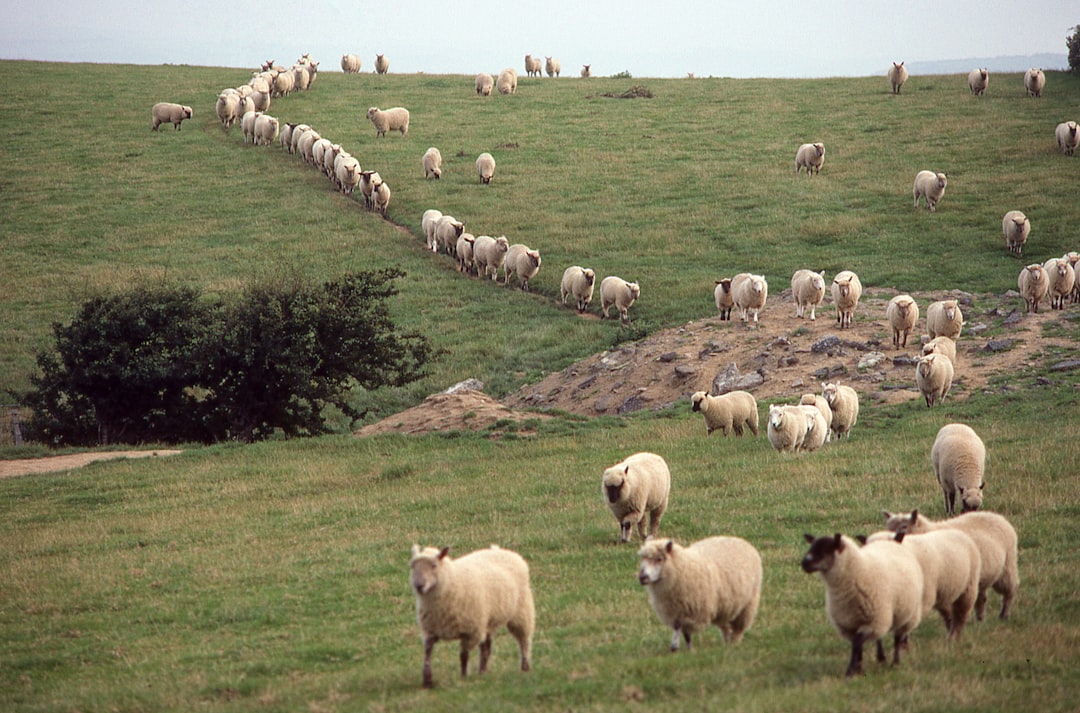
Transcript generated by AI. The sermon was not. Please comment if you notice any errors. If you want to take your Bibles in turn, we’re going to be in Genesis chapter 29 this morning is where we will start. Genesis 29. Andy told me last week that I was a little academic. So hopefully it won’t be quite so academic this week. It’ll be a little bit more in the story that we are reading. Genesis 29, beginning in verse 1 will read down through verse 14 to start with. Says then Jacob went on his journey and came to the land of the people of the east. As he looked, he saw a well in the field, and behold three flocks of sheep lying beside it, for out of that well the flocks were watered. The stone on the well’s mouth was large, and when all the flocks were gathered there, the shepherds would roll the stone from the mouth of the well and water the sheep, and put the stone back in its place over the mouth of the well. Jacob said to them, “My brothers, where do you come from?” They said, “We are from Haran.” He said to them, “Do you know Laban, the son of Nahor?” They said, “We know him.” He said to them, “Is it well with him?” They said, “It is well, and see, Rachel, his daughter, is coming with a sheep.” He said, “Behold, it is still high day. It is not time for the livestock to be gathered. Water the sheep and go pasture them.” But they said, “We cannot until all the flocks are gathered together and the stone is rolled from the mouth of the well. Then we water the sheep.” While he was still speaking with them, Rachel came with her father’s sheep, for she was a shepherdess. Now, as soon as Jacob saw Rachel, the daughter of Laban, his mother’s brother, and the sheep of Laban, his mother’s brother, Jacob came near and rolled the stone from the well’s mouth and watered the flock of Laban, his mother’s brother. Then Jacob kissed Rachel and wept aloud. Jacob told Rachel that he was her father’s kinsman, and that he was Rebecca’s son, and she ran and told her father. And as soon as Laban heard the news about Jacob, his sister’s son, he ran to meet him and embraced him and kissed him and brought him to his house, and Jacob told Laban all these things. And Laban said to him, “Surely you are my bone and my flesh,” and he stayed with him a month. So chapter 29 begins with the word “then.” Then what? After what happened? Well, last week we looked at chapter 28 and beginning in verse 10 of chapter 28. God had met with Jacob at Bethel. Jacob’s running for his life. He’s afraid that his brother Esau is going to kill him. Esau wants to kill him. And so he’s taking off. His mother and his father have sent him to Padan Aram to Laban, the brother, rather, of Rebecca. And so as he’s going, God meets him there in a dream and promises him that he is going to receive the blessing that God had promised to Abraham and to Isaac before him, and then adds to that a personal promise that God would bring Jacob back to the land that he was leaving. He was going to come back to the land of promise. Verses 2 and 3, as Jacob goes on this journey, he rises from that place at Bethel and heads, continues on, towards his mother’s family. We meet some shepherds. He gets to a place where he sees a well, and wells are significant meeting places in the Bible, and here is no different. He comes and he meets these shepherds at a well, and then we get a little bit of background as to how these shepherds operate. When all of their flocks get together, then they move the stone, and then they start drawing water to water their sheep. But they’re just laying around here in the middle of the day. There’s apparently a flock that’s waiting to come. And Jacob initiates conversation with these men. He says, “Where are you guys from?” And they say “Haran,” which is exactly the place that he is wanting to get to. This is where Abraham’s family is from. It’s where Rebecca’s family is from. He’s trying to get to this place, and he has made it here. God has providentially led him to the right place and also at just the right time, because when he finds out that they’re from here and he says, “Hey, do you know Laban?” And they said, “Yeah, we know Laban. And hey, look, there is his daughter Rachel coming right now.” God has led Jacob to just the right place, at just the right time. And here comes Rachel. And Jacob here is seen initiating. That’s important. He initiates the conversation with these men. When Rachel comes with the flock, he immediately moves the stone that these men have been saying, “Yeah, we wait until everybody gets here.” Well, as soon as Rachel’s there, he moves the stone. He tells Rachel who he is. He kisses her. This is just a kiss of greeting. Laban’s going to kiss Jacob the same way in a few verses. So this is not like love at first sight, romantic kissing. This is just like, “Hey, hello, we are relatives. It’s good to see you.” And then, Rachel runs and tells her father, and Laban welcomes Jacob in as a member of the family. There doesn’t seem to be anything duplicitous, anything hidden in Laban’s actions here. He just welcomes his sister’s son, as if he is a member of the family, which he is. So we get to verse 15. So Jacob has come, he started to stay with Laban. Then Laban said to Jacob, “Because you are my kinsman, should you therefore serve me for nothing? Tell me, what shall your wages be?” So Laban welcomes Jacob in, gives him a job, and then he says, “Okay, after a month, I’ve seen this guy work. I should probably quit treating—I shouldn’t treat him like a slave, but I can’t treat him like a son. I already have sons. They already get the inheritance, so I need to pay him something. Tell me, what shall your wages be?” Now, Laban had two daughters. The name of the older was Leah, and the name of the younger was Rachel. Leah’s eyes were weak, but Rachel was beautiful in form and appearance. Jacob loved Rachel, and he said, “I will serve you seven years for your younger daughter, Rachel.” And Laban said, “It is better that I give her to you than that I should give her to any other man. Stay with me.” So Jacob served seven years for Rachel, and they seemed to him but a few days because of the love that he had for her. So again, Laban looks at Jacob and says, “This is probably a good worker, a guy who understands what he’s doing with the sheep,” and we’re going to see later on in Jacob’s story that God actually pours out a great deal of blessing upon Laban because of Jacob’s diligent efforts. And so after a month, he says, “Hey, tell me, how can I pay you? How can I make it worth your while to stay here?” And Jacob, in this time has fallen in love with Rachel. The comparison here between the two sisters says that Leah has weak eyes, and this could just be a metaphor saying that she’s less attractive than Rachel, or it could be like a literal description. One of the ways that beauty shines through in people, and I would say, well, I’m on thin ice here, I probably should have thought this one through first. But like, women in particular is like the vivacity of their eyes. Like, you can see beauty coming through someone’s eyes when you’re looking at their face. And so that description of Rachel seems to be that she, in contrast to her sister Leah, who has weak eyes, Rachel is beautiful in form and appearance. Jacob is taken with her, and he says, “I will work for you for seven years in order to have your younger daughter, Rachel.” And that idea of treating a woman as if like, oh, we have to pay for her, that might strike our modern ears as strange, but it was a normal custom, that there would be some kind of bride price that a young man, if he wanted to marry a woman, he would have to bring forward this bride price. That was a normal part of, honestly, most human cultures until the day before yesterday. And you would have, in this society, an exchange, basically, like the man brought forward a bride price, and then the father would give a dowry with his daug… This is a public episode. If you would like to discuss this with other subscribers or get access to bonus episodes, visit remsenbible.substack.com
Embed this episode
No transcript yet.