
EPISODE · Jun 20, 2026 · 21 MIN
Pain Is (Mostly) Your Friend. Painkillers (Often) Don’t Fix the Pain
from Diabesity Decodified - Is Food the root cause of Type 2 Diabetes Mellitus pandemic?
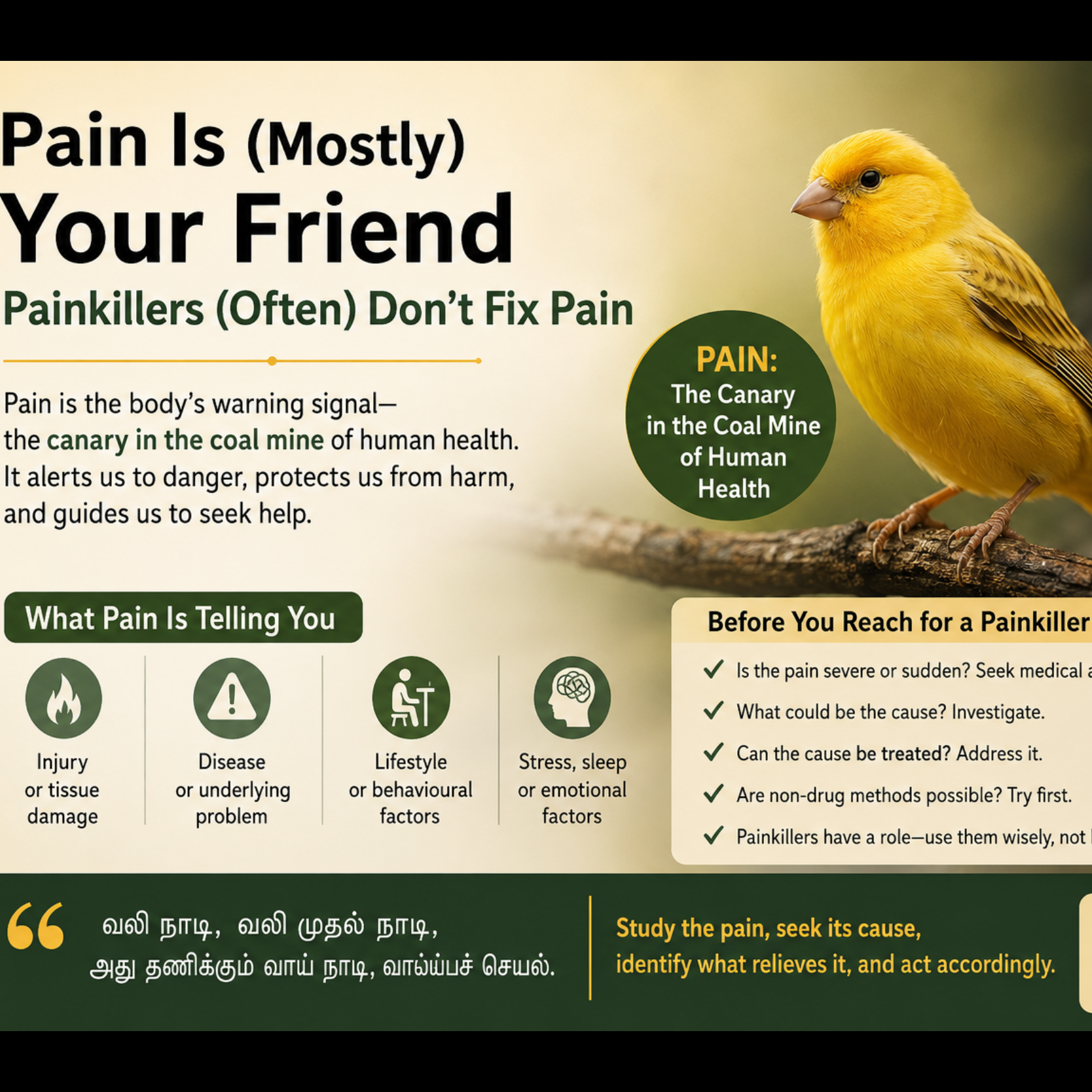
Pain Is (Mostly) Your Friend: Why Painkillers (Often) Don’t Fix PainPain is one of the most common reasons people seek medical attention. Yet it may also be one of the most misunderstood.Most of us have been taught to view pain as an enemy—something to be eliminated as quickly as possible. Modern medicine has provided an impressive array of medications capable of reducing or even abolishing pain. While these drugs have transformed countless lives, an important question remains:Are we treating the symptom, or are we understanding the message?In this episode, we explore a provocative but important idea: pain is often not the problem itself—it is the body’s warning system.A child touching a hot surface immediately withdraws because pain has done its job. A person developing chest pain while exerting themselves may be receiving an early warning of serious heart disease. A runner with persistent knee pain may be discovering that something in their training, biomechanics, or recovery requires attention.Pain is often the body’s alarm system.More than that, it is the canary in the coal mine of human health, warning us that danger may be present before irreversible harm occurs.This episode is not an argument against pain relief. Acute severe pain requires urgent assessment and appropriate treatment. Severe pain itself can produce profound physiological stress and deserves compassionate management.Nor is this an attack on painkillers. Analgesics play an indispensable role in modern medicine. They reduce suffering, improve quality of life, and are essential in many acute and chronic conditions.However, painkillers do not always fix pain.A headache caused by dehydration is best treated by correcting dehydration.Back pain caused by poor posture may require movement, strengthening, and ergonomic changes.Knee pain associated with excess weight may improve more through weight reduction than through long-term medication.Relieving pain and solving the underlying problem are not always the same thing.The discussion also examines chronic pain and the growing role of non-drug therapies, including exercise, physiotherapy, yoga, meditation, mindfulness, cognitive behavioural therapy, stress management, and improved sleep.We also address the risks associated with long-term use of pain medications, including gastrointestinal bleeding, kidney injury, liver toxicity, dependence, and opioid addiction. The opioid epidemic provides a sobering reminder that eliminating pain at any cost can sometimes create new forms of suffering.At the same time, the episode recognizes important exceptions. Some chronic pain syndromes persist even after healing has occurred. In advanced cancer and end-of-life care, the goal may shift from curing disease to relieving suffering. Patients and families may reasonably make different choices regarding comfort and lucidity.Drawing inspiration from the timeless wisdom of Thiruvalluvar, we revisit the famous couplet:“நோய்நாடி நோய்முதல் நாடி அதுதணிக்கும் வாய்நாடி வாய்ப்பச் செயல்.”And adapt its spirit for the modern discussion of pain:“வலி நாடி, வலி முதல் நாடி, அது தணிக்கும் வாய் நாடி, வாய்ப்பச் செயல்.”Study the pain. Seek its cause. Identify what relieves it. Act accordingly.Ultimately, pain is usually not the disease.It is the messenger.Before we silence the messenger, we should listen carefully to what it is trying to tell us.Pain is information. Ignore it at your peril. Suppress it thoughtfully. Understand it whenever possible.#PainManagement #Medicine #PublicHealth #LifestyleMedicine #PatientEducation #Healthcare #Prevention
Embed this episode
Ready to play
Pain Is (Mostly) Your Friend. Painkillers (Often) Don’t Fix the Pain
No transcript for this episode yet
Similar Episodes
No similar episodes found.
Similar Podcasts
No similar podcasts found.