Thank you. In New York City, we're recording this on day 482, 42 of the war. Already a few hostages are home. Seven are home.
And we hope without any problems there will be more. We're recording this on Wednesday of this week. By Thursday, tomorrow, there are supposed to be some additional hostages, three. Three more Israelis, but also five Thai. Five Thai hostages. And on Shabbat, another four, I believe, will be released. It's really an incredible moment. A rollercoaster of emotions for everybody watching this, watching with anxiety and anticipation as these hostages are being released. And elation, but also...
anguish, very, very strong emotions on both sides of the emotional spectrum. So we are with this and the story and praying for them and the safety of the ones remaining. And of course, knowing that many of them are not going to return alive and we are filled with anguish for them. Nevertheless, we are going to turn to our Parsha, Parsha Bo, third Parsha in the book of Shemot. This is the Parsha where everything happens. We start off with three plagues. Well, we start off with...
Arbe, Choshech, and then we'll have Makah Pichorot. We recall, of course, last week, the first seven plagues that are, you know, spoken of or related. These plagues begin with the idea that they are going to be narrated. This is, this is for the sake of your children, to know this, to hear this, that there's a private recitation or private story that this is reflecting. And I want to go to when it all happens. Moses warns Pharaoh that there's going to be this devastating plague. This is in chapter 10. Moses says, I'm just trying to find it.
God says, I'm going to bring one more plague. It's chapter 11, I'm sorry. God said, I'm going out in the midst of Egypt in the middle of the night. And then, all firstborn will die in the land of Egypt. From the firstborn of Pharaoh, sitting on his throne, to the firstborn of the maidservant. And then, there's going to be a great scream in Egypt, like there never was before.
And Moses is saying, and all your servants are going to come to me, they're going to bow down to me, and they're going to say, and they're going to, as if it were, you know, beg me, prostrate themselves before me and say, it's time for you to go. And then I will leave. And then that's the message he gives to Pharaoh. Okay? We get chapter 12, which is all about the Korban Pesach, and we've talked about it before, the intricate organization of that evening.
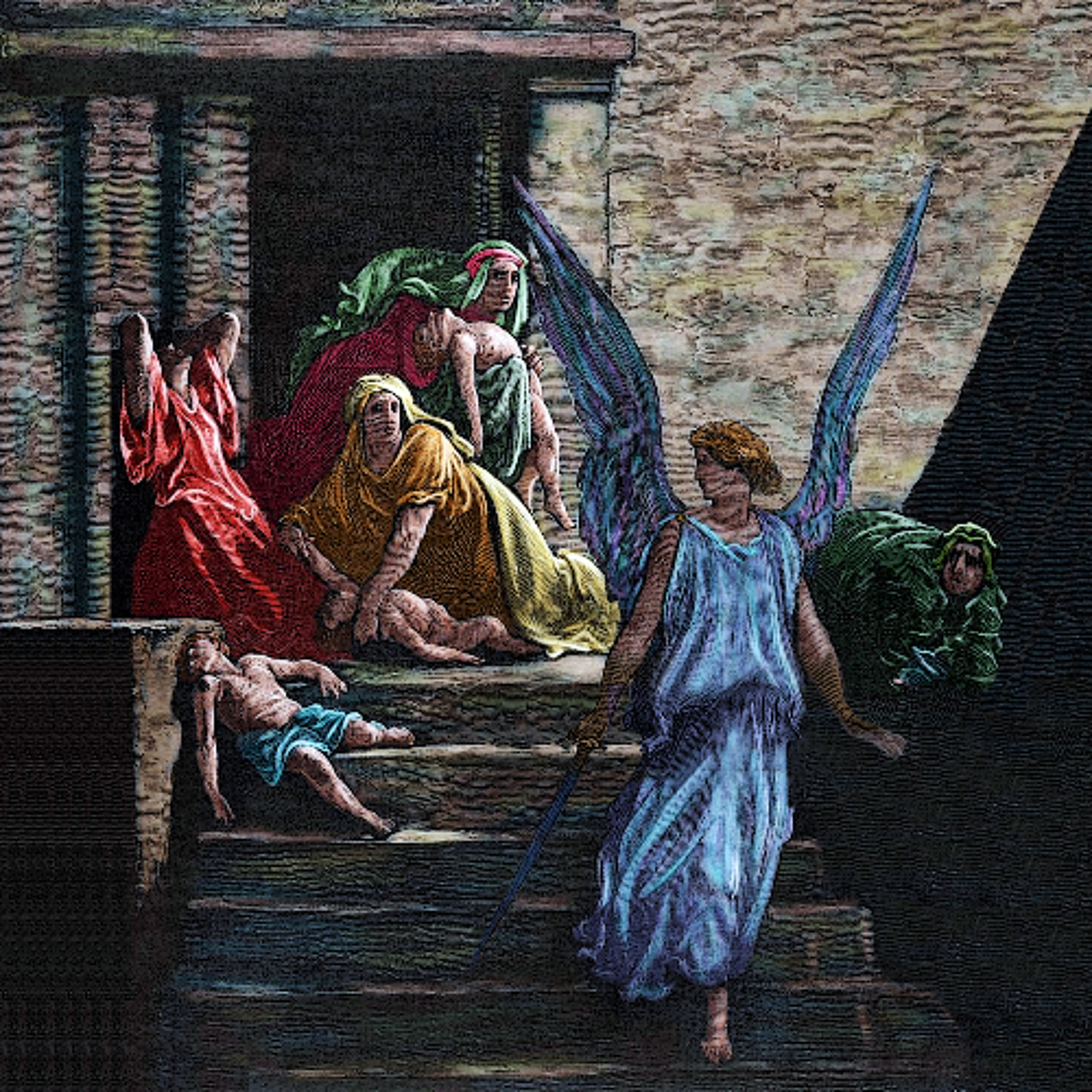
I want to jump to chapter 12, verse 29, because here is how the Torah relates what happens, and it's not kachatzot halayla, not around the middle of the night, but bachatzih halayla, bachatzih halayla. So I want to, for our Parsha talk this week, I want to kind of go through this verse by verse, even phrase by phrase in the verse, and really ask the question, what is happening? Let's, you know, be the color commentators here. of the play-by-play analysis of the text as it's being related to us in chapter 12, verse 29 through verse 36. I propose it's exactly at midnight, astronomical midnight. They obviously don't have clocks in the way that we have today. They don't know what 12 midnight is. It's the actual middle of the night. God smites all of the firstborn in the land of Egypt. From the firstborn of Pharaoh who is sitting on his throne. Even to the firstborn in prison.
And all firstborn animals. Go ahead. So what do you imagine happened? So it says that God smoked them, which can note some kind of a zets, a smack ahead. I think, here's what I think. The analogy is that each one was carrying a beeper from the Mossad. Okay. So this is where they got the idea. It's totally the idea. The beepers had three grams of plastic explosives that nobody checked out. And they went off at the same time and they exploded and he cocked.
What I was thinking is that perhaps there was something in slow motion, that they were struck in some way, but they did not die immediately. And that will alert Pharaoh and the households that something wrong is going on. And they'll wake up, because what's worse, I think, we were talking before, than waking up and seeing the person you're in bed with dead is watching that person actually die. Okay, so good. So you're saying it's not a lethal blow, but it's a... Something is set in motion. Something is set in motion. Okay. So verse 30. This is where it gets complicated. He gets up at night. So we are...
we are proposing then that it gets up after, uh, God smites the Egyptian firstborn that are, they're, they're choking or they're doing. And I suggest that the function of Lila is while it is still night. Okay. So you're translating it while it's still night. So some, but I'm saying it sometime after midnight. Yes. Oh, for sure. All right. So, and what gets him up? Everybody is up. Everybody is awake now. And so what you're, what we're saying is,
They get up because of the terrible screaming that's in Egypt. So what that means is that firstborn were smitten, there's screaming, everybody's awakened. Some people are awoken first. And then that, so what you can imagine if you're just playing the, if you're, if you're filming this, you know, you have a kind of, you know, camera over Egypt and you then hear a soundtrack of screaming. Right. And the soundtrack you hear is from the first Godfather movie. It's the movie executive waking up with a dead horse head in his bed. Right. And so, and that's that kind of screen. It's a blood, blood chilling screen. Right. Well, you know, I just, I'm sorry to, to do this, but I find it unavoidable. There's not, there's not a single house that doesn't have.
a dead person in it. And of course, there's the Tzakagdola. And that just rings incredibly painfully, horrifyingly true. I'm, you know, unambiguously a Zionist supporter, but you think about, you know, how much misery there is in Gaza. There's not a single family that hasn't lost somebody. And there's just so much, so much death in a society so scarred by how much mourning and how much abelut there is in every home. You can picture the screaming. If you've seen any videos from this year, you can picture the screaming.
Right. And of course, you know, it applied on October 7th on the side. On the Israeli side. Right. And as long as I'm talking about it, this Shabbos, we have Professor Ruth Halpern-Qadari, who's the leader, been the leader of the sexual violence. She made that movie with Sheryl Sandberg, and she's been speaking about it in legal context, and she'll be speaking at Najat Hasid this Saturday. And look, it's almost as if we would say in our language,
We are only one degree removed from the pain that people have experienced. It's in our immediate orbit. I mean, I've said this a number of times. We all know people. We certainly know people who know people. But I think we know people who are personally affected. I mean, I mentioned Defi Shoham several weeks ago. Yeah, we know him. His son was killed. No household has been spared from this. Okay? So now it gets complicated. Pharaoh calls them both in.
Rather than what Moses imagined, Pharaoh comes, or the servants come to Moses and bow down to him. Pharaoh calls Moses and Aaron in, Lila, which, Barry, I think you're saying is during the night. And he says, get up, get out from my people. So I have my stopwatch here. Anachronistically, I'm saying, OK, so let's say it's 12 midnight. Let's say that Pharaoh got up, I don't know, half an hour later, 20 minutes later.
you know, realizes what's going. Let's say Pharaoh summons his servants and says, go get Moses. That takes time, right? This is a, you know, a 911 call to get Moses. It takes, you know, several minutes, maybe even an hour for Moses to, you know, get hauled to Pharaoh's palace. It's already two in the morning now, okay? And then he says to Moses, get out of here.
and worship your God, go and worship God, as you said. So in Pharaoh's mind, it's, let's follow your plan. Your plan was to go on three days and worship God in the desert on a three-day journey. And is Pharaoh thinking this? Is that what he's thinking? Well, what you have to remember, I think, in part, is that when Pharaoh has acquiesced in the request to leave before, it's only been for part of the people, right? The men can go sacrifice, what do you need the women and children for? But now he's saying that, I recognize you are one people with one God.
and your services are no longer required here. Well, okay. And you have to leave. All right. So leave. What you said is correct. It's a gradual process. This is who's going. Moses says, everybody. Pharaoh says, no, no, no. The animals and the women and children have to stay. That's going to keep you. It's collateral, so to speak, so you come back. But the other weird thing about this entire story, which I have never and still don't understand, is that Moses has continually said we're going a three-day journey. Now, is that to think, by the way, that...
that from Egypt to Choreb, you could get even hundreds, let alone thousands of people moving fast enough to reach Choreb in three days. That makes no sense. But we have a benchmark, at least from the rabbis, and that is that the Shira, the crossing of the Sea of Reeds, was on the seventh day of Pesach. So it took six days just to get into Sinai. And if the claim that Moses has been making to Pharaoh is this is a temporary furlough, we're going to go three days into the desert.
Does Pharaoh think, I mean, I don't think that after the plague of the firstborn, when he says, just get the hell out of here, take your flock, take your flock, go, he's got to mean go and don't come back. But the ostensible pshat of the request has been for a three-day furlough. And that has never really made a ton of sense to me. Okay, so Moses may be giving Pharaoh the false impression that he's coming back with the entire people. I mean, you're right, it's ridiculous. Okay, but even more so, so Pharaoh says, take your flocks, take your animals.
Bless me as well. Now, we've talked about it in the past, and I can't get over, you know, the sense of possibilities here in understanding what he means when he says, you should bless me. Now, I think, you know, Barry, you make a good case that is actually a euphemism, right? Like, it's not bless me, but it's the opposite, right? Do you want to explain that? Yeah, well, so elsewhere in the Bible, in the book of Job, in the first chapter, actually, Mrs. Job says to Job,
bless God and die. Those are the words, but what she means is curse God and die because the penalty for cursing God would be divine execution. And, you know, it's been noted through the years that this was Lashonaki because people did not even like to use the word curse when that's what they meant for fear that the word itself would bring about a curse. So it's possible here that Pharaoh is understanding that he's been cursed, but can't say that about himself. So, and you have cursed me. Yeah. But the question that is raised here is what is the significance of the word God? So,
We generally translate it as also. So you shall also bless me or curse me, whatever it may mean. But in addition to whom? Or does God mean something else here? I think it means, I'll take a completely opposite view, which is you are departing and let us depart as honorable.
honorable people. So Pharaoh is summoning honor here. And as we've discussed in the past, or as I've taught this piece in the past, this is Jacob wrestling with the angel and wanting a blessing as part of the departure moment. This is the tennis match ending with the victor and the loser shaking hands at the end. This is the hockey game at the end of the Stanley Cup, where the teams line up and the losers and the winners shake hands. This is the judoka, where they bow to each other. And when they don't,
This is an affront, right? Like a few years ago when the Iranian judoka did not honor the Israeli winner. It was a horrible, horrible moment because the etiquette requires a certain kind of reestablishment of the equilibrium between opponents. And I think that this is what's going on here, that Pharaoh wants to, is soliciting the blessing in order to reestablish an equilibrium between him and Moses. And Moses basically says, no. I have a slightly, mine is related to the way you said it, or it's not mine, it's not Monadie's. But it...
You know, your practical contemporary life examples are very interesting. Nachmanides says that the meaning is, bless me in that you'll pray for me so all of this misery will end. I've been terribly punished, and I pray that you will pray, because you're obviously connected upstairs, that this time of Egyptian plague is coming to an end. And that would be a big bracha. You know, we're talking about the sports analogies and the relative dignity of players congratulating each other. I just happened to watch a very cool...
the ESPN documentary about the old Big East and the way Syracuse and Georgetown hated each other, and they wouldn't shake hands afterwards, and it's this kind of moment. But I'm thinking about the Cam David, not Cam David, the Lawns of the White House, when Bill Clinton basically forced Robin and Arafat to shake hands, and you could sort of see... See in the moment, you know. Now, in this case, Arafat seemed to want to shake hands, and Robin did not. But in the way you described the personal dynamics, that Robin is a little, he's like Moshe on this one, Arafat is like, come on, we're moving forward, let's shake hands, and Robin is like...
Do I have to? No, but the symbolism belies a deeper narrative, which is we are reestablishing the equilibrium between foes here. And even at that moment, I think Rabin had a certain level of distrust of him because they all knew that he was loathsome. Well, it wasn't just distrust. I think there was this...
a strong element of this. Right, and I keep, you know, whenever I teach this, I compare that moment to, let's say, Sadat and Golda Meir sitting at a press conference, and they kibitz with each other, and, you know, he says, you always called me the old lady, and he laughs, and she gives him a present for his granddaughter, and it seems that there's honor there. And Begin to Sadat, there was tremendous honor there. They, in fact, you know, as bitterly as they were divided at Camp David in some of the negotiations, and it nearly ended abruptly a few times, they did end, you know, as equals, basically, as honorable enemies that wanted to truly reconcile. And so what I'm saying here is that this is a moment that Pharaoh is soliciting the reconciliation and a new equilibrium for Moses. And I just think that...
Moses basically doesn't pay attention to it because we don't get a response here from Moses. In fact, what we get is, you know, the rest of the story. So we'll just go into the rest of the story, which is, you know, So the Egyptians just push out the Israelites. They really want them to move it on. Because they said, we're all going to die. So let's move it. You move it. So the people had been seated in their homes.
roasting their lambs, ready to eat their roasted lambs on their unleavened bread. There's nothing that's baked. The dough is there. They take their dough before it has risen. They roll it up in their cloaks and they put it in bowls on their shoulders. And Israel did what Moses said. They went to the Egyptians. They took from the Egyptians gold and silver implements and dresses and clothing. And God.
unleashed the generosity of the Egyptians, and they were able to do this. This part is really interesting, and how it fits in the narrative sits a little strangely with me, because this passage does say that God gave them chen in the eyes. The Egyptians seem to kind of have loved them and wanted to bestow these gifts on them. And I think that the whole... The rest of the story, why did the plague narratives go on so long? Why didn't God just, you know, to borrow from Harry Potter, why didn't, you know, like, this story is an ancient story. It can only be an ancient story. If you read it in the 21st century, you say, well, why didn't God send helicopters and just take them out? Because there's no helicopters. Why didn't God, if you borrow from Harry Potter, why didn't God just Petrificus Totalus them and turn them into stone and let the Israelites walk up? Because that's not the story. The story is that the Egyptians have been oppressing them, throwing them in the river, making them work, been bittering their lives, and they have to last through all these plagues and not just, you know, not just...
Pharaoh doesn't agree the first time Moses says what he says, and Pharaoh hardens his own heart a lot, and God hardens his heart to draw out these plagues narratives because they deserve the punishment. That's, I think, what's going on in the story is that they are punished in proportion with the viciousness of their enslavement. So now, at the end of that, after all the hard-heartedness, the story seems to culminate at least a little bit. Like, do you really think that, you know, Mr. and Mrs. Egyptian look over at the Israelites who have been the source of all this misery, who have resulted in the death of their child, and they love them? But the story, that's kind of implausible, but the story seems to be saying that after all the hatred, and after all the violence, and that after all the commensurate punishment, and the measure for measure, the equal and opposite reaction.
it ends up with a little bit of sweetness, and the Egyptians want to give them something. So, I'm sorry to cut you off. What I would suggest is that there is perhaps an element of Midak and Eged Midak here, because now the Egyptians realize that they're not the only ones who have had death in the household. That those babies that were thrown into the Nile, we only have the record of the one Osha who was saved, were Israelites. And that affected the Israelite people. And it could be that the reason for this killing of the firstborn was to compensate or make up for all the Israelites that had been drowned in the Nile or died as a result of the slavery experience. But, you know, we've talked over the years about the Korban Pesach and whether it was eaten or not. And it struck me listening to you read these verses, Elliot, that it seems here that...
The verse telling us about the Israelites having to wrap up the dough and take it with them suggests that they're leaving before they were ready to leave. And it also interferes with what becomes later a halakhic pronouncement, which is you can't leave the Korban Pesach overnight. But it seems clear from this little description that they haven't finished eating yet. Well, they may have started eating. No, you're supposed to eat the roasted meat with the matzah and maror. Right, but I assume that you're not making all the bread first and then eating. It could be that you're making some and then eating. I think it's when the thing is ready, that's when you bake your unleavened bread. Because you want the fresh, warm bread to kind of wrap up the meat like a burrito, basically. We preferred the shawarma earlier, so we'll stick with that on our Jewish show. They make horrid.
So I think we're going to leave that as a question, okay? I want to go back to Hena'am, which is the generosity or the grace of the people. And I think you said something, Jeremy, which I'm kind of latching on to, which is just as God hardens the heart of Pharaoh, you know, to make Pharaoh obstinate, God, and it says this clearly, that God is unleashing their grace or their generosity, that, you know, it's a kind of toggle switch here. Explain this more. Explain this more, which is the natural inclination of people in extremists, okay, in this moment of...
you know, there's not a household where there's not a dead body, and get out of here, that's not a moment when you're going to say you're going to be kind to anybody. And so it requires a kind of divine hand, as it were, to push them into grace and to say, let's unleash their grace. I would say it's the same emotional pivot, you know, or I would say the same emotional toggle switch. God toggled Pharaoh to be obstinate. God's toggling the people to be generous. Okay, so what I would suggest is that there's a kind of subterranean, perhaps even...
a subversive message here, and that the hero of the Exodus story clearly is God. And I think the way it's portrayed in Exodus, we're supposed to understand it as a series of miracles that would not have happened without the powerful hand of God. but at the same time, it also requires human initiative and response, both by the Israelites and by the Egyptians. And that what we sometimes forget when we get wrapped up in the story is that there is a human dimension, and in the human dimension, things are always messy. There is nothing that's so neat, right? The killing of the firstborn, when we read about it, we're going to read about it in a couple months at the Seder, it's kind of a chick-chack thing. It says this is what happened, so that's what happened. But if we imagine the real-life experience, things never go like that. Okay.
So quickly, we're running out of time. They go from Ramses to Sukkot, 600,000 men. That's the number. A mixed multitude goes with them. They bake the dough. We're not going to kind of put that on the timeline. We don't know when that happened. It's sometime in the evening or sometime maybe towards the next morning. It had not yet spoiled as chametz.
And then it tells us that the people lived there for 430 years. And then it was, It was on that very day, 430 years after they came down, that they left. That's a whole discussion. We're going to end with this. It is a night of vigil for God, who took them out of the land of Egypt. This is the evening of God, which will be a night of vigil for all of the people. So my reading of this is...
Does this mean, or it raises this question, are we supposed to stay up all night on Passover? Well, you have to stay up all night to wait for the food to come. Exactly. No, it's the Haganah, the rabbi, speaking all night long. It's the fifth question, of course. When do we eat? So what does this mean?
that it's a night of it, a night of watching. And when did they go out? Did they go out during the day or did they go out during the night? And this brings me back to which becomes a beautiful piyut, which none of us really sings. I mean, I want to learn, you know, the beautiful piyut at the end of the Haggadah that says that all of these great miracles happen in the middle of the night. And there's something about this. I'm being drawn to this whole experience because it's nocturnal. It's the nocturnal invigilation of the divine, shall we say. You have bats in your belfry.
So this is what I would say, is that we have, you know, already the rabbis pick up on this, the distinction between Pesach Mitzrayim, the first Passover, and Pesach L'dorot, the Passover that is celebrated in every subsequent year. And, you know, as I said a few minutes ago, the Pesach Mitzrayim is a miraculous event. But Pesach L'dorot is not a miraculous event because it's human-centered. It's what we do in our families and in our communities. And I think that we have...
a suggestion of this in the difference between the vigil on the night of Pesach, which is God or the Maschid passing over the Israelite houses that have been properly dogged with blood, and passing through the Egyptian households so that no one is unscathed. That's God's vigil, watching from above as this all unfolds. And then there's a vigil that we keep every Pesach night, in the Bible just the first night, when we recall these great events that happened to our ancestors and anticipate a future redemption. So night has a lot to do with it, you know, and timing. And look, I think that's how we experience it. It's not that we stay up all night, you know, at Passover, although, you know, we use that symbolic vigil for another holiday, for Shavuot, but we go pretty late, you know, some of us at Passover, to try and have a fractional reenactment of this night of vigil. We do invoke these words at the Angadah, Jeremy. I would just maybe wind this back to the thing you began with about Hatsi Halayla. There's multiple ways in which night plays in the story.
you know, they say the, what's the Bob Dylan line? Meet me in the morning. They say the darkest hour is right before the dawn. You find redemption in the most, in the most places of greatest suffering. And I would also point out that in Deuteronomy 16, where it describes the Pesach pilgrimage, it says you offer the lamb in the place where God has chosen, meaning the communal temple. And then, then you get up in the morning and you leave and you go home. I think that,
Maybe it means after you had a nice big night's sleep, but I think it means there in Deuteronomy that there is some primary early, early practice of an all-night experience. That's replicated in the story in the Haggadah of the Rabbis in B'nai B'rach, and maybe there is an assumption that Pesach is something like an all-night holiday. Right. Well, in truth, we could also go all-night discussing this. I think the fact that it yields, it never ceases to yield.
interpretation and speculation is what makes it beautiful. And what makes it beautiful is to get to talk about it together and to share it with our listeners and viewers whom we thank. Thank you for watching. Thank you for listening. We appreciate your attention. We know how much your attention is requested by so much content streaming at you from the internet. And we are so humbled at the fact that the three of us have a place in your Torah life. With that, I want to say shabbat shalom. We'll see you at the next edition of Question.