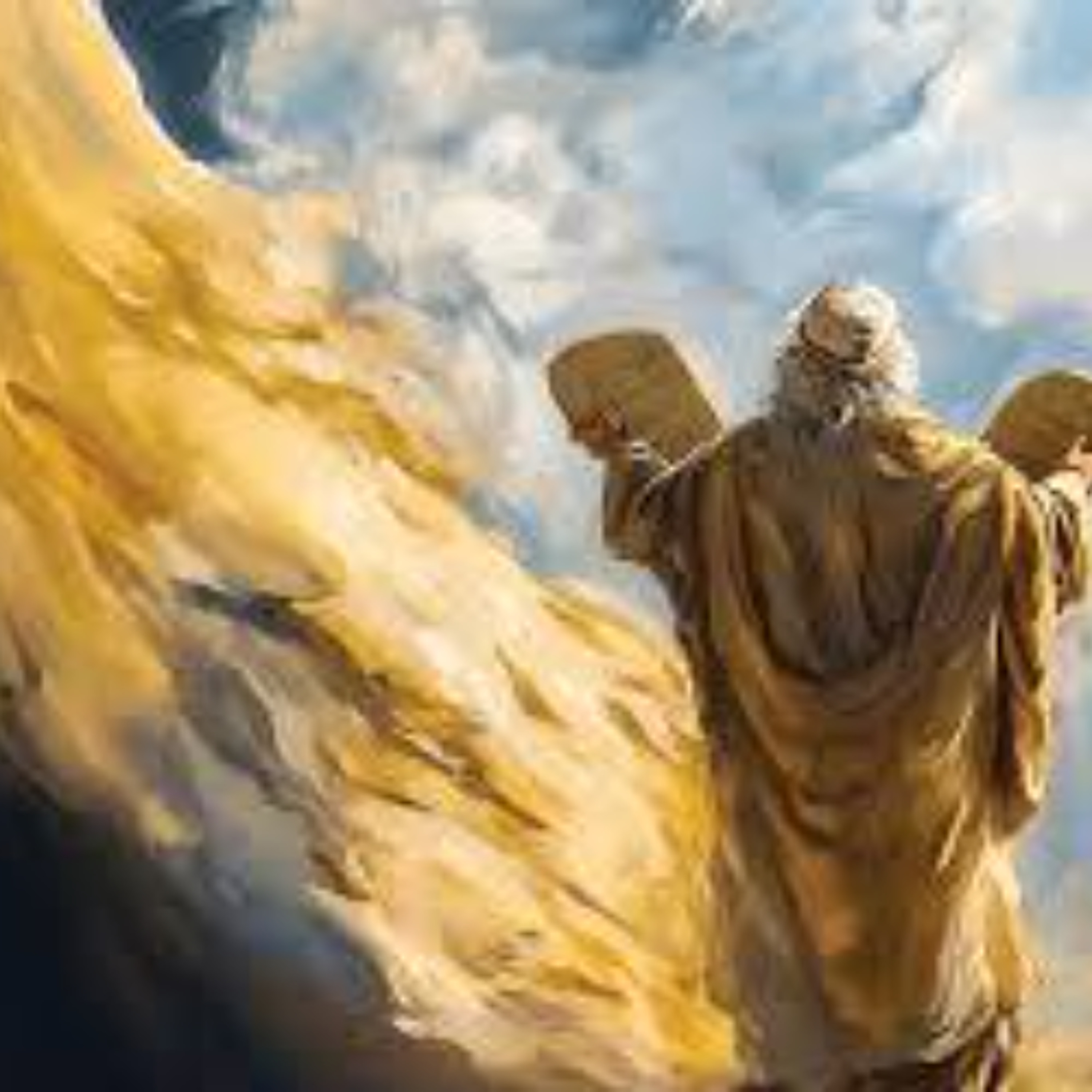
Shalom and welcome to another edition of Parshly Talk. I'm Rabbi Elliot Bell. In Highland Park, New Jersey, at the Highland Park, conservative telecommunication, Anshay Ahmed. My journey with our good friends, Rabbi Barry Chesler, Solomon Schenker, Day School of Long Island, and Rabbi Jeremy Kalmanowski of Anshay Chesed in New York City.
We are here today. We're recording this a little earlier for Parshat Mishpatim. Parshat Mishpatim is also Shabbat Shkalim. You know, when it's Shabbat Shkalim, it doesn't mean that Purim is coming. It means that Pesach is coming. You know, we say that in Shul. When you say Pesach is coming, you all of a sudden give people a kind of, I guess, an anxiety attack. It shouldn't be this way. It should be joy. It should be fulfillment. It should be anticipation. But for many people, saying...
you know, seeing the food already in the grocery stores, which in February you already do see Pesach food in the grocery stores. Shabbat Galim, you're saying this is one of the four, the first of the four special Shabbat before Passover. And so therefore, it's not every week, but Passover is not far away. We have, we're just finishing the month of Shabbat, we have the full month of Adar, and there you go. two weeks into Nisan. So Passover is about seven, eight weeks away. How about that? Shabbat Shkalim coming up. But first we've got to talk about Mishpatim, Parshat Mishpatim. After going through the whole discussion of the revelation at Sinai, the plan that God had didn't work. We have, it's like a detour almost. Or let me ask you this question. What would you call this? We call this text the Covenant Code, but what is it basically? Barry Chesler.
I guess I would suggest it's a reframing. So the question ever since Sinai is, what is Revelation and what does it mean? And the answer in Parsha Mishpatim is that Revelation is a code of law that the people have to adopt for their conduct and behavior. And it comes with an impressive ritual, a blood ceremony performed on the people, not just on the altar, as is familiar with the sacrifices we'll get to in a few weeks. And I think that it's wrestling with this question, you know, now that God has appeared, what does that mean?
Yeah, interesting. I'm curious, you know, to ask both of you personally, what are the strategies you use in reading this text? Or, you know, reading this text, frankly, we could ask it any text. But, you know, opening up the Parsha and seeing, you know, the first verse, and on and on, or every single set of law that are there. What are your strategies? Where do you go? Where does it take you, Rabbi Kalmanovsky? Where does it take you? Where does the text take you? Which part of the text? Any part of the text. It's a free response. Free response.
I mean, covenant code is a good name for it because it seems to me that the text is between Exodus 19 and 24 is kind of interrupted, right? Like on Exodus 19, God's telling Moses, like I said, bounce around the mountain. I want you to, now let the people come up in Exodus 19, 24. And so the Lord says to him, go down and come back together with Aaron, but let not the priesthood of people break through to see the Lord, to come to the Lord, lest he break out against them. And then you get all the 10 commandments in chapter 20 and you get another recitation of, at the end of 20, you know, we...
we get the people, get very afraid, and they run away. But then now in 24, and then you get all the laws, some laws at the end of 20, and then the code of the covenant in 21, 22, 23, and then 24. So God says, now I want you to come up with Aaron, and then a bunch of priests and elders, and they're going to be far, but Moses, you're going to come even closer. Moses is going to come a little closer. They're going to be a little more distant.
collection of people, they don't come at all. And Moses goes and repeats all of the specific commandments. I'm telling you that I think that probably at some original level, it's probably just the Ten Commandments, not the full set of torts and social laws that are part of Mishpatim. That's probably some earlier iteration of the text. And they say, yes, absolutely. And they all answer in unison. And they say, we're going to do all that stuff. And Moses writes it all down. He has another even grander recitation. And he splashes the blood of sacrifices, both on the altar and on the people. And so, to me, the main thing that is going on here is that the people are so utterly committed and bound.
to the covenant that they're making with God. Part of the blood, this is, Nachmanides says this, part of the blood goes on the altar, the rest of the blood goes on the people, and Nachmanides says it's 50-50 amounts, half on the altar and half on the people. It's to say that they have an equal share in this covenant. And so in the narrative part of the whole complex of the description of Revelation in 19 and then the culmination of it in 24, it's like, guys, we're in this for life. flesh and blood, and this is what the meaning of our life is. You know what I love about that is that you're giving a picture, and you've layered it on with the beautiful Ramban Nachmanali's comment, and so you're taking us into the...
the perspective of the Israelite. And that's a place where I like to go, which is what they're experiencing here and what they're trying to do here. I would just branch out a little bit and say, given the fact, given the experience of the revelation, which was terrifying for them, the mountain, basically a volcano, the billowing smoke that sounds, et cetera, and the people shuddering and trembling, the fact that they can get themselves together and answer, I think is really an accomplishment. I'm thinking about the fact that if you have a strong workout, right, you exercise, you run, you know, you play a game or whatever, and you work up a real sweat, you know, to pull yourself together and to really show up or something is a bit of an effort. So Lahavdil, here they are. They're trembling. They're terrified. You know, it's who knows what they're going through in terms of, you know, their own physiological reactions. And they get it together. And I find that to be reassuring, at least, at the very least, that our answers get together.
What I would add is there's also a kind of point and counterpoint here. Revelation is a one-time event. It's evanescent, it's ephemeral, it's a moment in time. The law is stable and meant to be permanent, and it's something that you can hold on to, which will give you access to the revelation itself. Because the revelation will not repeat, but your practice and observance of the law can every day.
Franz Rosenzweig and Martin Buber have this exchange of letters in the 1920s, and Buber does not like the law. He likes religious spontaneity. He is an excellent antinomian, sort of. He's not a reformed Jew, exactly, but he's mad at halacha, and he thinks that halacha is overly ossified and rigid, not just because the specific halachot are rigid, but because the very idea that you have to do the same thing every day, and you put on your right shoe before your left, and this is like that OCD quality of halacha, which we all know exists. And they had this article back.
letters back and forth. And Rosenzweig, who is generally speaking more disposed positively towards halakha, normative observance, concedes the point that there's only, there's two different things. There's commandment, which is given by the encounter. And then there's law or rule, which is given in the normativity. And Rosenzweig also wants to say that I am is the only commandment. The only commandment meaning that is God present at Sinai. Here I am. Here you are. We are face to face. And now, by the way, don't eat lobster. Well, so what you're saying is it's relational and all of this is to establish relationship. And through the rules of don't eat lobster and here's how you handle wealth and poverty and what happens if you're chopping wood in the forest and somebody's axe clonks somebody else in the head accidentally and all of the means of wealth that will be...
the social and interpersonal means of both for the rest of this religion. They're not bad, but they are, in their concreteness, they don't have that relational electricity of the, I am the Lord your God. And so maybe what Naseh is in this, at this part in the ceremony, is it's saying, we are, we're here too. You know, I want to give voice to the collective voice because I feel a part of that voice. At least I want to leap into solidarity with it. I want to imagine. And, you know, I want to imagine what my response would be if I would have been there. Would I say Naseh? Would I be, you know,
you know, rah, rah, would I be cynical? Would I be, let's get, or would I be just enjoying the collective experience of just being with 600,000 of my fellow Jews, you know, just yelling at the top of our lungs, nah, say, or would we be recovering from this experience? And would we be like, I imagine, you know, being in shul, after listening to Moses, give this whole thing and going, I've done this before on the podcast, we're going, come on. It's enough already. What I would say is I think the experience of Sinai for our ancestors is probably more along the lines of our experience of Rosh Hashanah and Yom Kippur, which are more somber days than what we call Yontaf, the pilgrimage holidays, which are associated with Simcha, with joy. I don't know that Sinai was meant or intended to be a joyful experience, but in a variety of ways, a transcendent experience. What the emotion I associate with it is awe and not joy.
All right, so let's just go to the ceremonial parts of it. There's a whole slaughter, lots of animals, a big altar that Moses is making, and half of the blood of all of these animals is placed on the altar, and half of this blood is placed in basins in reserve. And then just follow me from verse 7. He takes the covenant document and he reads it into the ears of the people. So there's some very ceremonial stuff going on here. It's a declaration.
as it were. That's a formulaic answer if there ever was one. They said, everything that God said, we will do and we will listen, we will abide by. And then just to keep going, Moses takes the blood and he actually sprinkles it on the people and he says, this is the blood of the covenant that God has made covenanted with you for all of these things. And we'll stop there.
i'm thinking like okay i mean for us to feel to hear to read you got you just got sprinkled man but you know off mic we were saying you know this is like a rally you want to get sprinkled you want you want a piece of that experience i mean You know, just think about it. You are encountering some kind of great transcendent moment. This would be akin to keeping your ticket from the Ed Sullivan Theater when the Beatles showed up the first time. This was an epic-making event. This is like, you know, getting a towel at an Elvis concert and framing it. This is like getting your pick from Bruce Springsteen at a concert. This is unbelievable. Or is it getting Jean Bellevaux's puck, you know, catching the puck?
I mean, it's a relic of this great moment. I assume this is a hockey player. It's a hockey thing. The point is, where I'm going with this is that the sprinkling of blood means you're connected to this transcendent moment, irreplaceable, unique moment. How and when do we... I've got a little theory here.
And it's really derived, Elliot, from what you have said in previous years about Pesach, is that the smearing of the blood on the house makes the house the Mizbeach. Ah, nice. Okay, okay, okay. So if that's the case, the sanctification of the people makes them a kind of the Mizbeach also, and makes them kind of the altar also. The priests, when the priests get sanctified, then they have some blood smearing on the ear and the big toe. And the Mitzorah, the leper, has something similar.
Maybe let's not go with that one, but maybe let's go with this is a ritual application of blood. And we know that the blood is life. And it's maybe an affirmation that, you know, you are really now like what is what is not the word is education, but to sanctify inauguration, inauguration, inauguration. And so the people, you know, this is this is maybe why I mean, it's an interesting question, by the way, because because. The reason I was looking at the Ramban is that there was an argument between... The medieval commentators also wondered about the question that modern commentators or modern Bible scholars would look at and say, you know, this stuff seems to have a little herky-jerky editing, and as I alluded to before, I think that 19 and 24 form a contiguous passage with some laws placed in the middle. That's what Rashi thinks, too. Rashi thinks that 24 all happens before any laws are given. Rashi thinks the Torah, there's no necessary sequence, there's a lot of sequence, and so he thinks that the whole...
Blood splashing, Na'a Sevin Yishmaz, all the agreement stuff happens all before, certainly before the Covenant Code and all those detailed rules in 21, but even before the Aserah had to be broke in 20, and Nachmanides thinks, no, no, no, that's... That gives you a really incoherent Torah that, in fact, there was a set for agreement, there was a content, and then following the content, there's that affirmation. But in either of those two scenarios, you do get the people saying, okay, we are ready to begin something totally brand new. Well, it's a very compelling interpretation here that this is inauguration. So the question I want to ask is a Jewish question, which is, you know, so many areas in these stories we have reenactments. Passover, for example, is the...
great reenactment. You could say that Shavuot is a reenactment of Sinai. You could say that Sukkah is a reenactment of the desert. I want to rifle through the attic of Jewish history and find a ritual that is a reenactment of this. Do we have anything like this? And if so, what is it? If not, why?
What comes close to this? And do we ever, you know, I can't pick up a machzor or a sidur or anything from, you know, the library. And will I find anything that says, and this is the point where you say to the person, I was just, I have to say, I was just at the seminary this past week where they have a very interesting exhibit in the library on conversion. It's a beautiful, it's a tiny little exhibit where they take, you know, some classic sources from the Talmud, from Rambam and from other places and talk about, you know, different response of conversion. And they have documents, conversion documents from the 19th century, a woman who was taken, to Nahar Deliver. And she was versed by Rabbi Leiser in the Nahar Deliver, okay? And a conversion actually is a moment where the convert makes a declaration and you can say, you know, we don't use these words, we have all different kinds of scripts for this, but they are, in a sense, making the declaration and we are accepting the convert as one of us with a document, basically, at the end, which is or however we word it. It's an affirmation.
And so let me ask you then, is there a conversion moment going on here at Sinai? Is that the metaphor I want? Or is it you have initiation? I like initiation. Initiation and conversion are really part of the same. They're like sister species of experiences, right? They're both beginnings for people. Bar Mitzvah, Brit Milah, marriage. So you go ahead, Barry. I was just going to say, the Brit Milah obviously comes to mind because that also involves blood.
But we don't, you know, the closest we get is, there's no smearing, thank God, but there is the mohel during... No, but there doesn't have to be smearing, but there is this reka in the sense because blood comes from the womb. It's not, you can't push it too far, obviously, but I think that there is some association. When the mohel says, takes some wine out of the cup and places it on the baby. Okay. Yeah, of course. So the...
What do you call it? The conversion is a really good one. I don't know that it's really reenactment, but in the Talmud, in tracting the diary, it describes the conversion. It describes it because in Egypt... You can't open the Bible and have these as a narrative, but this is the rabbinic creative reading. In Egypt, the Yitha Korban passed out, and contrary to Rabbi Malamud actually thinks they ate it, but this is kol arel lo yov chalvo. So obviously they ate it, and kol arel lo yov chalvo, the uncircumplified king. So we know there was circumcision in Egypt. And then they went to Sinai, and they went to the mikvah, because obviously, you know, as we talked about with the last session, you know, all of the... And clearly, Psalm of Dalman says, the ima ho, they needed it.
The imahot needed some sort of ritual, too, so the avot were circumcised, but the imahot needed some sort of physical ritual preparation, so we all went into miqvah, and then we all said, and so the convert, the male convert, has, all converts have the immersion, male converts have the circumcision, and you have kabbalat, all mitzvah, you accept the Torah. So there is a way that it works in conversion, although, of course, I don't think that most of the way we do it, and most converts themselves feel that I return to Sinai. And if not, why not? Okay. Pesach is a unique one, perhaps. It's uniquely well done, even in the Torah. One day, your children will ask you, and you'll have to tell them, this thing that we're doing, I do this crazy ritual because I'm remembering and reenacting. It isn't quite so clear. I don't have a good answer for why it's not perhaps the uniqueness of the mountain quaking, and you can't really get that, but...
I'm reminded of a wonderful statement which was attributed to the Rebbe of Kutz in the 19th century. He says, why do we call Shavuot Zman Matan Torateinu and not Zman Kabalat Torateinu? Why do we call the name of the holiday of Shavuot the day of the giving of the Torah and not the day of the receiving of the Torah? And he says, because the Torah was given once but must be received every day. Every day, every day you sort of have an acceptance. When you dive in the blessing before Shema, you know,
Unify our hearts so we can proclaim your oneness. You choose us in love. You chose us with love, we respond with love. So that really, I feel in my own religious life, my own filah life, that sense of joyful re-acceptance of the Torah. Are you saying then, and we do teach this, that the reenactment of Sinai comes through Kriyat Shema, the reenactment, the daily recitation of the Shema, the reenactment of Sinai is this daily experience, and therefore, you know, we are implicitly saying, every time we open a book, every time we study, and that, you know, we are commanded to study every day. It's not that we need to say, but...
you know we i mean i can't think of another another example of this other than let's say a presidential oath or or taking the oath of office all of which or frankly when you when you when you you know uh swear or affirm to give testimony these are marriage is a pretty good one marriage is a pretty good one marriage is exactly you know it follows the paradigm here where you know uh well we don't slaughter a sheep anymore we do we do read a covenantal document that binds the the bride and the groom, the groom to the bride. The kutubah under the chuppah is declaimed, it's read, you know, on such and such a date, you know, so-and-so gave so-and-so or so-and-so declared, and hakol sharia v'kayam, and it is bound by the act of the witnesses. It's given to the groom, given to the bride, and the bride holds on to it, yes.
Well, marriage is a striking ceremony because we don't reenact weddings. Although I once did participate in a vow renewal ceremony, a Jewish one. We have anniversaries, but that's not the same as a reenactment of the wedding. And I think that Sinai, what is important about Sinai is that it was a one-time event. And what needs to carry through in time is not...
the event, a reenactment of the event, but some activity that demonstrates your understanding of the event. That's why I like when Jeremy quoted the Kusker. It's not the giving of the Torah that is important to us. That's a fact that's already been well established. It's the receiving of the Torah in the day-to-day life. Well, look, the synagogue does reenact the giving of Torah through the taking of the Torah out of the ark. We've talked about that before. We go up to the Bema, we open the ark, we take the Torah out, we carry it around. All of that is a reenactment of Sinai. Especially when Shul's...
Marshall has a bimah, but we don't use it for tefillah. The shulchan is down low. The amud is down low. But you do walk up on the stage to get the Torah off an elevated platform and bring it down. And that's kind of, that's, you know. That's the closest we get. That kind of reenactment is so far from the description of Sinai in chapter 19 of Sefer Shemot. Now that's the rabbi's understanding of Sinai, not really the biblical understanding.
Right. So if we're going to reproduce it, you see, the thing is, you don't want to drive congregations through terror every week. I think you want to do it until you get it right. No, you know, nobody would show up, you know, although there are some people that really like that. They really like it when people yell at them or people terrify them or they like that experience of terror. Okay. Look, I mean, you know, what's so interesting here is it's an experience and, you know,
we're trying to create something here with the words, with na'asev and nishma. We're trying to live with them. And, you know, maybe I'm looking, I'm trying too hard to define something like this when I have tons of things. I have my tefillin, I have my talit, I have my mezuzah. I have, every time I sit down, you know, and I'm aware, you know, when we have Shabbat, you're not na'asev and nishma. You're not necessarily saying it, you're living it. You know, you come home, you make kiddush, you make kamosi, you're living it as opposed to making declarations.
It's important to make declarations and to affirm it. And the ceremonial aspect of it is really important. And it's important, I think, to feel connected, to have the relic of it. You know, I feel Victorian in this way because in the Victorian world, people like to collect these things. They like relics of things and souvenirs and pieces of things. I mean, Jeremy, you were saying off mic that you had this experience going and watching pilgrims. And do you want to just describe it? It's a fascinating experience. This was many years ago on the...
on Easter weekend in the Church of the Holy Sepulchre in Jerusalem, you know, there's so many, you know, when you go to the Church of the Holy Sepulchre in the Old City, there's a, like, on the, you enter, and on the left side, there's, you know, these, like, marble pillars, and there's a kraken, and then people put notes in the marble pillar. And it's just so obvious that for the Christians at that site and for the hotel, for us, you know, this is a site at which heaven and earth meet, right? It breaks through. And I happened to be there on a Saturday of, I was in the Old City, and it was a Saturday of Easter weekend, which the Christians call... Holy Saturday, which therefore is obviously referred to as Shabbos Kodesh. So there were just thousands and thousands and thousands of pilgrims who would come to celebrate Easter. And when you first enter the church, there's a marble slab, like a big, fairly large rectangular slab of marble on the ground, which is by tradition where Jesus was taken off the cross and laid down on that slab.
There were women, I think they were mostly Greek, although it was both a long time ago and I'm not sure that I, you know, trust my memory from before or trust my analysis of when it was, but I think they were Greek. Or in any case, there were some Levantine and they were, they were... casting their bodies on that slab. They were dropping perfume and fragrant water all over the slab. And so it was very wet. And they would then splash themselves with the water. And they were just in ecstasy. And in the same little place, in the same general spot, church is pretty big.
The Greek patriarch was coming out, and this is just like a Hasidic kind of thing. There were loaves of bread, obviously in Christian worship, the idea of eating, you know, bread signifying that man's body. So they're coming out with these, in whatever way they were designated and sanctified, this holy bread. And the loaves, they looked like big halof. They were kind of round, and they were being thrown around, and people were ripping the bread off of, you know, just like a Hasidic situation where the Rebbe touches the challah, and all the Hasidim want a piece. And it was totally ecstatic.
You know, Judaism has a good sense of order. Nadav and Avihu today in Parsha Mishpatim, they come up the mountain, but they don't get too close. And they have to know that Moses gets this zone, Aaron gets this zone, Nadav and Avihu get that zone, and you've got to stay in your place and win Nadav and Avihu screw things up. And they go too close, it doesn't go well. But at the same time, we have order, we have restraints, we have limits. And that's sort of the hallmark of traditional Jewish behavior. But it's also good to have a little ecstasy. And I still remember that Christian setting. And, you know, I think as Eliot has...
can have been arguing for, the ecstasy of being in Sinai, of seeing the scary parts, but also, you know, hearing the Torah and say, you know, we are, hearing the teachers say, we are committed, yes! So I am putting it in that context, and I'm seeing, what I'm saying is that this is an answer to Mount Sinai. The chaos and the havoc that took place there, you know, it's not that it didn't make them look good. It just, it wasn't their finest hour, okay? But I would put this as one of the finest hours, or at least an attempt to create a fine hour here. That, you know, at this point, the B'nai Yisrael is catching up to what is being expected of God. God is really expected a lot.
Maybe this is one step forward on the playing board of B'nai Israel. Okay. And this is also one step forward in the Parsha, in the Torah. We have reached the end of our time together, exploring and studying together. We thank you for watching. Thank you for listening. It's always a pleasure to share it with you and to share this joy. And you know what? We also have souvenirs. We can send you the T-shirt, the Parsha T-shirt. You know what? We'll take a transcript and edit it. We'll sign it. We'll send it to our... We've got about six listeners.
We'll see you next week for the next edition of Shabbat Shabbat Shalom everyone Shabbat Shalom