Shalom and welcome to another edition of Parsha Talk. I'm Rabbi Elian Malamit.
Highland Park, New Jersey at the Highland Park Conservative Temple. Coming to you from Jerusalem. You may be able to see that in the background. It's not the hotel. It's a lobby that I'm in where I'm recording this. With my good friend, Rabbi Barry Chesler, Salmon Executive Day School of Long Island. And we're missing our colleague, our friend, Rabbi Jeremy Kalmanovsky this week, not able to be with us. He's attending to his father, family, and we are sending him our prayers and our thoughts with him as his family goes through.
these days. We are remembering Ransvili also on day 824, the last hostage whose remains are still in Gaza. They are still looking for him, so they say, and they will bring him back hopefully soon. So it's just me and Barry here. We're talking about Parshat Shemot. We started a new book, which is amazing. It's an amazing Parshat. This Parshat really has to go through quite a bit of territory, time, and space to get us to the story. And Barry, I want you to, you know, I'm going to
ask you to reflect on some of the opening parts of this before we get into, I guess, the great moment of the burning bush. So you have the Israelites in Egypt. One thing we could make reference to is that there is a Pharaoh that does not know Joseph. And I wonder if you could describe or explain or talk about that. So it's actually, it's a fascinating opening, and it makes one wonder if Sefer Shemot was ever meant to stand alone. Because we have in the first few verses a very quick summary of the end of Sefer Brashit, where Jacob and his sons come to Egypt, and in seven verses, this family becomes a nation. I think the word Am is used for the first time somewhere around verse 7. Verse 8. So B'nai Yisrael at the beginning is the children of Israel or Jacob, and several verses later, B'nai Yisrael is the Israelite nation.
And so one of the things that we were talking about before is that there's a lot of great Rashi in this Parsha, and one of my favorites comes out in verse 4, is it? Yeah. Yeah, verse 5. That the descendants of Jacob were 70, and Joseph was in Egypt. And Rashi, following the Midrash, asked a question. Weren't he and his sons already in the count of 70? What does it come to teach us? That this comes to teach us the righteousness of Joseph. That the way we're supposed to read it is that it was Joseph...
who was in Egypt. Not the second in command to borrow, but the shepherd son of Jacob from the land of Canaan. That even though Joseph had a remarkable transformation from a slave to the pinnacle of Egyptian society, he was at heart the same person, and he's one of the few people that the rabbis identify as a tzaddik, as a righteous person. And as I mentioned earlier in the week in giving it to Bar Torah, Joseph is one of the most complicated people in Sefer Bereshit. And I don't know that many of us would think without prompting that he was a tzaddik.
He did some great things, and even some righteous things, I would add, but I don't know that that's what we come away from. But this idea that Joseph remained central, his core identity remained the same throughout all, I think is instructive. I've been teaching high school for a long time, and I like to use this comment when I address the seniors in Mignon, because what we want, I think, of our children who go off to college, the expression is that they should find themselves. We don't want them to become someone new. We want them to become who they are.
idea that we have a core identity, the rabbis find with Yosef, and then later on, I can't remember where, a similar comment is going to be made about Moshe, that Moshe also started out as a shepherd, and he became the greatest figure in Jewish history, but he was the same humble Moses all the way through. And it gives us something to think about. So it's interesting, you know, as you mentioned that, what I'm thinking about is, you know, we got so involved in the life of Joseph at the end of Breshid, the last forward parashiot of Breshid, and take us through, you know, and I think you mentioned it, that it's a very complicated figure, a very complicated character. And yet, you know, by the time we get to the beginning of Shemot, we are removed from that story. I already feel, you know, that the stories of Breshid are so far behind us. And so now we, what...
what Yosef HaYad Mitzrayim is doing is shifting the perspective. It's almost saying we now have a different historical perspective on this unique character in the same way that complicated characters, you know, over time, it's not that they lose their complexity. It's that we tend to, you know, we'll focus on their heroic parts or the things that will make them, you know, extraordinary. I mean, we can think of contemporary examples, maybe, I don't know. You know, we all love Abraham Lincoln as a character, you know.
And of course, of late, it's become very popular to focus on all of his, maybe he had melancholy, maybe he was a depression, maybe he had Marfan's disease. There are lots of things that, and in his lifetime, and you would speak to this better than me, in his lifetime, there were people who reviled him, despised him. Of course, he was assassinated and became a mythic figure. The same thing, I think, happened with John F. Kennedy and others. They become extraordinary figures in hindsight or with the passage of time. So what the opening of Shemot does, it tells us time has passed. We're now situated really generations after Joseph. And we're looking back to Joseph. And my first reaction is, well, Joseph's the one that's responsible for bringing them there in the first place. And maybe we still have...
some scores to settle with him. But let's set that aside now. That's what I'm reading here. Well, I think you make an important point because Joseph is the transition figure. You know, he leaves Canaan, the Promised Land, at a low moment. You know, not only the lowness of the pit, but, you know, he's sold as a slave into Egypt and he does rise as a complete reversal of fortune in Egypt. And that's the new scene. But I think part of the emphasis on Joseph here is that
Our connection to the land is rooted in the family drama, not just the national drama. And it's the family's connection to the land that I think is critical. The Torah could have begun, you know, as Rashi suggested in his opening comment on Greshit, with the first commandment in Parshat Bo, this will be the first month for you, or it could have begun with Sefer Shemot, because that's when we have the people. But our story is a family drama. sometimes think about is when we survey Western civilization, it's sometimes hard to know where to put Arab slash Muslim civilization, because they're not quite West, they're not quite East. And, you know, part of the problem, from my point of view, is that a number of the Arab countries are tribal countries, even today. Saudi Arabia is ruled basically by a tribe.
You know, they haven't had their renaissance and their intellectual revolution in the modern period. They had it in the Middle Ages. And, you know, that's a problem. But part of our rootedness in the Middle East is that our family drama is also a tribal drama. And that's what this passage reminds me of. Well, you know, being situated in the Middle East right now, I feel that. Oh, you can speak to it. I can speak to that. You know, I think part of the experience of being in Israel is, you know, that we're part of something larger that is not only peoplehood, but it's people that really relates to.
each other as extended family. You know, I used to have the experience while being here, maybe not as much now because it's just, it's so much, you know, been coming to Israel for years now. But I used to feel walking down the street that I was, you know, maybe I know people in common with people. And of course, the game that we play when we're here is, you know, who do we recognize? Who do we bump into? And today I actually was in the library, the National Library, and I thought I recognized someone who had been my counselor on Ramah's seminar, but 50 years ago, and I...
I nearly went up to him and said, are you, are you, but I didn't do that. And whatever, I regret it. But the point is that we have kinship. We are, we share that. And there's the transition that is being spoken about here is a movement from one state of kinship to a larger state of kinship. Yeah.
So I want to turn to where everything changes. And of course, since we're talking about Joseph, everything does hinge on Joseph. And this verse, there arises a new king who doesn't know Joseph. And of course, we have the various interpretations of that, that the king doesn't know Joseph, it's a much later king, or the king changes policies. And this is great. I'll go ahead. I was going to just lead into the next couple of verses. He says, gives the statement, here is the...
People, first time that phrase is used, the people of the children of Israel, there are many and they're greater than us. Let's wisen up to them. And so here, this is often referred to as a proto-antisemitic statement. The idea that the Jew, or let's just say the Israelite, which becomes, of course, equal to the idea of the Jew, becomes a symbolic figure in the imagination of the Egyptian and takes on such an outsized presence in Pharaoh's mind. You know, they're a small people.
and he's afraid that they're going to become larger. That's an extraordinary statement, and you hear echoes of that down to this day. Well, so a couple of things. First of all, I don't want to gloss over the important midrash that Rashi quotes on the Melech Hadash Lo Yadai Yosef. So he quotes the Talmud, I guess it is, Rabu Shmuel, that we have this formula in the...
Talmud many times, where we have two opinions, we have two rabbis mentioned, and it doesn't tell us which opinion goes with which rabbi. And you can make a case for either one, and it's part of the wisdom, but also the fun of the Talmud, is that you have these open-ended things, and you can't always tie the threads together neatly. But the explanation that's given here is that one of the rabbis think that this new pharaoh is someone who's really new. That in other words, he's... The pharaoh of Joseph has been succeeded by someone else, and now the new pharaoh takes a look around his land, realizes that there's a foreign presence that bothers him, and is going to take steps to offset their power. And the second explanation is that it wasn't a new king, it's just a king who made new decrees.
It's hard to imagine which one is worse, whether it's the new king who's really new and that's just, you know, times change and we're stuck with what we have, or that it's the king that went bad, that started out benevolent and now suddenly is not. But one of the things I was thinking about when you were talking is that... From the Egyptian point of view, one can understand how Israel could be a threat because the fear is that your land will be overrun by foreigners and you will no longer be in control of your own land. And that's a terrible thing because where do you have to go? The foreigner can always go back home, so to speak, but the native has no place to go. Right. Well, this is playing itself out in so many ways. In a lot of countries today. In a lot of countries, you know, and, you know, rightly wrongly. I mean, it's not that there's a sense that they're being overrun, but there is a sense of a critical...
mass being a critical number being reached, which will affect the politics of democracies. And this, you know, in particular is a reference to radical Islam and the Islamic populations that, you know, have as a program to reach certain kinds of critical population numbers so that they can begin to exercise political power in democracies and take advantage of. It's a serious conversation, you know. And of course, even to raise it is to... expose yourself to claims of xenophobia and racism and Islamophobia, etc. But, you know, we're projecting that back into the biblical story here. It's hard to imagine how, you know, the pharaoh, who is the greatest power on earth, political power, would be threatened by this. I mean, I recently, a few months ago, visited the Metropolitan Museum and saw the Egyptian wing. I mean...
If you want to just experience the sense of grandeur and the sense of how small we are, you know, then go take a walk there. I mean, we had no monumental buildings like that in ancient Israel. We were shepherds. And so we threatened that. That doesn't make any sense to me. So, right. It doesn't make sense because I don't think it's necessarily rational. It's psychology and maybe a psychopathology.
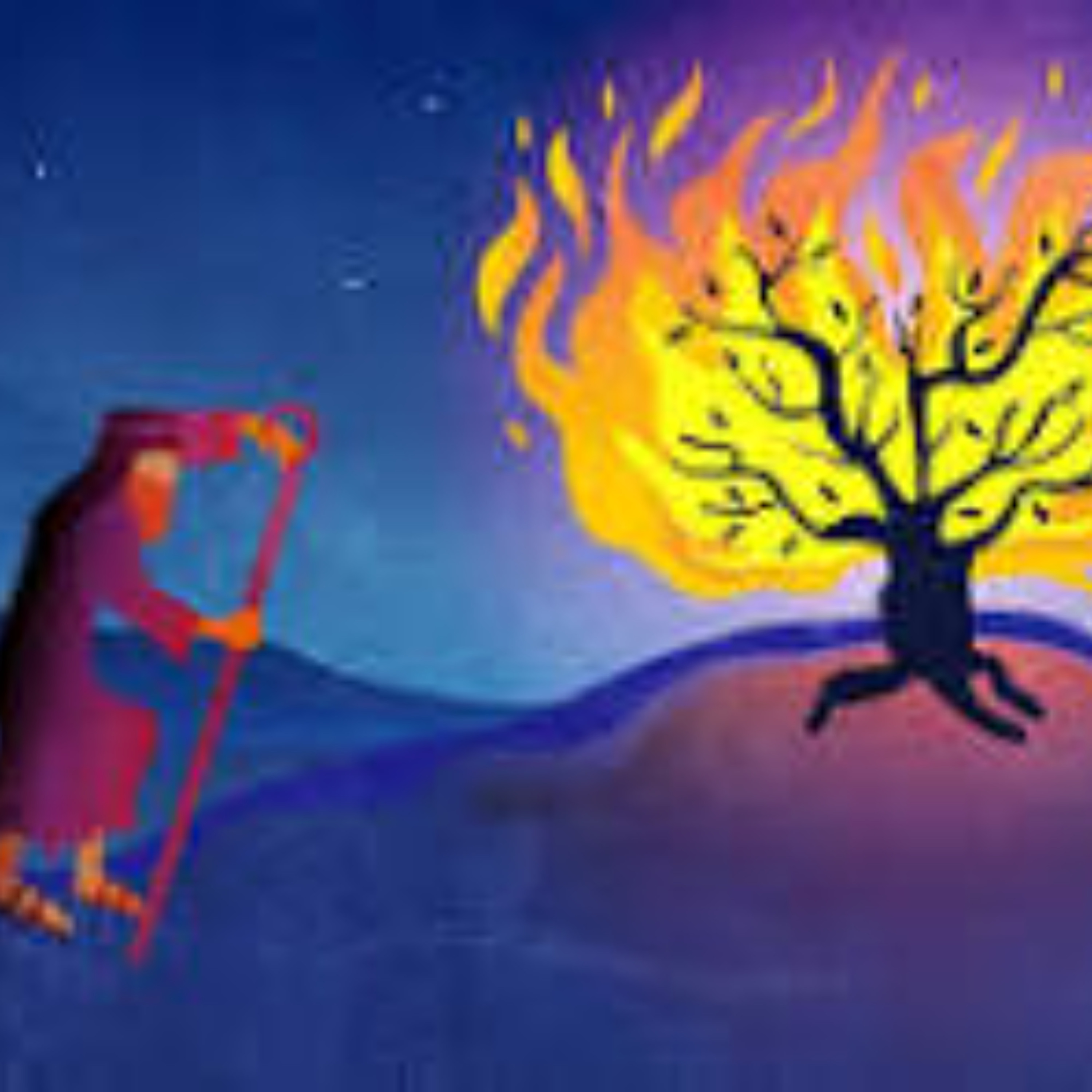
And I think ultimately what's at its root is a disconnect between how a person sees himself and how a person wants to be. And the issue for Pharaoh is that he senses it as a threat. But one of the things I wanted to add is that one of the values of projecting this back into the world of the Torah is that we can talk about the world of the Torah in a non-confrontational way because these people are long gone. It's a lot harder to talk about the issues today directly because people... of all stripes meaning those that we agree with and those that we disagree with have their antenna up and one of the first things that breaks down is communication because we don't listen as well as we might and so you know part of the usefulness of the torah is that it gives us a vocabulary to talk about serious issues without uh damaging relationships Interesting. Let's take a step forward and go to what is probably the most pivotal moment in this Parsha, and that's Moses in the burning bush. We move through some stunning stories of the birth of Moses, the adoption of Moses by Pharaoh's daughter, and Moses' banishment and exile to the Midian and his meeting of Zipporah, the daughter of Yitro. And he is a shepherd, and it's not an accident that he's a shepherd, and he is out.
One day, grazing the flock beyond the grazing field. Now, you know, we've got to translate Hamidbar not as the wasteland, but the grazing area. He's in a boundary zone near the mountain. And the boundary zone near the mountain is not a grazable place. And it's there that he sees this bush. And the text is rather enigmatic here, but it's worth quoting. It's chapter 3, verse 2. It says, An angel appeared to him.
In the flame, in the midst of the bush, he sees it. The bush is burning, and then it will call, and the bush was not consumed. And there's so much in that scene. First of all, it's the bush. It's not just an ordinary bush. Barry, I'm going to propose a story here, which is that this is not the first time that Moses was out in this area. There's a mountain there.
Well, it's not just the mountain. It's the mountain of God, right? It's the mountain of God. Does he know that this is the mountain of God? Maybe, maybe not. But let's just stop with a mountain. A mountain is a commanding place altogether, right? And it will command your attention. But he's been there before because this is the bush. I want to mention this only because, you know.
I'm smiling because around where I grew up in Ottawa, I used to go on lots of walks and hikes. And near my high school, it was a beautiful little creek. And there was this one gorgeous, gorgeous tree there, big, big oak tree. I love to go to see that tree. I felt like years later, I read Shel Silverstein's story, The Giving Tree. And this was a beautiful, beautiful tree. And Shel Silverstein's tree is a place that's very personal. And I would go there and I'd see that. And it would be like arriving at a destination. And throughout the years, I would see this.
You know, so it wasn't my first experience with this tree, you know. And, of course, there are famous trees in America. You had the Mercer tree in Princeton. You had the Salem oak. I did a little research on this. There are lots and lots of important trees. And, you know, maybe there is a mountain and there is a tree or a bush or something that commands Moses' attention. And on this particular occasion, when he goes there to have this experience, he sees it's on fire. So what do you make of this, though? So, I mean, the language is so telling that he sees this bush, this snap.
And it's burning, but not being consumed. So the only thing I can think of is that there's no smoke. That's why he has a sense that it's not being consumed. In other words, when you look at a fire, generally in the smoke, you see the destruction. And here he's just seeing a fire, I guess kind of attached or centered in this bush. And he knows that this is not normal, that this means something.
I think that that's what it is. I mean, this is a theme now in the Torah, because we have a God that is a consuming God, that is the all-powerful God, that if you get too close to, God will burn you up. And religion has to be a way of containing that nuclear power in a way that will translate into something legible in life. So one of the things I'm reminded of, 45 years ago already. So 45 years ago, I was in Seattle, and this was around the time when Mount St. Helens was ready to blow.
It was a dormant volcano for a long time, and now it's going to erupt. And I don't remember so well anymore, but in the course of the eruptions, 20% of the mountain was lost. It went from about 10,000 feet, as I recall, to about 8,000. And the reason why I mentioned it is some people identify Mount Sinai with a volcano. And when we think about the scene that we'll get to in a few weeks, that's when it's 19 and 20, when B'nai Israel is at Mount Sinai, the mountain is filled with smoke and thunder and lightning, and there is no destruction there, not unlike the snap. And what it makes me think, you were talking about how we have to control or tame somehow the fire, is that the fire of God does not need to be destructive. And, you know, the mountain, I think, as a symbol stands for itself. When you're in the presence of a mountain, I think it's difficult not to feel awe.
But the awe at the burning bush comes not from the bush, but from the fire. And by the uniqueness of this fire that does not consume. And this is what's going to lead Moshe, I believe, to God and from God to the people. Well, there's an apparition of an angel in the fire. An angel of the Lord, which is interesting. Right. And, you know, there are plenty of Idrashim on this word labat, labataish, you know, or as we Canadians say, labat. Sounds like a power forward for the Canadians. Labat. So labat is the flame, okay? But in the word labat is lev, the heart.
A lot of the Midrashim go to this place where they see that the text tells us that the flame is right at the heart of the bush. And I think that's significant only because being around a lot of dry material here, you can see that fire would normally start at the edges of a tree. Like the edge of branches would become on fire first and the fire would move from the edge to the center. But there's something awkward about the fire here being at the center and then it moves to the edges. And it's the center that tells you something that this is the heart of the matter. It can't get much better than that.
I'm going to give you my punchline, which is there's a midrash in Shemot Rabbah that talks about the fact that this was a fire that is two-thirds of the bush and above. In other words, it was above, if you took a ruler and divided it into three, the bottom two-thirds were not on fire, but the top third was. Just as a heart is placed at two-thirds of the person and above. So, you know, I'm sitting, but our hearts are located at the two-thirds place of our bodies. It's in the top third of our bodies.
And I find it's such an astounding Midrash that makes the connection between Labat, the flame, and Lev, the heart. And here's where I want to go with that, Barry, which is, you know, the mezuzah. The halakha for the mezuzah is that the mezuzah is to be placed in the top third of the doorpost. Now, I'm sure that there's a simple and pragmatic halakhic reason for this, but if I have the permission just to have my homiletical license, it's the placement of the mezuzah in the top third of the door is a kind of symbolic echo of the top third of the bush that is on fire, and that's the heart of the matter.
This is what makes it so fascinating. So we associate Revelation with Mount Sinai, not with a snap. Right? And we associate our table with the Beta Mikdash, the Mikdash Ma'at. And you're suggesting that our home is...
in a sense, a symbol of the burning bush, which is far more intimate than the revelation about Sinai. What I'm saying is that if you take it all the way to the end, which is that the gate to your home or the doorway is the doorway to this intimate experience with the divine. That's very powerful. Yeah, it's a very powerful idea. And so the bush is the gateway to that experience as well. It's a quote, it's not only in Maimonides, but do you know, it happens to be, I think on Friday this week, is Maimonides'
Yurtzeit. I was at the exhibit. It's a remarkable exhibit. Is it the 20th of Tevet? I have it written down. The 821st Yurtzeit of Rabbi Moshe bin Maimam. Friday, the 20th of Tevet.
Many people in my shul knew of this exhibit at the Grolier Club in New York City. Lots of important manuscripts of JTS, the JTS Library. And including in those manuscripts was the autograph of Maimonides. Remarkable, remarkable letter of Maimonides, signed by Maimonides. One of, you know, priceless, rare documents. And so, yeah, really. I mention this all because Maimonides in the Mishneh Torah, Hilchot Tfilinu Mezuzah mentions that.
the mezuzah is placed in the top third of the of the doorway he doesn't he doesn't make the connection between the midrash and and uh and mezuzah but i feel that the little footnote of the footnote a footnote that we can give is maybe there's a maybe we can make a at least a symbolic connection i was i think it was great so you know the snack is at least sound wise is linked to sinai and one of the things that again strikes me about this bush that is not consumed so what part of the sinai experience does it remind me of the shofar sound that kept getting louder yeah right which is contrary to nature as well so we have a bush that's not consumed and a shofar sound that's not um not abating in volume and there's something almost seductive in this story, how Moses is drawn in on one hand, because he steps closer, and yet he also has to be careful to step back as well. He has to take off his shoes, because he's on holy ground. And, you know, I guess the image is kind of like, you see, in one of the stories in, I think, about walking on the path where there's a ravine on either side, and you have to stay to the middle.
to secure your safety. And I think that's what a lot of rabbinic religion is about, is recognizing the danger and looking for a way to walk safely amidst the danger. I mean, I mean, that is a great way to bring this to a conclusion. And we will. Knowing that we just scratched the surface, there's so much more in this Parsha.
Lots and lots of material, lots of things to think about. We gravitate to these classic things. Thanking everybody who was with us. We thank you for spending the time with us. We know how important we are to your lives. And we're very honored by that. We're sending out to our good friend, Rabbi Jeremy Kalmanovsky. Our wishes, our strength, our chizuk, during this time for him. And wishing everybody, the community, the Parsha Talk community, good Shabbat shalom. We'll see you next week. Bye-bye.